
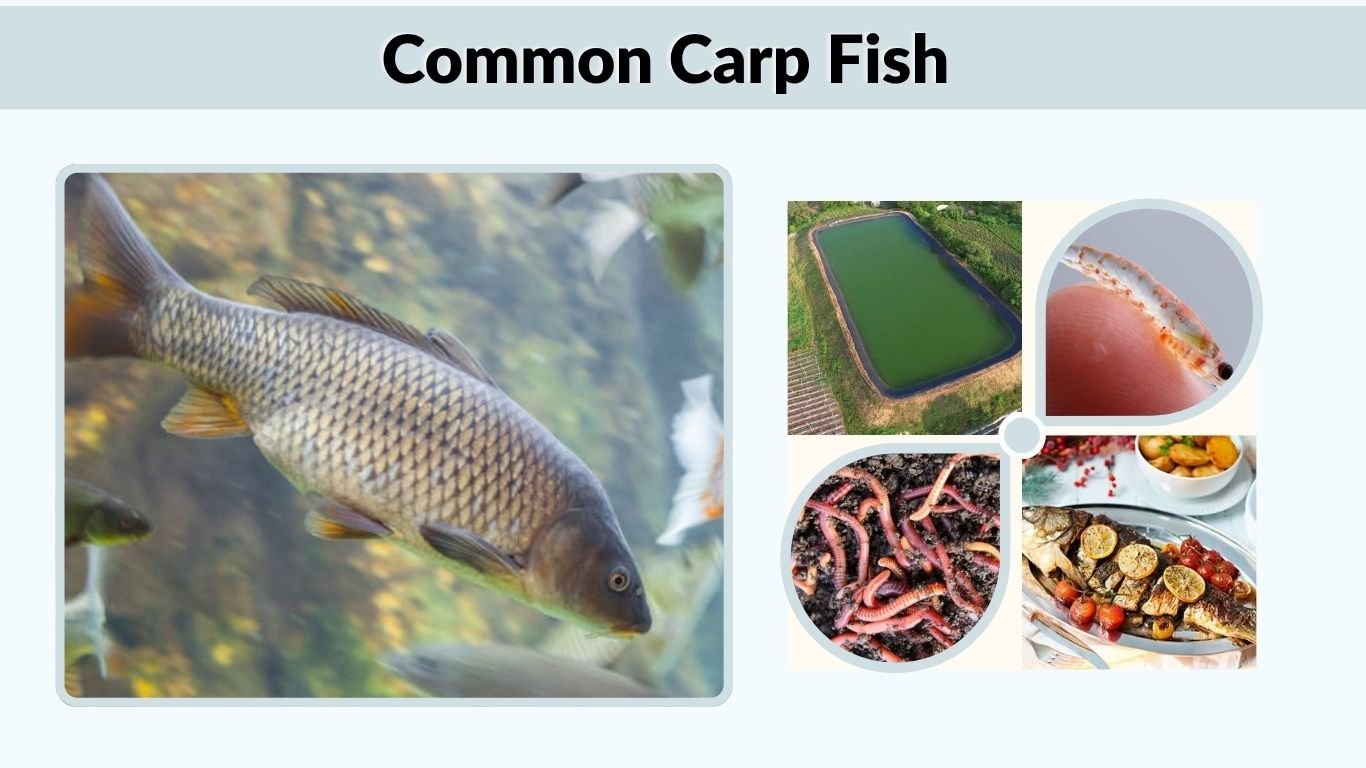
The common carp fish (Cyprinus carpio) is a large freshwater species found in lakes, rivers, reservoirs, ponds, and fish farms around the world. Originally native to parts of Europe and Asia, common carp have been introduced widely for food, sport fishing, and aquaculture. They are adaptable omnivores that feed on plants, insects, worms, crustaceans, and other bottom-dwelling organisms. Their rapid growth, large adult size, strong fighting ability, and tolerance of varied water conditions make them important both commercially and recreationally.
What Is a Common Carp Fish?
Common carp belong to the family Cyprinidae and are among the world’s best-known freshwater fish. They have deep, powerful bodies, large scales, and distinctive barbels near the mouth. Carp spend considerable time close to the bottom, where they use their sensitive mouths to search through mud and sediment for food. Domesticated varieties have been raised for food for centuries.
Common Carp Fish Identification
Common characteristics include:
- Scientific name: Cyprinus carpio
- Family: Cyprinidae
- Body: Deep, thick, and slightly compressed
- Color: Olive, bronze, brown, or golden
- Belly: Usually pale yellow or cream
- Scales: Large and clearly visible
- Mouth: Downward-facing and extendable
- Barbels: Two pairs around the mouth
- Dorsal fin: Long with a strong leading spine
- Habitat: Freshwater lakes, ponds, rivers, and reservoirs
Body coloration can change considerably depending on water clarity, habitat, age, and genetics.
Common Carp Size
Common carp can become large fish.
Adults frequently reach 20–30 inches long, while exceptional specimens can exceed 40 inches and weigh many tens of pounds.
Growth depends on water temperature, food availability, stocking density, genetics, and water quality.
Young carp grow particularly quickly in warm, productive ponds containing abundant natural and supplemental food.
What Do Common Carp Fish Eat?
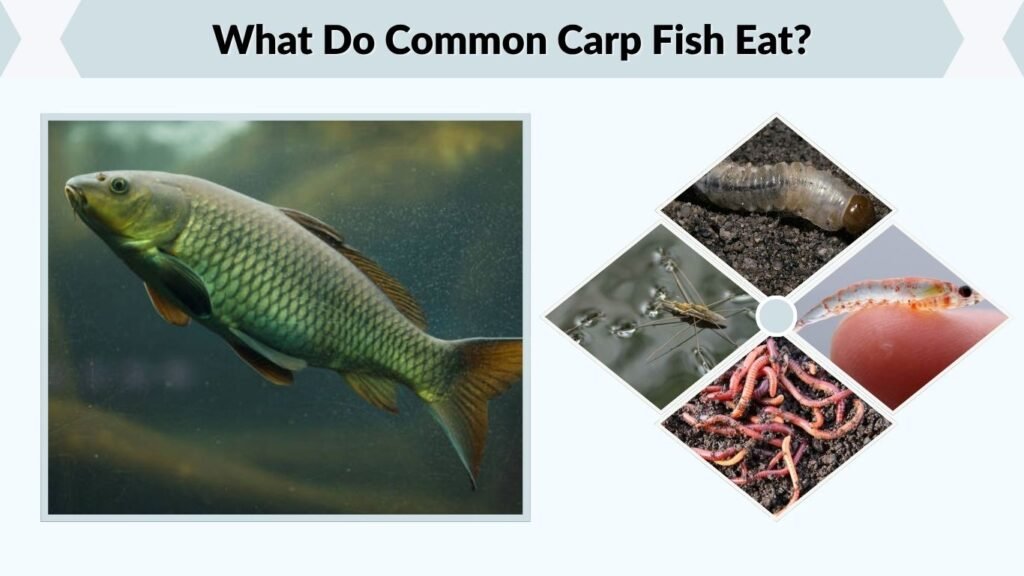
Common carp are omnivores, meaning they consume both plant and animal material. Much of their feeding occurs along the bottom. Carp extend their mouths into sediment and use sensory structures around the lips to locate edible organisms. Their feeding behavior can disturb mud, which sometimes makes heavily populated carp waters appear cloudy.
Common Carp Fish Food
Their natural diet can include:
- Aquatic insects
- Insect larvae
- Worms
- Small crustaceans
- Mollusks
- Zooplankton
- Plant material
- Seeds
- Algae
- Detritus
- Small aquatic organisms
- Commercial fish pellets
Young carp often rely heavily on zooplankton and small invertebrates before expanding their diet as they grow.
Do Common Carp Eat Other Fish?
Common carp do not normally hunt other fish like bass, pike, or catfish.
They are primarily bottom-feeding omnivores rather than active predators.
However, while searching through vegetation or sediment, carp may occasionally consume fish eggs, newly hatched fry, or other tiny animals.
Therefore, animal material can form part of their diet, but adult fish are not usually a major prey source.
Common Carp Habitat and Distribution
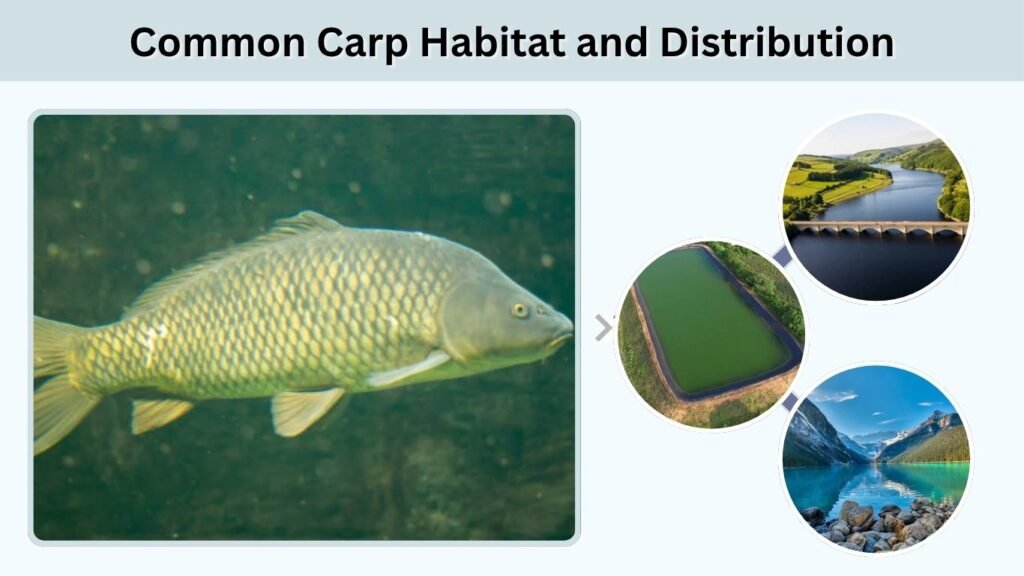
Common carp can tolerate a remarkable range of freshwater environments. They generally prefer slow-moving or still water with soft bottoms and abundant vegetation, but populations can survive in many other conditions. Their adaptability contributed to widespread introductions outside their original range. Today, they occur across Europe, Asia, North America, Australia, and many other regions.
Where Do Common Carp Live?
Common habitats include:
- Lakes
- Reservoirs
- Farm ponds
- Large rivers
- Slow streams
- Canals
- Floodplains
- Warm shallow bays
- Vegetated wetlands
- Aquaculture ponds
Carp particularly favor waters with muddy or silty bottoms where they can search efficiently for invertebrates and plant material.
Common Carp as an Introduced Species
Common carp have been introduced into many countries for food and sport.
In some environments, they are considered invasive because large populations can disturb sediment and uproot aquatic plants while feeding.
These activities may increase water cloudiness and reduce vegetation used by native fish, amphibians, and aquatic insects.
Their environmental impact depends greatly on population density and local ecosystem conditions.
Common Carp Fish Farming and Growth
Common carp have been raised as food fish for centuries and remain important in freshwater aquaculture. They tolerate varied environmental conditions, accept many natural and formulated foods, and can grow rapidly under favorable conditions. Carp are particularly suitable for pond-based farming systems where producers combine natural productivity with supplementary feeding.
Common Carp Fish Farming
Important farming requirements include:
- Suitable freshwater ponds
- Adequate dissolved oxygen
- Good-quality fingerlings
- Balanced stocking density
- Natural plankton and bottom organisms
- Supplemental feed
- Regular water-quality monitoring
- Protection from predators
- Disease management
Carp can be raised alone or with other compatible species in polyculture systems.
Common Carp Growth Time
Growth varies greatly according to climate and farming conditions.
In warm productive environments, common carp may reach a marketable size within approximately one to two years. Cooler temperatures or limited food can significantly slow development.
Farmers can improve growth by maintaining good water quality, providing sufficient feed, preventing overcrowding, and monitoring fish health.
Common Carp Breeding and Life Cycle
Common carp reproduce naturally in shallow, warm areas containing submerged vegetation. Breeding usually occurs when water temperatures rise during spring or early summer. Females can produce enormous numbers of sticky eggs, which attach to vegetation and other submerged surfaces. After hatching, young carp initially remain in sheltered shallow areas where food is plentiful.
Common Carp Breeding Stages
The reproductive process generally includes:
- Adults move into shallow breeding areas.
- Males pursue mature females.
- Females release large numbers of eggs.
- Males release sperm over the eggs.
- Fertilized eggs attach to aquatic vegetation.
- Larvae hatch after several days, depending on temperature.
- Young fish begin feeding on microscopic organisms.
- Juveniles gradually shift toward a broader omnivorous diet.
Carp do not provide parental care after spawning.
Common Carp Fry
Newly hatched carp are extremely small and depend initially on yolk reserves.
Once these reserves are absorbed, the fry begin feeding on plankton and tiny aquatic organisms.
Young fish grow rapidly when food is abundant and gradually develop the deep-bodied appearance of adults.
Fish farmers often raise fry separately in nursery ponds before transferring them to larger grow-out systems.
How to Fish for Common Carp
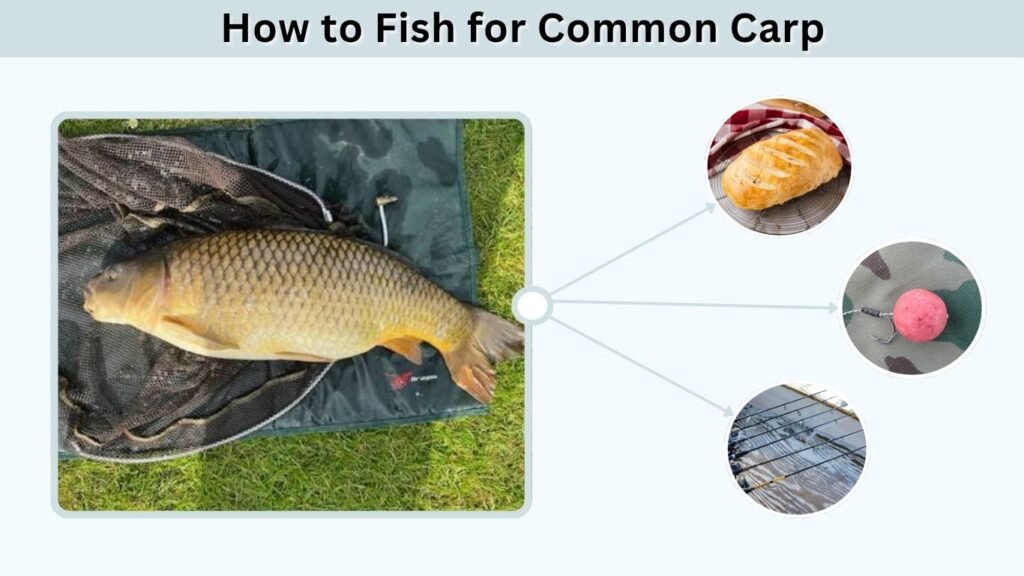
Common carp are prized by many anglers because large individuals are cautious, powerful, and capable of long runs after being hooked. Successful carp fishing usually involves presenting natural-looking bait close to the bottom. Quiet behavior is important because carp can become suspicious in heavily fished waters.
Best Baits for Common Carp
Popular baits include:
- Sweet corn
- Boilies
- Bread
- Dough balls
- Worms
- Pellets
- Chickpeas
- Tiger nuts where legal
- Prepared carp bait
The most effective bait depends on what fish regularly encounter in a particular lake or river.
How to Catch Common Carp
Carp often feed most actively during warmer periods, particularly around dawn and evening.
Look for bubbling water, muddy patches, moving reeds, or fish rolling at the surface.
Bottom rigs are commonly used because most feeding occurs close to the substrate.
After hooking a large carp, allow the drag to work rather than attempting to force the fish immediately toward shore.
Can You Eat Common Carp?
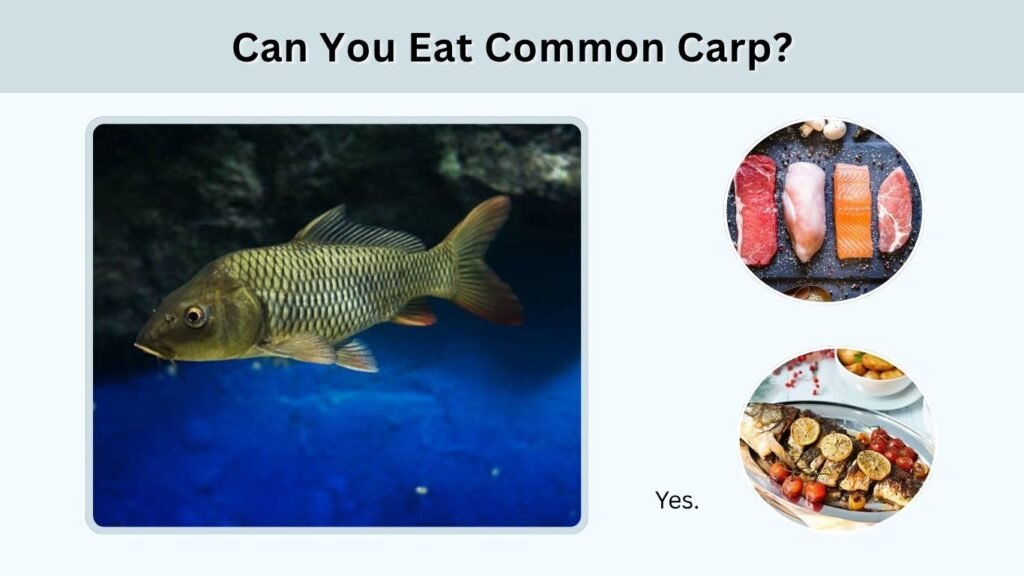
Yes. Common carp are edible and are an important traditional food fish in many European and Asian countries. Their flesh is firm and relatively rich, although flavor can vary according to habitat and preparation. Fish taken from clean water generally taste better than carp living in stagnant or heavily polluted environments.
Common Carp Nutrition and Cooking
Common carp can provide:
- High-quality protein
- Dietary fats
- Omega fatty acids
- Vitamin B12
- Phosphorus
- Selenium
- Potassium
- Other vitamins and minerals
Common cooking methods include frying, baking, grilling, smoking, steaming, and using carp in soups or stews.
The fish contains numerous small bones, so careful preparation is important.
Common Carp, Koi and Other Carp
Koi are domesticated ornamental forms descended primarily from common carp. Selective breeding produced the striking red, white, black, yellow, and other colors associated with modern koi. Although koi and wild-type common carp look dramatically different, they are closely related and belong to the same species.
Common Carp vs Koi
Wild common carp usually have:
- Brown, bronze, or olive coloration
- Natural camouflage
- Less dramatic patterns
- A food and sport-fish role
Koi commonly have:
- Bright ornamental colors
- Selectively bred patterns
- Higher value as decorative fish
- Frequent use in ornamental ponds
Both have similar body structures and characteristic barbels around the mouth.
FAQs
Common carp are important as food fish, sport fish, farmed animals, and introduced species. Their adaptable feeding behavior allows them to survive in many freshwater environments, while their large size makes them popular with anglers. Questions commonly focus on what they eat, how quickly they grow, whether they are edible, and how they differ from other carp.
What Is the Scientific Name of Common Carp?
The scientific name of the common carp is Cyprinus carpio.
Do Common Carp Eat Other Fish?
They do not normally hunt adult fish. However, they may occasionally consume fish eggs, tiny fry, and other small animal material while feeding.
How Big Can Common Carp Grow?
Large common carp can exceed 40 inches in length and weigh many tens of pounds, although most fish are considerably smaller.
Are Common Carp Good to Eat?
Yes. Common carp are eaten worldwide and provide protein, fats, vitamins, and minerals. Flavor depends strongly on water quality and preparation.
How Long Does Common Carp Take to Grow?
Under favorable warm-water farming conditions, carp may reach a useful harvest size within one to two years. Growth is slower when temperatures, food supply, or water quality are less suitable.