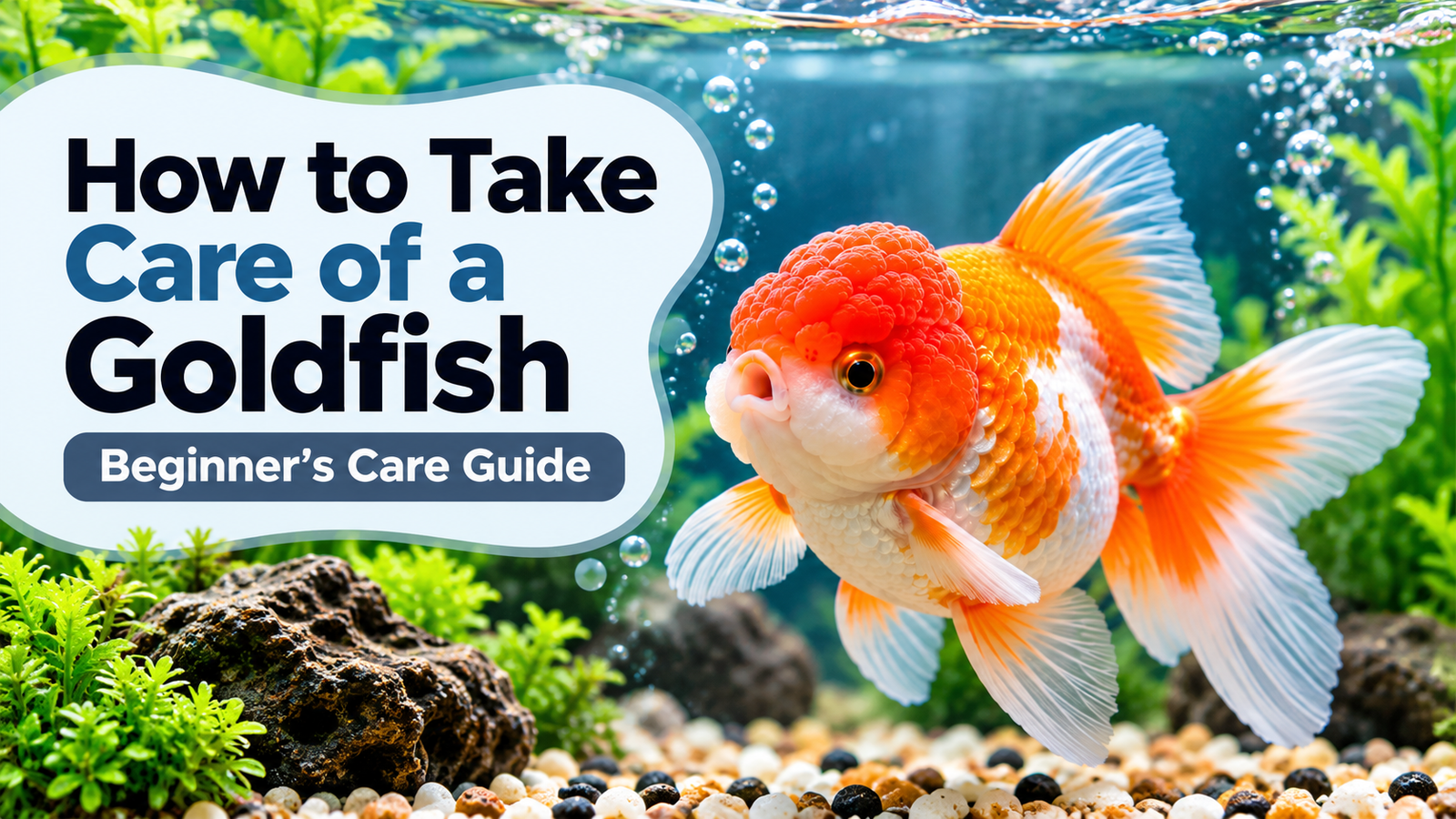
Goldfish are among the most popular freshwater aquarium fish because of their beautiful colors and peaceful behavior. However, keeping them healthy requires more than simply providing water and food. Learning how to take care of a goldfish involves choosing the right aquarium, maintaining clean water, providing nutritious food, and monitoring its health. With proper care, goldfish can live for 10–15 years or longer. This beginner-friendly guide explains everything you need to know about creating a safe, comfortable environment for your pet goldfish.
1. Choose the Right Tank for Your Goldfish
Choosing a properly sized aquarium is one of the most important parts of goldfish care. Although goldfish are frequently sold in small bowls, these containers cannot provide enough swimming space, filtration, or stable water conditions.
What Size Tank Does a Goldfish Need?
The ideal tank size depends on the variety of goldfish and its adult size.
| Goldfish Type | Recommended Housing |
|---|---|
| Fancy goldfish | At least 20 gallons (75 liters) for one |
| Two fancy goldfish | Approximately 30–40 gallons (114–151 liters) |
| Common goldfish | Very large aquarium or outdoor pond |
| Comet goldfish | Large aquarium or outdoor pond |
| Shubunkin goldfish | Large aquarium or outdoor pond |
These are practical starting recommendations, not universal minimums. Active, single-tailed varieties can reach approximately 12 inches and require considerably more space than fancy goldfish.
Essential Aquarium Equipment
A proper goldfish aquarium should include:
- Aquarium filter: Removes waste and supports beneficial bacteria.
- Water conditioner: Neutralizes harmful chlorine and chloramine.
- Aquarium thermometer: Monitors water temperature.
- Air stone: Improves aeration when surface movement is insufficient.
- Water testing kit: Measures ammonia, nitrite, nitrate, and pH.
- Safe decorations: Provide hiding places without sharp edges.
Place the aquarium away from direct sunlight, heaters, and strong temperature fluctuations.
2. Maintain Proper Goldfish Water Conditions
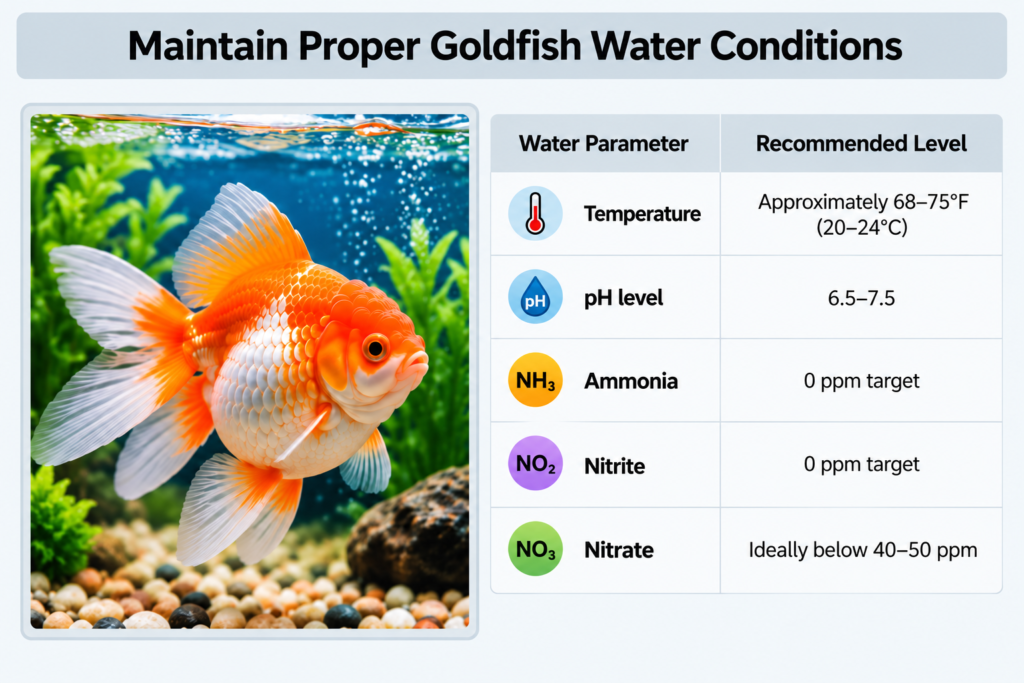
Clean water is essential for maintaining healthy goldfish. These fish produce substantial amounts of waste, which can release toxic ammonia into the aquarium.
A properly functioning biological filter converts ammonia into nitrite and eventually nitrate. Regular testing and water changes help keep these substances under control.
Ideal Water Parameters for Goldfish
| Water Parameter | Recommended Level |
|---|---|
| Temperature | Approximately 68–75°F (20–24°C) |
| pH level | 6.5–7.5 |
| Ammonia | 0 ppm target |
| Nitrite | 0 ppm target |
| Nitrate | Ideally below 40–50 ppm |
Goldfish tolerate a range of temperatures, and suitable temperatures vary somewhat by variety. Stable conditions are more important than maintaining one exact temperature.
How to Keep Goldfish Water Clean
Before introducing goldfish, establish the aquarium’s nitrogen cycle through fishless cycling.
Afterward, perform partial water changes every week, typically replacing 10–25% of the water. Larger or more frequent changes may be necessary when testing indicates poor water quality.
Always treat replacement tap water with an aquarium water conditioner and keep its temperature close to the tank’s existing temperature.
Never use untreated tap water directly in your goldfish aquarium.
3. Feed Your Goldfish a Healthy, Balanced Diet
Proper feeding helps goldfish maintain healthy growth, strong coloration, and normal digestive function. Goldfish are omnivores, meaning they consume plant material and small aquatic animals.
However, overfeeding is one of the most common mistakes among beginner fishkeepers.
What Should You Feed Goldfish?
A balanced goldfish diet can include:
- Goldfish pellets: Provide essential daily nutrients.
- Goldfish flakes: Suitable for many varieties.
- Blanched peas: Offer occasional vegetable variety.
- Spinach: Supplies additional plant material.
- Daphnia: Provides occasional animal protein.
- Brine shrimp: Can be offered as a supplementary treat.
High-quality, goldfish-specific food should form the foundation of their diet. Fancy goldfish may benefit from sinking pellets instead of floating food.
How Often Should You Feed Goldfish?
Most adult goldfish can be fed once or twice daily in small portions. Provide only what they can comfortably consume within approximately two minutes.
Remove uneaten food because it decomposes and pollutes aquarium water.
Young, growing goldfish may require different feeding schedules, while goldfish kept in cold outdoor ponds need reduced feeding when temperatures drop.
4. Clean and Maintain Your Goldfish Tank
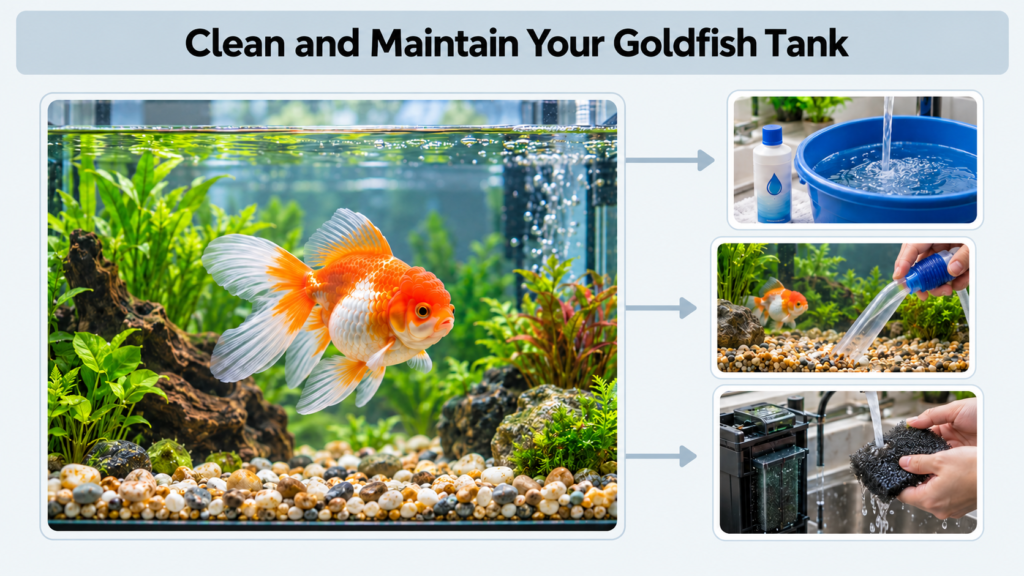
Regular aquarium maintenance prevents harmful waste accumulation and supports a healthy aquatic environment.
Fortunately, maintaining a goldfish aquarium becomes straightforward once you establish a consistent routine.
How to Clean a Goldfish Tank Step by Step
- Prepare replacement water: Treat fresh tap water with aquarium conditioner.
- Remove old water: Use a siphon to remove approximately 10–25% of the aquarium water.
- Clean the substrate: Vacuum accumulated fish waste and uneaten food.
- Clean aquarium glass: Remove algae using an aquarium-safe scraper.
- Rinse filter media: Gently rinse clogged media in removed tank water.
- Refill the aquarium: Add conditioned water at a similar temperature.
- Check equipment: Ensure the filter and aeration system are functioning properly.
Avoid replacing all the aquarium water during routine maintenance. Never wash filter media under untreated tap water because doing so may damage the beneficial bacterial population.
Goldfish Maintenance Schedule
| Frequency | Maintenance Task |
|---|---|
| Daily | Feed fish and observe their behavior |
| Daily | Check temperature and equipment |
| Weekly | Perform partial water changes |
| Weekly | Vacuum debris and test water |
| Monthly or as needed | Gently rinse clogged filter media |
During aquarium cycling or whenever fish appear unwell, test water more frequently.
5. Keep Your Goldfish Healthy and Stress-Free
Goldfish need more than clean water and food. Their surroundings, swimming space, and daily routines also influence their health.
Providing a stimulating environment encourages natural swimming, exploration, and foraging behaviors.
Signs of a Healthy Goldfish
A healthy goldfish generally displays:
- Active, balanced swimming.
- Normal appetite and feeding behavior.
- Clear eyes and healthy-looking fins.
- Consistent coloration.
- Regular interaction with its environment.
Goldfish can become familiar with feeding routines and may even recognize their caregivers.
Common Signs of Goldfish Illness
Watch for symptoms such as white spots, unusual swelling, torn fins, persistent floating or sinking, loss of appetite, or difficulty breathing.
If your goldfish behaves unusually, immediately check ammonia, nitrite, temperature, and other water parameters.
Consult a qualified aquatic veterinarian for persistent or severe symptoms rather than treating an unidentified disease with random aquarium medications.
Can Goldfish Live Together?
Yes, goldfish can live together when the aquarium provides adequate space and filtration.
However, fancy goldfish are generally slower swimmers than common or comet goldfish. Keeping these varieties together can create feeding competition.
Choosing goldfish with similar body shapes and swimming abilities helps reduce these problems.
6. Avoid Common Goldfish Care Mistakes
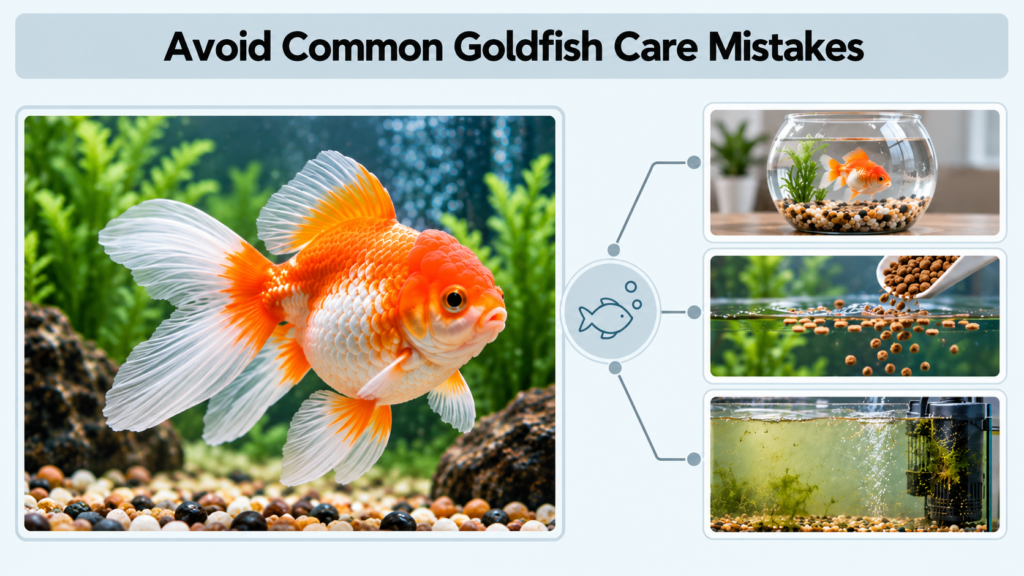
Many goldfish health problems result from inappropriate housing or maintenance rather than difficult diseases.
Understanding common beginner mistakes can significantly improve your goldfish’s quality of life.
Mistakes to Avoid
- Keeping goldfish in bowls: Small bowls provide inadequate swimming space and poor water stability.
- Overfeeding: Excess food pollutes the aquarium and can cause health problems.
- Skipping water changes: Waste compounds gradually accumulate.
- Using untreated tap water: Chlorine and chloramine may harm fish.
- Overcrowding: Too many fish overwhelm filtration systems.
- Cleaning filters incorrectly: Removing beneficial bacteria disrupts biological filtration.
- Adding fish too early: An uncycled aquarium may develop dangerous ammonia levels.
Maintaining a properly sized, filtered aquarium and checking water quality regularly can prevent many of these problems.
Frequently Asked Questions
1. Are Goldfish Easy to Take Care Of?
Goldfish can be manageable for beginners, but they require more maintenance than many people expect. They need spacious aquariums, effective filtration, nutritious food, and regular water changes. Their substantial waste production makes water quality especially important for long-term health.
2. How Long Do Goldfish Live?
Goldfish commonly live around 10–15 years with appropriate care, although some individuals survive much longer. Their lifespan depends on factors such as genetics, aquarium size, water quality, nutrition, and disease prevention. Poor living conditions can dramatically shorten their lives.
3. Can Goldfish Live Without an Air Pump?
Goldfish can live without a separate air pump if their aquarium has sufficient oxygen exchange through filter-driven surface movement. However, an air stone may be necessary when circulation is inadequate. Good aeration is particularly important in crowded or poorly circulated aquariums.
4. Do Goldfish Need a Heater?
Goldfish generally do not require an aquarium heater when the surrounding environment maintains suitable, stable temperatures. However, a thermostatically controlled heater may help prevent excessive temperature fluctuations. Always use an aquarium thermometer and choose temperatures appropriate for your particular goldfish variety.
5. How Often Should You Change Goldfish Water?
Most established goldfish aquariums benefit from weekly partial water changes of approximately 10–25%. The exact amount depends on aquarium size, fish population, filtration efficiency, and water test results. Always use conditioned replacement water and avoid unnecessary complete water changes.