
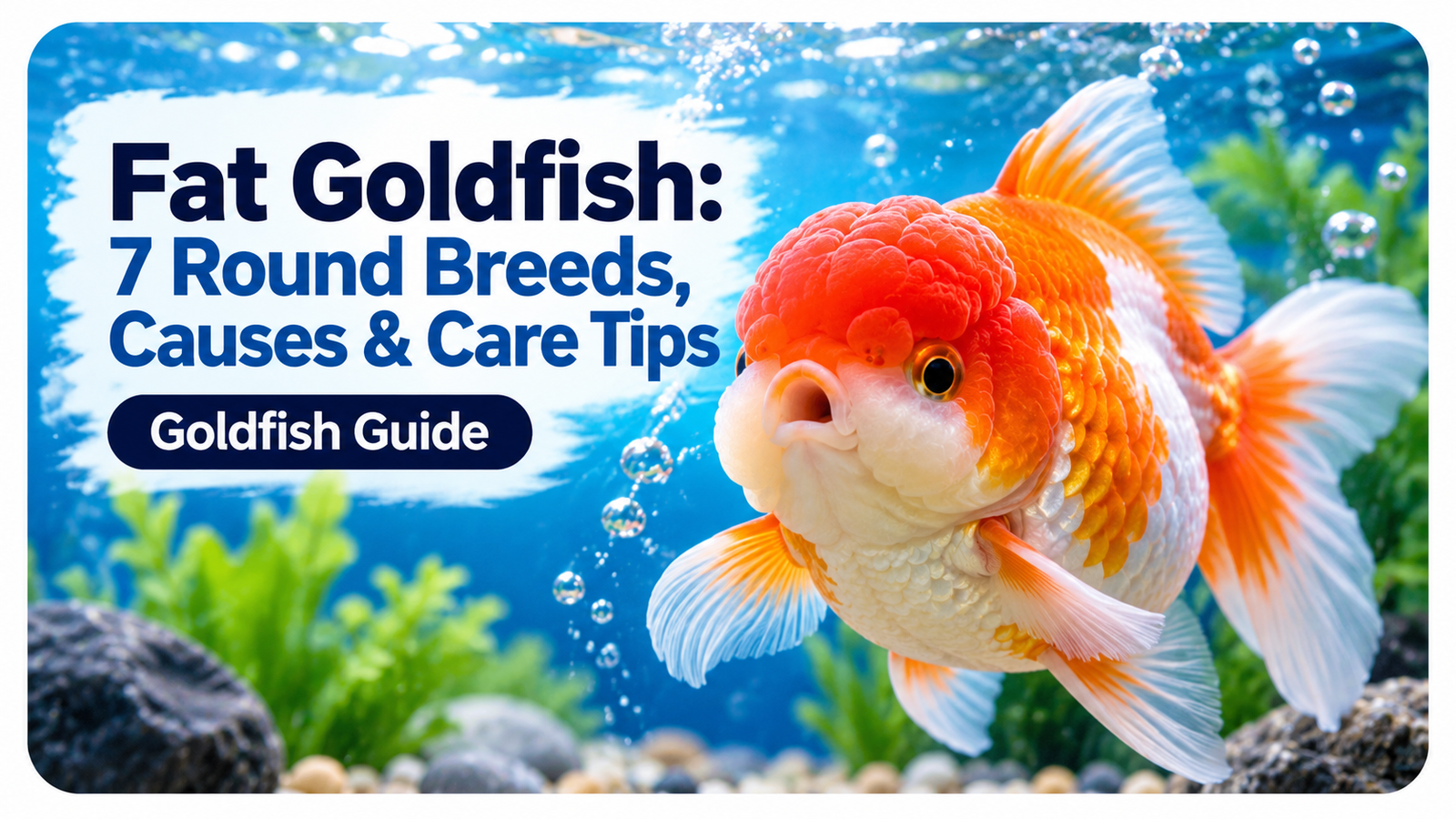
Fat goldfish are popular among aquarium enthusiasts because of their adorable round bodies, chubby faces, and distinctive swimming movements. While some goldfish breeds naturally have large, rounded bellies, others may appear fat because of overfeeding, egg development, or health problems. Understanding the difference between a naturally round goldfish and an abnormally swollen one is important for proper care. This guide explores the most popular fat goldfish breeds, why goldfish become bloated, how to identify concerning symptoms, and ways to maintain their health.
What Is a Fat Goldfish?
A fat goldfish generally refers to a goldfish with a rounded, plump, or unusually large-looking body. However, “fat goldfish” is not an official breed name. Several fancy goldfish varieties naturally develop short, deep bodies through selective breeding.
These fish look noticeably different from common goldfish, which typically have longer and more streamlined bodies.
Some round goldfish remain perfectly healthy throughout their lives, while others may develop abnormal abdominal swelling.
The most important distinction is whether the fish has always had a rounded shape or whether its belly has recently become enlarged.
7 Types of Fat Goldfish Breeds
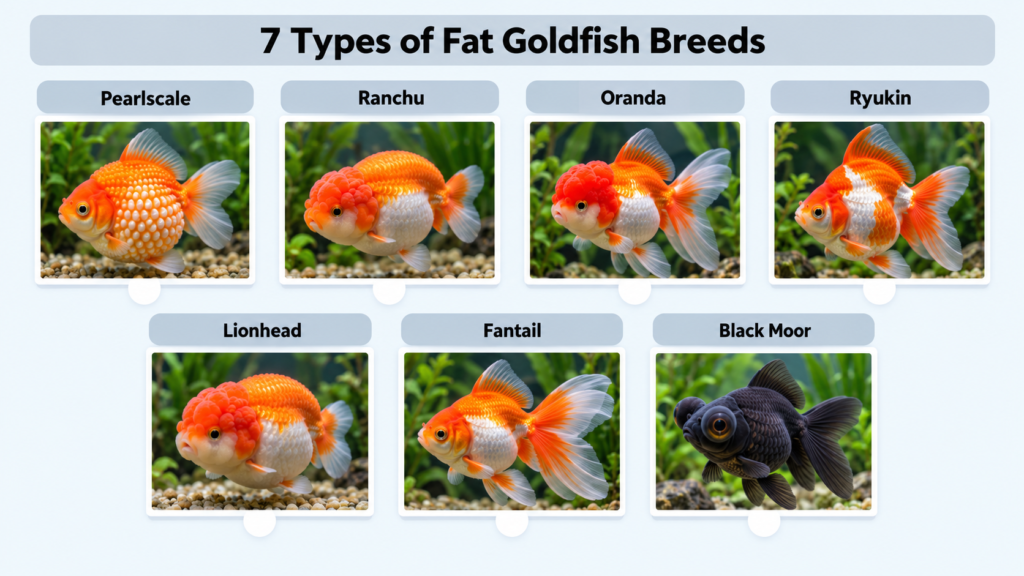
Several fancy goldfish varieties have naturally round bodies, prominent bellies, or enlarged head features. Their unusual appearances result from generations of selective breeding rather than necessarily being overweight.
1. Pearlscale Goldfish
Pearlscale Goldfish are among the roundest fancy goldfish varieties. Their bodies can resemble small golf balls, making them particularly recognizable.
They have raised, dome-shaped scales that create a pearl-like texture across their bodies.
Some Pearlscales also develop rounded head growths, giving them an even more unusual appearance.
Their compact shape can make swimming less efficient than it is for streamlined goldfish. Consequently, they need gentle water currents, adequate swimming space, and compatible tank mates.
2. Ranchu Goldfish
Ranchu Goldfish have short, rounded bodies, curved backs, and no dorsal fins. Their compact appearance makes them one of the most recognizable chubby goldfish varieties.
Many Ranchu develop fleshy head growths called wen, which may extend around their cheeks and forehead.
Their absence of a dorsal fin contributes to their distinctive swimming movement.
Ranchu are generally peaceful fish that benefit from spacious aquariums and gentle water flow.
3. Oranda Goldfish
Oranda Goldfish have deep, egg-shaped bodies and distinctive fleshy head growths.
Their head growth, commonly called a wen, can make the forehead and cheeks appear particularly large.
Some Orandas display bright red head growths, while others have orange, white, black, or mixed coloration.
Although they look fat, their rounded appearance is a normal characteristic of the variety.
Excessive head growth can occasionally interfere with vision or feeding and may require professional assessment.
4. Ryukin Goldfish
Ryukin Goldfish have high, arched backs and deep, rounded bellies.
Their pronounced shoulder hump distinguishes them from many other fancy varieties.
Despite their short, deep bodies, Ryukin can be relatively active swimmers compared with more extreme round-bodied varieties.
Their appearance is especially striking when viewed from the side, where the steep back and rounded abdomen are clearly visible.
5. Lionhead Goldfish
Lionhead Goldfish have rounded bodies, no dorsal fins, and prominent fleshy head growths.
Their enlarged head tissue creates the impression of fat cheeks or a large forehead.
Unlike Pearlscale Goldfish, Lionheads do not have raised pearl-like scales.
These gentle fish are usually slower swimmers and require suitable companions that will not outcompete them for food.
6. Fantail Goldfish
Fantail Goldfish are among the most familiar fancy goldfish varieties.
They have short, egg-shaped bodies and paired tails that spread outward like fans.
Their rounded belly is generally less exaggerated than that of a Pearlscale or Ranchu.
Fantails are often considered a practical introduction to fancy goldfish keeping, although they still need spacious, properly filtered aquariums.
7. Black Moor Goldfish
Black Moor Goldfish are known for their dark coloration, rounded bodies, and large protruding telescope eyes.
Their combination of a chubby body and oversized eyes makes them particularly distinctive.
Unlike Orandas or Lionheads, Black Moors do not normally develop fleshy head growths.
Because their eyes can be easily injured, they should be kept away from sharp decorations and aggressive tank mates.
Why Is My Goldfish Getting Fat?
Goldfish can appear larger for several reasons, ranging from natural growth to potentially serious medical conditions.
A healthy fish may develop a rounded body as it matures, but sudden or progressive swelling deserves closer attention.
Overfeeding and Excess Weight
Goldfish are enthusiastic feeders and may continue searching for food even after eating enough.
Providing excessive food can contribute to unhealthy weight gain and increased waste production.
Uneaten food also decomposes, potentially reducing water quality.
Overfeeding does not automatically explain a swollen abdomen, however. A suddenly bloated goldfish may have a different underlying problem.
Female Goldfish Carrying Eggs
Female goldfish can develop fuller abdomens when their ovaries contain developing eggs.
This sometimes leads owners to describe their fish as pregnant.
However, goldfish are egg-laying fish, not livebearers.
A female carrying eggs may appear wider around the abdomen, especially during breeding periods.
Egg development cannot be confirmed from belly shape alone. Persistent swelling can also occur with reproductive disorders that require veterinary care.
Digestive Problems and Bloating
Digestive contents, gas, or intestinal disorders may contribute to abdominal enlargement.
A fish experiencing digestive problems might also produce abnormal waste, lose its appetite, or develop difficulty swimming.
Short-bodied fancy goldfish may be particularly vulnerable to buoyancy problems because their body shape affects the arrangement of internal organs.
However, an enlarged belly should never automatically be diagnosed as constipation.
Dropsy and Internal Illness
Dropsy describes abnormal fluid accumulation associated with an underlying medical problem.
Affected fish may develop swollen bodies, protruding scales, lethargy, and difficulty swimming.
When scales stand outward, the fish may develop a characteristic pinecone-like appearance.
Dropsy can involve serious infections or organ dysfunction and requires prompt veterinary attention.
Other conditions, including internal masses or reproductive problems, can also cause unusual swelling.
How to Tell if a Goldfish Is Fat or Bloated

Recognizing differences between a naturally round body and new swelling can help owners decide when further investigation is needed.
| Signs | Naturally round goldfish | Potentially unhealthy swelling |
| Body shape | Consistently round | Newly enlarged or changing |
| Scales | Normally positioned | May protrude outward |
| Swimming | Normal for its variety | May become abnormal |
| Appetite | Generally normal | May decrease |
| Behavior | Active and responsive | May become lethargic |
| Belly | Usually symmetrical | May swell unevenly or suddenly |
These signs are clues rather than a diagnosis. A fish can be sick without displaying every warning sign, and some healthy fancy goldfish naturally swim more slowly than common goldfish.
How to Care for a Fat Goldfish
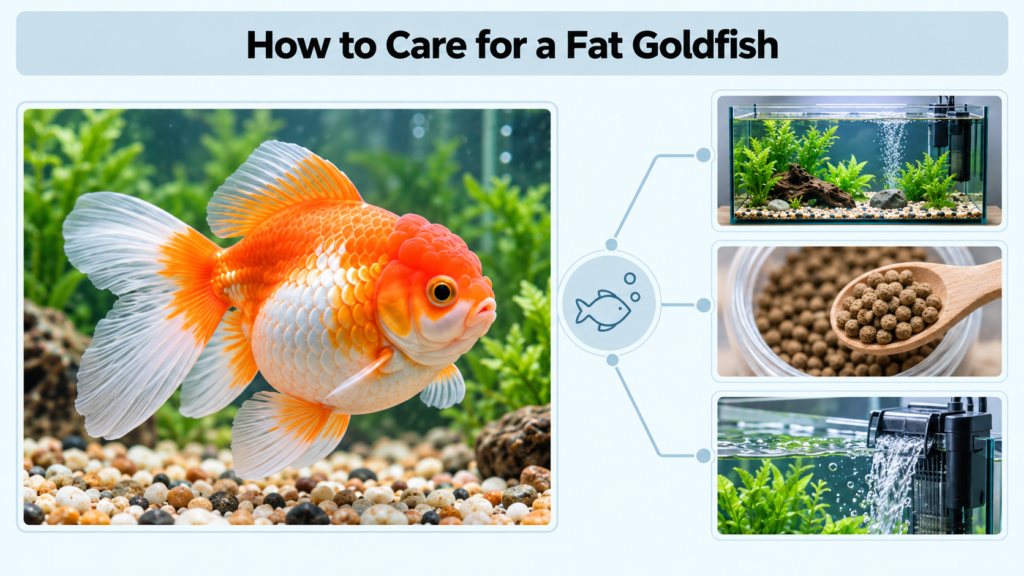
Naturally round goldfish require similar basic care to other fancy varieties, although their compact body shapes may make them less efficient swimmers.
Providing an appropriate environment supports healthy growth, digestion, and long-term welfare.
Provide a Spacious Aquarium
A tank of approximately 30 gallons or more is a sensible starting point for one adult fancy goldfish, with additional space for companions.
Larger aquariums provide more stable water conditions and room for normal movement.
Use efficient biological filtration and avoid strong currents that may overwhelm slow-swimming varieties.
Small fishbowls are unsuitable for long-term goldfish care.
Feed a Balanced Diet
Choose high-quality sinking goldfish pellets or suitable gel food as the main diet.
Supplement occasionally with appropriate vegetables and foods such as daphnia or brine shrimp.
Avoid excessive feeding and remove uneaten food.
A practical approach is to provide modest portions that can be consumed within approximately one to two minutes.
Healthy feeding aims to maintain normal body condition, not deliberately make a fish fatter.
Maintain Good Water Quality
Goldfish produce considerable waste, making regular aquarium maintenance essential.
Test ammonia, nitrite, and nitrate levels, and maintain effective filtration.
Perform partial water changes regularly, adjusting the amount according to test results and aquarium conditions.
Use a suitable water conditioner when adding tap water and avoid sudden temperature changes.
What to Do if Your Goldfish Suddenly Looks Fat
A sudden increase in belly size should not be dismissed as normal weight gain.
Begin by checking water quality, observing the fish’s swimming behavior, and comparing its current appearance with previous photographs.
Look carefully for protruding scales, rapid breathing, appetite changes, abnormal waste, or difficulty remaining upright.
If swelling is sudden, worsening, or accompanied by other concerning symptoms, contact an aquatic veterinarian promptly.
Avoid squeezing the abdomen, attempting to release eggs manually, or adding medications and salt without an appropriate diagnosis.
Prompt evaluation is especially important when the fish develops pinecone-like scales or significant swimming problems.
FAQs
1. Can Goldfish Get Fat From Eating Too Much?
Yes. Excessive feeding can contribute to unhealthy weight gain and other problems. However, a swollen belly does not always indicate obesity and may have a medical cause.
2. What Breed of Goldfish Is the Fattest?
Pearlscale Goldfish are among the roundest varieties because of their naturally spherical bodies. Ranchu, Ryukin, and Oranda Goldfish also have noticeably rounded shapes.
3. Why Does My Goldfish Have a Big Fat Belly?
A large belly may result from natural body shape, egg development, overfeeding, digestive problems, fluid accumulation, or other health conditions. Sudden swelling should be investigated.
4. Is a Fat Goldfish Pregnant?
Goldfish do not become pregnant like livebearing fish. Females produce eggs and may develop a fuller abdomen before spawning.
5. Is It Normal for Fancy Goldfish to Look Fat?
Yes. Many fancy varieties naturally have deep, rounded bodies. However, new swelling, protruding scales, loss of appetite, or unusual swimming may indicate illness.