

The Black Moor Goldfish is one of the most distinctive fancy goldfish varieties, recognized for its velvety black body, protruding telescope eyes, and flowing fins. These peaceful freshwater fish are popular among aquarium enthusiasts because of their unusual appearance and gentle personality. However, their delicate eyes and slow swimming style require special attention. Understanding proper tank size, water temperature, feeding habits, and compatible tank mates is essential for keeping them healthy. This guide covers everything you need to know about Black Moor Goldfish care.
What Is a Black Moor Goldfish?
The Black Moor Goldfish (Carassius auratus) is a fancy goldfish variety developed through selective breeding. It belongs to the telescope-eye group, which is characterized by noticeably protruding eyes.
Unlike common goldfish, Black Moors have rounded bodies, double tails, and relatively slow swimming movements. Their unique eyes can limit their vision, making aquarium decoration and compatible tank mates especially important.
Although generally peaceful and adaptable, Black Moors require clean water, adequate swimming space, and consistent maintenance.
Black Moor Goldfish Quick Facts
| Characteristic | Details |
| Scientific name | Carassius auratus |
| Common name | Black Moor Goldfish |
| Fish type | Fancy goldfish |
| Adult size | Usually 6–8 inches |
| Lifespan | Commonly 10–15 years |
| Tank size | 30+ gallons recommended for one |
| Temperature | Approximately 64–75°F (18–24°C) |
| Diet | Omnivorous |
| Temperament | Peaceful |
| Care level | Moderate |
Black Moor Goldfish Appearance and Identification

Black Moor Goldfish have a recognizable appearance that distinguishes them from most other goldfish varieties. Their dark coloration, telescope eyes, and flowing fins are particularly noticeable.
Young fish may not display fully developed eyes or deep black coloration immediately. These features typically become more pronounced as the fish matures.
Key Identification Features
- Body color: Usually deep black, although some individuals develop bronze, orange, or golden patches.
- Eyes: Large, protruding telescope-shaped eyes that extend outward.
- Body shape: Rounded or egg-shaped with a relatively short body.
- Tail: Flowing, divided double tail with a graceful appearance.
- Fins: Broad dorsal, pectoral, and pelvic fins that support slow swimming.
- Swimming behavior: Generally peaceful and slower than common goldfish.
Their protruding eyes are especially vulnerable to injuries from sharp aquarium decorations.
How Big Do Black Moor Goldfish Get?
A full-grown Black Moor Goldfish generally reaches approximately 6–8 inches (15–20 centimeters) in length, although some individuals grow larger.
Growth depends on genetics, nutrition, aquarium conditions, and overall health. Young Black Moors may measure only 1–2 inches when purchased, but they require considerably more space as they mature.
Healthy individuals continue developing over several years, although their growth usually slows with age.
Large Black Moor Goldfish can develop substantial body depth and long, flowing tails. However, they generally remain shorter than common or comet goldfish.
Small bowls and overcrowded aquariums can negatively affect their health and development.
Black Moor Goldfish Tank Size and Setup
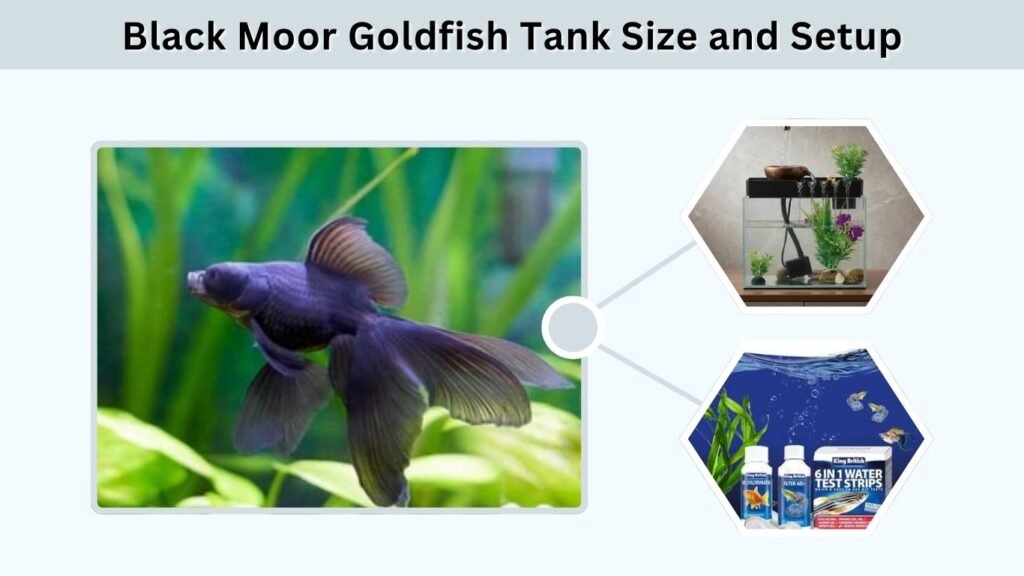
Choosing the correct aquarium is essential for Black Moor Goldfish care. Although they swim slowly, these fish still require plenty of space for movement and normal development.
Their rounded bodies and delicate eyes also mean that aquarium decorations and water movement must be selected carefully.
Recommended Tank Size
A 30-gallon aquarium (approximately 114 liters) is a reasonable starting point for one adult Black Moor Goldfish, with larger aquariums preferable.
For two adults, consider approximately 50–55 gallons or more, depending on filtration and tank dimensions.
A longer aquarium provides more useful swimming space than a narrow, tall tank.
Avoid keeping Black Moors in small fishbowls. These containers generally lack adequate water volume, filtration, and oxygen exchange.
Ideal Water Conditions
Maintaining consistent water quality is essential for preventing stress and illness.
| Water parameter | Recommended conditions |
| Temperature | Approximately 64–75°F (18–24°C) |
| pH | Around 7.0–8.0 |
| Ammonia | 0 ppm target |
| Nitrite | 0 ppm target |
| Nitrate | Keep low through maintenance |
| Water movement | Gentle to moderate |
Use an appropriately sized biological filter and test aquarium water regularly.
Perform partial water changes weekly, adjusting the amount according to test results and waste buildup. Always treat replacement tap water with a suitable dechlorinator.
Aquarium Decorations and Plants
Black Moor Goldfish have relatively poor eyesight, so sharp decorations can cause injuries.
Choose smooth stones, rounded ornaments, and soft or sturdy aquarium plants.
Anubias and Java fern are commonly used in goldfish aquariums because their leaves are relatively durable.
Avoid pointed driftwood, rough artificial decorations, and narrow openings where the fish could become trapped.
What Do Black Moor Goldfish Eat?

Black Moor Goldfish are omnivores that require balanced nutrition to maintain healthy growth, coloration, and digestion.
High-quality sinking goldfish pellets are a practical staple because they are formulated to provide appropriate nutrients.
Their diet can also include softened, aquarium-safe vegetables and occasional suitable frozen foods.
Best Foods for Black Moor Goldfish
- Sinking goldfish pellets: Provide balanced daily nutrition.
- Blanched vegetables: Offer fiber and dietary variety.
- Frozen daphnia: Suitable as an occasional supplementary food.
- Brine shrimp: Provide additional protein when offered appropriately.
- Gel food: Can be a useful alternative for fancy goldfish.
Feed modest portions once or twice daily, providing only what the fish can consume comfortably.
Because Black Moors have limited vision, observe feeding carefully to ensure faster fish are not taking all their food.
Remove uneaten food to maintain good water quality.
Black Moor Goldfish Lifespan
The average Black Moor Goldfish lifespan is commonly 10–15 years with appropriate care. Some individuals may live considerably longer under favorable conditions.
Their longevity depends on water quality, suitable nutrition, genetics, and disease prevention.
Maintaining stable aquarium conditions is particularly important because repeated water-quality problems can contribute to chronic stress and illness.
Regular observation also helps owners identify changes in swimming behavior, appetite, or physical appearance before problems become severe.
A properly maintained aquarium provides the best opportunity for these fish to live long, healthy lives.
Best Tank Mates for Black Moor Goldfish

Black Moor Goldfish are generally peaceful and can live with compatible fancy goldfish.
However, their slow swimming speed and limited eyesight make them vulnerable when housed with faster or aggressive species.
Suitable companions include other Black Moors, telescope goldfish, and similarly gentle fancy goldfish, provided the aquarium is large enough.
Fantail goldfish may also work well when individual fish have similar feeding abilities.
Avoid aggressive tropical fish, fin-nipping species, and fast-swimming comet goldfish that may outcompete Black Moors during feeding.
Always monitor compatibility, especially when introducing new aquarium inhabitants.
Why Is My Black Moor Goldfish Turning Gold or Orange?
Black Moor Goldfish sometimes develop orange, bronze, golden, or lighter patches as they mature.
These changes can result from genetics, aging, pigmentation changes, and environmental influences.
Some fish retain their deep black coloration throughout life, while others gradually lose some or most of it.
A gradual color change in an otherwise healthy, active fish is not necessarily a sign of disease.
However, sudden discoloration accompanied by wounds, unusual swimming, or loss of appetite may indicate a health problem.
Black-and-white telescope goldfish are sometimes marketed as panda telescope goldfish. This is a color pattern rather than a separate goldfish species.
Common Black Moor Goldfish Diseases and Health Problems
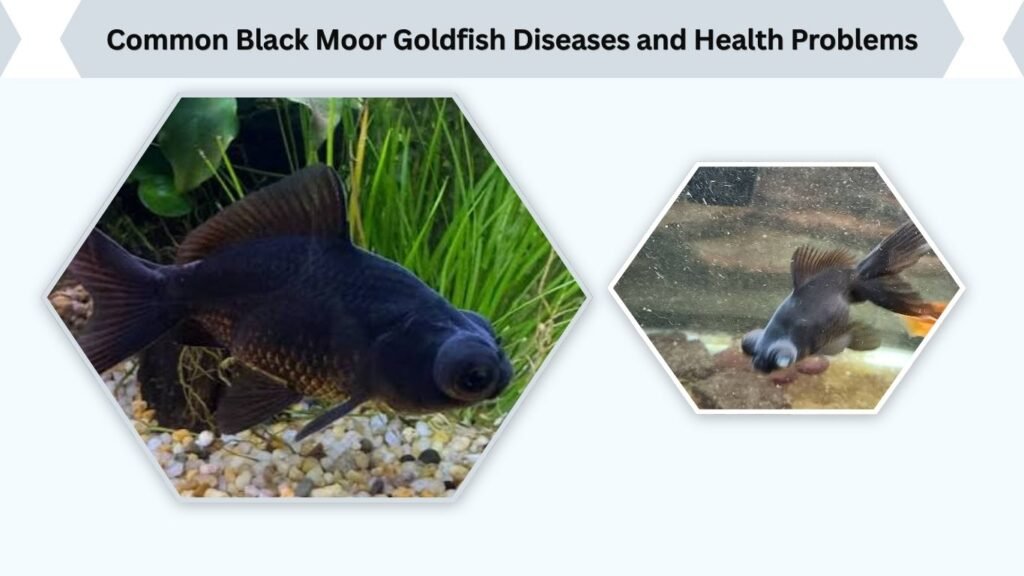
Like other fancy goldfish, Black Moors can develop health problems when water conditions or aquarium environments are unsuitable.
Their protruding eyes require particular attention because physical injuries can lead to secondary infections.
Common problems include:
- Eye injuries: Damage caused by sharp objects or collisions.
- Fin rot: Fraying or deterioration of fins associated with infection or poor conditions.
- Ich: A parasitic infection often associated with small white spots.
- Buoyancy problems: Difficulty maintaining normal swimming position.
- Fungal infections: May produce cotton-like growths on damaged tissue.
Watch for persistent bottom-sitting, clamped fins, rapid breathing, unusual swelling, or loss of appetite.
Test water quality promptly if symptoms develop. Consult an aquatic veterinarian for injuries, persistent abnormal behavior, or suspected infections rather than treating every symptom with medication.
FAQs
1. Are Black Moor Goldfish Easy to Care For?
Black Moor Goldfish are moderately easy to care for when provided with a spacious aquarium, effective filtration, balanced nutrition, and compatible tank mates. Their delicate eyes require additional precautions.
2. Can Black Moor Goldfish Live Alone?
Yes, Black Moor Goldfish can live alone, although they may also benefit from compatible goldfish companions. The aquarium must have sufficient space for every fish.
3. Are Black Moor Goldfish Aggressive?
No. Black Moor Goldfish are generally peaceful and rarely display serious aggression. However, males may chase females during breeding periods.
4. How Long Do Black Moor Goldfish Live?
Black Moor Goldfish commonly live approximately 10–15 years. With excellent care, some individuals can live longer.
5. Can Black Moor Goldfish Live in a Bowl?
No. Small fishbowls do not provide the water volume, swimming space, or filtration required for healthy adult Black Moor Goldfish. A properly maintained aquarium is essential.