
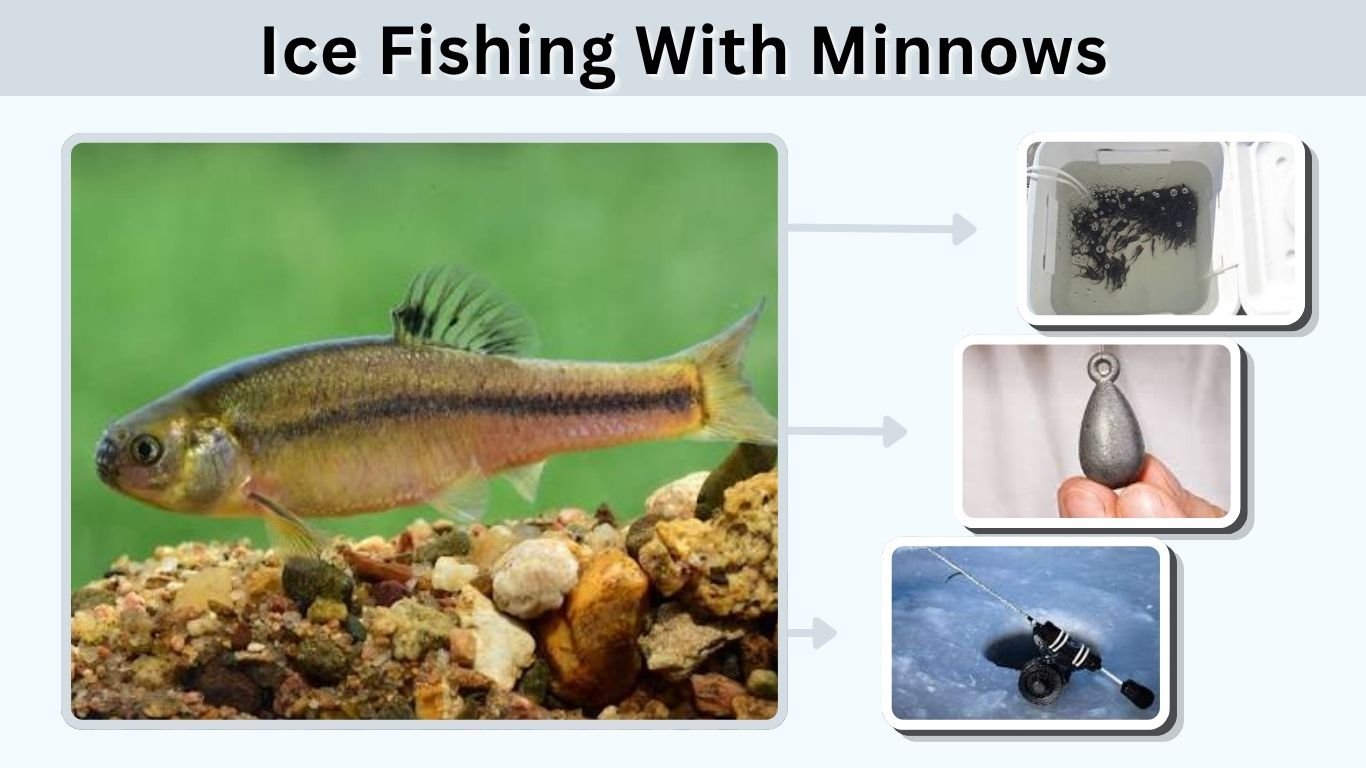
Ice fishing with minnows is one of the most effective ways to catch freshwater fish during winter. Live minnows attract walleye, crappie, perch, and northern pike through their natural swimming movements and appearance. However, successful minnow ice fishing requires proper bait selection, hooking techniques, fishing rigs, and storage methods. Choosing the right minnow size and keeping your bait alive can significantly improve your chances of catching fish. This guide explains how to ice fish with minnows, including practical rigging tips, bait storage, and fishing techniques.
Why Are Minnows Good for Ice Fishing?
Minnows are effective ice fishing bait because they resemble the small fish that many freshwater predators naturally consume.
Even during winter, walleye, crappie, perch, and northern pike actively search for food beneath frozen lakes. A properly presented minnow provides a realistic feeding opportunity.
Live minnows produce subtle movements and vibrations that help attract nearby predators. Their natural appearance can be particularly useful when fish become less responsive to artificial lures.
Although live minnows are popular, dead minnows and artificial minnow imitations can also produce excellent results under suitable conditions.
Best Minnows for Ice Fishing
Choosing the best minnows for ice fishing depends on your target species, water conditions, and local bait regulations.
Smaller minnows generally work well for panfish, while larger baitfish often attract bigger predators.
4 Best Types of Minnows for Ice Fishing

1. Fathead Minnows
Fathead minnows are hardy baitfish commonly used for crappie, perch, and walleye. Their small size and active movement make them suitable for ice fishing with light tackle.
2. Golden Shiners
Golden shiners are popular for targeting walleye and northern pike. Their reflective scales and swimming movements make them attractive to larger predatory fish.
3. Emerald Shiners
Emerald shiners have slender, silver bodies. They are commonly used for walleye and perch fishing, particularly in waters where small shiners are natural forage.
4. Small Suckers
Small sucker fish are popular live bait for northern pike and large walleye. Their larger profile makes them suitable when anglers are targeting bigger predators.
Minnesota’s Department of Natural Resources recommends small minnows for crappie and larger baitfish for species such as walleye and pike.
How to Hook a Minnow for Ice Fishing
Knowing how to hook a minnow for ice fishing is essential for creating a natural presentation.
Incorrect hooking can injure the bait, restrict movement, or cause it to die quickly. Three common hooking methods work well for different fishing situations.
1. Hooking Through the Lips
Insert a small hook through the minnow’s lower lip and carefully bring the point through its upper lip.
This technique keeps the bait facing forward and works particularly well with jig heads.
Avoid inserting the hook too deeply or closing the mouth excessively, as this can restrict breathing.
2. Hooking Behind the Dorsal Fin
Insert the hook shallowly beneath the skin near the dorsal fin, avoiding the spine.
This method allows the minnow to swim relatively naturally while suspended beneath a bobber, deadstick, or tip-up.
It is particularly useful for stationary bait presentations.
3. Hooking Near the Tail
Place the hook carefully through the narrow portion of the body near the tail.
Tail-hooked minnows can produce additional movement, making them useful when fish respond to struggling bait.
However, this method may produce more missed strikes if predators grab the minnow’s head first.
All three methods are established live-bait rigging techniques.
How to Rig a Minnow for Ice Fishing
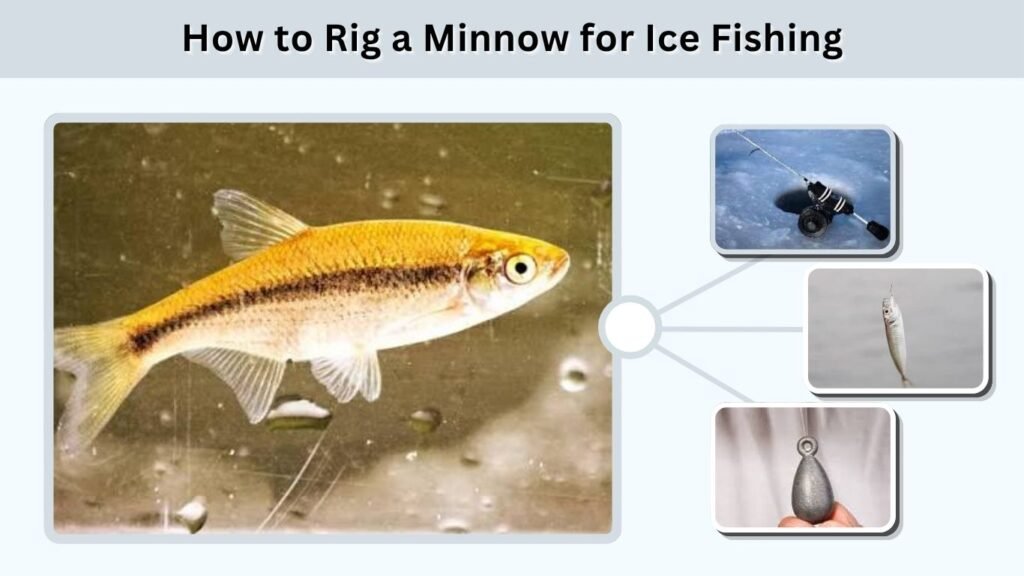
A proper ice fishing minnow setup controls bait depth while allowing natural movement.
Anglers commonly use small jig heads, live-bait hooks, split-shot sinkers, and bobbers. A simple vertical presentation is an excellent starting point for beginners.
Step-by-Step Ice Fishing Minnow Setup
- Choose an ice fishing rod: Select a lightweight or medium-action rod appropriate for your target species.
- Select a hook or jig: Match the hook size to the minnow rather than using unnecessarily large tackle.
- Add a sinker if necessary: A small split shot helps maintain the desired fishing depth.
- Hook the minnow carefully: Use lip, dorsal, or tail hooking depending on your presentation.
- Lower the bait slowly: Position the minnow near the bottom or at the depth where fish are suspended.
Popular Ice Fishing Minnow Rigs
A jig-and-minnow rig works well for active fishing because anglers can create movement by gently lifting and lowering the rod.
A deadstick rig holds a live minnow at a selected depth with minimal rod movement. Tip-ups allow anglers to present minnows beneath the ice while watching for a strike indicator.
New York’s Department of Environmental Conservation also describes live minnows as common tip-up bait.
Ice Fishing With Minnows for Different Fish
Different freshwater fish respond to specific bait sizes, depths, and presentations.
Understanding the feeding behavior of your target species helps you select an effective ice fishing strategy.
Ice Fishing for Walleye With Minnows
Walleye often feed around rocky points, underwater drop-offs, and other structural features.
Medium-sized fathead minnows or shiners work well on jig heads, deadstick rigs, and tip-ups.
Keep the bait close to the bottom when fish are holding deep. Occasionally lifting the jig can attract attention without creating excessive movement.
Ice Fishing for Crappie With Minnows
Crappie frequently suspend above underwater structures or deeper basins during winter.
Small fathead minnows are effective when presented on lightweight hooks beneath sensitive bobbers.
Adjust the bait depth until it matches the level where fish are feeding. A nearly stationary presentation often works well.
Ice Fishing for Perch With Minnows
Yellow perch commonly feed near lake bottoms, vegetation edges, and submerged structures.
Small minnows or minnow-tipped jigs can attract perch. Gentle jigging movements followed by brief pauses help imitate injured prey.
How to Keep Minnows Alive While Ice Fishing

Keeping minnows alive during freezing weather requires careful temperature control, oxygenation, and storage.
An insulated minnow bucket can help protect bait from extreme cold, while a battery-powered aerator can maintain oxygen levels.
5 Tips for Keeping Ice Fishing Minnows Alive
- Use an insulated minnow bucket: Prevent bait water from freezing during long fishing sessions.
- Maintain oxygen levels: Use a portable aerator when necessary, especially in crowded containers.
- Avoid overcrowding: Give minnows enough space to swim and breathe.
- Prevent sudden temperature changes: Avoid exposing minnows to rapid changes between storage and lake-water temperatures.
- Remove dead bait promptly: Dead minnows can reduce water quality and affect the remaining fish.
What Is the Best Minnow Bucket for Ice Fishing?
A good ice fishing minnow bucket should have insulated walls, a secure lid, and an easy-access opening.
For longer fishing trips, consider a bucket with a removable bait basket and space for a battery-powered aerator.
Choose a size that accommodates your bait without unnecessary crowding.
Can You Ice Fish With Dead or Frozen Minnows?
Yes, dead minnows can work for ice fishing, especially when targeting predatory fish that respond to scent and natural bait appearance.
Dead minnows, minnow heads, and frozen baitfish are often used with jigging spoons and other artificial lures.
A small piece of minnow attached to a jig can add scent and flavor, making the presentation more attractive.
However, regulations vary considerably. Some jurisdictions restrict live bait, dead bait, frozen minnows, or transporting baitfish between waters.
For example, Minnesota has specific rules governing preserved and frozen baitfish.
Ice Fishing Safety and Bait Regulations
Before heading onto a frozen lake, verify local fishing regulations and ice conditions.
The Minnesota DNR advises staying off ice measuring less than four inches thick and considering at least four inches of new, clear ice before walking onto it. Even thicker ice is never guaranteed safe, so test conditions frequently and avoid currents or other weak areas.
Use only permitted bait species, follow hook and line limits, and never release leftover minnows into the water. Dispose of unwanted bait responsibly to help prevent invasive species and disease transmission.
FAQs
1. What Is the Best Way to Hook a Minnow for Ice Fishing?
Hooking a minnow shallowly near the dorsal fin is effective for stationary presentations because it allows natural swimming. Lip hooking works well for jigging. The best method depends on bait size, target species, and fishing technique.
2. What Size Minnows Are Best for Walleye Ice Fishing?
Minnows approximately 3–5 inches long are a useful starting point for walleye ice fishing. Smaller baitfish may work better during difficult bites, while larger minnows can attract bigger fish. Match bait size to local forage.
3. Can You Ice Fish With Frozen Minnows?
Yes, frozen minnows can catch fish when properly rigged on hooks or jigging lures. They can be especially useful for predators attracted to scent. Always verify local regulations because frozen baitfish may be restricted.
4. How Long Can Minnows Stay Alive in an Ice Fishing Bucket?
Minnows may survive an entire fishing day or longer when properly maintained. Their survival depends on oxygen availability, water temperature, species, and crowding. An insulated bucket with suitable aeration helps maintain healthy bait during cold weather.
5. Are Live Minnows Better Than Artificial Minnow Lures?
Live minnows provide natural movement and scent that can attract cautious fish. Artificial minnow lures offer greater durability and convenience. Both can be effective, and the better choice depends on fishing conditions, target species, and local bait regulations.