
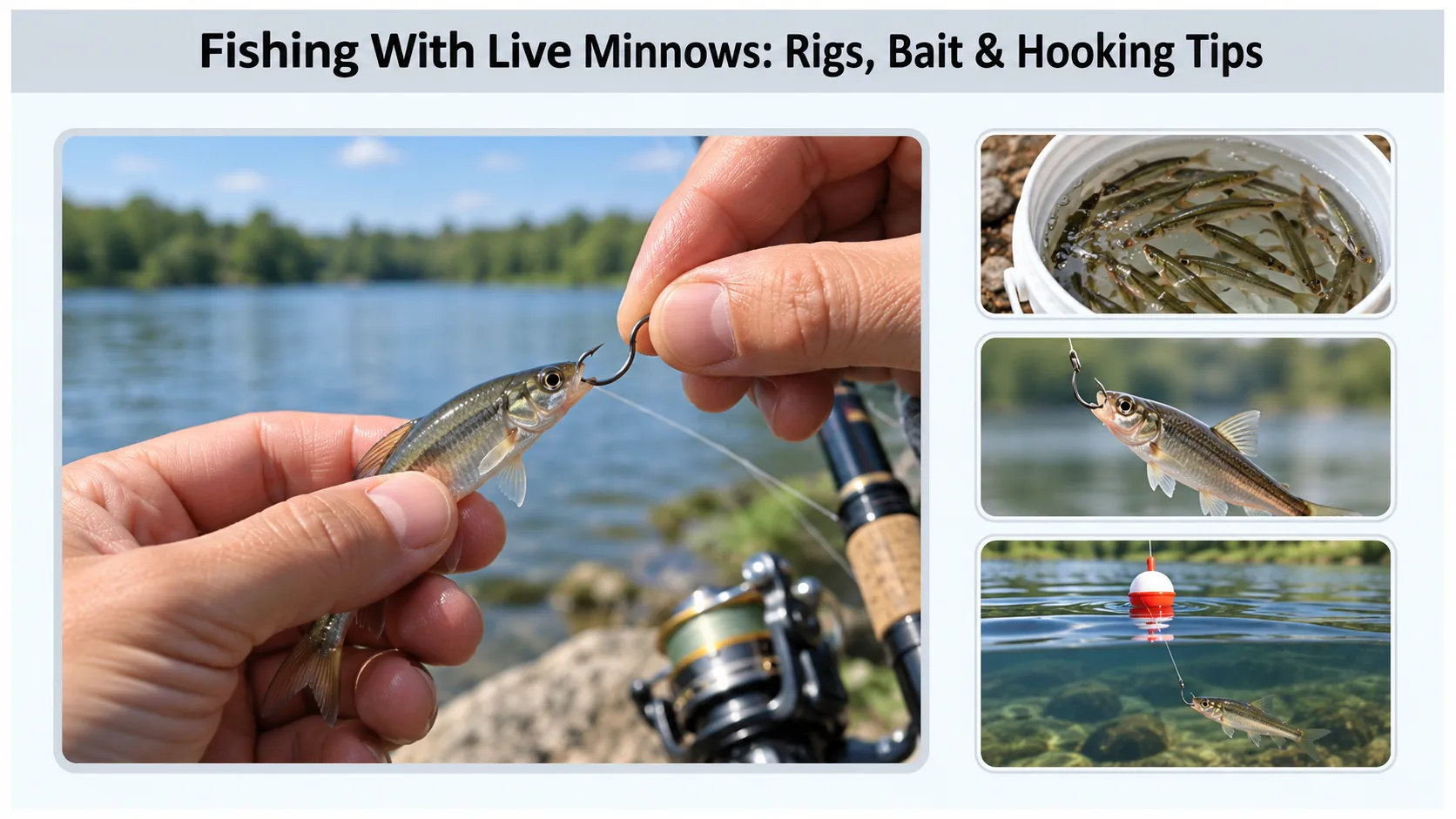
Fishing with live minnows is one of the most effective ways to catch freshwater fish, including bass, crappie, trout, and walleye. Their natural swimming movements, appearance, and vibrations attract predatory fish that feed on smaller baitfish. However, successful live minnow fishing requires proper bait selection, hooking methods, fishing rigs, and presentation techniques. Whether you are fishing from shore or a boat, understanding how to handle and rig minnows can improve your results. This guide explains everything you need to know about fishing with live minnows.
Why Is Fishing With Live Minnows Effective?
Live minnows are popular fishing bait because they closely resemble the natural prey of many freshwater predators.
Unlike artificial lures, live minnows swim independently, creating realistic movements and vibrations underwater. These movements can attract fish that may ignore stationary bait or artificial presentations.
Their effectiveness also depends on water temperature, fishing depth, and the feeding behavior of the target species.
For example, largemouth bass and northern pike frequently consume small fish, making larger live minnows a useful bait option. Smaller minnows are particularly effective for crappie and other panfish.
Best Live Minnows for Fishing
Different minnow species attract different freshwater predators. Choosing the right type and size improves bait presentation and helps match the natural forage available in a particular lake or river.
4 Best Types of Live Minnows for Fishing
1. Fathead Minnows
Fathead minnows are widely used for crappie, perch, trout, and walleye fishing. Their small size and relatively hardy nature make them suitable for many live-bait fishing setups.
2. Golden Shiners
Golden shiners have reflective scales and active swimming movements. Larger shiners are especially popular for largemouth bass and northern pike fishing.
3. Emerald Shiners
Emerald shiners are slender, silver-colored baitfish commonly used for walleye and perch. They can be effective when predators are feeding on small schooling fish.
4. Mud Minnows
Mud minnows, a name often applied to coastal killifish, are commonly used for inshore saltwater fishing. They can attract flounder, redfish, and spotted seatrout.
For freshwater fishing, matching bait size to the predator is often more important than choosing the largest available minnow.
How to Hook Live Minnows for Fishing
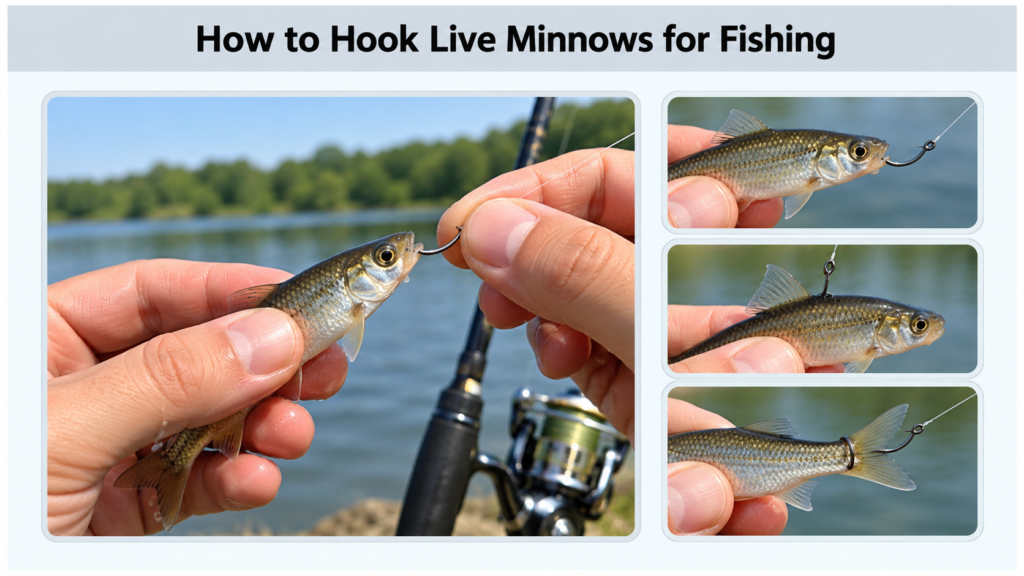
Correctly hooking a live minnow helps preserve its swimming ability and creates a more natural presentation.
The best hooking location depends on whether you are fishing beneath a bobber, retrieving your bait, or using a stationary bottom rig.
1. Hooking Through the Lips
Insert the hook point through the lower lip and carefully bring it through the upper lip.
This method works well when slowly retrieving or drifting live minnows. It keeps the bait facing forward and allows it to move naturally through the water.
Avoid using an oversized hook or excessively restricting the minnow’s mouth.
2. Hooking Behind the Dorsal Fin
Insert the hook shallowly into the fleshy area near the dorsal fin without damaging the spine.
This method is popular for float fishing because it allows the minnow to swim while suspended at a selected depth.
It is particularly effective for bass and crappie fishing.
3. Hooking Near the Tail
Carefully position the hook through the narrow body section near the tail.
Tail-hooked minnows often swim energetically, creating additional movement that may attract nearby predators.
However, this presentation may produce missed strikes when predators attack the head first.
These hooking methods are commonly recommended for natural freshwater bait presentations.
Best Live Minnow Fishing Rigs

Selecting the right live minnow fishing rig allows you to control bait depth, movement, and position.
Some rigs work best in shallow water, while others are more effective around deeper structures or moving water.
1. Bobber and Live Minnow Rig
A bobber rig suspends the minnow beneath a fishing float at a chosen depth.
Attach a suitable hook, add a small split-shot weight if necessary, and position the bobber above the bait.
This technique works particularly well for crappie, bass, and perch near submerged vegetation.
2. Jig Head and Live Minnow Rig
A jig-and-minnow setup combines a weighted jig head with natural bait.
Hook the minnow carefully through its lips, then lower or cast the rig near underwater structures.
Gentle lifts and pauses help create movement without making the presentation appear unnatural.
3. Bottom Fishing Minnow Rig
A bottom rig uses a sinker, leader, and hook to present a minnow near the lake or river bottom.
Depending on the setup, the sinker may slide along the main line or remain fixed above a leader.
This technique can be effective for walleye and other fish feeding close to the bottom.
How to Fish With Live Minnows for Bass
Bass fishing with live minnows can be especially productive around submerged vegetation, docks, fallen trees, and rocky structures.
Largemouth bass naturally feed on smaller fish, making appropriately sized shiners and other permitted baitfish effective choices.
When fishing near shallow cover, a bobber rig helps keep the bait above vegetation. In deeper water, a free-lined minnow or lightly weighted rig can provide a more natural presentation.
Allow the minnow to swim rather than constantly retrieving it.
Watch the fishing line carefully because bass may grab the bait and immediately move toward nearby cover.
Using appropriately sized circle hooks can help reduce deep hooking when fishing with live bait, especially during catch-and-release fishing.
Fishing With Live Minnows for Crappie, Trout, and Walleye
Live minnows are versatile baitfish that can attract multiple freshwater species. However, each fish responds differently to bait size, water depth, and presentation.
Crappie Fishing With Live Minnows
Crappie frequently gather near submerged brush, docks, and underwater structures.
Small minnows presented beneath a float are a common technique. A light-wire hook and small split-shot sinker help maintain a natural presentation.
Adjust the fishing depth until you locate feeding fish.
Trout Fishing With Live Minnows
Some trout species feed on small fish, especially as they grow larger.
Small minnows can be effective in lakes and rivers where their use is legal.
Present them naturally with light tackle and avoid adding excessive weight that restricts movement.
Walleye Fishing With Live Minnows
Walleye often feed near rocky points, drop-offs, and deeper underwater structures.
A live minnow attached to a jig or bottom rig can be effective near feeding areas.
Slow presentations are often useful when walleye are less active.
How to Keep Live Minnows Alive While Fishing

Healthy minnows create natural swimming movements that attract predatory fish.
Poor storage conditions can quickly weaken bait, reducing its effectiveness.
5 Essential Live Minnow Care Tips
- Use a suitable bait bucket: Choose a container large enough to prevent overcrowding.
- Maintain oxygen levels: Use a battery-powered aerator or suitable livewell system.
- Keep water temperatures stable: Protect minnows from direct sunlight and sudden temperature changes.
- Use appropriate water: Keep bait in suitable, uncontaminated water and avoid sudden changes in water chemistry.
- Remove dead minnows: Check your bucket regularly and remove dead bait to prevent water quality problems.
An insulated bait bucket is especially useful during hot weather because it helps reduce temperature fluctuations.
Where to Buy Live Minnows for Fishing
Live minnows are commonly available from fishing bait shops, tackle stores, and licensed bait dealers.
Local fishing shops often stock different baitfish sizes depending on the species anglers commonly target.
Before purchasing, inspect the minnows for healthy swimming movements, clear eyes, and normal body coloration.
Avoid containers containing numerous dead or visibly unhealthy fish.
Always confirm that the baitfish species is legal to possess and use in your fishing location.
Common Mistakes When Fishing With Live Minnows
One common mistake is using minnows that are too large for the target fish. Oversized bait may discourage smaller predators or make hookups difficult.
Another problem is hooking minnows too deeply, which can damage vital organs and reduce their swimming ability.
Fishing at an incorrect depth can also limit success, particularly when targeting suspended crappie.
Finally, never release unused live minnows into lakes or rivers. Baitfish can introduce invasive species and aquatic diseases. Local laws may also restrict transporting live minnows between water bodies.
FAQs
1. What Is the Best Way to Fish With Live Minnows?
The best method depends on your target fish and water conditions. Bobber rigs work well for crappie and shallow-water bass, while jigging and bottom rigs are useful for deeper water. Keep the bait lively and maintain natural movement.
2. Are Live Minnows Good for Bass Fishing?
Yes, live minnows are effective for catching largemouth and smallmouth bass. Their natural swimming movements attract predatory fish. Larger shiners can work particularly well when targeting big bass around docks, submerged vegetation, rocky areas, and other underwater structures.
3. How Long Do Live Minnows Last in a Fishing Bucket?
Live minnows can survive several hours or even days with suitable oxygen, clean water, and stable temperatures. Their survival depends on the species, water quality, and crowding. A properly maintained aerated bait bucket helps keep minnows healthy.
4. What Size Hook Should You Use for Live Minnows?
Small minnows commonly work with hooks around sizes 8 to 4, while larger baitfish may require size 2, 1, or larger hooks. Choose a hook that fits the minnow without severely restricting its natural swimming movements.
5. Can You Fish With Live Minnows in Any Lake?
No. Fishing regulations vary by state, region, and individual waterbody. Some lakes prohibit live baitfish or restrict specific species. Always check current local regulations before fishing, transporting minnows, or using bait collected from another body of water.