

White Cloud Mountain Minnow fish are small, colorful freshwater fish known for their peaceful nature, active swimming behavior, and easy care requirements. These hardy aquarium fish are especially popular among beginners because they thrive in cooler water and usually do not require an aquarium heater. Originally found in streams in China, White Cloud Mountain Minnows are excellent choices for planted aquariums and peaceful community tanks. Understanding their ideal tank size, feeding habits, water conditions, schooling behavior, and compatible tank mates will help you keep these beautiful fish healthy.
What Is a White Cloud Mountain Minnow Fish?
The White Cloud Mountain Minnow (Tanichthys albonubes) is a small freshwater fish originally discovered near White Cloud Mountain in southern China. It belongs to the family Tanichthyidae and is sometimes called the White Cloud Minnow or Poor Man’s Neon Tetra.
These fish naturally inhabit freshwater streams and prefer clean, oxygen-rich water. Their peaceful temperament and attractive appearance make them popular aquarium fish.
White Cloud Mountain Minnow Fish Facts
| Feature | Details |
| Scientific name | Tanichthys albonubes |
| Common name | White Cloud Mountain Minnow |
| Origin | China and Vietnam |
| Adult size | 1.5–1.6 inches |
| Lifespan | Approximately 3–5 years, sometimes longer |
| Tank size | 15 gallons minimum recommended |
| Temperature | 57–72°F (14–22°C) |
| pH level | 6.0–8.5 |
| Diet | Omnivorous |
| Temperament | Peaceful |
| School size | Ideally 8–10 or more |
| Care level | Beginner-friendly |
Their adaptability makes them relatively easy to maintain, provided water quality and temperature remain suitable.
White Cloud Mountain Minnow Fish Appearance and Types
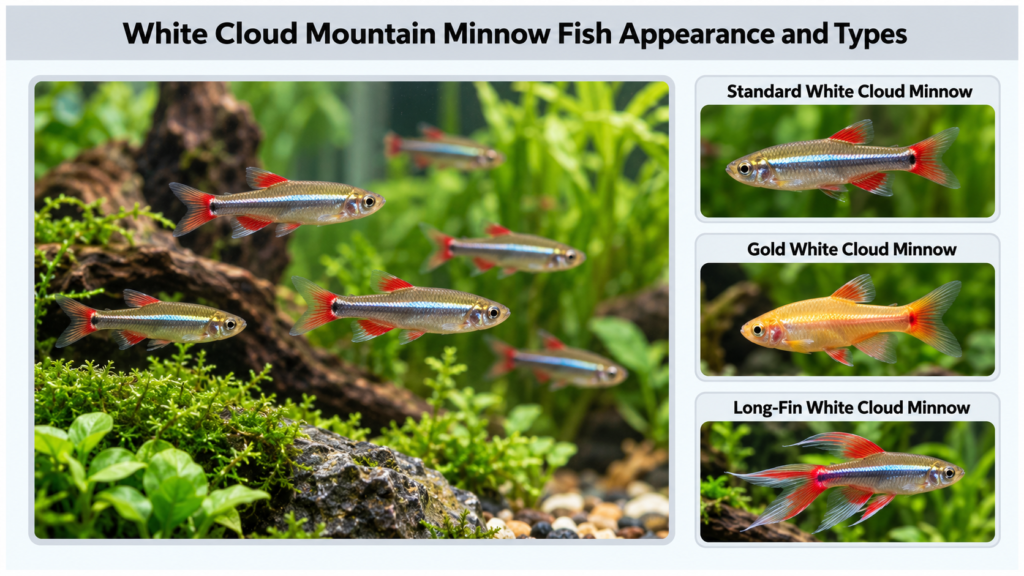
White Cloud Mountain Minnows have slender, streamlined bodies with a distinctive horizontal stripe extending from the head toward the tail.
Their bodies display silver, bronze, and sometimes golden colors. Bright red markings on the fins make them especially attractive in planted aquariums.
Common White Cloud Minnow Varieties
- Standard White Cloud Minnow: Features a silver-brown body, iridescent horizontal stripe, and reddish fins.
- Gold White Cloud Minnow: A golden color variety with orange-red fins and a brighter overall appearance.
- Long-Fin White Cloud Minnow: Has elongated, flowing fins that create a more decorative appearance.
All three varieties belong to the same species and have similar aquarium care requirements.
White Cloud Minnow Fish Tank Size and Setup

Although White Cloud Minnows are small, they are active swimmers that need sufficient horizontal space.
A 15-gallon aquarium with a length of approximately 24 inches is a practical minimum for a small school. A 20-gallon long aquarium provides additional swimming space and allows a larger group.
How to Set Up a White Cloud Minnow Aquarium
- Choose a suitable tank: Select an aquarium with enough horizontal swimming space for at least eight fish.
- Add aquarium plants: Use Java moss, hornwort, or other plants suited to cooler water to provide natural shelter.
- Install a gentle filter: Choose a reliable filtration system that keeps the water clean without creating excessive turbulence.
- Include natural decorations: Smooth stones, driftwood, and fine gravel help create an attractive freshwater environment.
- Provide moderate lighting: Use suitable aquarium lighting while maintaining shaded areas among plants.
A secure aquarium lid is also recommended because these active fish may jump when frightened.
Ideal Water Temperature and pH Levels
White Cloud Mountain Minnows are subtropical fish that prefer cooler water than many popular tropical aquarium species.
Their preferred temperature range is approximately 57–72°F (14–22°C). In a room that stays within this range, an aquarium heater is usually unnecessary.
Maintain a pH between 6.0 and 8.5, with stable conditions being more important than chasing a particular number.
Sudden temperature fluctuations and prolonged exposure to warm tropical conditions can stress these fish.
Regular water testing and consistent aquarium maintenance help prevent health problems.
Are White Cloud Mountain Minnows Schooling Fish?
Yes, White Cloud Mountain Minnows are schooling and shoaling fish that naturally live in groups.
Keeping at least six together is important, although groups of eight to ten or more are preferable. Larger groups encourage natural swimming behavior, improve confidence, and often bring out stronger coloration.
When kept alone, these minnows may become stressed, hide frequently, or display reduced activity.
Males sometimes spread their colorful fins while displaying toward other males. This behavior is generally harmless when sufficient space and suitable group numbers are provided.
What Do White Cloud Minnow Fish Eat?
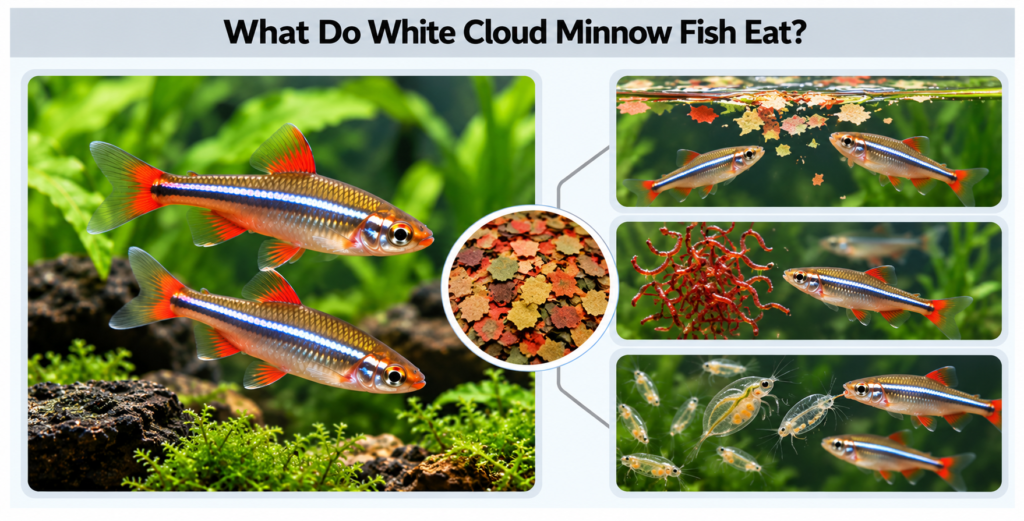
White Cloud Mountain Minnows are omnivorous fish that consume small aquatic organisms and a variety of prepared aquarium foods.
In their natural habitat, they feed on small insects, worms, crustaceans, and other tiny invertebrates.
Best Foods for White Cloud Mountain Minnows
- High-quality fish flakes: Provide a convenient everyday diet containing essential nutrients.
- Small aquarium pellets: Choose appropriately sized micro pellets that these small fish can swallow easily.
- Live or frozen brine shrimp: Supply protein and encourage natural feeding behavior.
- Daphnia and bloodworms: Offer occasional variety and additional nutrients, using suitably sized portions.
- Plant-based aquarium foods: Help provide a more balanced diet alongside animal-based foods.
Feed small amounts once or twice daily, providing only what the fish can consume within a few minutes.
Remove leftover food to prevent water pollution. A varied diet supports healthy growth, activity, and coloration.
What Fish Can Live With White Cloud Mountain Minnows?
White Cloud Mountain Minnows are peaceful community fish, but choosing compatible tank mates requires careful attention to water temperature, body size, and temperament.
Fish that prefer cooler conditions and do not prey on small minnows are generally the best choices.
Best White Cloud Minnow Tank Mates
- Zebra Danios: Active, peaceful fish that can tolerate overlapping cooler temperatures when given adequate swimming space.
- Gold Barbs: Potential companions in larger aquariums, provided their water requirements overlap.
- Rosy Barbs: Can share suitable temperatures, but need a spacious tank because they grow considerably larger.
- Other White Cloud Minnows: Usually the easiest and most reliable companions because they share identical care requirements.
Fish to Avoid
Betta fish generally prefer warmer water and may behave aggressively toward active minnows. Angelfish are also unsuitable because larger individuals may eat small White Cloud Minnows.
Paradise fish tolerate similar temperatures, but their territorial behavior can make them risky companions.
Goldfish are not ideal tank mates either. Larger goldfish may swallow minnows, while their considerable waste production makes maintaining water quality more difficult.
White Cloud Mountain Minnow Fish Breeding
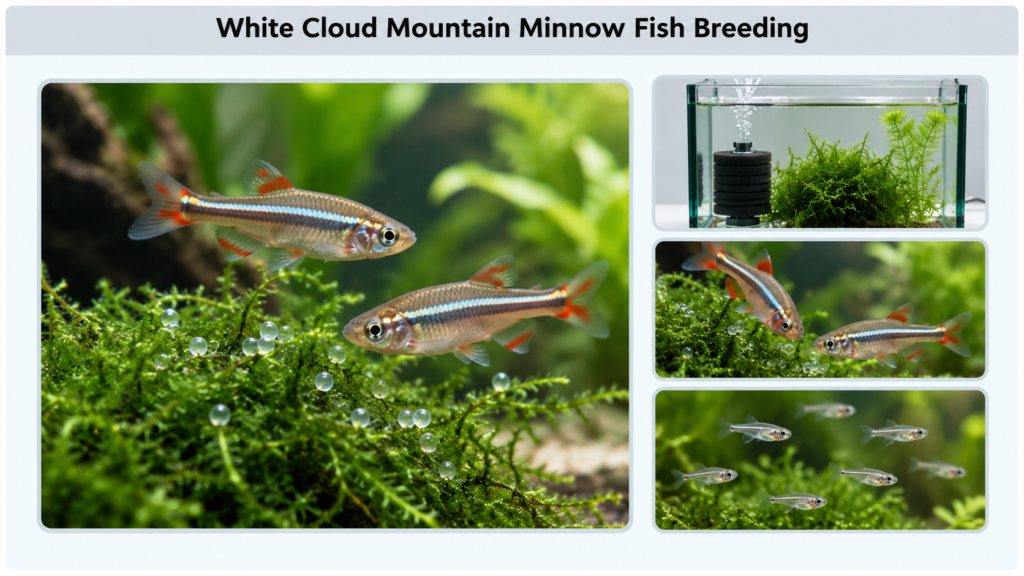
Breeding White Cloud Mountain Minnows is relatively straightforward in a mature aquarium with suitable water conditions.
These fish are egg scatterers, meaning females release eggs among plants or other spawning materials rather than giving birth to live young.
How to Breed White Cloud Minnows
- Prepare a breeding tank: Provide clean, oxygenated water, gentle filtration, and fine-leaved plants or spawning mops.
- Select healthy breeding fish: Choose mature males and females with strong coloration and good body condition.
- Encourage spawning: Offer nutritious live or frozen foods while maintaining stable water conditions.
- Protect the eggs: Remove adults or transfer spawning material when necessary to reduce egg predation.
- Feed the fry: Once free-swimming, provide infusoria or suitable powdered fry food before introducing newly hatched brine shrimp.
The eggs commonly hatch within approximately 48–60 hours under suitable conditions.
A female with a rounded abdomen may be carrying eggs, but she is not pregnant in the livebearing sense.
Common White Cloud Minnow Care Problems
White Cloud Minnows are hardy, but unsuitable aquarium conditions can still cause illness.
Poor water quality, overcrowding, inadequate schooling numbers, and excessive temperatures are common sources of stress.
Signs of potential health problems include faded coloration, unusual swimming patterns, loss of appetite, rapid breathing, and clamped fins.
Maintain a properly cycled aquarium with zero detectable ammonia and nitrite. Perform regular partial water changes, typically around 20–25% weekly, adjusting the schedule according to test results and stocking levels.
Observing the fish daily helps identify unusual behavior before problems become serious.
FAQs
Are White Cloud Mountain Minnows Coldwater Fish?
Yes. White Cloud Mountain Minnows are cool-water, subtropical freshwater fish that thrive at temperatures around 57–72°F. They usually do not require aquarium heating when the surrounding room temperature remains within their preferred range.
Can White Cloud Minnows Live in a Fish Bowl?
A fish bowl is not recommended for White Cloud Minnows. They need a properly filtered aquarium with sufficient swimming space, stable water conditions, and room for a group of at least six individuals.
Can White Cloud Mountain Minnows Live With Bettas?
Keeping White Cloud Mountain Minnows with bettas is generally not recommended. Bettas usually prefer warmer water, while White Cloud Minnows thrive in cooler conditions. Their active swimming behavior may also disturb some bettas.
How Long Do White Cloud Mountain Minnows Live?
White Cloud Mountain Minnows commonly live approximately three to five years, although some survive longer under excellent conditions. Stable temperatures, clean water, suitable nutrition, and proper schooling groups contribute to their longevity.
Are White Cloud Mountain Minnows Good for Beginners?
Yes. White Cloud Mountain Minnows are excellent beginner aquarium fish because they are peaceful, adaptable, relatively inexpensive to maintain, and easy to feed. However, they still require proper filtration, suitable temperatures, and regular aquarium maintenance.