
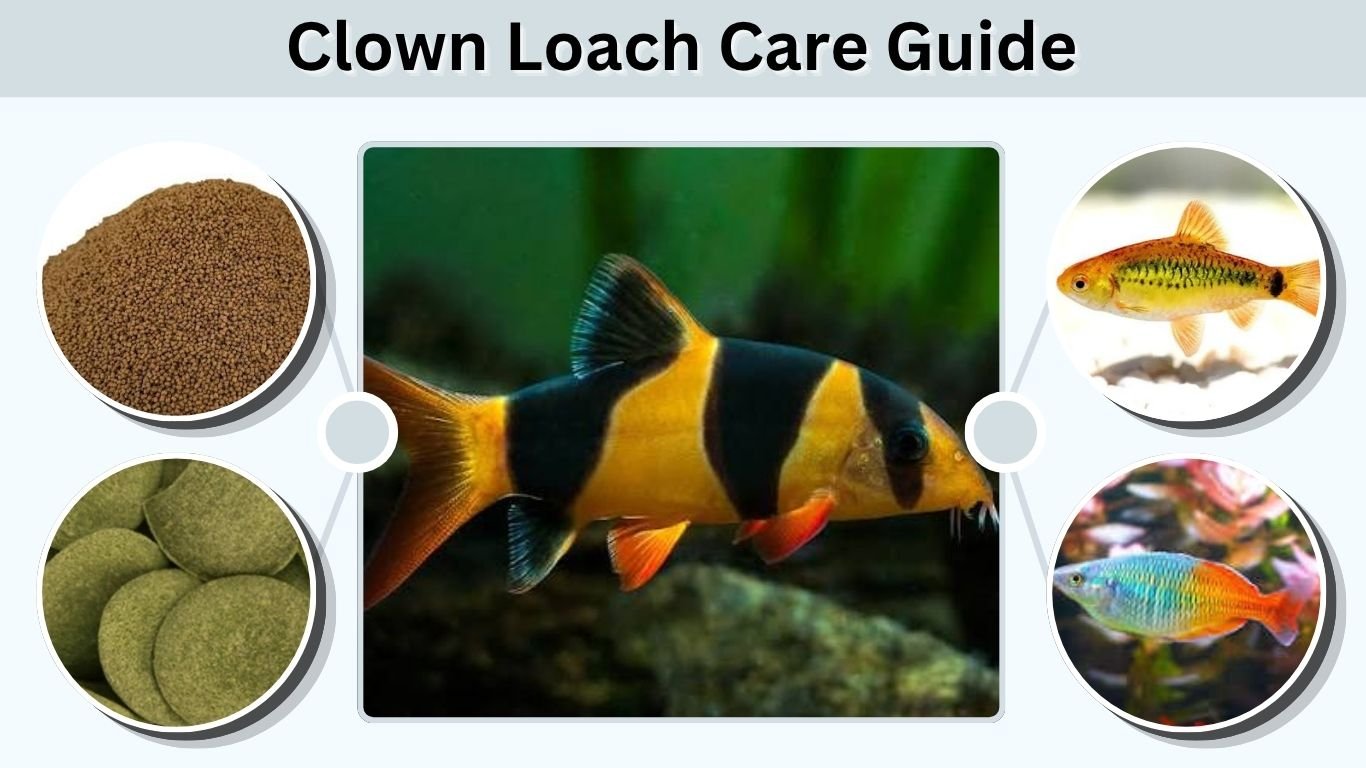
Clown loaches are colorful freshwater fish known for their orange bodies, bold black stripes, and playful personalities. Native to Southeast Asia, these social fish are popular among aquarium enthusiasts because of their fascinating behavior and attractive appearance. However, clown loaches require spacious aquariums, stable water conditions, and proper companionship to thrive. Although they are commonly sold as small juveniles, they eventually grow into large, long-lived fish. This guide covers clown loach size, tank requirements, feeding habits, lifespan, suitable tank mates, and essential care practices.
What Is a Clown Loach?
The clown loach (Chromobotia macracanthus) is a tropical freshwater fish belonging to the Botiidae family. It naturally inhabits rivers and floodplain environments in Sumatra and Borneo, Indonesia. These fish are famous for their distinctive coloration, active personalities, and social behavior. Unlike solitary bottom dwellers, clown loaches feel more secure when living in groups.
Clown Loach Identification and Appearance
Clown loaches have several recognizable physical characteristics that distinguish them from other freshwater aquarium fish.
- Body Color: Bright orange or yellowish-orange with three bold black vertical bands.
- Body Shape: Long, slightly compressed body with a curved belly.
- Fins: Reddish-orange fins that complement their colorful appearance.
- Mouth: Downward-facing mouth surrounded by sensitive barbels for finding food.
- Eyes: Small eyes with defensive spines positioned beneath them.
- Behavior: Active swimming, social interactions, and unusual sideways resting positions.
Some varieties marketed as super red clown loaches display particularly intense orange-red coloration.
Clown Loach Size: How Big Do They Get?
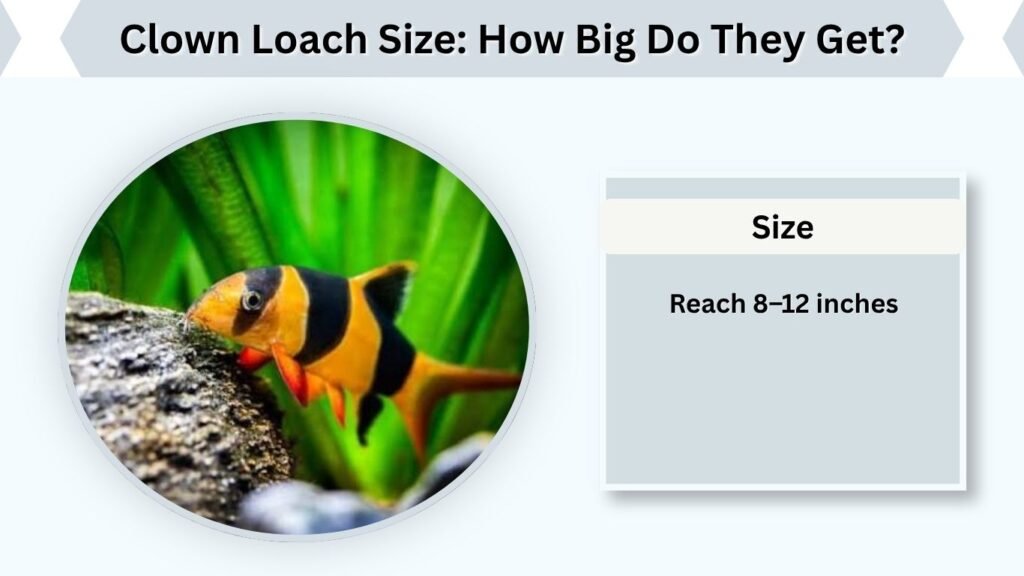
Clown loaches are considerably larger than many beginners expect. While juvenile fish commonly measure only two or three inches when purchased, their adult size requires substantial aquarium space. Their eventual growth depends on genetics, nutrition, water quality, and environmental conditions.
Average and Maximum Clown Loach Size
Adult clown loaches commonly reach 8–12 inches in home aquariums. Exceptionally large specimens may approach 16 inches under favorable conditions.
Their maximum size makes them unsuitable for small aquariums. A full-grown clown loach also develops a heavier body, increasing its need for swimming space.
How Fast Do Clown Loaches Grow?
Clown loaches generally experience faster growth during their early years before gradually slowing as they mature. Reaching full adult size can take many years.
Consistent feeding, clean water, and adequate space support healthy development. Poor conditions may restrict growth and cause health complications.
Ideal Clown Loach Tank Size and Setup

A suitable clown loach aquarium should provide generous swimming space, hiding places, and effective filtration. These fish are active explorers that spend much of their time searching the substrate and interacting with companions. Planning the aquarium around their adult size is essential.
Recommended Clown Loach Tank Size
A tank of approximately 180 gallons or larger is recommended for a group of adult clown loaches. Long aquariums with substantial floor space are preferable.
Although juveniles can temporarily occupy smaller aquariums, a 10-gallon or 20-gallon tank cannot accommodate their long-term needs.
Best Aquarium Setup
An appropriate clown loach fish tank should include:
- Substrate: Fine sand or smooth gravel to protect sensitive barbels.
- Hiding Places: Driftwood, caves, and smooth rock formations.
- Aquatic Plants: Hardy plants such as Java fern and Anubias.
- Filtration: Efficient biological filtration to maintain clean water.
- Lighting: Moderate lighting with shaded areas for resting.
- Water Movement: Gentle to moderate current with adequate oxygenation.
Avoid sharp decorations that could injure their bodies or delicate barbels.
Clown Loach Temperature and Water Conditions
Clown loaches thrive in warm, stable freshwater environments. Sudden temperature changes, ammonia buildup, and unstable water chemistry can cause significant stress. Maintaining suitable conditions helps encourage natural activity, healthy feeding, and long-term survival.
Ideal Water Temperature and pH
The recommended clown loach temperature is approximately 77–86°F (25–30°C), with many aquariums maintained near 78–82°F (26–28°C).
A slightly acidic to neutral pH of approximately 6.0–7.5 is generally suitable. Water hardness should remain relatively soft to moderately hard.
Maintaining Healthy Water Quality
Clown loaches require fully cycled aquariums with no detectable ammonia or nitrite. Regular partial water changes help control nitrate accumulation.
Stable temperatures, good oxygen circulation, and consistent filtration are particularly important because these fish can be sensitive to deteriorating water quality.
What Do Clown Loaches Eat?
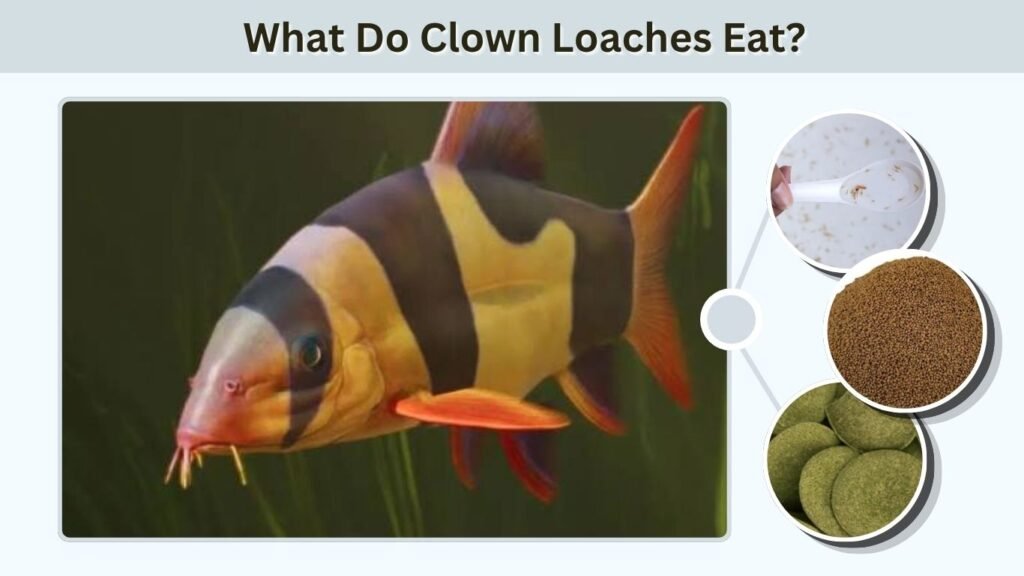
Clown loaches are omnivorous fish that consume both animal-based and plant-based foods. In their natural habitats, they feed on aquatic invertebrates, worms, small mollusks, and plant material. A varied aquarium diet supports healthy growth, attractive coloration, and normal behavior.
Best Food for Clown Loaches
Suitable foods include:
- Sinking Pellets: High-quality pellets formulated for omnivorous bottom feeders.
- Bloodworms: Frozen or live bloodworms offered occasionally.
- Brine Shrimp: Protein-rich food that encourages natural feeding activity.
- Vegetables: Blanched zucchini, spinach, and cucumber.
- Sinking Wafers: Nutritious foods containing plant ingredients.
- Frozen Foods: Commercial aquatic invertebrate blends for dietary variety.
Feed appropriate portions once or twice daily. Remove uneaten food to protect water quality.
Do Clown Loaches Eat Snails?
Yes, clown loaches naturally eat many freshwater snails. They use their specialized mouths to extract soft-bodied prey from shells.
However, clown loaches should not be purchased solely for controlling aquarium snails because they require large tanks and long-term care.
Clown Loach Tank Mates and Social Behavior

Clown loaches are generally peaceful community fish, although they can become energetic during feeding and social interactions. Choosing suitable tank mates requires considering adult fish size, swimming activity, and temperature preferences.
Best Tank Mates for Clown Loaches
Rainbowfish, Congo tetras, larger peaceful barbs, and certain compatible plecos can make suitable companions in spacious aquariums.
Angelfish and discus may coexist under carefully managed conditions, but differences in activity and feeding behavior require monitoring.
Avoid aggressive cichlids, extremely small fish, and delicate slow-moving species.
How Many Clown Loaches Should Be Kept Together?
Clown loaches should live in groups of at least five or six individuals. Their natural social interactions help establish hierarchy and encourage confident behavior.
Keeping only one or two clown loaches may increase stress, hiding, or aggression. Larger groups generally display more natural social activity.
Clown Loach Lifespan and Common Health Problems
Clown loaches are exceptionally long-lived aquarium fish. Under appropriate conditions, they can survive for 20 years or longer. Their lifespan depends on stable water quality, balanced nutrition, suitable social groups, and sufficient swimming space.
Common Clown Loach Health Issues
Several conditions can affect clown loaches:
- Ich Disease: White spots on the body or fins caused by parasitic infection.
- Stress: Persistent hiding, reduced appetite, or unusual aggression.
- Weight Loss: Poor nutrition, parasites, or underlying illness.
- Barbel Injuries: Damage associated with sharp substrate or unsuitable decorations.
Clown loaches may be sensitive to certain aquarium medications. Treatments should be selected carefully.
Can Clown Loaches Breed in Captivity?
Breeding clown loaches in home aquariums is extremely difficult. In nature, reproduction is associated with seasonal river conditions and migration patterns.
Commercial breeding facilities have produced clown loaches using specialized reproductive techniques. However, successful natural breeding in ordinary home aquariums remains exceptionally rare.
FAQs
1. Are Clown Loaches Aggressive?
Clown loaches are generally peaceful but sometimes display chasing or dominance behavior within their group. Aggression becomes more likely when fish are overcrowded or kept in insufficient numbers. A spacious aquarium and proper companionship help minimize conflicts.
2. Can Clown Loaches Live With Goldfish?
Clown loaches and goldfish are generally unsuitable companions because their preferred water temperatures differ. Clown loaches require consistently warm tropical conditions, while many goldfish varieties prefer cooler environments. Maintaining both species together can compromise their long-term health.
3. Do Clown Loaches Eat Shrimp?
Clown loaches may eat small freshwater shrimp, particularly juveniles. Their natural diet includes aquatic invertebrates, making ornamental shrimp vulnerable. Even larger shrimp may be at risk, so keeping valuable shrimp in a separate aquarium is usually safer.
4. Are Clown Loaches Good for Beginners?
Clown loaches are not ideal for beginners with limited aquarium space. Their large adult size, social requirements, sensitivity to water quality, and long lifespan demand careful planning. Experienced aquarists with spacious freshwater systems are generally better equipped.
5. Are Clown Loaches Nocturnal?
Clown loaches are often most active during dim lighting and evening hours, although they are not strictly nocturnal. Comfortable fish regularly explore their aquariums during daylight. Providing hiding places and keeping them in groups encourages confident, natural activity.