

The panda loach (Yaoshania pachychilus) is a fascinating freshwater fish known for its striking black-and-white coloration and unusual hillstream lifestyle. Native to the mountain streams of southern China, this small bottom-dwelling species requires cool, oxygen-rich water and strong currents to remain healthy. Unlike many traditional aquarium fish, panda loaches spend much of their time clinging to smooth rocks and grazing on natural biofilm. Understanding their adult size, tank requirements, feeding habits, compatible tank mates, and lifespan is essential for maintaining these beautiful fish in a healthy aquarium.
What Is a Panda Loach?
The panda loach is a small freshwater species belonging to the family Gastromyzontidae. Its scientific name is Yaoshania pachychilus, although it was previously classified as Protomyzon pachychilus.
This species inhabits fast-flowing mountain streams in Guangxi Province, southern China. Its flattened body and specialized fins allow it to grip submerged rocks while resisting strong currents.
Panda loaches are particularly popular because juveniles display an attractive black-and-white pattern resembling a giant panda. Their appearance changes considerably as they mature.
Panda Loach Appearance and Identification
Panda loaches possess several distinctive physical features that separate them from other freshwater loaches.
- Body shape: Small, flattened, and streamlined for living in flowing water.
- Coloration: Juveniles display bold black-and-white bands.
- Adult pattern: Mature fish develop subdued brown, gray, or cream-colored markings.
- Head: Broad and slightly flattened with a downward-facing mouth.
- Fins: Wide pectoral and pelvic fins help the fish cling to rocks.
- Mouth: Adapted for grazing algae, biofilm, and microscopic organisms.
Their changing coloration is one of the most interesting features of this species.
Panda Loach Size and Growth Rate
Adult panda loaches typically reach approximately 2–2.5 inches (5–6 cm) in length. Their compact size makes them suitable for relatively small specialized aquariums, provided sufficient water movement and oxygenation are maintained.
Young panda loaches are often sold at approximately 0.8–1.2 inches. During development, their striking juvenile coloration gradually changes into the more subdued markings characteristic of adults.
How Fast Do Panda Loaches Grow?
Panda loach growth depends on nutrition, water quality, temperature, and overall environmental conditions.
Although precise growth rates are not well documented, healthy juveniles gradually increase in size as they mature. A biologically established aquarium containing abundant natural grazing surfaces helps support development.
Poor nutrition or limited biofilm availability can cause weight loss and interfere with normal growth.
Panda Loach Tank Size and Aquarium Setup
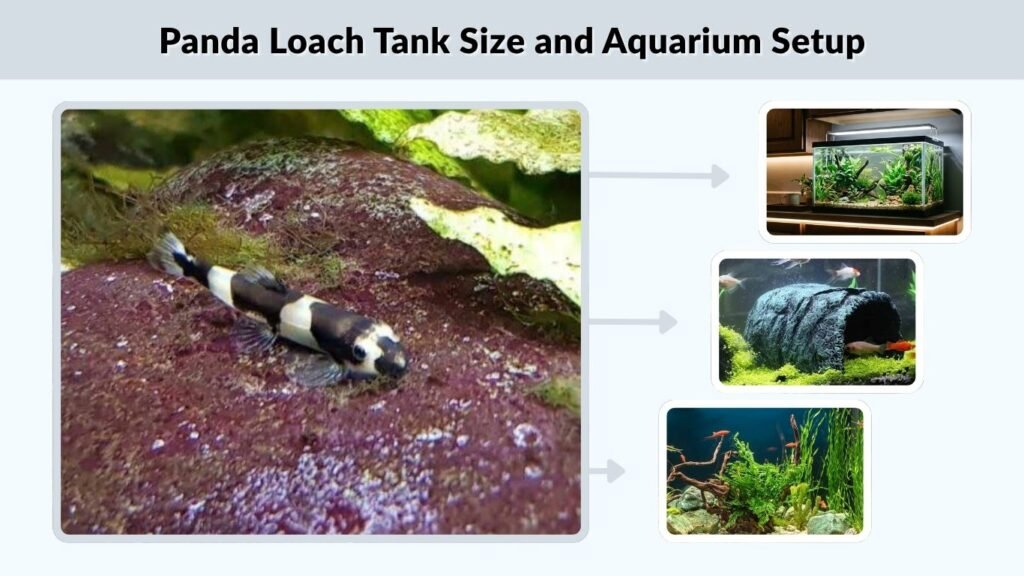
Panda loaches require a specialized aquarium that resembles their natural mountain-stream habitat. Unlike many tropical community fish, they depend on strong water movement, high dissolved oxygen levels, and mature surfaces covered with microscopic food.
A tank measuring at least 24 inches (60 cm) long can accommodate a small group, although a 20–30-gallon aquarium or larger provides more space for rocks, territorial boundaries, and water circulation.
Ideal Panda Loach Tank Setup
The following aquarium features help create an appropriate environment:
- Tank size: Approximately 20 gallons or larger, with a generous horizontal footprint.
- Substrate: Fine sand, smooth gravel, and rounded river stones.
- Rocks: Large, smooth stones that provide natural feeding surfaces.
- Water movement: Strong directional flow produced by suitable filtration and powerheads.
- Filtration: Efficient biological and mechanical filtration.
- Lighting: Moderate to bright lighting that encourages natural algae and biofilm growth.
- Plants: Optional hardy species such as Anubias and Java fern.
- Hiding places: Rock formations, shaded crevices, and sheltered resting locations.
A tightly fitted aquarium lid is important because panda loaches can climb wet glass and escape through small openings.
Panda Loach Water Parameters
Maintaining suitable water conditions is one of the most important aspects of panda loach care. These fish originate from clear, fast-moving streams where oxygen concentrations are high.
Warm, stagnant water can create serious health problems. Therefore, aquarium owners should prioritize consistent temperatures, excellent filtration, and strong surface agitation.
Ideal Temperature, pH, and Water Hardness
| Water parameter | Recommended range |
|---|---|
| Temperature | 68–75°F (20–24°C) |
| pH level | 6.5–7.5 |
| Water hardness | 2–15 dGH |
| Ammonia | 0 ppm |
| Nitrite | 0 ppm |
| Nitrate | Preferably below 20 ppm |
| Water movement | Strong current |
| Oxygen level | High dissolved oxygen |
Weekly partial water changes help control waste accumulation and maintain stable water conditions.
Panda loaches should never be introduced into newly established aquariums because they depend on mature biological filtration and established biofilm.
Panda Loach Diet and Feeding Habits
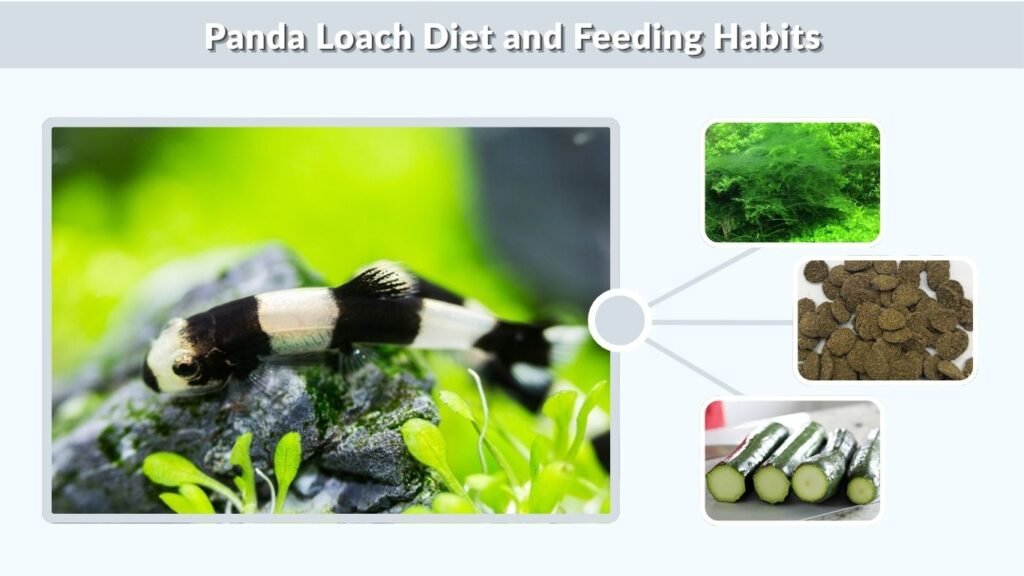
Panda loaches are specialized grazers that feed primarily on biofilm, soft algae, and microscopic organisms growing on submerged surfaces.
In their natural habitat, they continuously investigate rocks and other hard surfaces for food. This behavior makes mature aquarium environments particularly important.
Although panda loaches may accept prepared foods, natural grazing material should remain an essential part of their diet.
What Do Panda Loaches Eat?
A balanced panda loach diet can include:
- Natural biofilm: Microscopic organisms growing on established aquarium surfaces.
- Soft algae: Naturally developing algae on smooth rocks.
- Algae wafers: High-quality sinking foods suitable for grazing fish.
- Spirulina-based foods: Vegetable-rich prepared foods offered as supplements.
- Blanched zucchini: Small occasional portions of softened vegetables.
- Frozen daphnia: Supplemental animal protein offered sparingly.
- Specialized grazing foods: Prepared gel or paste diets designed for aufwuchs-feeding fish.
How Often Should You Feed Panda Loaches?
Panda loaches naturally graze throughout the day rather than consuming a few large meals.
Provide continuous access to established grazing surfaces and supplement their diet with small amounts of suitable prepared food.
Avoid excessive protein-rich foods and remove uneaten portions to maintain water quality. Regularly monitor body condition to ensure every fish receives sufficient nutrition.
Panda Loach Behavior and Temperament
Panda loaches are generally peaceful toward unrelated fish but may display territorial behavior around preferred feeding surfaces.
They spend considerable time clinging to rocks, moving between sheltered locations, and grazing on microscopic organisms.
Their unusual body structure allows them to remain attached to surfaces even in relatively powerful currents.
Are Panda Loaches Aggressive?
Panda loaches are not usually aggressive toward peaceful community fish. However, they may chase other bottom-dwelling fish away from favored rocks or feeding territories.
These interactions are typically brief and rarely result in serious injuries when sufficient space and hiding places are available.
Providing multiple grazing surfaces helps distribute territorial activity throughout the aquarium.
How Many Panda Loaches Should Be Kept Together?
Keeping approximately four to six panda loaches together is generally preferable when adequate space and feeding resources are available.
Although they do not form tightly coordinated schools, groups allow individuals to display natural social interactions.
Larger groups require more grazing surfaces and careful monitoring to prevent competition for food.
Best Panda Loach Tank Mates
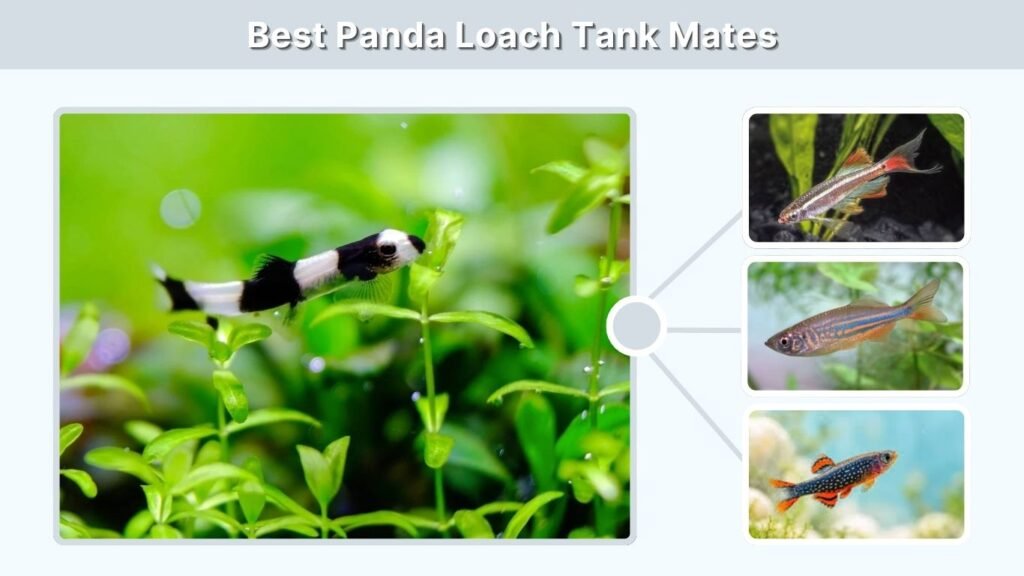
Choosing compatible tank mates requires more consideration than simply selecting peaceful freshwater fish.
Panda loaches need cool, oxygen-rich water and powerful circulation. Therefore, potential companions must tolerate similar environmental conditions without competing excessively for food.
Compatible Panda Loach Tank Mates
Potential companions include:
- White cloud mountain minnows: Peaceful schooling fish that tolerate cooler water.
- Danios: Active swimmers that can adapt to flowing aquarium conditions.
- Small peaceful rasboras: Suitable only when their temperature and flow requirements overlap.
- Other panda loaches: Compatible when sufficient space and grazing surfaces are provided.
- Selected hillstream loaches: Possible companions in larger aquariums with adequate feeding territories.
Avoid aggressive cichlids, large predatory fish, and tropical species requiring consistently warm water.
Slow-moving fish that struggle against strong currents are also unsuitable.
Panda Loach Lifespan and Common Health Problems
The exact lifespan of panda loaches in captivity is not well established. Unlike commonly kept species such as clown loaches or kuhli loaches, reliable long-term lifespan records remain limited.
With appropriate care, panda loaches may survive for several years, but a specific average lifespan cannot be confidently stated.
Their survival depends heavily on maintaining clean, oxygen-rich water and sufficient natural food.
Common Panda Loach Health Problems
Panda loaches may develop several health issues when aquarium conditions are unsuitable.
Oxygen deficiency: Weak circulation and elevated temperatures can reduce dissolved oxygen, causing respiratory stress.
Malnutrition: Insufficient biofilm and unsuitable feeding routines may cause gradual weight loss.
Bacterial infections: Poor water quality and injuries can contribute to bacterial disease.
Stress-related problems: Sudden changes in temperature, water chemistry, or current strength may weaken fish.
Parasites: Newly imported specimens may carry external or internal parasites requiring careful assessment.
Quarantine newly purchased fish and observe their feeding behavior before introducing them into established aquariums.
Panda Loach Breeding and Reproduction
Breeding panda loaches in home aquariums is extremely challenging. Their reproductive behavior remains poorly documented, and verified successful captive breeding reports are limited.
Researchers and experienced aquarists believe seasonal temperature changes and suitable stream conditions may influence spawning.
However, there is no widely established breeding method that reliably produces offspring.
Male vs. Female Panda Loach
Distinguishing male and female panda loaches is difficult because obvious external differences have not been reliably documented.
Mature females may appear fuller when carrying eggs, but body shape alone cannot confirm sex.
Providing natural environmental conditions and a healthy social group is more practical than attempting to identify breeding pairs through appearance.
Are Panda Loaches Good for Beginners?
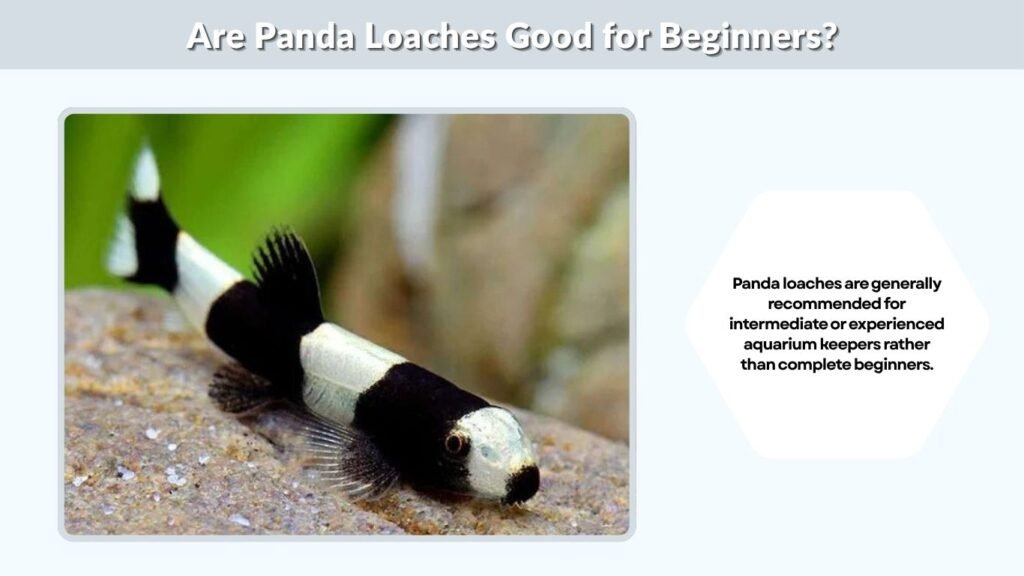
Panda loaches are generally recommended for intermediate or experienced aquarium keepers rather than complete beginners.
Their specialized requirements make them more demanding than many common freshwater fish.
Successful panda loach care requires a mature aquarium, powerful water circulation, appropriate oxygenation, and reliable food availability.
Aquarists who already understand biological filtration, water testing, and hillstream aquarium design are better prepared to maintain this species successfully.
FAQs
1. Do Panda Loaches Eat Algae?
Yes, panda loaches consume soft algae and the microorganisms associated with natural biofilm. However, they are not general-purpose algae cleaners and may ignore certain algae varieties. A mature aquarium containing abundant grazing surfaces and suitable supplemental foods is essential for maintaining their nutritional health.
2. Can Panda Loaches Live in a 10-Gallon Tank?
A 10-gallon aquarium is generally too small for a group of adult panda loaches. Although these fish remain relatively small, they need strong water movement, sufficient oxygen, and multiple grazing surfaces. A longer aquarium of approximately 20 gallons or more provides a more suitable environment.
3. Are Panda Loaches Peaceful?
Panda loaches are generally peaceful toward appropriately selected tank mates. However, they sometimes defend preferred rocks and feeding locations against other bottom-dwelling fish. Providing multiple hiding places and abundant grazing surfaces reduces competition and encourages more natural behavior in group aquariums.
4. Why Do Panda Loaches Change Color?
Panda loaches naturally change coloration as they grow. Juveniles display bold black-and-white bands, while adults develop subtler brownish, gray, or cream markings. This transformation is a normal developmental process rather than necessarily indicating illness, although sudden unusual color changes may also occur during stress.
5. Do Panda Loaches Need a Heater?
Panda loaches do not always require an aquarium heater because they prefer relatively cool water. If room temperatures remain stable within approximately 68–75°F, additional heating may be unnecessary. However, temperature fluctuations should be monitored carefully, and a cooling system may be needed in warmer climates.