

The zebra loach (Botia striata) is a colorful freshwater fish recognized for its attractive black and golden stripes, playful personality, and peaceful nature. Native to India, this bottom-dwelling species is popular among aquarium enthusiasts because of its active behavior and ability to eat small snails. However, zebra loaches need suitable water conditions, a spacious aquarium, and companionship to remain healthy. Understanding their adult size, ideal tank setup, feeding habits, lifespan, and compatibility with other fish helps aquarists create a comfortable environment where these fascinating loaches can thrive.
What Is a Zebra Loach?
The zebra loach is a freshwater fish belonging to the family Botiidae. Its scientific name is Botia striata, and it is sometimes called the striped loach or zebra botia. This species naturally inhabits clear, flowing streams in the Western Ghats of southern India.
Zebra loaches are social bottom dwellers that spend considerable time exploring rocks, plants, and aquarium decorations. Although relatively peaceful, they are energetic fish that require plenty of swimming space and hiding locations.
Zebra Loach Appearance and Identification
Zebra loaches have distinctive physical characteristics that make them easy to recognize.
- Body shape: An elongated, slightly compressed body with a downward-facing mouth.
- Coloration: Alternating dark brown or black stripes over a yellowish or golden background.
- Stripes: Numerous narrow vertical bands extending along the body.
- Barbels: Small sensory structures around the mouth used to locate food.
- Fins: Generally transparent to yellowish fins with dark markings.
- Eyes: Small eyes positioned near retractable defensive spines.
Their striking striped appearance makes them especially attractive in planted community aquariums.
Zebra Loach Size and Growth Rate
Adult zebra loaches typically reach approximately 3–4 inches (7.5–10 cm) in length. They are considerably smaller than clown loaches, making them more manageable for medium-sized aquariums.
Juvenile zebra loaches are often sold at around 1–2 inches. Their growth rate depends on feeding quality, water conditions, genetics, and overall aquarium maintenance.
How Long Does a Zebra Loach Take to Reach Full Size?
Zebra loaches grow gradually, and reaching adult size may take approximately two to three years, although individual growth rates vary.
A nutritious diet, stable water parameters, and sufficient swimming space support healthy development. Poor water quality or inadequate nutrition can slow growth and affect long-term health.
Zebra Loach Tank Size and Aquarium Setup
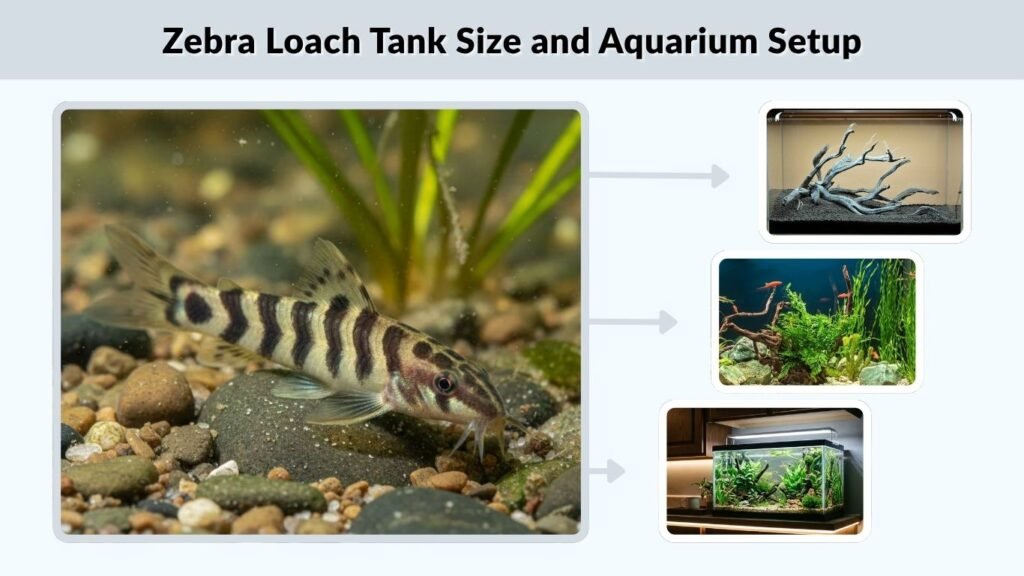
A properly designed aquarium is essential for maintaining healthy zebra loaches. These fish are active explorers that prefer environments containing hiding places, open swimming areas, and gentle to moderate water movement.
A tank measuring at least 48 inches (120 cm) long is a useful minimum for a small group. This often corresponds to a long aquarium of approximately 30 gallons or more, depending on its dimensions.
Ideal Tank Conditions
The following conditions provide a suitable environment for zebra loaches:
- Tank size: Approximately 30 gallons minimum, with 40 gallons or more offering additional flexibility.
- Substrate: Fine sand or smooth gravel that protects their sensitive barbels.
- Decorations: Driftwood, smooth rocks, caves, and sheltered areas.
- Plants: Java fern, Anubias, Java moss, and other hardy aquarium plants.
- Filtration: An efficient biological filter producing well-oxygenated water.
- Lighting: Moderate or subdued lighting with shaded resting locations.
- Water movement: Gentle to moderate flow resembling natural streams.
Avoid sharp decorations and narrow openings where zebra loaches could become trapped. A secure aquarium lid is also important because these fish occasionally jump.
Zebra Loach Water Parameters
Zebra loaches naturally inhabit freshwater streams with clean, oxygen-rich water. Maintaining consistent water conditions is more important than making frequent adjustments to achieve exact readings.
Their sensitivity to deteriorating water quality makes regular aquarium maintenance particularly important.
Recommended Temperature, pH, and Hardness
| Water parameter | Recommended range |
|---|---|
| Temperature | 70–79°F (21–26°C) |
| pH level | 6.0–7.5 |
| General hardness | 1–10 dGH |
| Ammonia | 0 ppm |
| Nitrite | 0 ppm |
| Nitrate | Preferably below 20 ppm |
Regular partial water changes, appropriate filtration, and avoiding overfeeding help maintain these conditions. Zebra loaches should only be introduced into an established, fully cycled aquarium.
Sudden temperature changes, accumulated waste, and insufficient oxygen can cause stress and increase susceptibility to disease.
Zebra Loach Diet and Feeding Habits

Zebra loaches are omnivorous fish with a strong preference for small aquatic invertebrates. In natural habitats, they consume insect larvae, worms, mollusks, and other organisms found along streambeds.
In captivity, they readily accept sinking commercial foods alongside frozen or live foods. Providing a varied diet helps maintain their energy, coloration, and overall health.
What Do Zebra Loaches Eat?
A balanced feeding routine can include:
- Sinking pellets: High-quality foods designed for bottom-dwelling omnivores.
- Bloodworms: Frozen or live bloodworms offered as occasional protein-rich foods.
- Brine shrimp: A nutritious supplementary food.
- Daphnia: Small aquatic crustaceans that encourage natural feeding behavior.
- Blanched vegetables: Small portions of zucchini, cucumber, or spinach.
- Aquarium snails: Small snails may be eaten when available.
How Often Should You Feed Zebra Loaches?
Feed zebra loaches once or twice daily, providing portions they can consume within a few minutes. Remove uneaten food to prevent waste accumulation.
Because they spend much of their time near the aquarium bottom, sinking foods are particularly useful. Ensure that faster-swimming tank mates do not consume all the food before it reaches the loaches.
Zebra Loach Temperament and Behavior
Zebra loaches are generally peaceful but energetic freshwater fish. They frequently explore aquarium decorations, search through substrate, and interact with members of their own species.
Unlike some more aggressive loach varieties, zebra loaches usually coexist successfully with appropriately selected community fish. However, they establish social hierarchies and may occasionally chase one another.
Are Zebra Loaches Aggressive?
Zebra loaches are not typically aggressive toward compatible community fish. However, keeping them alone or in very small groups can increase stress, territorial behavior, and competition.
They occasionally produce clicking sounds during feeding or social interactions. Their unusual resting positions, including lying sideways, can also be normal behavior.
How Many Zebra Loaches Should Be Kept Together?
Keep at least five or six zebra loaches together, with larger groups preferred when aquarium space permits.
Group living encourages natural behavior and distributes social interactions among individuals. Solitary zebra loaches may become withdrawn or unusually aggressive.
Best Zebra Loach Tank Mates
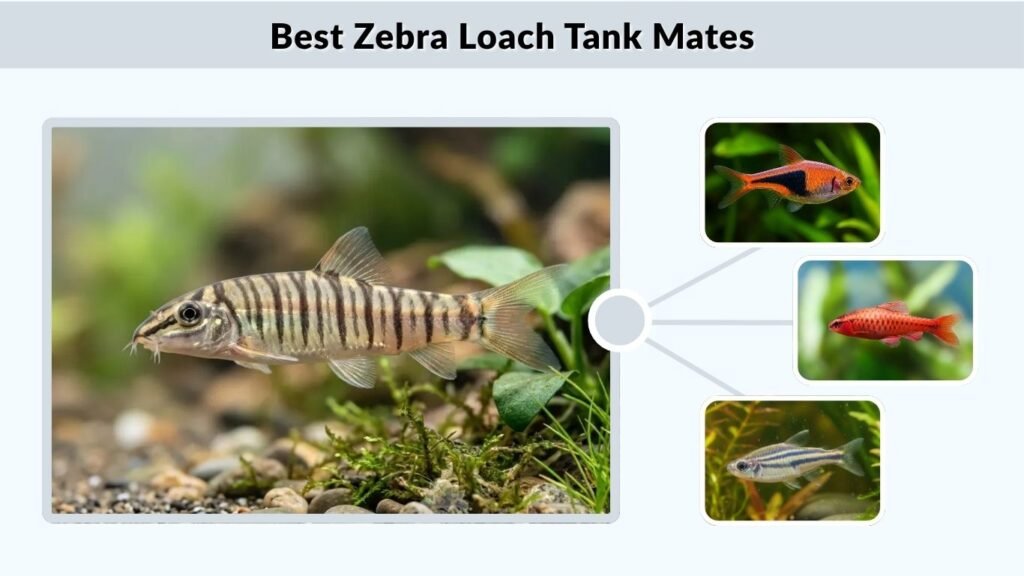
Selecting compatible tank mates is essential for creating a peaceful aquarium. Zebra loaches generally coexist well with active, nonaggressive freshwater species that tolerate similar water conditions.
Fish occupying the middle and upper swimming areas are particularly suitable because they reduce competition for bottom-level territory.
Compatible Zebra Loach Tank Mates
Potential companions include:
- Harlequin rasboras: Peaceful schooling fish suitable for community aquariums.
- Rummy-nose tetras: Active fish that prefer stable, clean water.
- Cherry barbs: Relatively peaceful barbs with attractive coloration.
- Zebra danios: Energetic schooling fish, provided temperatures suit both species.
- Other zebra loaches: Essential companions for normal social behavior.
Avoid keeping zebra loaches with highly aggressive cichlids, extremely small vulnerable fish, or slow-moving long-finned species.
Shrimp and small snails may also be eaten, making zebra loaches unsuitable for aquariums where these invertebrates need protection.
Zebra Loach Lifespan and Common Health Problems
Zebra loaches commonly live approximately 8–12 years in well-maintained aquariums, and some may reach 15 years under excellent conditions.
Their lifespan depends on water quality, nutrition, genetics, disease prevention, and social conditions. Providing stable temperatures and avoiding overcrowding can significantly improve their long-term well-being.
Common Zebra Loach Health Issues
Zebra loaches may experience several aquarium-related health problems.
Ich (white spot disease): A parasitic infection that produces small white spots, irritation, and unusual scratching behavior.
Skinny disease: A condition involving progressive weight loss, sometimes associated with internal parasites or other underlying health problems.
Fin damage: Injuries may develop from sharp decorations, aggressive tank mates, or poor water quality.
Stress-related illness: Unstable temperatures, ammonia exposure, and inadequate hiding places can weaken fish and increase disease susceptibility.
Quarantine newly purchased fish, monitor their behavior, and investigate unusual symptoms promptly. Some loach species are sensitive to medications, so treatment should be selected carefully.
Zebra Loach Breeding and Reproduction
Breeding zebra loaches in home aquariums is extremely difficult. Although mature females may develop fuller bodies when carrying eggs, successful natural spawning under ordinary aquarium conditions is rarely documented.
Commercial breeding has been achieved using specialized hormonal techniques, but these methods are not appropriate for typical home aquarium setups.
Male vs. Female Zebra Loach
Male and female zebra loaches look remarkably similar, making accurate identification challenging.
Mature females may develop slightly rounder bodies, particularly when carrying eggs. Males sometimes appear slimmer, although these differences are unreliable in younger fish.
There are no consistently dependable external markings that distinguish the sexes.
Are Zebra Loaches Good for Beginners?
Zebra loaches are better suited to aquarists with some freshwater fishkeeping experience. Although generally peaceful and adaptable, they require stable water conditions, adequate swimming space, and a properly maintained social group.
Beginners who understand aquarium cycling, filtration, and routine water testing can successfully maintain these fish. However, a newly established aquarium or small unfiltered tank is unsuitable.
Because wild zebra loach populations are classified as Endangered, buyers should favor responsibly bred, traceable aquarium stock rather than specimens collected from threatened habitats.
FAQs
1. Do Zebra Loaches Eat Snails?
Yes, zebra loaches eat small aquarium snails and may help reduce certain snail populations. They use their mouths to investigate shells and consume accessible snails. However, they should not be purchased solely for pest control because they require group companionship, sufficient aquarium space, and a balanced diet.
2. Can Zebra Loaches Live With Bettas?
Zebra loaches are generally not ideal companions for bettas. Their energetic swimming and occasional fin-nipping behavior may stress slow-moving, long-finned bettas. Although compatibility depends on individual temperament and aquarium size, choosing calmer community fish is usually safer for a betta aquarium.
3. Do Zebra Loaches Hide All Day?
Zebra loaches may hide frequently after entering a new aquarium or when experiencing stress. Once comfortable, they often become active during daylight hours. Providing several hiding places, suitable lighting, and a group of their own species encourages confidence and more visible natural behavior.
4. Can Zebra Loaches Live in a 20-Gallon Tank?
A standard 20-gallon aquarium is generally too small for an adult group of zebra loaches. These active fish need considerable horizontal swimming space and should live in groups of at least five or six. A longer aquarium of approximately 30 gallons or more is preferable.
5. Are Zebra Loaches Nocturnal?
Zebra loaches may become active during the evening and nighttime, but they are not strictly nocturnal. Well-adjusted individuals frequently explore and feed during daylight hours. Their activity patterns depend on lighting, aquarium layout, companionship, feeding routines, and how secure they feel in their environment.