

The dwarf chain loach is a small freshwater fish known for its striking chain-like markings, energetic swimming, and curious personality. Unlike many loaches that hide throughout the day, this species is often active and visible in a well-established aquarium. Despite its small size, it needs plenty of space, companions of its own kind, and clean, oxygen-rich water. Whether you are planning to buy dwarf chain loaches or already keep them, understanding their tank size, diet, lifespan, breeding habits, and compatibility can help you provide healthier long-term care.
What Is a Dwarf Chain Loach?
The dwarf chain loach (Ambastaia sidthimunki) is a tropical freshwater fish in the Botiidae family. It originates from river systems around western Thailand and the Thailand–Myanmar border. Also called the dwarf loach or chain botia, it is popular in planted community aquariums.
Wild populations face serious conservation pressures, so choosing captive-bred fish is especially important.
Appearance and Natural Behavior
Dwarf chain loaches have slim, cream-colored bodies decorated with dark horizontal stripes connected by vertical bars. These markings resemble small chain links. Short barbels help them investigate food and surfaces.
They swim along the bottom and through the middle of the aquarium, often following one another between plants, stones, and driftwood.
Dwarf Chain Loach Size and Lifespan
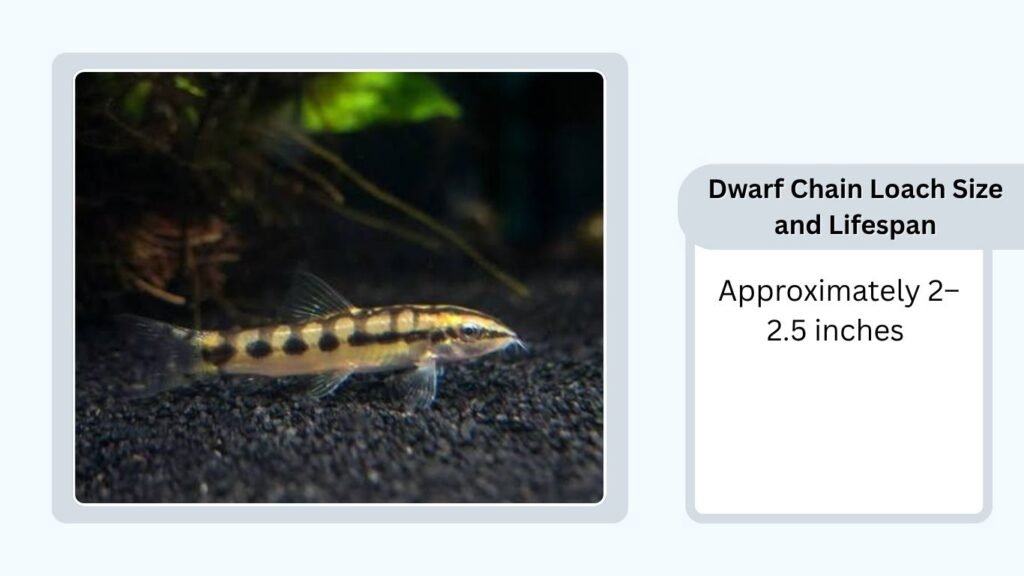
Dwarf chain loaches are among the smaller members of their family, but they are active swimmers rather than stationary bottom dwellers.
How Big Do Dwarf Chain Loaches Get?
Adults typically reach approximately 2–2.5 inches (5–6 cm) long. Females may become slightly larger and rounder than males, especially when mature.
Adults still need ample horizontal swimming room.
How Long Do Dwarf Chain Loaches Live?
With appropriate care, dwarf chain loaches may live around 5–10 years, sometimes longer. Lifespan depends on water quality, a varied diet, low stress, and suitable companions.
Dwarf Chain Loach Tank Size and Water Conditions
A suitable dwarf chain loach tank should provide swimming room, plentiful hiding places, and well-filtered water. They do best in mature, biologically stable aquariums.
Minimum Tank Size
A 20-gallon long aquarium is a reasonable starting point for a modest group, while 25–30 gallons or more offers additional swimming room. A 10-gallon aquarium is generally unsuitable for long-term group care.
Use a secure lid because these inquisitive fish can jump.
Ideal Water Parameters
Maintain stable freshwater conditions rather than frequently chasing exact readings:
- Temperature: Preferably 75–82°F (24–28°C).
- pH: Approximately 5.5–7.5.
- Hardness: Around 1–12 dGH.
- Ammonia: 0 ppm.
- Nitrite: 0 ppm.
- Flow: Moderate, with good oxygenation.
Substrate and Aquarium Decorations
Choose fine sand or smooth gravel, together with rounded stones and driftwood. Add caves and plants such as Java fern or Anubias to provide security.
Avoid sharp ornaments or narrow openings where fish might become trapped. Regular water changes and removal of waste help protect these sensitive fish.
Dwarf Chain Loach Diet and Feeding
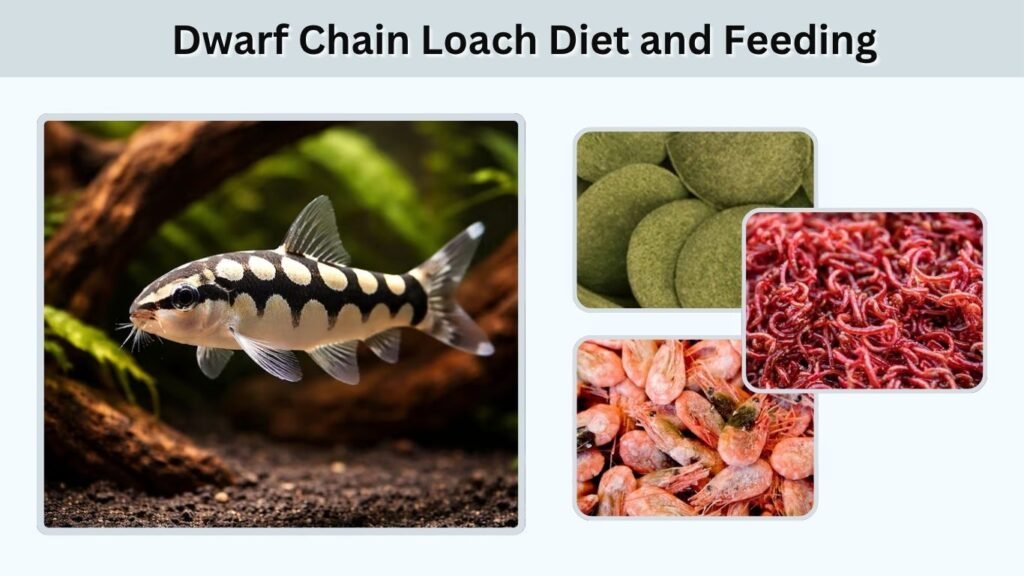
Dwarf chain loaches are omnivores with a strong preference for small animal foods. They actively search for food along the substrate and in midwater.
A varied diet helps maintain healthy weight and supports their constant activity.
Best Food for Dwarf Chain Loaches
Offer a mixture of suitable foods:
- High-quality sinking micro-pellets.
- Frozen or live bloodworms.
- Daphnia and brine shrimp.
- Soft gel-based aquarium foods.
- Occasional blanched vegetables.
- Small portions of chopped earthworms.
Feed controlled portions once or twice daily, ensuring every loach gets access to food.
Do Dwarf Chain Loaches Eat Snails?
Yes, they may eat small aquarium snails and investigate larger ones. However, they are not guaranteed snail-control fish and should not be purchased solely to eliminate an infestation.
They may also harass ornamental snails, including nerites.
Dwarf Chain Loach Behavior and Tank Mates

Dwarf chain loaches are social, energetic fish that often swim together during daylight. Their groups develop social hierarchies, which can involve brief chasing or sparring.
Group size and hiding places help limit bullying.
How Many Dwarf Chain Loaches Should Be Kept Together?
Keep at least six dwarf chain loaches together, ideally eight to ten or more when tank space permits.
Solitary fish can become withdrawn, while groups of two or three may experience persistent bullying. A larger group usually encourages confident, natural behavior.
Best Dwarf Chain Loach Tank Mates
Potentially compatible fish include:
- Harlequin rasboras.
- Peaceful small tetras.
- Zebra danios in suitable water conditions.
- Corydoras catfish with enough bottom space.
- Peaceful platies and similar community fish.
Observe interactions closely. Slow-moving, long-finned fish, including some bettas and gouramis, may be stressed by active loaches. Avoid aggressive predators and very small fish fry.
Are Dwarf Chain Loaches Aggressive?
They are generally peaceful toward suitable tank mates, although individual loaches may chase one another to establish rank.
Repeated biting, torn fins, or fish hiding constantly are signs that the aquarium’s social setup needs attention.
Dwarf Chain Loach Breeding and Health
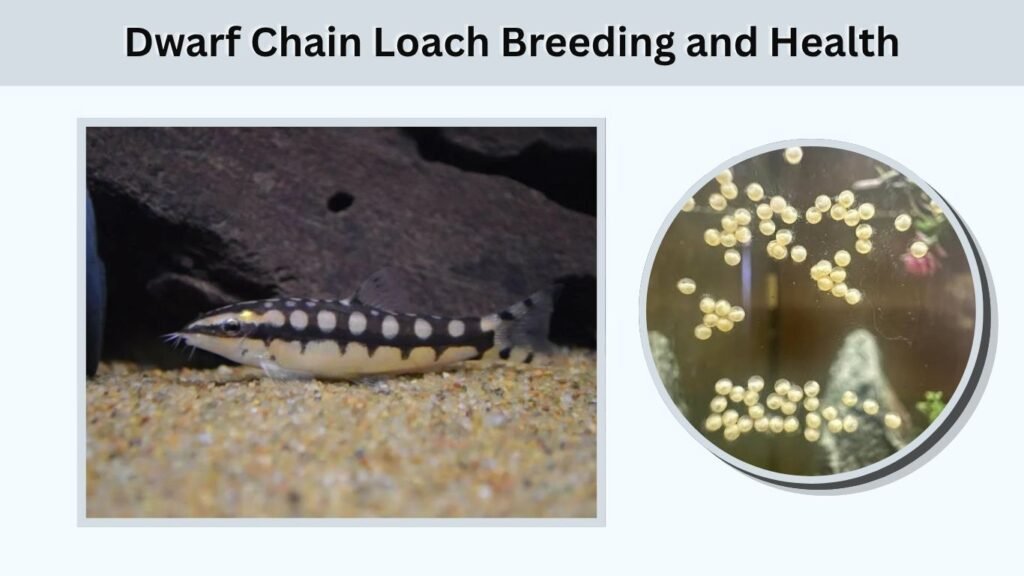
Breeding dwarf chain loaches at home is challenging. Commercial breeders often use hormone-assisted techniques, and spontaneous home breeding remains rare.
Male, Female, and Eggs
Mature females are usually broader through the abdomen, while males tend to be slimmer. Identifying sex in young fish is difficult.
These loaches are egg layers, and adults do not provide parental care. Successfully raising fry requires protecting eggs and newborn fish from being eaten.
Common Health Warning Signs
Watch for changes that may suggest poor conditions or disease:
- White spots: Possible ich or another infection.
- Weight loss: May indicate parasites or inadequate feeding.
- Clamped fins: Often associated with stress.
- Rapid breathing: May signal low oxygen or water-quality problems.
- Persistent hiding: Can indicate bullying or illness.
Test the water before treating suspected disease, and use medication appropriate for loaches.
FAQs
1. Can Dwarf Chain Loaches Live in a 10-Gallon Tank?
A 10-gallon aquarium is too small for a suitable long-term group. These fish are energetic and need room to establish social relationships. A longer 20-gallon tank or a larger aquarium is a much better choice.
2. Can Dwarf Chain Loaches Live With Bettas?
Sometimes, but the pairing is unpredictable. Active loaches may disturb slow-moving bettas, and some individuals nip fins. If attempting this combination, provide generous space, dense planting, and an alternative tank in case aggression develops.
3. Will Dwarf Chain Loaches Eat Shrimp?
They may eat baby shrimp and sometimes attack small adults. Larger Amano shrimp might coexist, but their safety cannot be guaranteed. Dwarf chain loaches are not ideal companions for a dedicated shrimp-breeding aquarium.
4. Can Dwarf Chain Loaches Live With African Dwarf Frogs?
This combination is generally not recommended. African dwarf frogs feed slowly and may struggle to compete with active loaches. Their delicate bodies and different feeding habits make a dedicated frog aquarium a safer arrangement.
5. Why Has My Dwarf Chain Loach Disappeared?
Dwarf chain loaches sometimes hide inside caves, plants, or driftwood, especially after introduction. Check decorations and filter compartments carefully without injuring the fish. If it remains missing, inspect the lid and water conditions for possible problems.