
Yoyo loaches are fascinating freshwater fish known for their distinctive black patterns, energetic swimming behavior, and playful personalities. These attractive bottom-dwelling fish are popular among aquarium enthusiasts because of their social nature and ability to eat small snails. Native to South Asia, yoyo loaches require spacious aquariums, stable water conditions, and suitable companions to remain healthy. Although they are relatively hardy when properly maintained, understanding their specific needs is essential. This guide explains yoyo loach size, tank requirements, feeding habits, lifespan, behavior, and compatible tank mates.
What Is a Yoyo Loach?
The yoyo loach is a freshwater fish commonly associated with Botia almorhae and the closely related Botia species group. It belongs to the Botiidae family and naturally inhabits rivers across parts of northern India and Nepal.
Its common name comes from the distinctive dark markings that resemble the letters “Y” and “O” along its body. Aquarium specimens are sometimes sold under the name Pakistani loach, although this name can be misleading.
Yoyo Loach Identification and Appearance
Yoyo loaches have several recognizable physical characteristics.
- Body Color: Silvery, cream, or pale golden body with dark irregular markings.
- Body Pattern: Black or brown markings resembling the letters Y and O.
- Body Shape: Elongated, streamlined body adapted for bottom-dwelling activity.
- Mouth: Downward-facing mouth surrounded by sensitive barbels.
- Fins: Mostly transparent or lightly patterned fins.
- Eyes: Small eyes with defensive spines positioned beneath them.
As yoyo loaches mature, their distinctive markings often become more complex and interconnected.
Yoyo Loach Size: How Big Do They Get?
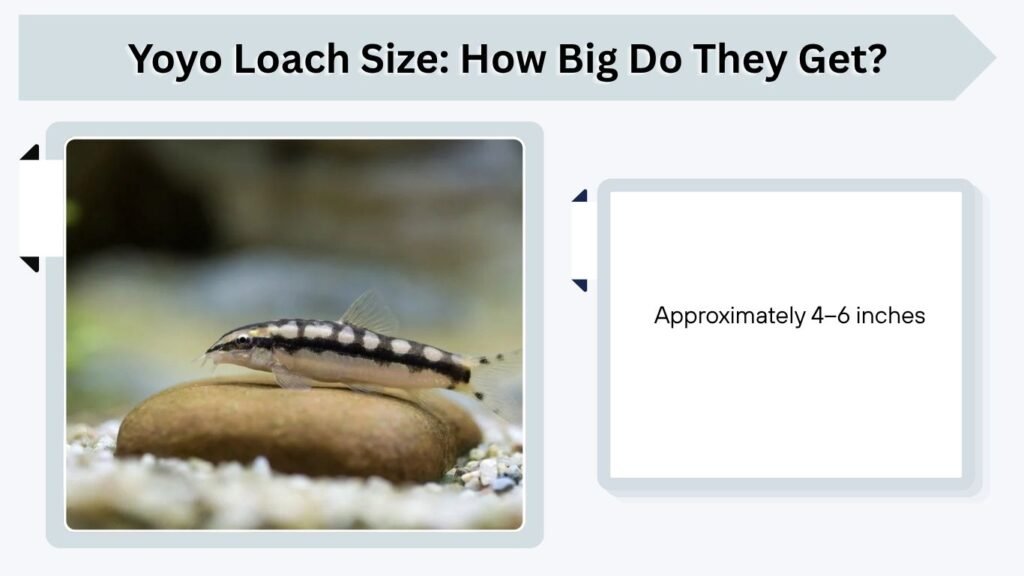
Yoyo loaches are medium-sized freshwater fish that grow considerably larger than their juvenile appearance suggests. Their adult size depends on genetics, feeding quality, environmental conditions, and overall health. Understanding their growth potential is important when selecting an appropriate aquarium.
Average and Maximum Yoyo Loach Size
Adult yoyo loaches commonly reach approximately 4–6 inches (10–15 cm). Large specimens can reach around 6 inches in standard body length, excluding the tail fin.
Females may develop fuller bodies than males, particularly when mature. Their relatively active behavior means they require more swimming space than similarly sized, less energetic fish.
How Fast Do Yoyo Loaches Grow?
Yoyo loaches generally grow faster during their juvenile stages before slowing as they approach maturity. Growth varies depending on food availability, water quality, and aquarium conditions.
A varied diet and spacious environment support healthy development throughout their lives.
Ideal Yoyo Loach Tank Size and Aquarium Setup
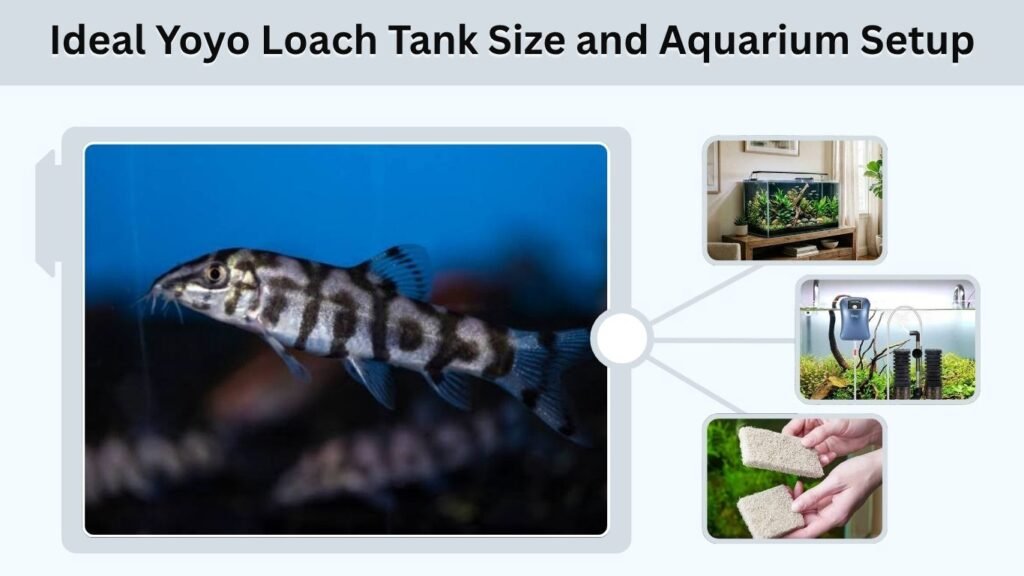
Yoyo loaches need spacious aquariums with adequate swimming room and numerous hiding places. Although they spend considerable time exploring the bottom, they also swim through the middle water levels. A properly arranged aquarium helps encourage natural behavior and reduce stress.
Recommended Yoyo Loach Tank Size
An aquarium of approximately 65 gallons (245 liters) or larger, measuring at least 48 inches long and 18 inches wide, is a practical minimum for a small adult group.
Larger aquariums provide additional swimming space and accommodate more companions. A 10-gallon or 20-gallon aquarium is unsuitable for adult yoyo loaches.
Best Aquarium Setup
A suitable yoyo loach aquarium should include:
- Substrate: Fine sand or smooth gravel to protect sensitive barbels.
- Hiding Places: Driftwood, caves, smooth rocks, and sheltered areas.
- Aquatic Plants: Java fern, Anubias, and Java moss.
- Filtration: Efficient filtration to maintain clean, oxygen-rich water.
- Lighting: Moderate lighting with shaded resting areas.
- Water Movement: Gentle to moderate water circulation.
- Tank Cover: A secure lid because yoyo loaches occasionally jump.
Avoid decorations with sharp edges or narrow openings that could trap fish.
Yoyo Loach Water Temperature and Conditions
Maintaining stable water parameters is essential for healthy yoyo loaches. These fish naturally inhabit freshwater rivers and prefer clean, well-oxygenated water. Sudden environmental changes and accumulated waste can cause unnecessary stress.
Ideal Temperature and pH
Yoyo loaches tolerate approximately 66–82°F (19–27.5°C), although a stable temperature around 73–79°F (23–26°C) is suitable for many aquariums.
The recommended pH range is approximately 6.0–7.5, with water hardness around 2–12 dGH.
Maintaining Water Quality
A mature biological filtration system helps maintain suitable aquarium conditions. Ammonia and nitrite should remain undetectable.
Regular partial water changes prevent excessive nitrate accumulation. Stable temperatures and adequate oxygen circulation also support healthy feeding and activity.
What Do Yoyo Loaches Eat?
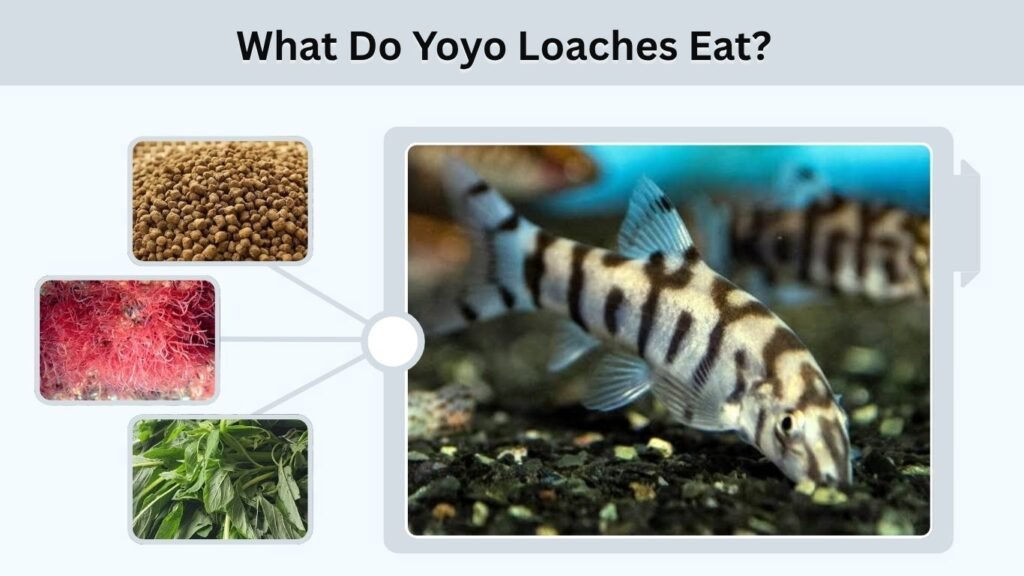
Yoyo loaches are omnivorous fish with a strong preference for animal-based foods. In natural environments, they consume aquatic insects, worms, mollusks, and other small invertebrates. Aquarium specimens benefit from a varied diet combining nutritious sinking foods with occasional vegetables.
Best Food for Yoyo Loaches
Suitable foods include:
- Sinking Pellets: High-quality foods formulated for bottom feeders.
- Bloodworms: Frozen or live bloodworms offered as occasional treats.
- Brine Shrimp: Nutritious food supporting healthy growth.
- Tubifex Worms: Properly sourced worms offered in moderation.
- Vegetables: Blanched spinach, zucchini, and cucumber.
- Frozen Foods: Commercial aquatic invertebrate blends for dietary variety.
Feed appropriate portions once or twice daily and remove uneaten food to protect water quality.
Do Yoyo Loaches Eat Snails?
Yes, yoyo loaches naturally eat many freshwater aquarium snails. They use their specialized mouths to extract soft-bodied animals from shells.
They may consume bladder snails, ramshorn snails, and small Malaysian trumpet snails. However, their effectiveness varies between individuals.
Larger nerite snails may be more difficult to consume, but they are not necessarily safe companions.
Yoyo loaches should never be purchased solely for snail control because they require proper group housing and long-term care.
Yoyo Loach Tank Mates and Social Behavior
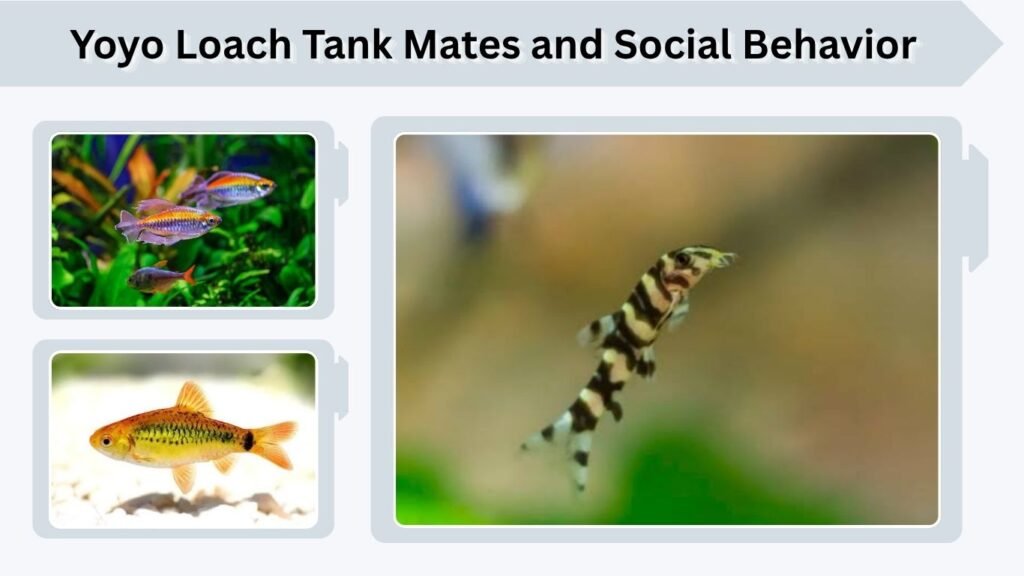
Yoyo loaches are generally peaceful but can become boisterous or occasionally nip the fins of slower fish. Their active personalities and social hierarchy make compatible tank mates especially important.
Best Yoyo Loach Tank Mates
Peaceful rainbowfish, appropriately sized barbs, and active medium-sized tetras can make suitable companions.
Some compatible bottom-dwelling fish may also coexist when adequate territory and hiding places are available.
Avoid slow-moving, long-finned species such as ornamental bettas and fancy guppies. Small ornamental shrimp are also vulnerable to predation.
How Many Yoyo Loaches Should Be Kept Together?
Yoyo loaches should live in groups of at least five or six individuals. Larger groups often display more natural interactions and social behavior.
Keeping only one or two may encourage excessive hiding or dominance-related aggression.
Their social activities include chasing, clicking sounds, and occasional sideways resting positions.
Yoyo Loach Lifespan and Common Health Problems
Yoyo loaches can live approximately 10–15 years with proper aquarium care. Their longevity depends on balanced nutrition, clean water, appropriate companionship, and sufficient swimming space.
Common Yoyo Loach Health Issues
Several health problems may affect these fish.
- Ich Disease: Small white spots caused by parasitic infection.
- Skinny Disease: Significant weight loss potentially associated with internal parasites or other illnesses.
- Stress: Persistent hiding, appetite loss, or abnormal behavior.
- Barbel Damage: Injuries caused by sharp substrate or unsuitable decorations.
Prompt identification of unusual symptoms and appropriate treatment help prevent serious complications.
Can Yoyo Loaches Breed in Captivity?
Breeding yoyo loaches in ordinary home aquariums is extremely difficult. In natural habitats, reproductive activity is associated with seasonal environmental changes and river migrations.
Mature females generally develop fuller bodies, but distinguishing males from females can be challenging.
Reliable natural breeding in home aquariums remains exceptionally rare.
FAQs
1. Are Yoyo Loaches Aggressive?
Yoyo loaches are generally peaceful but may display territorial behavior and occasional fin nipping. Aggression becomes more noticeable when they are kept alone or in small groups. Providing adequate space, hiding places, and suitable companions helps minimize conflicts.
2. Can Yoyo Loaches Live With Bettas?
Yoyo loaches are generally unsuitable companions for bettas. Their energetic swimming behavior may disturb slower bettas, while occasional fin nipping can damage delicate fins. Separate aquariums are usually safer because these species have different behavioral requirements.
3. Do Yoyo Loaches Eat Algae?
Yoyo loaches may occasionally consume algae or plant material, but they are not dedicated algae eaters. Their preferred diet consists mainly of small invertebrates and protein-rich foods. They should not replace specialized algae-eating fish or regular aquarium maintenance.
4. Can Yoyo Loaches Live With Cory Catfish?
Yoyo loaches and Corydoras catfish can sometimes coexist in spacious aquariums. However, their active feeding behavior and shared bottom territory may create competition. Providing separate feeding locations and numerous hiding places helps reduce potential stress between these species.
5. Are Yoyo Loaches Good for Beginners?
Yoyo loaches are better suited to aquarists with some experience. They require stable water conditions, adequate filtration, spacious tanks, and proper group companionship. Beginners who understand aquarium cycling and long-term fish care may successfully maintain them with careful preparation.