

The rosy loach is a tiny, colorful freshwater fish known for its peaceful temperament, playful swimming behavior, and attractive pinkish-orange appearance. Unlike many bottom-dwelling loaches, rosy loaches actively explore different aquarium levels, making them fascinating additions to planted community tanks. These social fish thrive in groups and require stable water conditions, suitable tank mates, and a nutritious diet. Whether you’re considering rosy loaches for a nano aquarium or want to improve their existing habitat, understanding their natural behavior and care requirements will help you maintain healthy, active fish.
What Is a Rosy Loach?
The rosy loach (Physoschistura mango) is a small freshwater fish belonging to the family Nemacheilidae. Native to eastern Myanmar, particularly the Shan State region, it inhabits shallow, vegetation-rich freshwater environments.
Previously known in the aquarium trade as Petruichthys sp. “rosy” or Yunnanilus sp. “rosy,” this species received its formal scientific name in 2023.
Rosy loaches are particularly popular because of their miniature size, attractive coloration, and unusual swimming habits. Unlike many other loaches that remain near the aquarium bottom, they frequently explore open swimming areas.
Rosy Loach Identification
Rosy loaches have slender, elongated bodies with relatively small fins and subtle markings. Their appearance varies between males and females.
- Scientific name: Physoschistura mango
- Common names: Rosy loach, Burmese pink loach, dwarf rosy loach
- Family: Nemacheilidae
- Origin: Eastern Myanmar
- Adult size: Approximately 1–1.2 inches
- Color: Rosy-orange, pinkish, or brown with darker markings
- Temperament: Peaceful and social
- Swimming level: Bottom, middle, and occasionally upper areas
- Care level: Moderate
Male rosy loaches typically display brighter orange or pinkish colors, particularly during breeding. Females are generally larger, with rounded bodies and darker spots.
Rosy Loach Size and Lifespan
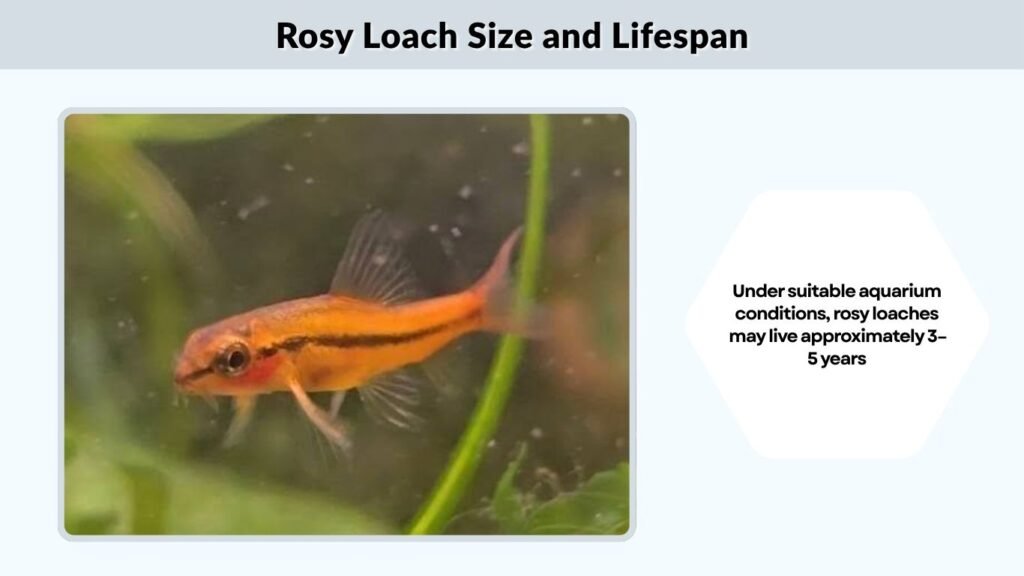
Rosy loaches are among the smaller loach species commonly kept in freshwater aquariums. Most adults reach approximately 1–1.2 inches (2.5–3 cm) in length.
Despite their small size, they remain surprisingly active and require enough horizontal space for swimming.
Under suitable aquarium conditions, rosy loaches may live approximately 3–5 years, although reliable species-specific lifespan information remains limited.
Their longevity depends on water quality, nutrition, social grouping, and overall aquarium maintenance. Fish kept in stable, mature environments generally have better opportunities to remain healthy throughout adulthood.
Ideal Rosy Loach Tank Size and Setup
Rosy loaches thrive in well-established, densely planted aquariums that resemble their natural freshwater habitat. Although they are small, their active behavior means they need more space than their body length might suggest.
A tank holding approximately 15 gallons (57 liters), preferably at least 24 inches long, provides a practical starting point for a small group.
Recommended Tank Conditions
| Parameter | Recommended Conditions |
|---|---|
| Minimum tank size | 15 gallons |
| Temperature | 68–79°F (20–26°C) |
| pH level | 6.5–8.0 |
| Water hardness | 5–15 dGH |
| Group size | At least 8–10 |
| Water movement | Gentle to moderate |
| Substrate | Fine sand or smooth gravel |
| Lighting | Moderate |
| Tank environment | Mature, densely planted |
Best Plants and Decorations
Rosy loaches appreciate environments that combine open swimming areas with dense vegetation and sheltered spaces.
Suitable aquarium decorations include:
- Java moss for shelter and potential breeding areas.
- Java fern for natural-looking greenery.
- Cryptocoryne plants for dense underwater coverage.
- Floating plants to create shaded areas.
- Smooth driftwood for hiding spaces.
- Fine sand or rounded gravel to protect delicate bodies.
Avoid sharp decorations and extremely strong water currents. Gentle filtration with good oxygenation helps maintain a comfortable environment.
Most importantly, introduce rosy loaches only after the aquarium has completed its nitrogen cycle and established stable water conditions.
Rosy Loach Diet and Feeding Requirements
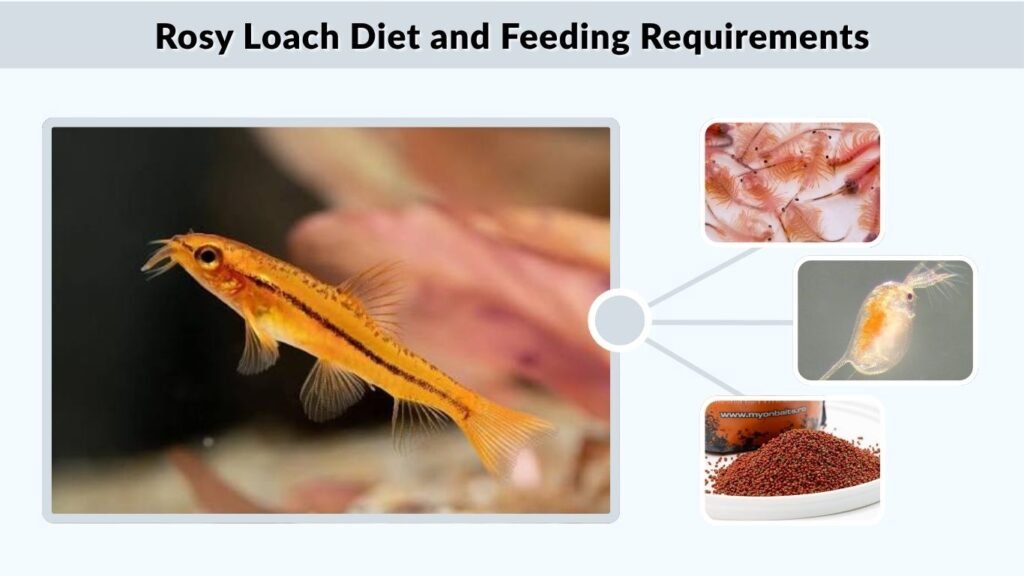
Rosy loaches are primarily micropredators in nature, feeding on tiny aquatic invertebrates, insect larvae, and other small organisms.
In captivity, they accept a variety of small prepared, live, and frozen foods. Providing a diverse diet supports healthy development, natural coloration, and reproductive conditioning.
Best Foods for Rosy Loaches
- Baby brine shrimp: Excellent protein-rich food for adults.
- Daphnia: Encourages natural hunting behavior.
- Microworms: Suitable for their small mouths.
- Frozen cyclops: Provides nutritional variety.
- Crushed flakes: Convenient supplemental food.
- Micro pellets: Useful when appropriately sized.
- Moina: Another excellent small live food.
Feed small portions once or twice daily, adjusting according to appetite and body condition. Newly imported or underweight individuals may benefit from more frequent small meals.
Remove leftover food to prevent deteriorating water quality.
Rosy Loach Behavior and Temperament
Rosy loaches are peaceful, energetic, and highly social fish. Their behavior differs from that of many traditional bottom-dwelling loaches.
Instead of remaining hidden beneath decorations, they frequently swim through plants, hover above the substrate, and explore open aquarium areas.
They are most confident when maintained in groups of at least eight to ten individuals. Larger groups encourage natural social interactions and reduce nervous behavior.
Occasional chasing or short bursts of movement between individuals are generally normal social activities. However, persistent hiding, faded coloration, or an inability to compete for food may indicate stress.
Rosy loaches are not generally aggressive toward other fish, making them suitable for carefully selected peaceful community aquariums.
Best Rosy Loach Tank Mates
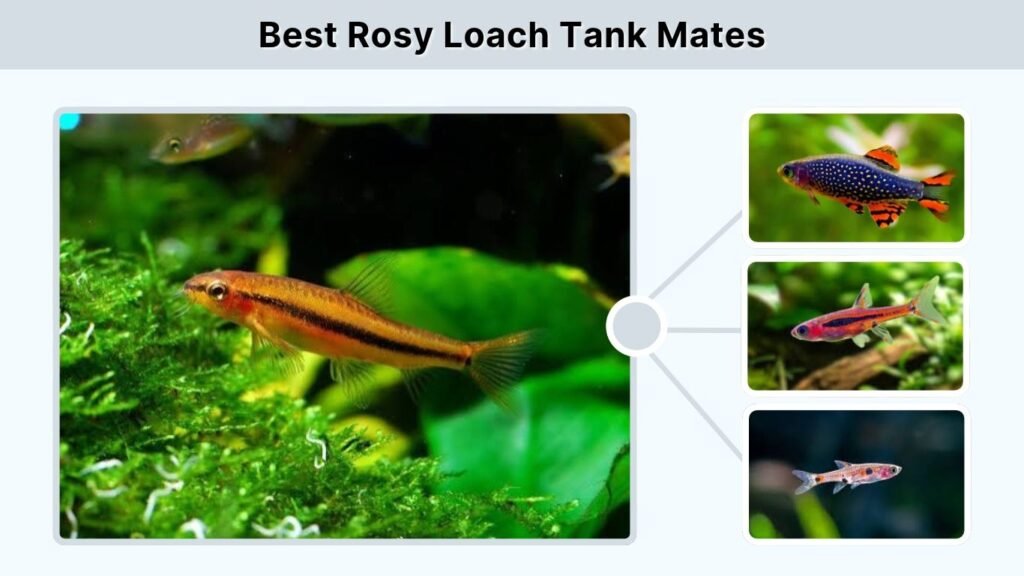
Choosing compatible tank mates is essential because rosy loaches are extremely small and can easily become intimidated by larger or aggressive species.
The best companions have peaceful temperaments, similar temperature requirements, and relatively small mouths.
Suitable Tank Mates
- Celestial pearl danios
- Chili rasboras
- Small Boraras rasboras
- Emerald dwarf rasboras
- Other peaceful Microdevario species
- Small peaceful freshwater shrimp, with caution regarding their young
- Appropriately matched peaceful nano fish
Celestial pearl danios are particularly interesting companions because they occur in similar natural environments.
Fish to Avoid
Large, aggressive, or highly competitive species are unsuitable companions.
Avoid keeping rosy loaches with:
- Oscars and other large predatory cichlids.
- Large aggressive barbs.
- Big predatory catfish.
- Fish capable of swallowing small loaches.
- Extremely aggressive territorial species.
Even peaceful but substantially larger fish may outcompete rosy loaches during feeding.
Rosy Loach Male vs Female Differences
Male and female rosy loaches display noticeable differences in body shape and coloration, particularly after reaching maturity.
Male rosy loaches are generally slimmer and more brightly colored. Their bodies often show attractive orange or rosy-pink shades that become especially intense during reproductive activity.
Females are usually slightly larger and have fuller, rounder abdomens. Their coloring tends to be brownish or muted, with irregular dark spots and blotches along the body.
These differences become easier to recognize when observing several healthy adult fish together.
However, aquarium stores sometimes offer mainly colorful males, making it difficult to obtain a balanced breeding group.
Rosy Loach Breeding in Home Aquariums
Breeding rosy loaches is possible in captivity, particularly in mature aquariums containing healthy males and females.
These fish are egg scatterers, meaning females release eggs among plants or onto suitable surfaces rather than building nests.
Adults provide no parental protection and may consume their eggs.
How to Breed Rosy Loaches
- Select healthy breeding adults. Choose mature males and females showing normal swimming behavior and healthy body condition.
- Prepare a breeding aquarium. Use a small, established breeding setup containing clean water and fine-leaved plants.
- Provide conditioning foods. Offer live foods such as Daphnia and baby brine shrimp.
- Encourage natural spawning. Allow the fish to interact peacefully among dense vegetation.
- Protect the eggs. Remove adults after spawning if necessary to reduce egg predation.
- Feed newly hatched fry. Begin with infusoria or appropriately tiny foods before introducing newly hatched brine shrimp.
Eggs may hatch in approximately 24 hours under warmer breeding conditions, although development varies with temperature.
Young fry require very small food particles and excellent water quality during their earliest stages.
Common Rosy Loach Health Problems

Rosy loaches can be sensitive to unstable aquarium conditions, particularly sudden changes in ammonia, nitrite, temperature, or water chemistry.
Poor water quality and stress are common contributing factors to aquarium fish health problems.
Signs of an Unhealthy Rosy Loach
- Persistent hiding or unusual inactivity.
- Loss of natural coloration.
- Rapid breathing.
- Refusal to eat.
- Unusual swimming movements.
- Visible white spots or skin abnormalities.
- Noticeable weight loss.
Test aquarium water promptly whenever unusual symptoms appear. Ammonia and nitrite should remain at undetectable levels in an established aquarium.
Regular partial water changes, appropriate feeding, quarantine of new arrivals, and avoiding overcrowding help reduce disease risks.
Do not medicate the entire aquarium without identifying the likely problem, as unnecessary treatments can harm sensitive fish.
FAQs
1. Are Rosy Loaches Good for Beginners?
Rosy loaches can be suitable for aquarists with basic experience maintaining freshwater tanks. However, they are not ideal for completely inexperienced keepers because they require stable water parameters, a mature aquarium, suitable food, and proper social grouping. Consistent maintenance makes their care considerably easier.
2. How Many Rosy Loaches Should Be Kept Together?
Rosy loaches should ideally be kept in groups of at least eight to ten individuals. They naturally form social groups and become more confident when surrounded by others of their species. Keeping only one or two may cause stress, hiding, and reduced natural activity.
3. Can Rosy Loaches Live With Shrimp?
Rosy loaches can coexist with many adult freshwater shrimp in peaceful planted aquariums. However, they may eat newly hatched shrimplets because their natural diet includes tiny invertebrates. Dense moss and vegetation provide shelter for juvenile shrimp, although successful shrimp breeding cannot be guaranteed.
4. Do Rosy Loaches Eat Algae?
Rosy loaches may consume small amounts of plant or algal material, but they are not specialized algae eaters. Their preferred foods include tiny invertebrates, larvae, and appropriately sized prepared foods. They should not be purchased primarily for aquarium algae control or cleaning purposes.
5. Can Rosy Loaches Live in a 10-Gallon Tank?
Although rosy loaches are extremely small, a 10-gallon aquarium is generally not the preferred choice for a full group. Their active swimming habits and social requirements make a longer, approximately 15-gallon aquarium more appropriate. Additional space also helps maintain stable water conditions and provides more opportunities for natural behavior.