

The leopard loach is a fascinating freshwater fish recognized for its spotted body, active bottom-dwelling behavior, and ability to thrive in well-maintained aquariums. Native to rivers and streams across South and Southeast Asia, this attractive species prefers clean, oxygen-rich water, natural hiding places, and a nutritious diet. Although leopard loaches are generally peaceful, they require suitable tank conditions and carefully selected companions. Understanding their natural habitat, feeding habits, temperament, and breeding behavior helps aquarium enthusiasts create a comfortable environment where these unique fish can remain healthy and active.
What Is a Leopard Loach?
The leopard loach (Acanthocobitis botia) is a freshwater fish belonging to the family Nemacheilidae. It is also commonly called the zipper loach, mottled loach, or sand loach.
This species naturally inhabits clear, flowing rivers and streams across parts of India, Bangladesh, Nepal, Myanmar, Pakistan, and neighboring Asian regions. It generally prefers rocky or sandy substrates with sufficient water movement.
The name leopard loach can also refer to certain spotted kuhli loaches, including Pangio shelfordii. However, this guide specifically covers Acanthocobitis botia, the stream-dwelling leopard loach.
Leopard Loach Identification
Leopard loaches have elongated bodies covered with irregular dark markings that resemble a leopard’s spotted pattern. Their coloration helps them blend naturally into rocky riverbeds.
- Scientific name: Acanthocobitis botia
- Common names: Leopard loach, zipper loach, mottled loach
- Family: Nemacheilidae
- Origin: South and Southeast Asia
- Typical aquarium size: Approximately 3–4 inches
- Color: Yellowish-brown with dark spots and blotches
- Temperament: Generally peaceful but sometimes territorial
- Diet: Omnivorous, with a preference for small invertebrates
- Care level: Intermediate
Their small, downward-facing mouths and sensitive barbels allow them to search for food among stones, sand, and other underwater surfaces.
Leopard Loach Size and Lifespan
Leopard loaches are relatively small freshwater fish. Many aquarium specimens reach approximately 3–4 inches (7.5–10 cm), although larger individuals have been documented in the wild.
Their slender bodies allow them to move efficiently between rocks, driftwood, and other aquarium decorations.
A leopard loach may live for several years in captivity. However, reliable species-specific lifespan information is limited, so commonly quoted estimates of five years or longer should not be treated as guarantees.
Proper aquarium maintenance, balanced feeding, and stable environmental conditions are important for supporting their long-term health.
Ideal Leopard Loach Tank Size and Setup
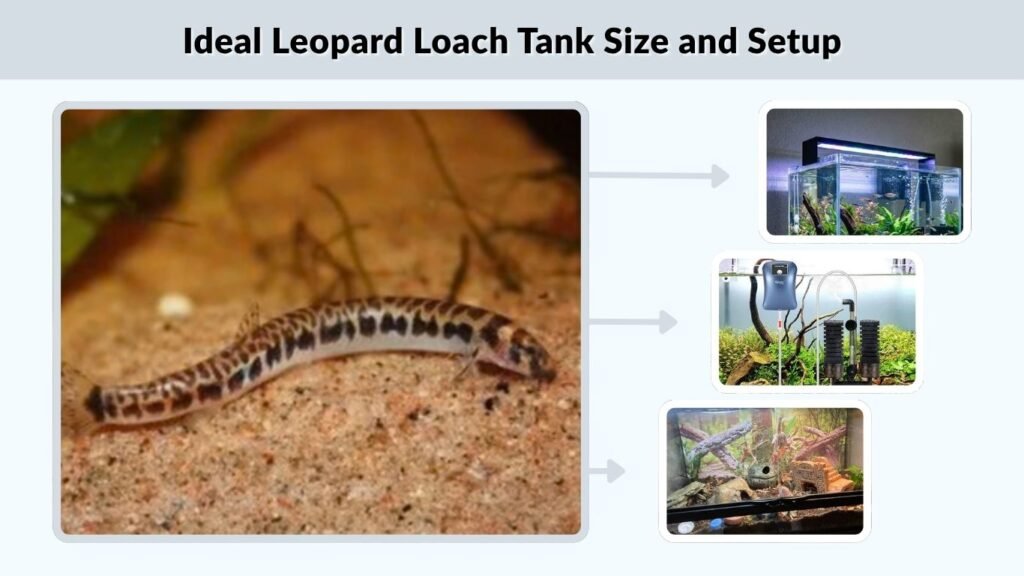
Leopard loaches naturally inhabit flowing freshwater environments. Therefore, their aquarium should provide adequate swimming space, clean water, and rocky hiding places.
A 30-gallon aquarium is a practical starting point for a small group, with additional space recommended when keeping multiple bottom-dwelling fish.
Recommended Water Parameters
| Parameter | Recommended Conditions |
|---|---|
| Tank size | 30 gallons or larger |
| Temperature | 72–79°F (22–26°C) |
| pH level | 6.5–7.5 |
| Water hardness | Soft to moderately hard |
| Water movement | Moderate to strong |
| Substrate | Smooth gravel and sand |
| Lighting | Moderate |
| Tank environment | Rocky, well-oxygenated freshwater |
| Filtration | Efficient filtration with good circulation |
Maintaining stable water conditions is more important than constantly adjusting aquarium parameters.
Best Aquarium Decorations
Leopard loaches prefer aquariums containing natural structures that provide shelter without restricting movement.
Suitable aquarium decorations include:
- Smooth river rocks for natural hiding areas.
- Fine gravel or sand for comfortable bottom exploration.
- Driftwood for shaded shelters.
- Java fern attached to rocks or wood.
- Anubias for additional vegetation.
- Small caves for resting and territorial separation.
A powerful filtration system can help maintain clean, oxygen-rich water. However, the aquarium should also contain calmer areas where fish can rest.
Avoid sharp decorations that could injure their bodies or barbels.
Leopard Loach Diet and Feeding Requirements

Leopard loaches are omnivorous fish that naturally consume small aquatic invertebrates, insect larvae, and other edible organisms found along riverbeds.
In captivity, they usually accept sinking prepared foods alongside live and frozen alternatives.
A varied diet is important because these active bottom feeders require sufficient protein and other essential nutrients.
Best Foods for Leopard Loaches
- Bloodworms: A protein-rich supplemental food.
- Daphnia: Encourages natural feeding behavior.
- Brine shrimp: Provides additional nutritional variety.
- Sinking pellets: Suitable for regular feeding.
- Frozen insect larvae: Resemble natural food sources.
- Tubifex worms: May be offered occasionally from reliable sources.
- Quality flakes: Accepted by some individuals when food reaches the bottom.
Feed small portions once or twice daily, depending on the fish’s size and appetite.
Because leopard loaches primarily search for food near the substrate, ensure that enough food reaches the bottom before faster-swimming tank mates consume everything.
Remove uneaten food promptly to prevent ammonia accumulation and declining water quality.
Leopard Loach Behavior and Temperament
Leopard loaches are active, curious fish that spend much of their time investigating the aquarium bottom.
They frequently move between rocks, search through substrate, and rest underneath decorations. Their natural behavior is closely connected to the flowing river environments they inhabit.
Although generally peaceful toward unrelated fish, leopard loaches may display territorial behavior toward similar bottom-dwelling species.
Some individuals defend preferred resting areas or food sources, particularly in smaller aquariums.
Their activity levels may increase during feeding or when the aquarium becomes quieter.
Unlike strongly schooling fish, leopard loaches do not necessarily remain together in tight groups. Providing multiple hiding places helps reduce territorial disputes when keeping several individuals.
Best Leopard Loach Tank Mates
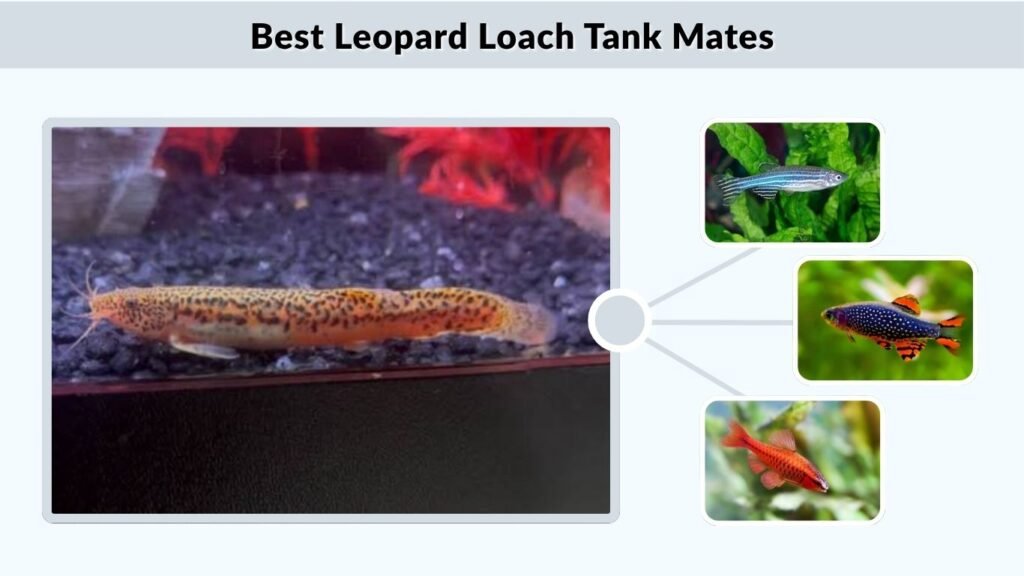
Selecting appropriate leopard loach tank mates requires considering temperament, adult size, water temperature, and current preferences.
The best companions are peaceful, active species that appreciate well-oxygenated freshwater conditions.
Suitable Tank Mates
- Zebra danios
- Pearl danios
- Selected peaceful barbs
- White cloud mountain minnows, where temperature requirements overlap
- Other nonaggressive stream-dwelling fish
- Peaceful medium-sized community fish with compatible water requirements
Fish occupying the middle and upper aquarium regions are often easier companions because they compete less directly for bottom territory.
Fish to Avoid
Avoid housing leopard loaches with aggressive, predatory, or highly territorial fish.
Unsuitable companions may include large aggressive cichlids, predatory catfish, and particularly combative bottom dwellers.
Very small shrimp may also be vulnerable because leopard loaches naturally consume tiny invertebrates.
Monitor new aquarium combinations carefully. Even fish described as peaceful can become aggressive when space, shelter, or food is limited.
Leopard Loach Male vs Female Differences
Distinguishing male and female leopard loaches can be challenging, particularly when the fish are immature.
Adult females are generally fuller-bodied than males, especially when carrying developing eggs. Their abdominal region may appear noticeably rounded.
Males are often slimmer and may display subtle differences in head shape or body markings.
However, coloration alone is not a reliable way to identify sex.
Comparing several mature individuals usually makes these differences easier to recognize.
Leopard Loach Breeding in Aquariums
Breeding leopard loaches in home aquariums is uncommon. Most available husbandry information focuses on maintaining adults rather than reliably reproducing them.
In natural environments, reproduction may be influenced by seasonal changes in rainfall, water movement, and other environmental conditions.
The species has occasionally reproduced in captivity, but a consistently successful breeding method is not well established.
How to Encourage Leopard Loach Breeding
Aquarists interested in breeding can focus on creating conditions that support natural reproductive behavior.
- Choose healthy adults: Select mature fish showing normal activity and feeding behavior.
- Provide appropriate space: Use a mature aquarium with adequate bottom territory.
- Maintain excellent water quality: Keep ammonia and nitrite undetectable.
- Offer nutritious foods: Provide varied live and frozen foods to support conditioning.
- Create natural shelters: Include smooth stones, gravel, and protected areas.
- Observe reproductive behavior: Watch for changes in activity and interactions between individuals.
These steps may improve breeding conditions, but they do not guarantee spawning.
If eggs or fry appear, protect them from adult fish and provide appropriately sized food once the young become free-swimming.
Common Leopard Loach Health Problems
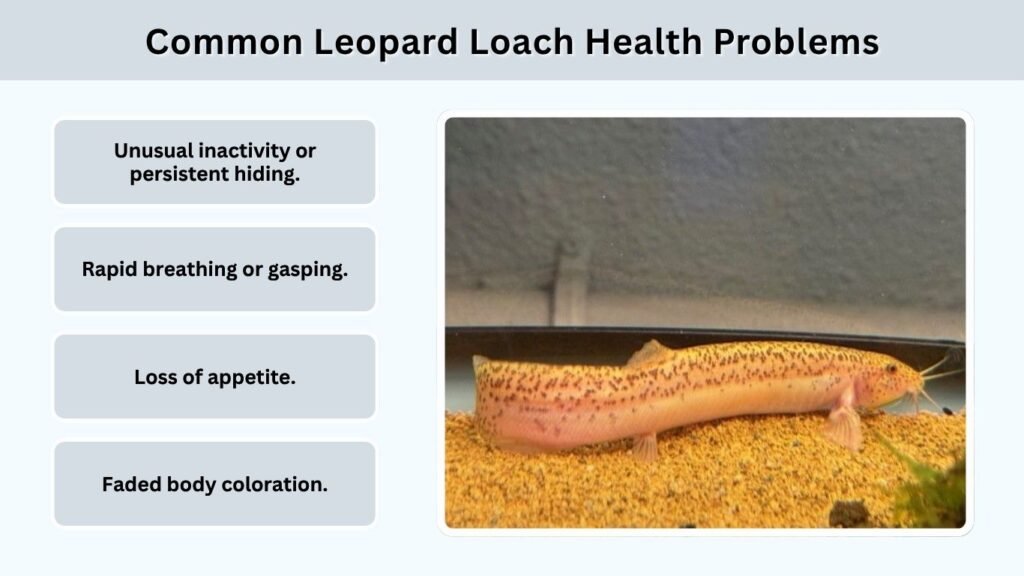
Leopard loaches can experience health problems when exposed to poor water quality, inappropriate temperatures, insufficient oxygen, or persistent stress.
Their natural habitat contains moving, oxygen-rich water, making proper filtration and circulation especially important.
Signs of an Unhealthy Leopard Loach
- Unusual inactivity or persistent hiding.
- Rapid breathing or gasping.
- Loss of appetite.
- Faded body coloration.
- White spots on the body or fins.
- Damaged barbels or visible wounds.
- Difficulty maintaining normal swimming movements.
Test water parameters whenever abnormal behavior develops.
Regular partial water changes, careful feeding, suitable tank mates, and adequate filtration help prevent many common aquarium problems.
New fish should ideally be quarantined before entering an established community aquarium.
Avoid using medications without identifying the likely disease and checking whether the treatment is suitable for loaches.
Leopard Loach vs Kuhli Loach
Leopard loaches and kuhli loaches are sometimes confused because both have elongated bodies and spend considerable time near the aquarium bottom.
However, their habitat requirements and swimming behavior differ.
| Feature | Leopard Loach | Kuhli Loach |
|---|---|---|
| Scientific name | Acanthocobitis botia | Pangio kuhlii and related species |
| Body appearance | Mottled or spotted | Usually banded |
| Habitat | Flowing streams | Slower streams and sheltered waters |
| Water movement | Moderate to strong | Gentle to moderate |
| Temperament | Sometimes territorial | Generally peaceful and social |
| Preferred substrate | Sand and smooth gravel | Fine sand |
| Social behavior | May defend bottom territories | Benefits from larger groups |
Kuhli loaches are generally better suited to densely planted aquariums with gentle currents, while leopard loaches usually benefit from more noticeable water movement and rocky surroundings.
FAQs
1. Are Leopard Loaches Aggressive?
Leopard loaches are generally peaceful toward many community fish but may become territorial with other bottom-dwelling species. Their aggression usually involves chasing competitors away from preferred shelters or feeding areas. Providing sufficient aquarium space and multiple hiding places helps reduce unnecessary conflict between individuals.
2. How Big Do Leopard Loaches Get?
Leopard loaches commonly reach approximately 3–4 inches in home aquariums, although larger wild specimens have been recorded. Their final size depends on genetics, food availability, and environmental conditions. Providing adequate space and a balanced diet supports normal growth and physical development.
3. Can Leopard Loaches Live With Shrimp?
Leopard loaches may coexist with larger adult shrimp, but they can consume small shrimp and newly hatched shrimplets. Their natural diet includes tiny aquatic invertebrates, making shrimp breeding colonies potentially vulnerable. Dense vegetation and hiding places may improve shrimp survival but cannot eliminate predation risks.
4. Do Leopard Loaches Eat Algae?
Leopard loaches are not specialized algae eaters. Although they may occasionally consume small amounts of organic material while searching for food, their diet primarily includes aquatic invertebrates and prepared aquarium foods. They should not be purchased specifically for algae control or aquarium cleaning.
5. Are Leopard Loaches Good for Beginners?
Leopard loaches are better suited to aquarists with some freshwater fishkeeping experience. They require well-oxygenated water, suitable filtration, a natural substrate, and carefully selected tank mates. Beginners who understand aquarium cycling and regular water maintenance may successfully keep them in appropriately designed aquariums.