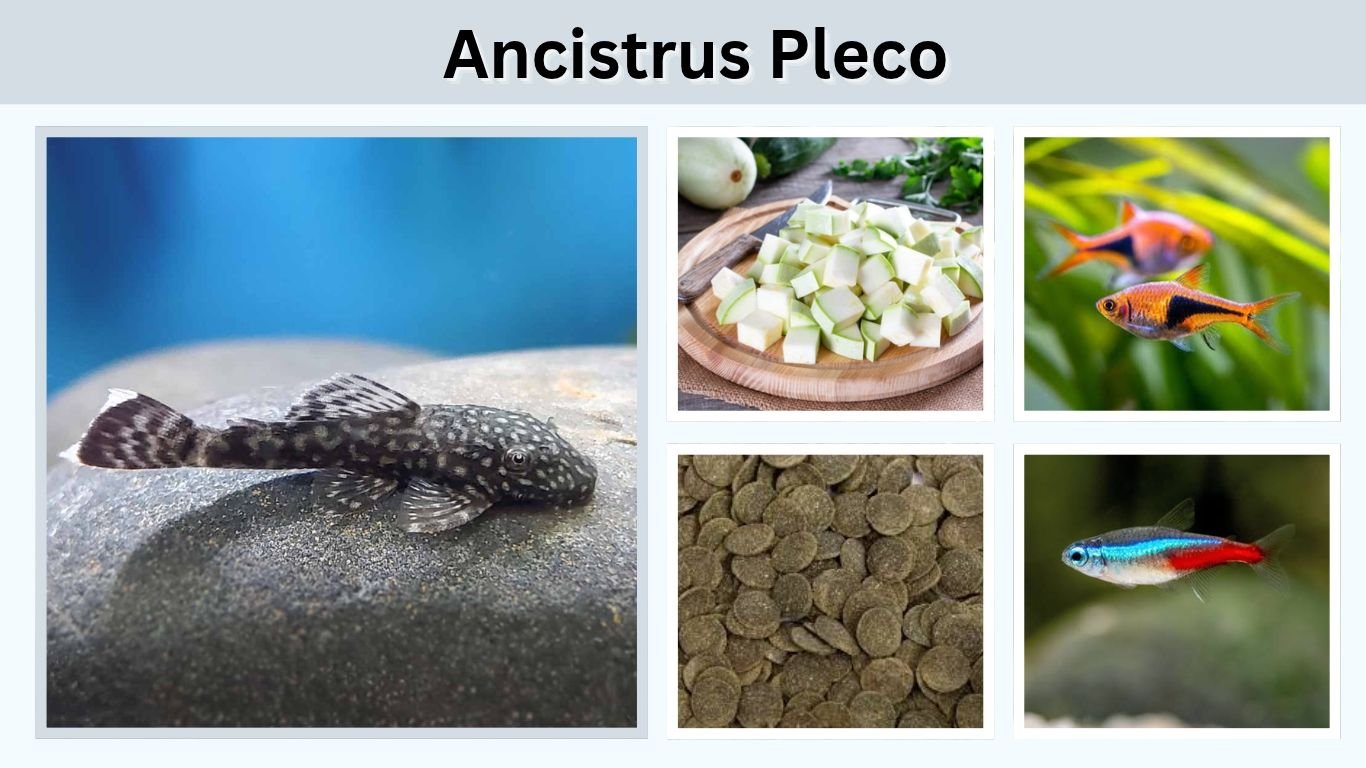
The Ancistrus pleco, commonly known as the bristlenose pleco, is a popular freshwater aquarium fish recognized for its unusual facial bristles and algae-eating behavior. Native to tropical regions of Central and South America, these peaceful catfish are appreciated for their manageable size and distinctive appearance. Available in several beautiful varieties, including Super Red, Albino, and Longfin, Ancistrus plecos can make excellent additions to established community aquariums. Understanding their diet, growth, breeding habits, and tank requirements helps aquarists provide proper care and maintain healthy fish for many years.
What Is an Ancistrus Pleco?
The Ancistrus pleco belongs to the genus Ancistrus within the armored catfish family Loricariidae. These fish are commonly called bristlenose plecos because adult males develop distinctive fleshy tentacles around their snouts.
Many aquarium specimens are sold as Ancistrus sp. because the exact species or ancestry of domesticated strains is uncertain.
Ancistrus Pleco Identification
Ancistrus plecos have several recognizable physical characteristics.
- Scientific Name: Ancistrus spp.
- Common Name: Bristlenose pleco or bushynose pleco
- Family: Loricariidae
- Origin: Central and South America, depending on species
- Adult Size: Approximately 4–6 inches for common aquarium strains
- Lifespan: Often 5–10 years with proper care
- Body Shape: Flattened body with armored plates
- Mouth: Downward-facing suction mouth
- Behavior: Generally peaceful and bottom-dwelling
Adult males develop prominent snout bristles, while females usually have fewer or smaller bristles.
How Big Do Ancistrus Plecos Get?
Most common aquarium Ancistrus plecos reach approximately 4 to 6 inches (10–15 cm) in length when fully grown.
Their smaller adult size makes them easier to accommodate than common plecos, which may exceed 12 inches and sometimes grow much larger.
Ancistrus Pleco Growth Rate
Young bristlenose plecos grow relatively quickly when provided with sufficient nutrition and suitable aquarium conditions.
Growth slows as they approach maturity, with many reaching most of their adult size within one to two years.
Their development depends on genetics, water quality, diet, and overall health.
Different Ancistrus species may have different maximum sizes, so identification is important when selecting a fish.
Popular Types of Ancistrus Plecos
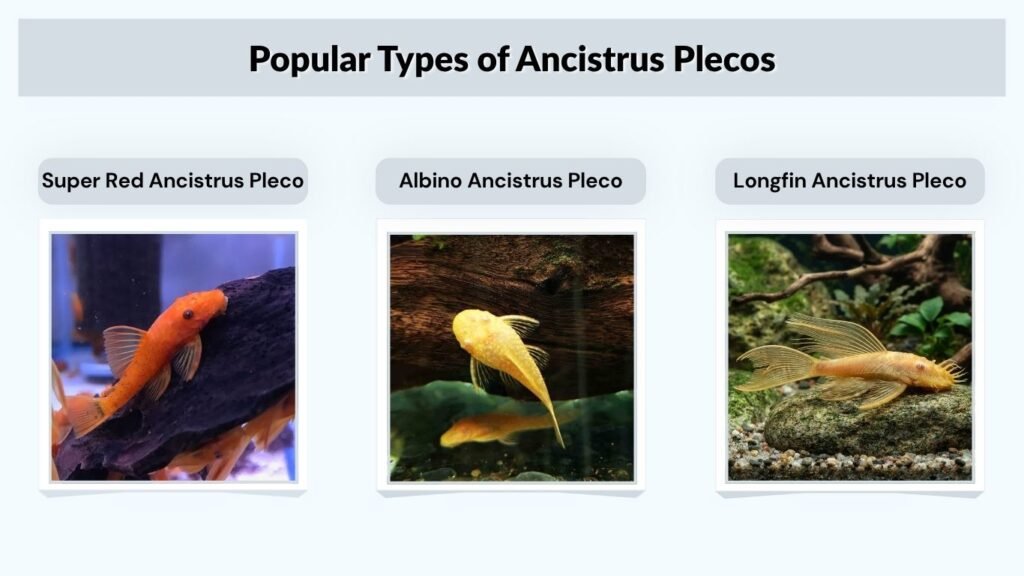
Ancistrus plecos are available in numerous colors, fin shapes, and patterns. Many popular aquarium varieties result from selective breeding rather than representing separate species.
Each variety generally requires similar care, although individual fish may have slightly different needs.
1. Super Red Ancistrus Pleco
The Super Red Ancistrus pleco is recognized for its bright orange-red coloration.
Selective breeding has produced fish with increasingly intense colors, making this variety particularly attractive to aquarium enthusiasts.
Super Red plecos generally reach approximately 4 to 5 inches and require care similar to other domesticated bristlenose plecos.
2. Albino Ancistrus Pleco
Albino Ancistrus plecos have pale yellow, cream, or golden bodies with reddish or pinkish eyes.
Their unusual coloration results from reduced or absent melanin pigmentation.
Like other bristlenose plecos, they prefer aquariums containing hiding places, driftwood, and stable water conditions.
3. Longfin Ancistrus Pleco
Longfin Ancistrus plecos have elongated dorsal, pectoral, and tail fins that create a flowing appearance.
They occur in several color varieties, including brown, albino, and Super Red.
Their long fins can be more vulnerable to damage from sharp decorations or aggressive tank mates, making careful aquarium design important.
4. Blue-Eyed Lemon Ancistrus Pleco
Blue-Eyed Lemon bristlenose plecos have distinctive yellow coloration and pale or bluish-looking eyes.
They are sometimes marketed under the L144 label, although this trade designation has been used inconsistently.
Their attractive color makes them popular among breeders and collectors.
5. Green Dragon Ancistrus Pleco
Green Dragon bristlenose plecos typically have dark olive, brown, or greenish coloration.
Both regular-fin and longfin forms are available.
Like other domesticated strains, their exact ancestry may not be documented, so Green Dragon should be understood as a trade variety rather than a formally recognized species.
Ancistrus Pleco Tank Requirements
Ancistrus plecos need clean, oxygen-rich freshwater and suitable hiding places to remain healthy.
Although relatively hardy, they produce considerable waste and require good filtration.
A mature aquarium with stable conditions is preferable to a newly established tank.
Ideal Water Parameters
| Parameter | Recommended Range |
| Tank Size | 20 gallons minimum for one common adult; larger preferred |
| Temperature | 72–79°F (22–26°C) |
| pH Level | Approximately 6.0–7.5 |
| Water Hardness | Soft to moderately hard |
| Ammonia | 0 ppm |
| Nitrite | 0 ppm |
| Lifespan | Commonly 5–10 years |
These recommendations apply primarily to common captive-bred bristlenose plecos. Specialized wild species may require different conditions.
Best Aquarium Setup
Provide caves, smooth rocks, driftwood, and plants to create a comfortable environment.
Ancistrus plecos often rest in sheltered areas during daylight and become more active during evening hours.
A soft sand substrate or smooth gravel helps protect their undersides.
Good filtration, regular water changes, and adequate oxygenation are essential for long-term health.
What Do Ancistrus Plecos Eat?

Ancistrus plecos are omnivorous fish that consume algae, biofilm, plant matter, and small animal-based foods.
Although they are famous for eating algae, aquarium algae alone cannot provide a complete diet.
They need regular supplemental feeding to remain healthy.
Best Foods for Ancistrus Plecos
A balanced Ancistrus pleco diet may include:
- High-quality algae wafers
- Spirulina-based sinking pellets
- Blanched zucchini
- Cucumber slices
- Shelled peas
- Suitable leafy vegetables
- Small amounts of frozen bloodworms or other protein-rich foods
- Natural algae and biofilm
Vegetables should be washed before feeding, and uneaten portions should be removed before they spoil.
Driftwood can also provide grazing surfaces where microorganisms and biofilm develop.
How Often Should You Feed Them?
Most adult Ancistrus plecos benefit from daily feeding, with portions adjusted to their size and the amount of natural food available.
Younger fish may need more frequent access to suitable food.
Avoid overfeeding because decomposing leftovers can reduce water quality.
Ancistrus Pleco Behavior and Tank Mates

Ancistrus plecos are generally peaceful fish that spend much of their time exploring aquarium surfaces and searching for food.
They are often most active during the evening and nighttime.
However, adult males can become territorial, particularly around caves and favored hiding places.
Best Tank Mates
Compatible tank mates may include:
- Neon tetras
- Cardinal tetras
- Harlequin rasboras
- Peaceful rainbowfish
- Corydoras catfish in sufficiently spacious tanks
- Small peaceful gouramis
- Other nonaggressive community fish
Avoid aggressive species that may injure plecos or compete intensely for territory.
Keeping multiple males requires a larger aquarium with separate hiding places.
How to Breed Ancistrus Plecos
Ancistrus plecos are among the easier armored catfish to breed in captivity.
Breeding usually occurs when mature males and females have suitable shelter, nutritious food, and stable aquarium conditions.
Unlike many egg-scattering fish, bristlenose plecos typically reproduce inside caves.
Ancistrus Pleco Breeding Process
- Pair Selection: Choose healthy, sexually mature male and female fish.
- Cave Preparation: Provide appropriately sized breeding caves with sheltered openings.
- Courtship: The male establishes a territory and attracts a female into the cave.
- Egg Laying: The female deposits a cluster of yellow-orange eggs inside the shelter.
- Egg Protection: The male guards and fans the eggs to maintain water circulation.
- Hatching: Eggs generally hatch after several days, depending on temperature.
- Fry Development: Young fish initially absorb their yolk sacs before beginning to feed.
Newly free-swimming fry can consume biofilm, suitable finely prepared foods, and softened vegetables.
Ancistrus vs. Common Pleco: What’s the Difference?
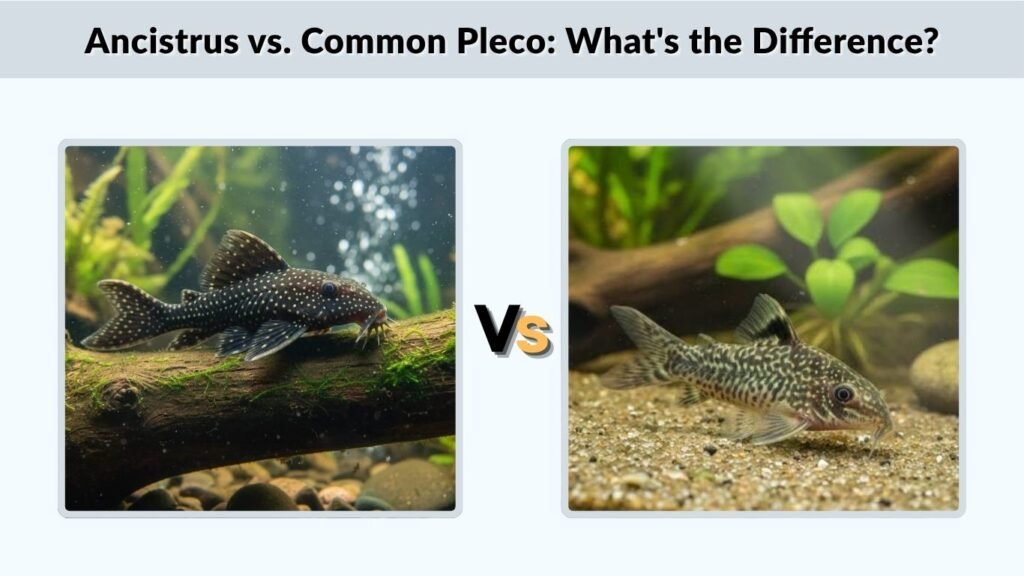
Ancistrus plecos are members of the larger group of armored suckermouth catfish commonly called plecos.
Therefore, Ancistrus is not separate from plecos; it is one genus within that broader group.
The main practical differences involve size, appearance, and aquarium requirements.
| Feature | Ancistrus Pleco | Common Pleco |
| Typical Adult Size | 4–6 inches | Often 12–18+ inches |
| Facial Bristles | Prominent in adult males | No comparable snout tentacles |
| Tank Size | Commonly 20+ gallons | Much larger aquarium required |
| Temperament | Generally peaceful | Can become territorial |
| Algae Consumption | Yes | Yes, especially when young |
| Care Difficulty | Relatively manageable | More demanding due to size |
Ancistrus plecos are generally better suited to modestly sized home aquariums than large common plecos.
FAQs
1. How long do Ancistrus plecos live?
Ancistrus plecos commonly live for 5 to 10 years in well-maintained aquariums. Their lifespan depends on genetics, water conditions, diet, and disease prevention. Some individuals may live longer when provided with excellent long-term care.
2. Are Ancistrus plecos good algae eaters?
Yes, Ancistrus plecos are effective grazers of certain soft algae and biofilm. However, they do not consume every type of aquarium algae and cannot replace regular tank maintenance. They also require supplemental vegetables and prepared foods.
3. Can two Ancistrus plecos live together?
Two Ancistrus plecos can live together in a sufficiently large aquarium with multiple hiding places. However, adult males may compete for territory and breeding caves. A compatible male-female pair is often easier to maintain than two territorial males.
4. Do female Ancistrus plecos have bristles?
Female Ancistrus plecos may develop small bristles around the edges of their snouts, but these are generally less prominent than those of males. Mature males usually display larger, branching tentacles across the upper snout.
5. What is the difference between Super Red and Albino Ancistrus plecos?
Super Red Ancistrus plecos have orange to reddish coloration developed through selective breeding. Albino varieties have reduced pigmentation, pale bodies, and pinkish or reddish eyes. Both generally require similar aquarium conditions and a balanced diet.