
The Green Phantom Pleco is a beautiful freshwater catfish admired for its olive-green body, bright yellow spots, and distinctive appearance. Native to the Orinoco River system in South America, this fascinating fish is popular among aquarium enthusiasts looking for an unusual bottom-dwelling species. Although generally peaceful toward other fish, Green Phantom Plecos require clean, oxygen-rich water, a spacious aquarium, and a balanced diet. Understanding their adult size, growth rate, lifespan, feeding habits, breeding behavior, and tank requirements is essential for keeping them healthy.
What Is a Green Phantom Pleco?
The Green Phantom Pleco is a freshwater catfish commonly identified as Hemiancistrus subviridis, also known by the aquarium trade number L200. It belongs to the Loricariidae family, which includes numerous armored suckermouth catfish.
Interestingly, the L200 designation is also used for a closely related species, Baryancistrus demantoides, commonly called the High-Fin Green Phantom Pleco.
Green Phantom Pleco Identification
- Common Name: Green Phantom Pleco
- Scientific Name: Hemiancistrus subviridis
- L-Number: L200
- Family: Loricariidae
- Origin: Orinoco River basin, South America
- Adult Size: Approximately 6–8 inches, sometimes larger
- Lifespan: Often estimated at 10–15 years in captivity
- Diet: Omnivorous
- Temperament: Generally peaceful but territorial
- Care Level: Intermediate
- Water Temperature: 79–86°F (26–30°C)
- Preferred pH: Approximately 6.0–7.5
Physical Appearance
Green Phantom Plecos have broad, flattened heads, armored bodies, and sucker-shaped mouths. Their green or olive-colored bodies are decorated with numerous small yellow or cream-colored spots.
Their fins often feature yellowish edges, creating an attractive contrast with their darker body coloration.
They also possess powerful pectoral fins that help them maintain their position in flowing water.
Green Phantom Pleco Size and Growth Rate

Green Phantom Plecos are medium-to-large aquarium catfish that require more space than many smaller pleco varieties. Their adult size depends on their species, genetics, environmental conditions, and overall health.
How Big Does a Green Phantom Pleco Get?
A full-grown Green Phantom Pleco commonly measures approximately 6–8 inches in total length.
Some specimens may reach around 8–10 inches under favorable conditions. Scientific size records often measure standard length, excluding the tail, which explains some differences between reported measurements.
How Fast Do Green Phantom Plecos Grow?
Green Phantom Plecos generally have a moderate to slow growth rate. Juveniles grow gradually, and reaching full adult size can take several years.
Growth depends on several factors:
- Diet: Balanced nutrition supports healthy development.
- Tank Size: Adequate space allows natural movement.
- Water Quality: Stable conditions reduce stress.
- Temperature: Suitable warmth supports metabolism.
- Genetics: Individual growth potential varies.
- Health: Disease and prolonged stress can slow growth.
There is no scientifically established monthly growth rate that applies to every Green Phantom Pleco.
Green Phantom Pleco Tank Size and Setup
Green Phantom Plecos naturally inhabit flowing rivers with rocky bottoms and strong water movement. Their aquarium should reproduce these conditions while providing secure hiding places.
Minimum Tank Size
A 55–75-gallon aquarium with a footprint of at least 48 inches long and 18 inches wide is a practical starting recommendation for a single adult.
Larger aquariums are preferable, especially for fully grown specimens or tanks containing multiple bottom-dwelling fish.
The aquarium should provide sufficient space for movement and territorial behavior.
Ideal Water Parameters
- Temperature: 79–86°F (26–30°C)
- pH: Approximately 6.0–7.5
- Water Hardness: Ideally 2–10 dGH
- Ammonia: 0 ppm
- Nitrite: 0 ppm
- Nitrate: Preferably below 20 ppm
- Water Flow: Moderate to strong
- Oxygen Level: High dissolved oxygen
There is no single essential total dissolved solids (TDS) reading for this species. Stable, relatively soft water is generally more important than achieving an exact number.
Substrate and Decorations
Smooth gravel or sand works well as aquarium substrate.
Large rocks, caves, and driftwood create natural hiding places and territorial boundaries.
A strong filtration system, circulation pump, and good surface agitation help maintain oxygen-rich conditions.
Heavy rocks should be positioned securely to prevent injuries or aquarium damage.
What Do Green Phantom Plecos Eat?

Green Phantom Plecos are omnivorous grazers. In their natural habitats, they scrape algae, biofilm, organic material, and small organisms from submerged surfaces.
Unlike wood-eating Panaque species, Green Phantom Plecos do not require wood as their primary food source.
Best Foods for Green Phantom Plecos
A balanced aquarium diet may include:
- Algae Wafers: Provide convenient plant-based nutrition.
- Sinking Pellets: Supply additional nutrients.
- Zucchini: A commonly accepted vegetable.
- Cucumber: Can be offered occasionally.
- Spinach: Provides dietary variety.
- Sweet Potato: Suitable as an occasional food.
- Bloodworms: Offer animal protein.
- Mysis Shrimp: Provide additional protein.
- Natural Biofilm: Encourages normal grazing behavior.
How Often Should You Feed Them?
Feed a suitable amount daily, adjusting portions according to the fish’s appetite and body condition.
Many Green Phantom Plecos become more active during evening hours, making nighttime feeding useful.
Remove uneaten vegetables and other foods before they begin decomposing.
Although these fish graze on algae, aquarium algae alone cannot provide complete nutrition.
Green Phantom Pleco Behavior and Tank Mates
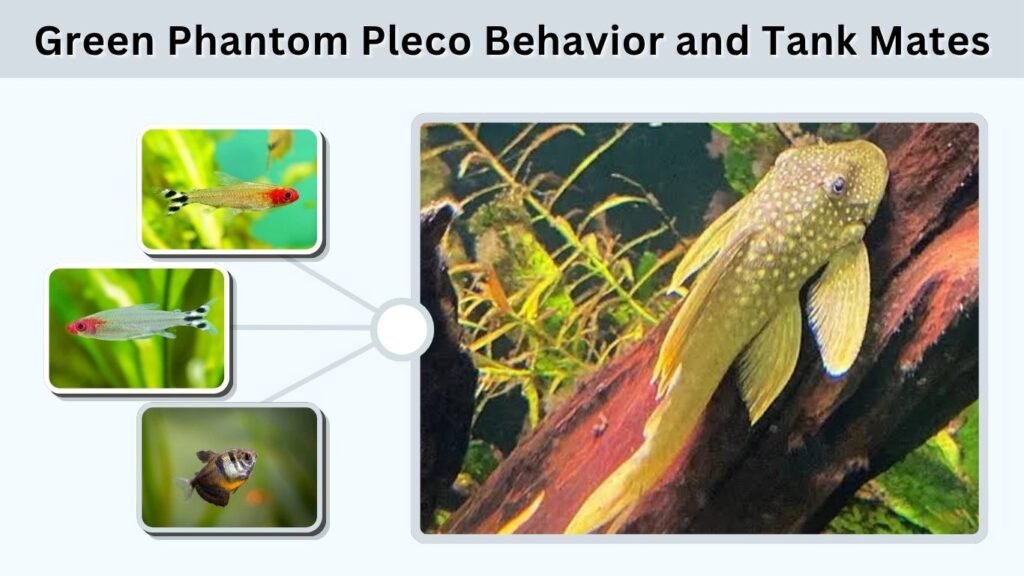
Green Phantom Plecos are generally peaceful toward fish occupying the middle and upper aquarium levels. However, they can become territorial toward other plecos and similarly sized bottom-dwelling species.
They often spend daylight hours resting inside caves or underneath rocks.
Best Tank Mates
Suitable companions may include:
- Rummy-Nose Tetras
- Cardinal Tetras
- Peaceful Pencilfish
- Larger peaceful tetras
- Sterbai Corydoras
- Other compatible warm-water community fish
Tank mates should tolerate warm, well-oxygenated water and appropriate water movement.
Can Green Phantom Plecos Live With African Cichlids?
Most African Rift Lake cichlids are unsuitable companions because they typically prefer harder, more alkaline water.
Some species also display territorial aggression that may stress Green Phantom Plecos.
Keeping fish with matching water requirements is generally safer.
Can Green Phantom Plecos Live With Discus?
Green Phantom Plecos and discus share some temperature and water preferences, but compatibility requires careful planning.
Discus often prefer calmer aquarium conditions, while Green Phantom Plecos benefit from substantial water movement.
A large aquarium with well-oxygenated water and sheltered areas may make coexistence possible, but it is not an ideal combination for every setup.
Green Phantom Pleco Male vs. Female
Determining the sex of young Green Phantom Plecos is difficult because males and females look similar before reaching maturity.
Male Green Phantom Pleco
Mature males often develop broader heads and more prominent odontodes, which are small, bristle-like structures located around their cheeks and pectoral fins.
They may also become more territorial during breeding periods.
Female Green Phantom Pleco
Females generally have less prominent odontodes and may develop fuller, rounder abdomens when carrying eggs.
However, body shape alone is not sufficient for accurate identification.
Examining multiple characteristics in mature fish provides more reliable results.
Green Phantom Pleco Breeding
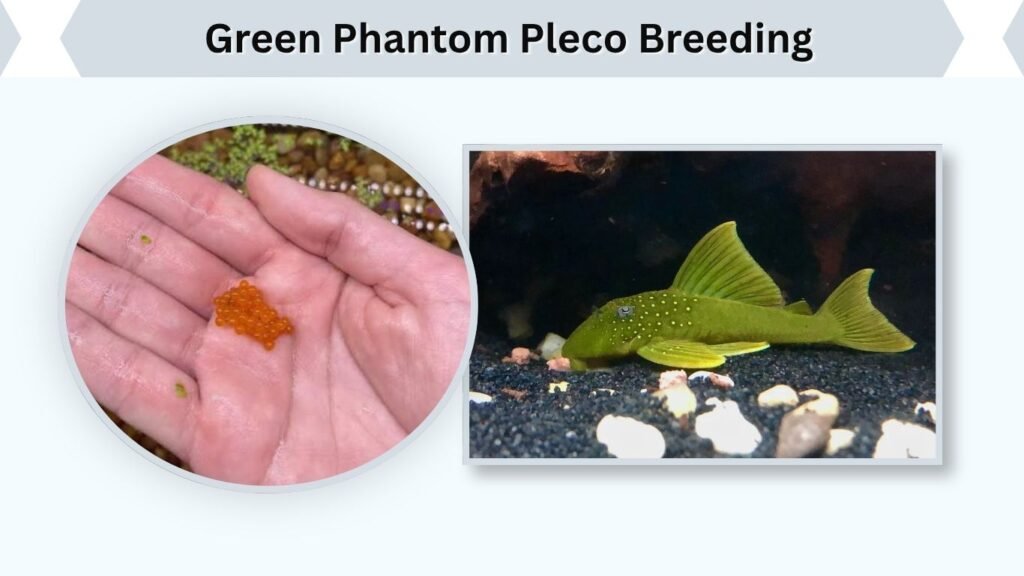
Breeding Green Phantom Plecos in captivity is possible but challenging. Successful reproduction requires healthy adults, appropriate caves, stable water conditions, and excellent oxygenation.
Breeding Conditions
Green Phantom Plecos are cave-spawning fish. Mature males may establish territories inside rocky crevices or suitable artificial caves.
During spawning, females deposit eggs inside a protected cavity, where males guard the developing offspring.
Reported captive breeding observations describe clutches of several dozen eggs, although exact numbers vary.
Clean water, suitable nutrition, and minimal disturbance are particularly important during egg development.
Green Phantom Pleco Lifespan and Health
Green Phantom Plecos are long-lived aquarium fish, with captive lifespans often estimated at approximately 10–15 years. However, dependable long-term lifespan records are limited.
Proper feeding, stable water conditions, and adequate space can help support longevity.
Common Health Problems
Potential health problems include bacterial infections, parasitic diseases, malnutrition, and stress associated with poor water quality.
Warning signs may include:
- Persistent loss of appetite
- Sunken abdomen
- Rapid or labored breathing
- Unusual hiding behavior
- Visible white patches or wounds
- Abnormal swimming movements
New fish should be quarantined before being introduced into established aquariums.
Green Phantom Pleco vs. Blue Phantom Pleco
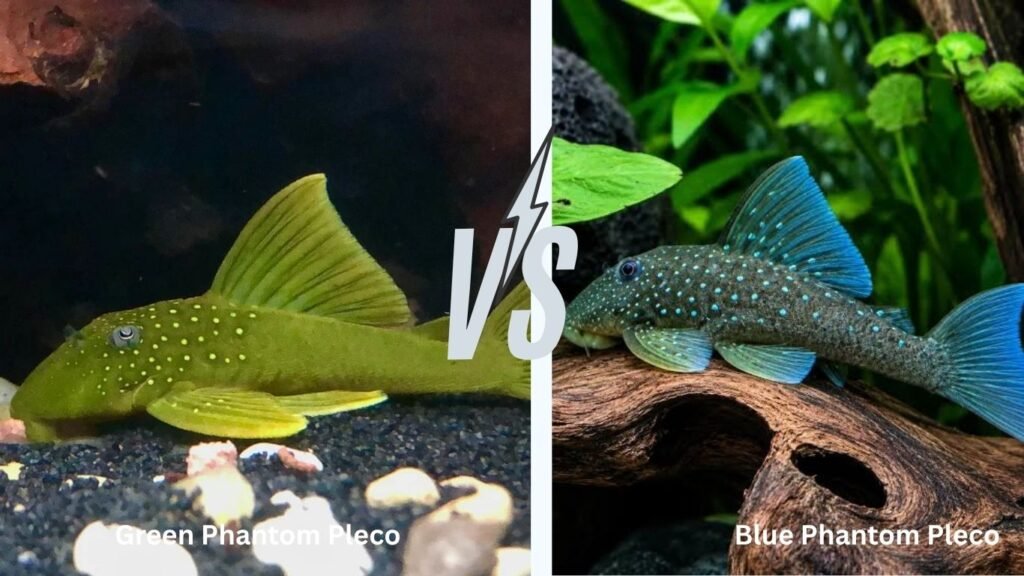
The Green Phantom Pleco (L200) and Blue Phantom Pleco (L128) are closely related aquarium fish with similar body shapes and care requirements.
The Green Phantom typically displays an olive-green body with yellowish spots.
The Blue Phantom usually has a darker blue-gray or bluish-green body with lighter spots.
Their exact taxonomic relationship has been debated, but aquarium retailers generally distinguish them by their appearance and collection locality.
Standard vs. High-Fin Green Phantom Pleco
The standard L200 is Hemiancistrus subviridis, while the High-Fin L200 is Baryancistrus demantoides.
The High-Fin variety has a taller dorsal fin and a more developed membrane behind that fin. These fish are separate scientifically described species despite sharing the same trade number.
Green Phantom Pleco Price and Buying Tips
Green Phantom Pleco prices vary depending on specimen size, availability, location, and whether the fish is a standard or High-Fin L200.
High-Fin specimens may be more expensive because they are less commonly available.
Before purchasing, inspect the fish for healthy body condition, normal breathing, intact fins, and an active feeding response.
Avoid individuals with severely sunken bellies or obvious signs of disease.
FAQs
1. Are Green Phantom Plecos Aggressive?
Green Phantom Plecos are generally peaceful toward most community fish. However, adult males may become territorial toward other plecos, especially when competing for caves or feeding areas. Providing sufficient space and multiple hiding places helps reduce aggressive encounters.
2. Why Is My Green Phantom Pleco Always Hiding?
Green Phantom Plecos naturally hide inside caves and rocky shelters, particularly during daylight hours. Recently introduced fish may remain hidden while adjusting to their surroundings. Persistent hiding accompanied by poor appetite or rapid breathing may indicate stress or illness.
3. Do Green Phantom Plecos Need Driftwood?
Driftwood is useful because it provides shelter and supports natural biofilm growth. However, Green Phantom Plecos are not specialized wood-eating catfish. Their main nutritional needs should be met through balanced sinking foods, vegetables, and occasional animal-based foods.
4. Can You Keep Two Green Phantom Plecos Together?
Two Green Phantom Plecos can sometimes coexist in a sufficiently spacious aquarium with separate caves and territories. However, mature individuals may become aggressive toward one another. Keeping a single specimen is usually easier for aquarium owners.
5. Are Green Phantom Plecos Good for Beginners?
Green Phantom Plecos are better suited to aquarists with some fishkeeping experience. Although relatively hardy in suitable conditions, they require excellent water quality, strong oxygenation, specialized feeding, and a spacious aquarium. These requirements make them more demanding than many beginner-friendly catfish.