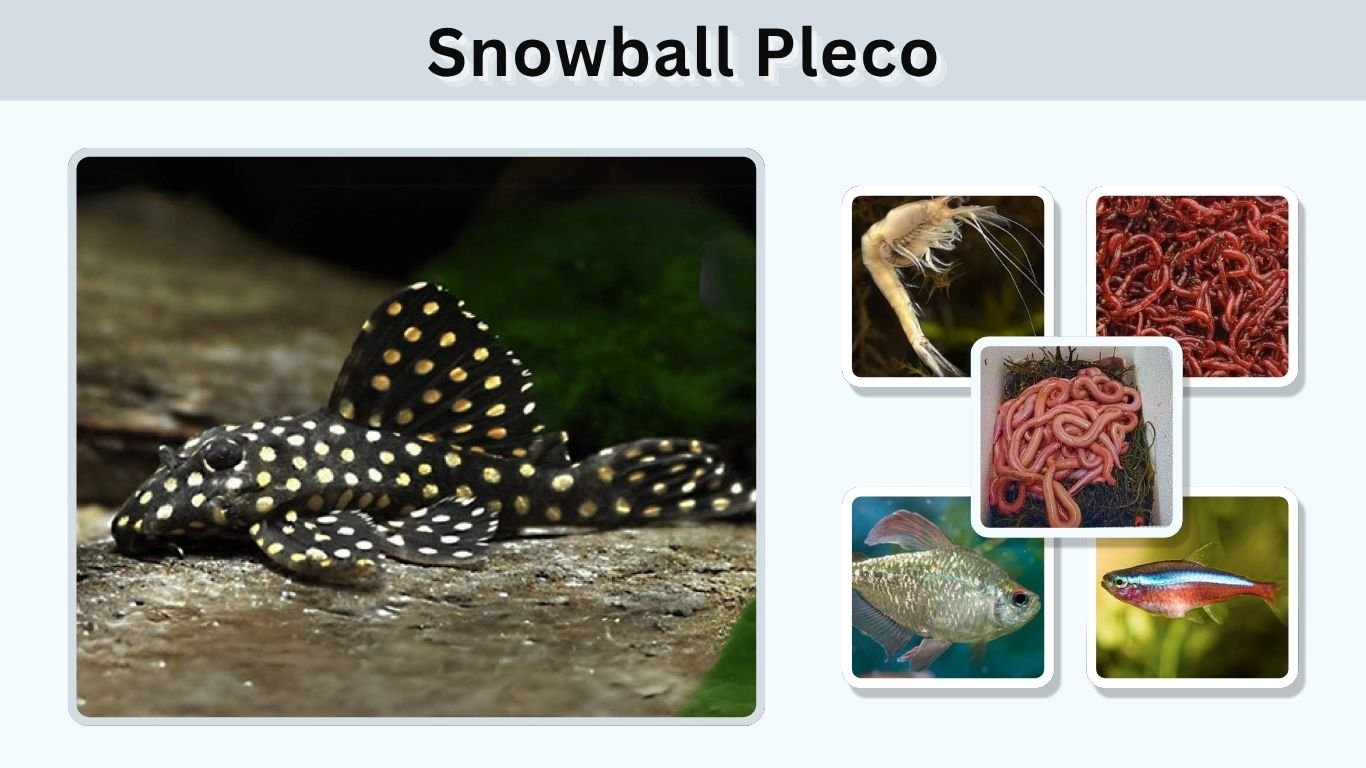
The Snowball Pleco is a striking freshwater catfish recognized by its dark body and bright, snow-like spots. Popular with aquarium keepers, this bottom-dwelling fish is often sold under several common names and L-numbers, which can make identification confusing. Its adult size, diet, and tank needs depend on the exact variety. Learning how to identify a Snowball Pleco and provide suitable water conditions, hiding places, and nutrition will help it thrive in a home aquarium for many years when cared for properly.
What Is a Snowball Pleco?
The Snowball Pleco is a popular name for several spotted South American suckermouth catfish belonging to the Loricariidae family. The name is particularly associated with Hypancistrus inspector (L102), although other spotted varieties are also sold under similar names. These freshwater fish are admired for their contrasting body patterns, peaceful nature, and interesting bottom-dwelling behavior.
Appearance and Natural Habitat
Snowball Plecos usually have dark brown, black, or charcoal-colored bodies covered with small white or cream-colored spots. Their flattened bodies, protective armor-like plates, and sucker-shaped mouths help them navigate rocky underwater environments.
Many varieties originate from South American river systems, particularly the Orinoco and Rio Negro regions. They naturally live around submerged rocks, caves, and crevices where they can hide from predators and search for food.
Different Types of Snowball Plecos
Several varieties are associated with the Snowball Pleco name. Their appearance and adult size can differ depending on their species and L-number.
- L102 Snowball Pleco: Hypancistrus inspector is recognized by its dark body and prominent white spots. It can reach approximately 5–6 inches.
- L201 Snowball Pleco: Often called the Orinoco Angel Pleco, this spotted variety generally grows to around 4 inches.
- L471 Mini Snowball Pleco: A smaller spotted variety that typically reaches approximately 2.5–3.5 inches.
- LDA33 Big Spot Pleco: Sometimes confused with Snowball Plecos because of its spotted appearance, but it belongs to a different group and can grow considerably larger.
Common names are not always used consistently by aquarium sellers, so checking the scientific name or L-number is important before purchasing.
Snowball Pleco Size and Lifespan
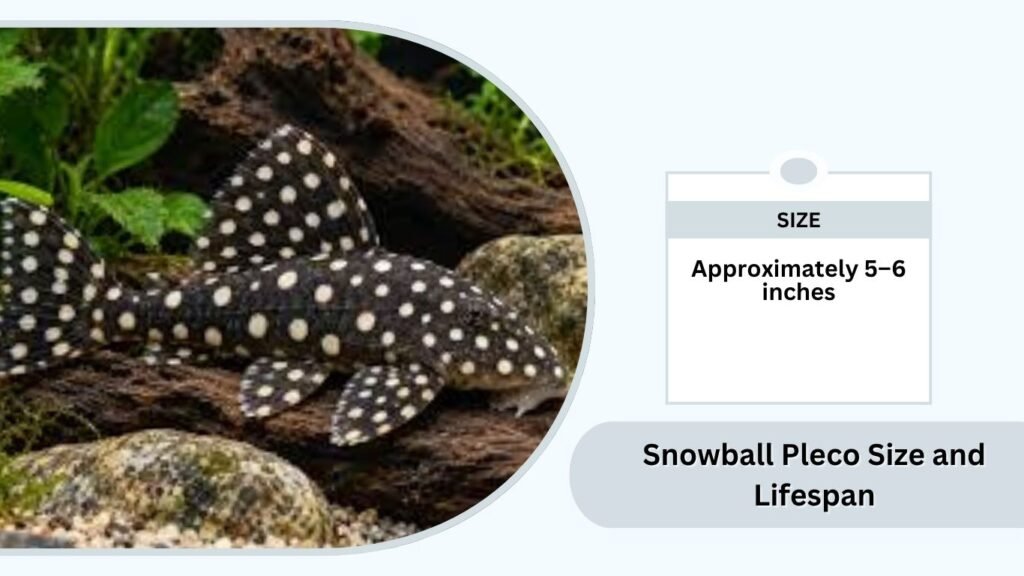
Snowball Pleco size depends on the particular variety, its genetics, and the conditions in which it grows. Some types remain relatively small, making them suitable for moderately sized aquariums, while others need considerably more space. Understanding their expected adult size helps aquarium owners choose an appropriate tank and avoid overcrowding.
How Big Do Snowball Plecos Get?
A typical L102 Snowball Pleco can reach approximately 5–6 inches in standard length when fully grown. L201 varieties generally remain around 4 inches, while L471 Mini Snowball Plecos are considerably smaller.
Young Snowball Plecos grow gradually as they mature. Their growth rate depends on nutrition, water quality, oxygen availability, and overall health. Providing appropriate food and stable aquarium conditions supports healthy development.
Snowball Pleco Lifespan
A well-maintained Snowball Pleco can live for approximately 8–10 years or longer, although lifespan varies between species and individual fish.
Clean water, proper nutrition, and a stress-free environment contribute to longevity. Poor water quality, inadequate feeding, and unsuitable tank conditions can shorten their lives. Regular aquarium maintenance is therefore essential.
Snowball Pleco Care and Tank Setup
Snowball Plecos need a carefully maintained freshwater aquarium that resembles their natural rocky habitat. They prefer warm water, good oxygenation, effective filtration, and several hiding places. Although they are relatively peaceful, they can become territorial around their favorite caves. Providing enough space and suitable shelter helps keep them comfortable.
Snowball Pleco Tank Size
The appropriate tank size depends on the variety and its expected adult dimensions. A 30-gallon aquarium is a reasonable starting point for an adult L102, while smaller varieties may be maintained in appropriately designed tanks with sufficient bottom space.
Important aquarium features include:
- Caves and shelters: Provide ceramic tubes, rock caves, and other secure hiding places.
- Substrate: Choose smooth sand or fine gravel to prevent injuries.
- Filtration: Use an effective filter to maintain clean water and remove fish waste.
- Water circulation: Maintain good oxygenation and steady water movement.
- Aquarium decorations: Add driftwood and securely positioned rocks to create a natural environment.
Make sure rocks and decorations cannot collapse or trap the fish. Multiple hiding places are particularly useful when keeping more than one pleco.
Water Temperature and Parameters
Snowball Plecos prefer warm, stable freshwater conditions. For Hypancistrus varieties, a temperature of approximately 26–30°C (79–86°F) is generally suitable. A pH between 5.5 and 7.5 provides a practical starting range, depending on the particular species.
Ammonia and nitrite should remain at zero, while nitrate should be kept low through regular partial water changes. Test aquarium water regularly and avoid sudden changes in temperature or chemistry.
Snowball Pleco Diet and Feeding
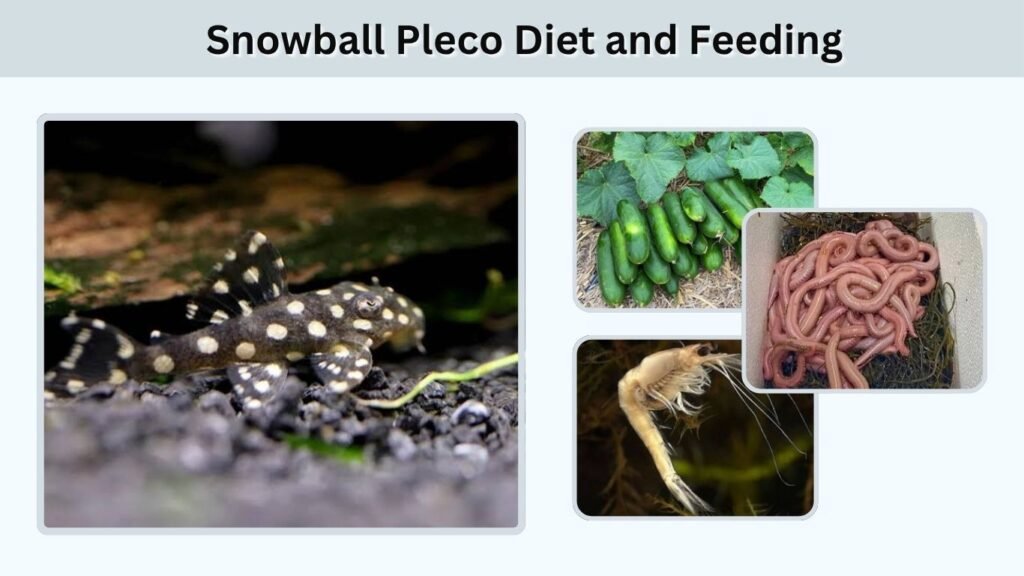
Snowball Plecos need a balanced diet to maintain healthy growth and body condition. Although some plecos primarily consume algae and plant material, Hypancistrus varieties are more protein-oriented. Offering suitable sinking foods and animal-based protein sources is important. Their feeding routine should match the nutritional requirements of the particular variety rather than relying on algae growing inside the aquarium.
Best Food for Snowball Plecos
Good food choices for Snowball Plecos include:
- Sinking carnivore pellets: Provide protein and essential nutrients for daily feeding.
- Bloodworms: Frozen bloodworms offer an additional source of animal protein.
- Brine shrimp: Provide dietary variety and useful nutrients.
- Mysis shrimp: Offer a nutritious food option for protein-oriented plecos.
- Vegetables: Small portions of blanched zucchini can occasionally supplement the diet.
Avoid feeding only algae wafers because many Snowball Plecos require more protein than typical algae-eating species.
How Often Should You Feed Them?
Feed young Snowball Plecos small portions daily to support their development. Adults can also receive daily meals, with quantities adjusted according to their body condition and appetite.
These fish are often more active at night, so offering food after the aquarium lights go out can encourage natural feeding behavior. Remove uneaten food to prevent waste accumulation and maintain good water quality.
Snowball Pleco Behavior and Tank Mates

Snowball Plecos are generally peaceful fish that spend most of their time near the aquarium bottom. They are usually comfortable around similarly sized community fish that do not compete for their hiding places. However, males may defend caves and preferred territories. Providing enough space, shelter, and food helps reduce competition and creates a more comfortable aquarium environment.
Why Is My Snowball Pleco Always Hiding?
Hiding is normal for Snowball Plecos because they are primarily nocturnal. They often remain inside caves, beneath rocks, or behind decorations during daylight hours. They usually become more active when aquarium lighting is reduced.
However, excessive hiding combined with a sunken belly, rapid breathing, unusual swimming, or refusal to eat may indicate stress or illness. Check the water parameters, feeding routine, and behavior of other aquarium inhabitants if these symptoms appear.
Best Tank Mates for Snowball Plecos
Suitable tank mates include peaceful community fish that occupy different swimming levels. Cardinal tetras, rummy-nose tetras, harlequin rasboras, and certain peaceful dwarf cichlids may work in appropriately sized aquariums.
Corydoras catfish can also be compatible, provided the aquarium has enough bottom space and feeding opportunities. Avoid aggressive fish, large territorial cichlids, and species that frequently compete for caves.
Snowball Pleco Breeding
Breeding Snowball Plecos is possible in home aquariums when their environmental and nutritional needs are met. Many Hypancistrus varieties are cave spawners, meaning they lay eggs inside protected spaces rather than scattering them throughout the aquarium. A compatible breeding pair, suitable caves, stable water conditions, and proper nutrition can encourage successful reproduction.
How to Identify Male and Female Snowball Plecos
Male and female Snowball Plecos can be difficult to distinguish when they are young. Mature males generally develop broader heads and more noticeable odontodes, which are small bristle-like structures around the pectoral fin spines and body.
Females usually have rounder bodies, particularly when carrying eggs. These physical differences become easier to recognize as the fish mature.
How to Breed Snowball Plecos
Provide narrow caves with suitable entrances where a female can deposit her eggs. Maintain clean, oxygen-rich water and offer nutritious food to the breeding pair.
After spawning, the male typically guards the eggs inside the cave. Once the eggs hatch, the fry initially depend on their yolk sacs for nutrition. When these are absorbed, provide appropriately sized nutritious foods and maintain excellent water quality to support their development.
FAQs
1. How big does a Snowball Pleco get?
A Snowball Pleco’s adult size depends on its variety. L102 can reach approximately 5–6 inches, while L201 generally grows to around 4 inches. The L471 Mini Snowball Pleco is smaller, typically reaching approximately 2.5–3.5 inches.
2. What do Snowball Plecos eat?
Snowball Plecos, particularly Hypancistrus varieties, prefer protein-rich foods such as sinking carnivore pellets, bloodworms, brine shrimp, and mysis shrimp. Small portions of vegetables can occasionally supplement their diet, but algae alone is not sufficient.
3. Are Snowball Plecos aggressive?
Snowball Plecos are generally peaceful toward compatible community fish. However, they may become territorial when defending caves or preferred hiding places. Providing multiple shelters and enough aquarium space helps minimize aggression and competition.
4. What is the smallest Snowball Pleco?
The L471 Mini Snowball Pleco is one of the smallest varieties associated with the Snowball name. It generally reaches approximately 2.5–3.5 inches as an adult and is popular among aquarium keepers looking for a compact spotted pleco.
5. How long do Snowball Plecos live?
Snowball Plecos can live approximately 8–10 years or longer with proper care. Their lifespan depends on genetics, diet, water quality, and aquarium conditions. Regular maintenance and appropriate feeding help support a healthy, long life.