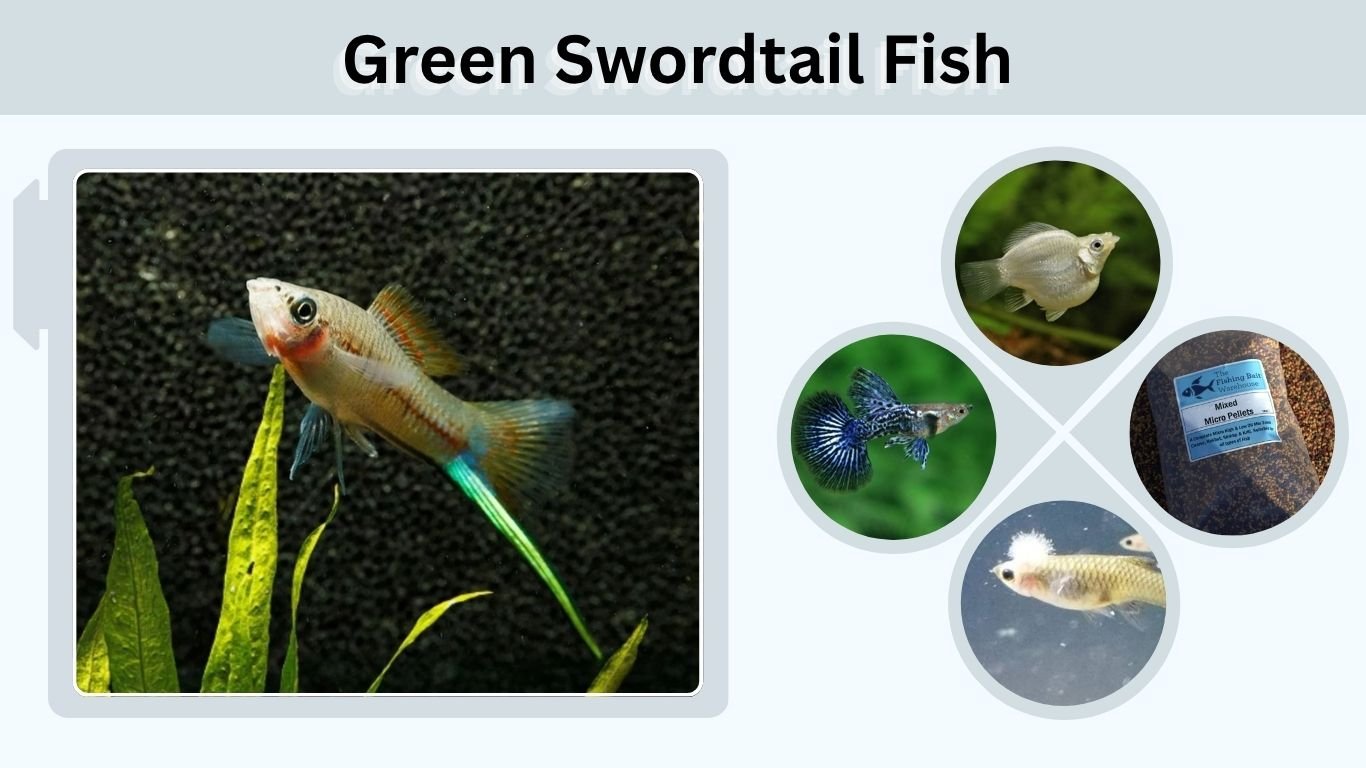
The green swordtail fish is a beautiful freshwater species recognized for its greenish body, colorful horizontal stripes, and distinctive sword-shaped tail. Native to Mexico and Central America, this active livebearer is popular among aquarium enthusiasts because of its attractive appearance and adaptable nature. Green swordtails are relatively easy to maintain, making them suitable for beginners who understand their basic needs. However, proper aquarium space, balanced feeding, and stable water conditions are essential for keeping them healthy. This guide explains green swordtail care, size, lifespan, habitat, diet, behavior, and breeding.
What Is a Green Swordtail Fish?
The green swordtail (Xiphophorus hellerii) is a tropical freshwater fish belonging to the Poeciliidae family. It is one of the original wild forms from which many colorful aquarium swordtail varieties have been developed. Although commonly called green, its body may display olive, silver, yellow, and blue-green shades, depending on genetics and lighting conditions.
Green Swordtail Identification
Green swordtails have slender, elongated bodies and distinctive markings that help distinguish them from other livebearers.
- Body color: Olive-green or silvery-green with iridescent scales.
- Horizontal stripe: A reddish or brownish line along the sides.
- Tail: Mature males develop an elongated lower tail extension.
- Fins: Usually transparent or lightly colored, sometimes with reddish markings.
- Body shape: Streamlined, with females generally appearing fuller than males.
Green Swordtail Size and Lifespan
Adult green swordtails commonly grow around 4–6 inches long, including the male’s tail extension, although individual sizes vary. Females may develop larger bodies than males.
Their typical aquarium lifespan is approximately 3–5 years. Good nutrition, clean water, and suitable tank conditions help support healthy growth and longevity.
Green Swordtail Natural Habitat
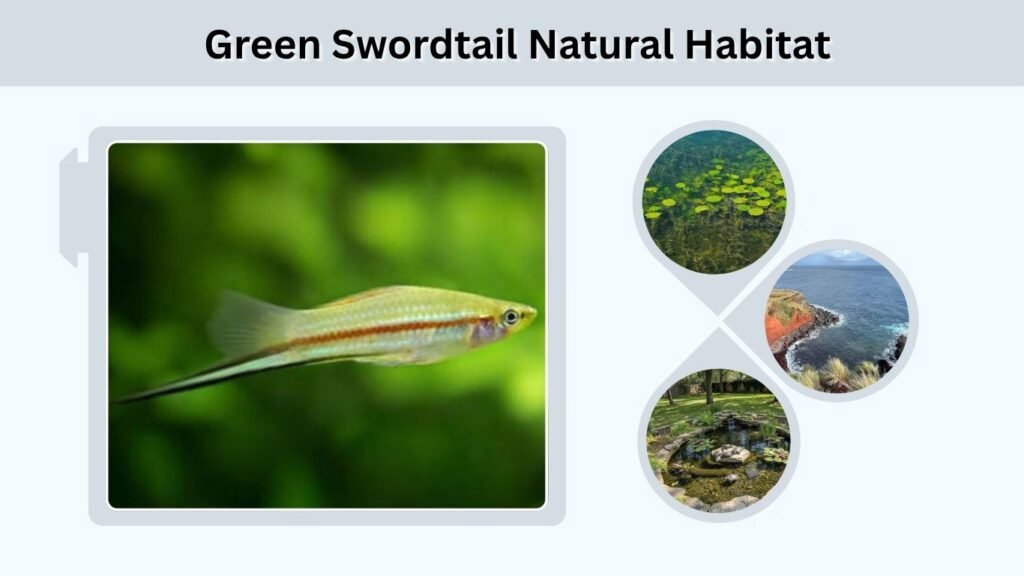
Wild green swordtails originate from freshwater habitats across southeastern Mexico and parts of Central America, including Guatemala, Belize, and Honduras. They inhabit streams, rivers, springs, and other freshwater environments. Their natural surroundings provide useful guidance for creating comfortable aquarium conditions, particularly regarding water movement, temperature, and available shelter.
Where Do Wild Green Swordtails Live?
Wild green swordtails occur in both flowing and relatively calm freshwater habitats. Adults are often found in areas with noticeable water movement, while smaller fish may shelter near quieter margins.
They generally prefer well-oxygenated water and can live in environments containing rocks, aquatic vegetation, and other natural hiding places.
Wild Green Swordtail vs. Aquarium Varieties
Wild-type green swordtails usually display subtle greenish coloring with a horizontal stripe.
Selective breeding has produced aquarium forms with brighter colors and modified fins, including neon green, high-fin, and tuxedo varieties.
These names describe ornamental strains rather than separate species. The Montezuma swordtail (Xiphophorus montezumae) is a different species.
Green Swordtail Care and Tank Requirements
Green swordtail care is relatively straightforward when aquarium conditions remain stable. These fish are energetic swimmers and need sufficient horizontal space rather than a small, crowded tank. A properly established aquarium with filtration, suitable water chemistry, and regular maintenance supports natural behavior, healthy coloration, and successful reproduction.
Ideal Tank Size and Water Parameters
- Tank size: At least 30 gallons for a small group, preferably with a long swimming area.
- Temperature: 72–82°F (22–28°C).
- Water pH: Approximately 7.0–8.0.
- Water hardness: Around 10–25 dGH.
- Filtration: Efficient biological filtration with moderate water circulation.
- Lighting: Moderate lighting with shaded resting areas.
- Tank lid: Secure covering to prevent jumping.
Aquarium Plants and Decorations
Green swordtails appreciate aquariums that combine open swimming areas with suitable shelter.
Java fern, hornwort, Vallisneria, and floating plants are useful choices. Smooth rocks and driftwood can create a more natural environment.
Avoid overcrowding the aquarium with decorations because swordtails need room to swim freely.
Water Changes and Maintenance
Change approximately 20–30% of the aquarium water weekly, adjusting according to water testing and stocking levels.
Regularly monitor ammonia, nitrite, nitrate, and temperature. Ammonia and nitrite should remain at zero in a properly cycled aquarium.
Avoid sudden changes in water chemistry, which can stress fish.
What Do Green Swordtail Fish Eat?
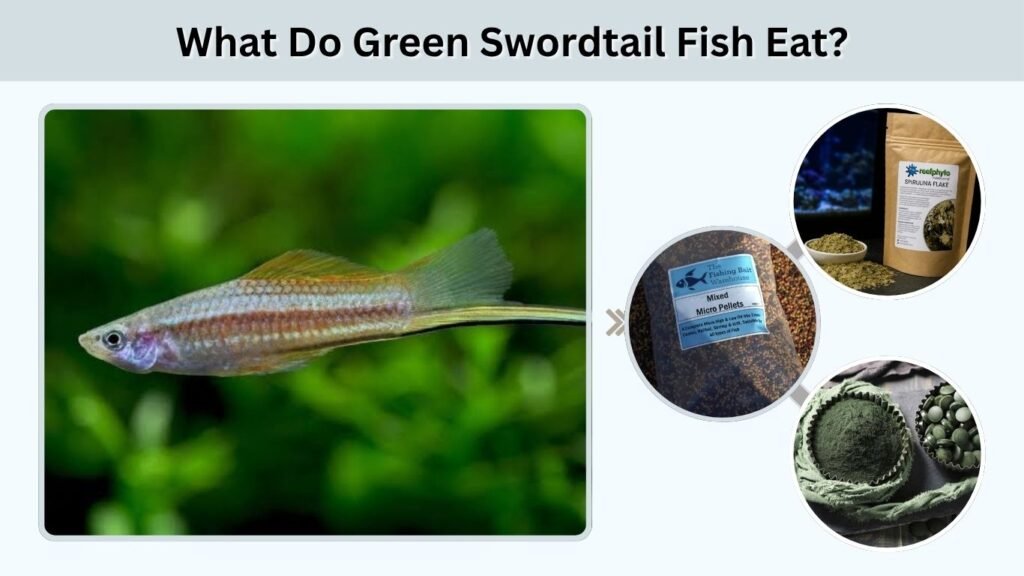
Green swordtails are omnivorous fish that consume plant matter and small animals. In the wild, their diet includes algae, small invertebrates, insects, and organic material. Aquarium fish readily accept prepared foods, but feeding a combination of nutritious products helps maintain good health, proper growth, and attractive coloration.
Best Foods for Green Swordtails
- Fish flakes: High-quality tropical flakes provide everyday nutrition.
- Micro-pellets: Convenient balanced food for adult fish.
- Spirulina foods: Supply vegetable-based nutrients.
- Brine shrimp: Offer additional protein and dietary variety.
- Daphnia: Suitable as an occasional live or frozen food.
- Blanched vegetables: Small portions of zucchini or spinach can supplement their diet.
How Often Should You Feed Green Swordtails?
Feed adult green swordtails once or twice daily in small portions.
Offer only enough food for them to finish within a couple of minutes. Overfeeding can increase waste and reduce water quality.
Rotate plant-based and protein-rich foods to maintain a balanced diet.
Green Swordtail Behavior and Tank Mates
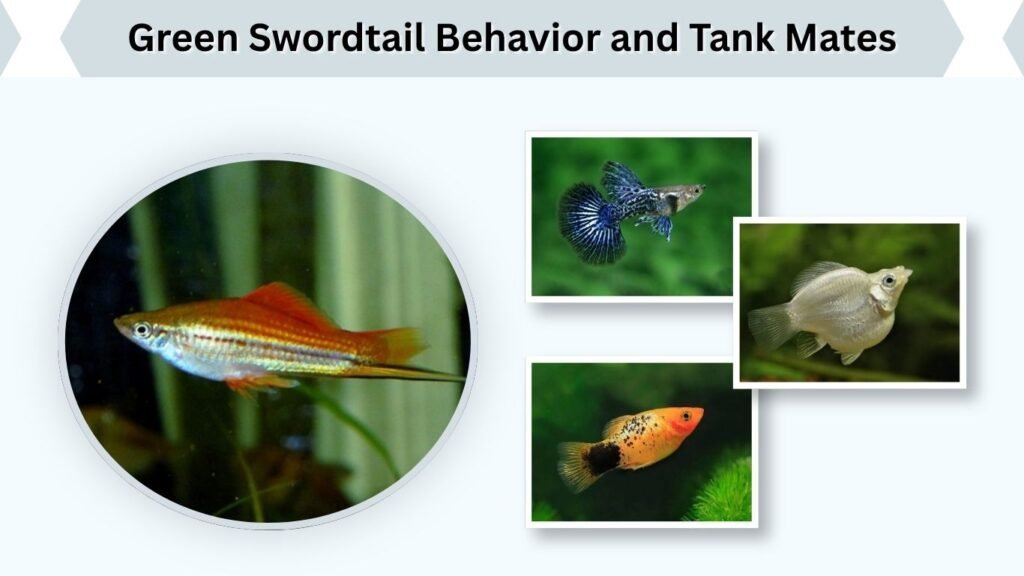
Green swordtails are generally peaceful community fish, although males may show territorial behavior toward other males. Their constant swimming and curious nature make them interesting aquarium inhabitants. Providing adequate space and compatible companions is important because stress and competition can influence their behavior.
Best Tank Mates
Green swordtails can share an aquarium with several peaceful freshwater species when their water requirements are compatible.
- Platies
- Mollies
- Guppies
- Certain rainbowfish
- Compatible Corydoras catfish
- Bristlenose plecos
Avoid aggressive fish and persistent fin nippers. Monitor smaller companions because individual swordtails can sometimes behave aggressively.
Can Green Swordtails Live Alone?
A green swordtail may survive alone, but keeping compatible companions generally provides a more natural social environment.
A group containing one male and two or three females can help spread male attention. Avoid housing several males in cramped conditions, where competition may cause persistent chasing.
Green Swordtail Breeding and Reproduction
Green swordtails reproduce through internal fertilization and give birth to live young rather than laying eggs. Healthy adults may breed naturally in suitable aquariums without special equipment. Females can also store sperm, meaning they may produce additional broods after separation from males. Providing shelter is especially important when raising young swordtails.
Male vs. Female Green Swordtail
Male green swordtails usually develop a distinctive sword-like extension on the lower tail fin. They also have a narrow, modified anal fin called a gonopodium.
Females lack the typical sword extension and possess a fan-shaped anal fin. Mature females generally have fuller bodies.
Pregnant Green Swordtail Signs
A pregnant female often develops a noticeably enlarged abdomen.
The gestation period commonly lasts approximately 24–30 days, although conditions can influence the timing.
Females may produce dozens of live fry per brood. The number varies depending on the fish’s size, age, and condition.
Caring for Green Swordtail Fry
Newborn swordtails are small but capable of swimming and feeding independently.
Provide dense plants or a separate nursery aquarium because adult fish may eat the fry.
Offer finely crushed flakes, suitable fry food, or newly hatched brine shrimp. Maintain stable water conditions to support healthy development.
Common Green Swordtail Health Problems
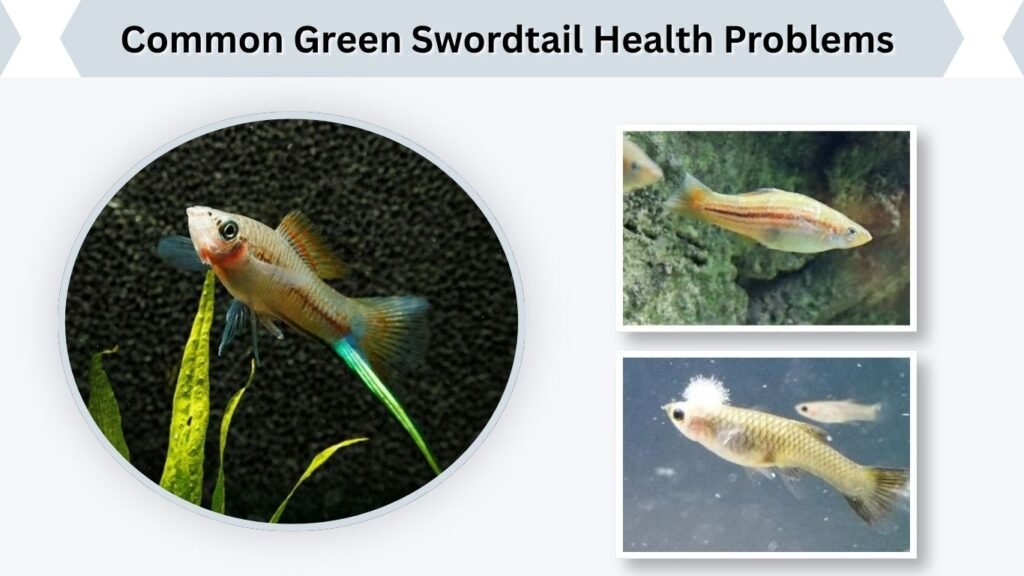
Green swordtails are relatively hardy, but poor water quality, incompatible tank mates, and improper feeding can increase their risk of disease. Regular observation and early detection are important because changes in swimming behavior, appetite, or physical appearance may indicate health problems.
Health Problems to Watch For
- Ich: Small white spots accompanied by scratching or irritation.
- Fin rot: Frayed or deteriorating fins.
- Fungal infections: Cotton-like growths on affected tissues.
- Stress: Reduced appetite, hiding, or unusual swimming.
- Digestive problems: Abnormal swelling or difficulty passing waste.
How to Keep Green Swordtails Healthy
Maintain stable water conditions, offer varied food, and avoid overcrowding.
Quarantine newly purchased fish before introducing them to an established aquarium.
If a fish develops symptoms, test the water and identify the underlying problem before choosing medication.
FAQs
1. Are Green Swordtail Fish Easy to Care For?
Yes, green swordtails are suitable for beginners who can maintain a properly cycled aquarium. They accept a variety of foods and adapt to appropriate freshwater conditions. However, their active swimming behavior requires adequate tank space, stable water chemistry, and compatible tank mates.
2. How Long Do Green Swordtail Fish Live?
Green swordtails typically live around 3–5 years in home aquariums. Their lifespan depends on genetics, water quality, diet, and overall care. Keeping ammonia and nitrite at zero, feeding nutritious food, and reducing stress can help support a longer life.
3. Can Green Swordtails Live With Guppies?
Yes, green swordtails and guppies can usually live together when water conditions are suitable. However, swordtails are larger and sometimes more assertive. Provide ample swimming space, plants, and hiding areas. Monitor their interactions, especially if guppies have long, flowing fins.
4. How Can You Tell if a Green Swordtail Is Pregnant?
A pregnant green swordtail typically develops a fuller, rounded abdomen. Some females may also display a darker gravid area near the rear of the abdomen. These signs are not always definitive, so observe the fish’s body changes and behavior over time.
5. What Is the Best Tank Size for Green Swordtails?
A 30-gallon or larger aquarium is a practical starting point for a small group of green swordtails. A longer tank is preferable because these fish swim actively. Larger aquariums offer more stable water conditions and help reduce territorial conflicts among males.