

The pineapple swordtail fish is a colorful freshwater aquarium fish known for its bright yellow-orange body, reddish markings, and distinctive sword-shaped tail. This attractive variety of the green swordtail is popular among aquarium enthusiasts because of its lively behavior, relatively simple care requirements, and peaceful nature. Pineapple swordtails are also livebearers, meaning females give birth to live young instead of laying eggs. Although they are suitable for beginners, they require appropriate water conditions, enough swimming space, and balanced nutrition. This guide covers pineapple swordtail care, appearance, size, lifespan, feeding, breeding, and tank mates.
What Is a Pineapple Swordtail Fish?
The pineapple swordtail is a selectively bred color variety of Xiphophorus hellerii, a freshwater fish belonging to the Poeciliidae family. Its wild ancestors originate from Mexico and Central America, but the pineapple variety was developed through aquarium breeding.
The name pineapple refers to its yellow, orange, and reddish coloration, which resembles the colors of a ripe pineapple.
Pineapple Swordtail Appearance
Pineapple swordtails have elongated bodies and bright, warm colors that distinguish them from wild green swordtails.
- Body color: Yellow, golden-orange, or light orange.
- Back markings: Darker orange or reddish patches.
- Tail: Mature males develop a long sword-shaped extension.
- Fins: Yellow, orange, reddish, or sometimes black.
- Body shape: Slender and streamlined, with females usually appearing fuller.
Individual fish may show different color patterns depending on their breeding line.
Pineapple Swordtail Size and Lifespan
Adult pineapple swordtails typically reach approximately 4–5 inches in body length, although some individuals grow larger. The male’s sword-like tail extension increases its overall length.
Their expected lifespan is around 3–5 years in a properly maintained aquarium.
Good nutrition, stable water chemistry, and sufficient swimming space help maintain healthy growth.
Popular Pineapple Swordtail Varieties
Pineapple swordtails are available in several ornamental forms featuring different fin shapes and color patterns. Aquarium breeders selectively develop these fish for their attractive appearance. However, variety names are not always standardized, meaning fish sold under the same name may look slightly different between suppliers.
Common Pineapple Swordtail Varieties
- Classic Pineapple Swordtail: Displays a yellow-orange body with reddish coloring along the upper body.
- Pineapple Wag Swordtail: Features bright pineapple coloring combined with contrasting dark or black fins.
- Pineapple Tuxedo Swordtail: Has yellow-orange coloration with darker markings along part of the body.
- Neon Pineapple Swordtail: A trade name sometimes used for especially bright or iridescent pineapple-colored fish.
- Pineapple Lyretail Swordtail: Combines pineapple coloring with elongated decorative tail extensions.
These fish generally share the same basic water, feeding, and aquarium requirements.
Pineapple Swordtail Tank Setup and Care
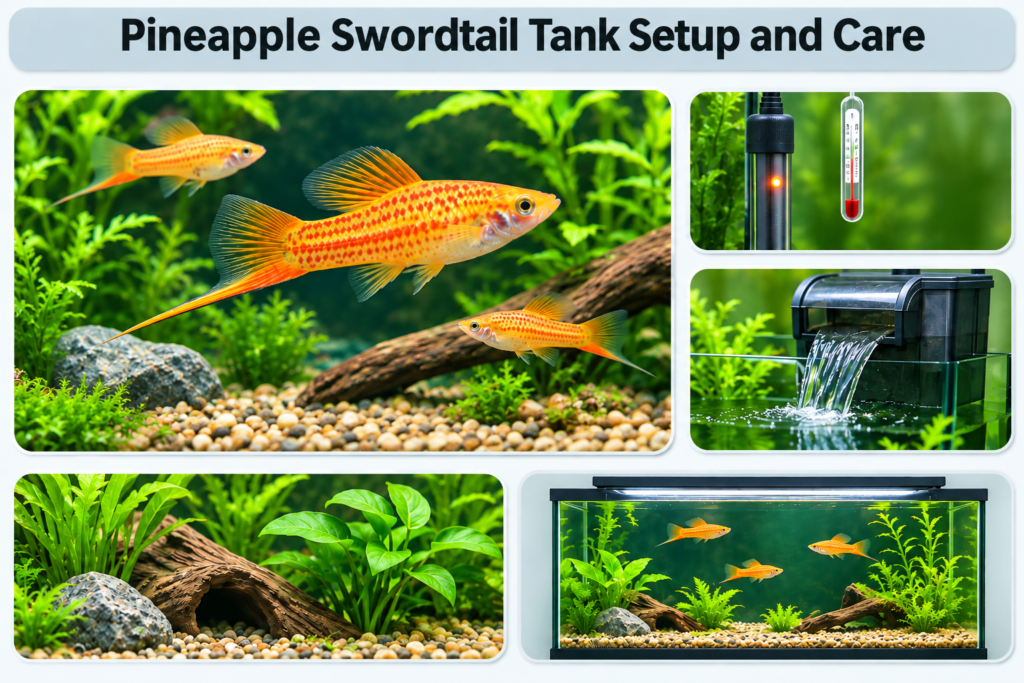
Pineapple swordtails are active swimmers that need more space than their relatively small bodies might suggest. A comfortable aquarium should provide open swimming areas, suitable plants, and reliable filtration. Although these fish tolerate a reasonable range of freshwater conditions, stable temperature and water chemistry are important for maintaining their health.
Ideal Tank Requirements
- Tank size: At least 30 gallons for a small group.
- Temperature: Approximately 72–82°F (22–28°C).
- Water pH: Around 7.0–8.0.
- Water hardness: Approximately 10–25 dGH.
- Filtration: Reliable biological filtration with moderate circulation.
- Lighting: Moderate aquarium lighting.
- Tank cover: A secure lid to prevent jumping.
Aquarium Plants and Decorations
Pineapple swordtails enjoy planted aquariums with enough room for active swimming.
Java fern, Vallisneria, hornwort, and floating plants provide useful shelter. Smooth rocks and driftwood can also create an attractive environment.
Avoid overcrowding the tank with decorations. Maintain open areas where fish can swim naturally without constantly encountering obstacles.
Water Changes and Maintenance
Change approximately 20–30% of the aquarium water weekly, adjusting according to test results and stocking levels.
Test ammonia, nitrite, nitrate, and pH regularly. Ammonia and nitrite should remain at zero in a cycled aquarium.
Avoid sudden temperature changes and use a heater when necessary to maintain stable conditions.
What Do Pineapple Swordtail Fish Eat?

Pineapple swordtails are omnivores that consume both animal and plant-based foods. Their natural diet includes small invertebrates, algae, and organic material. In aquariums, they readily accept commercially prepared food, making feeding relatively straightforward. A varied diet supports normal development, healthy digestion, and attractive coloration.
Best Foods for Pineapple Swordtails
- Tropical flakes: Provide balanced everyday nutrition.
- Small pellets: Suitable for regular feeding.
- Spirulina flakes: Offer vegetable-based nutrients.
- Brine shrimp: Supply additional protein.
- Daphnia: Useful as occasional live or frozen food.
- Blanched vegetables: Small amounts of zucchini or spinach add variety.
Feeding Frequency
Feed adult pineapple swordtails once or twice daily.
Offer only enough food for them to consume within a couple of minutes. Remove leftovers to prevent waste accumulation.
Young fish may require smaller, more frequent meals to support development.
Pineapple Swordtail Behavior and Tank Mates
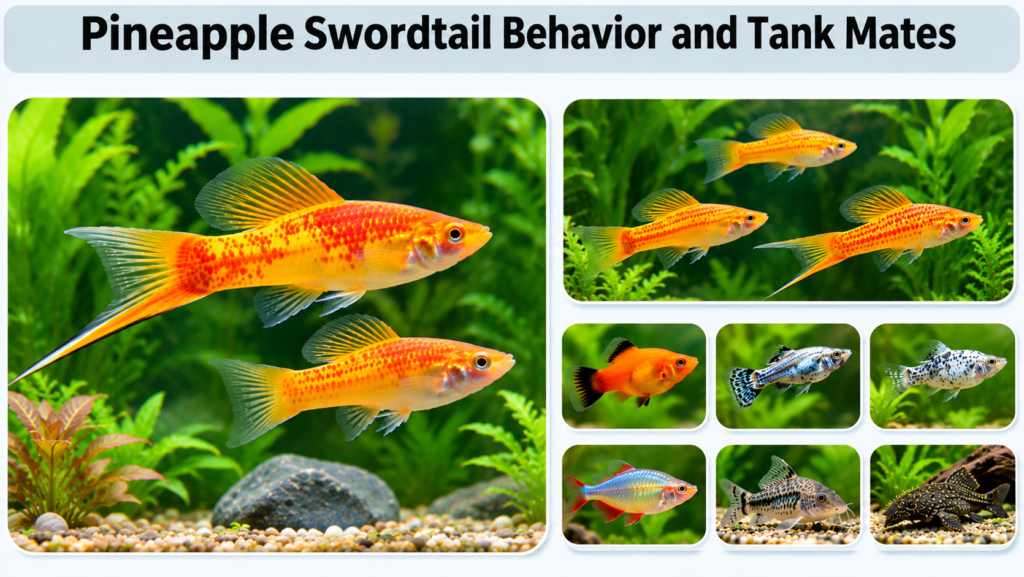
Pineapple swordtails are generally peaceful, energetic fish suitable for many freshwater community aquariums. They frequently swim around the middle and upper portions of the tank. However, males may chase females or compete with other males, especially in smaller aquariums. Proper group composition and sufficient space help reduce these problems.
Best Tank Mates
Suitable companions include:
- Platies
- Mollies
- Guppies
- Compatible rainbowfish
- Corydoras catfish
- Bristlenose plecos
Choose companions with similar water requirements. Avoid highly aggressive fish and species that frequently nip fins.
Are Pineapple Swordtails Aggressive?
Pineapple swordtails are not usually highly aggressive, but mature males may become territorial.
Keeping one male with two or three females can help reduce persistent chasing of individual females.
Provide additional hiding places if fish show signs of stress or repeated harassment.
Male vs. Female Pineapple Swordtail Fish
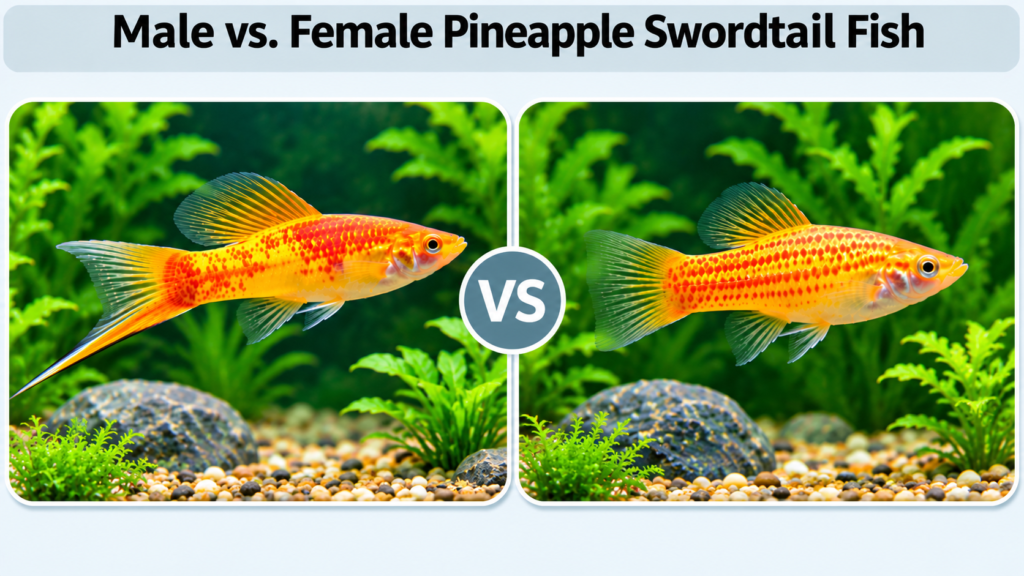
Male and female pineapple swordtails display noticeable physical differences once they mature. Understanding these differences is important for aquarium stocking and breeding. Young individuals can be difficult to identify because their reproductive features may not be fully developed.
Male Pineapple Swordtail
Mature males usually have slimmer bodies and an elongated extension on the lower tail fin.
They also possess a modified anal fin called a gonopodium, which is used during reproduction.
Some males develop their distinctive features later than others.
Female Pineapple Swordtail
Female pineapple swordtails usually have fuller bodies and a fan-shaped anal fin.
They generally lack the male’s long sword extension. Females may also become noticeably rounder when carrying developing fry.
Body shape alone is not a reliable way to determine sex, particularly in immature fish.
Pineapple Swordtail Breeding and Pregnancy
Pineapple swordtails are livebearing fish that reproduce readily in suitable aquarium conditions. Females give birth to fully formed, free-swimming fry rather than laying eggs. Successful breeding does not usually require complicated equipment, but protecting newborn fish is important because adult swordtails may eat their offspring.
Signs of a Pregnant Pineapple Swordtail
A pregnant pineapple swordtail may develop a noticeably enlarged abdomen.
Some females show a gravid area near the rear of the abdomen, although its color and visibility vary with body pigmentation.
As birth approaches, the abdomen may become fuller or slightly squared. These signs alone cannot confirm pregnancy.
How Long Are Pineapple Swordtails Pregnant?
Pregnancy commonly lasts approximately four to six weeks, depending on water temperature and individual conditions.
A female may produce dozens of fry during a single birth.
Female swordtails can also store sperm, allowing multiple broods without mating again.
Caring for Pineapple Swordtail Fry
Newborn fry can swim and eat independently soon after birth.
Provide dense aquatic plants or a separate nursery aquarium to protect them from adult fish.
Feed finely crushed flakes, appropriately sized fry food, or newly hatched brine shrimp. Maintain clean, stable water to encourage healthy development.
Common Pineapple Swordtail Health Problems

Pineapple swordtails are relatively hardy, but unsuitable aquarium conditions can lead to health problems. Poor water quality, overcrowding, and sudden environmental changes may cause stress and increase susceptibility to disease. Regularly observing their appearance, appetite, and swimming behavior helps identify problems early.
Common Health Issues
- Ich: Small white spots on the body or fins.
- Fin rot: Frayed or deteriorating fin edges.
- Fungal infections: Cotton-like growths on affected areas.
- Stress: Hiding, reduced appetite, or unusual swimming.
- Swim bladder problems: Difficulty maintaining normal swimming position.
Check water conditions whenever symptoms appear. Correct environmental problems and identify the illness before selecting treatment.
FAQs
1. How Big Do Pineapple Swordtail Fish Get?
Pineapple swordtails commonly reach around 4–5 inches in body length, although some grow larger. Mature males have an additional sword-shaped tail extension. Females often develop fuller bodies. Their final size depends on genetics, nutrition, aquarium space, and overall growing conditions.
2. How Long Do Pineapple Swordtails Live?
Pineapple swordtails generally live around 3–5 years with appropriate care. Their lifespan depends on genetics, water quality, diet, and environmental stability. Regular aquarium maintenance, balanced feeding, and protection from aggressive tank mates can help support their long-term health.
3. How Can You Tell if a Pineapple Swordtail Is Pregnant?
A pregnant pineapple swordtail usually develops a rounded, enlarged abdomen. Some females display a visible gravid area near the anal fin. As pregnancy progresses, the abdomen may appear more squared. These changes can suggest pregnancy, but bloating or illness can produce similar symptoms.
4. Do Pineapple Swordtail Fish Need a Heater?
Pineapple swordtails benefit from a heater when room temperatures cannot maintain suitable aquarium conditions. A stable temperature around 72–82°F is appropriate for routine care. Although swordtails tolerate some temperature variation, sudden fluctuations can cause stress and increase health risks.
5. Can Pineapple Swordtails Live With Guppies?
Yes, pineapple swordtails can usually live with guppies in a properly maintained community aquarium. Both species prefer similar freshwater conditions. However, swordtails grow larger and may occasionally chase guppies. Provide adequate swimming space, plants, and hiding areas to reduce conflicts.