
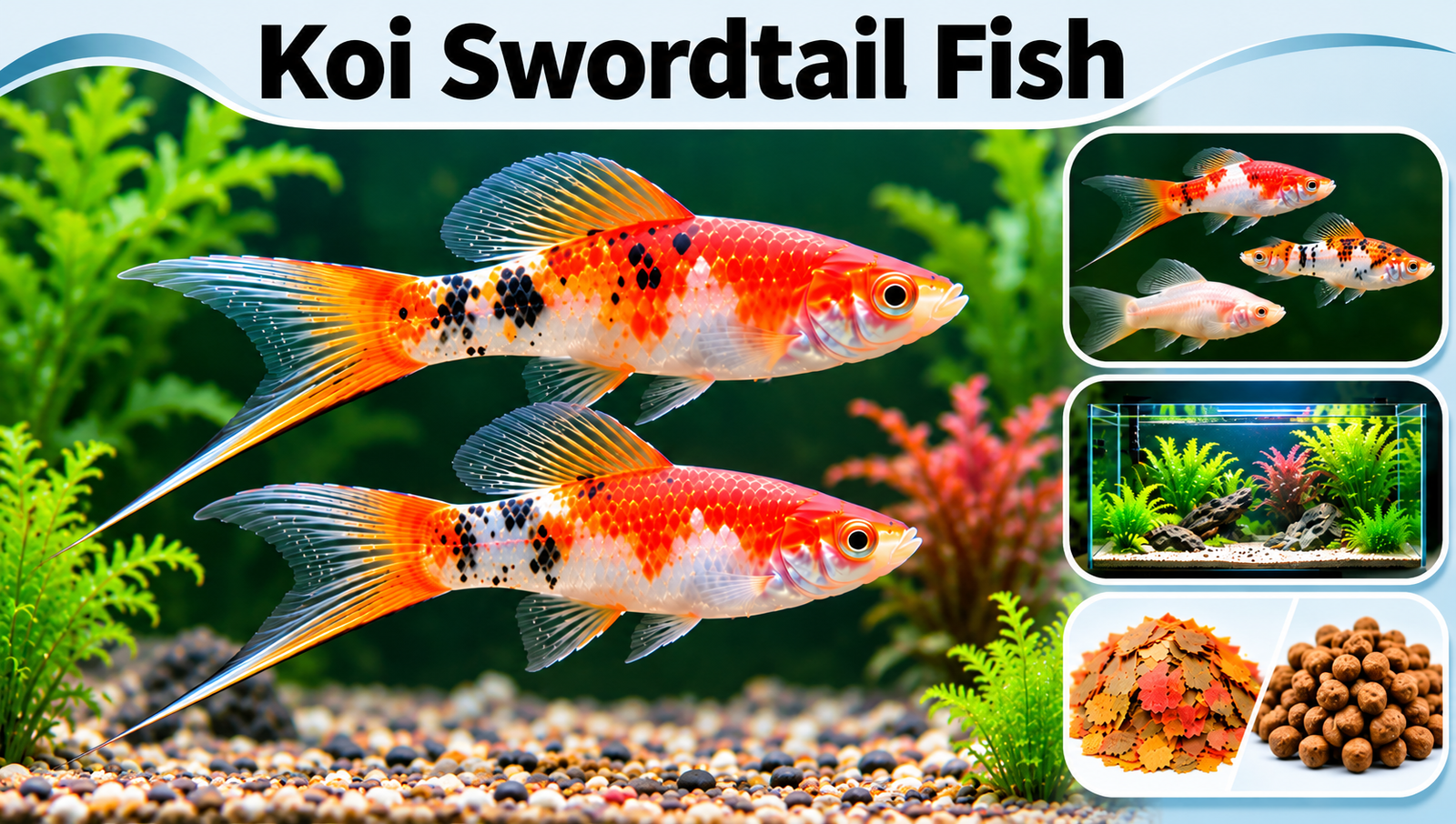
The koi swordtail fish is a colorful freshwater aquarium fish recognized for its beautiful red, white, orange, and black markings. Its distinctive patterns resemble ornamental koi carp, making it a popular choice among aquarium enthusiasts. Koi swordtails are selectively bred livebearers that combine attractive coloration with active swimming behavior and relatively easy care requirements. They are available in several varieties, including Kohaku, Sanke, albino, and lyretail forms. Although suitable for beginners, these fish need proper aquarium space, stable water conditions, and balanced nutrition. This guide covers koi swordtail varieties, size, lifespan, feeding, breeding, and tank mates.
What Is a Koi Swordtail Fish?
The koi swordtail is an ornamental variety of the freshwater swordtail, Xiphophorus hellerii, belonging to the Poeciliidae family. Some aquarium breeding lines have hybrid ancestry involving related platy species. Unlike actual koi carp, koi swordtails are relatively small tropical aquarium fish.
The term “koi” describes their decorative color patterns rather than a separate biological species.
Koi Swordtail Appearance
Koi swordtails have elongated bodies with colorful markings that vary between individual fish.
- Body color: White, red, orange, yellow, or combinations of these colors.
- Black markings: Present in some varieties, particularly Sanke and tricolor forms.
- Tail: Mature males typically develop a sword-shaped extension.
- Fins: May be transparent, red, orange, white, or black.
- Body shape: Streamlined, with females generally having fuller bodies.
Koi Swordtail Size and Lifespan
Adult koi swordtails commonly reach approximately 4–5.5 inches in total length, although size varies between individuals. Male swordtails may appear longer because of their extended tail fins.
Their typical lifespan is around 3–5 years under suitable aquarium conditions. Proper feeding, clean water, and reduced stress can help maintain their health.
Popular Types of Koi Swordtail Fish
Koi swordtails are available in several attractive color patterns and fin varieties. Aquarium breeders have developed these ornamental forms through selective breeding, sometimes involving hybrid ancestry. Although their appearances differ, they generally have similar care requirements. Names can vary between sellers, so individual fish may not always match a standardized color pattern.
Common Koi Swordtail Varieties
- Kohaku Koi Swordtail: Features a predominantly white body with bright red or orange patches.
- Sanke Koi Swordtail: Displays red, white, and black markings resembling traditional Sanke koi patterns.
- Albino Koi Swordtail: Has reduced dark pigmentation, often with pale coloration and reddish eyes.
- Koi Kohaku Lyretail Swordtail: Combines red-and-white coloration with elongated decorative tail fins.
- Calico Koi Swordtail: Displays irregular patches or speckles of multiple colors.
- Showa Koi Swordtail: A trade name sometimes used for fish with prominent black, red, and white markings.
- Tancho Koi Swordtail: Typically describes a pale-bodied fish with a prominent red or orange marking on its head.
These are ornamental trade varieties, not separate swordtail species. Some patterns may change as the fish mature.
Koi Swordtail Care and Tank Requirements
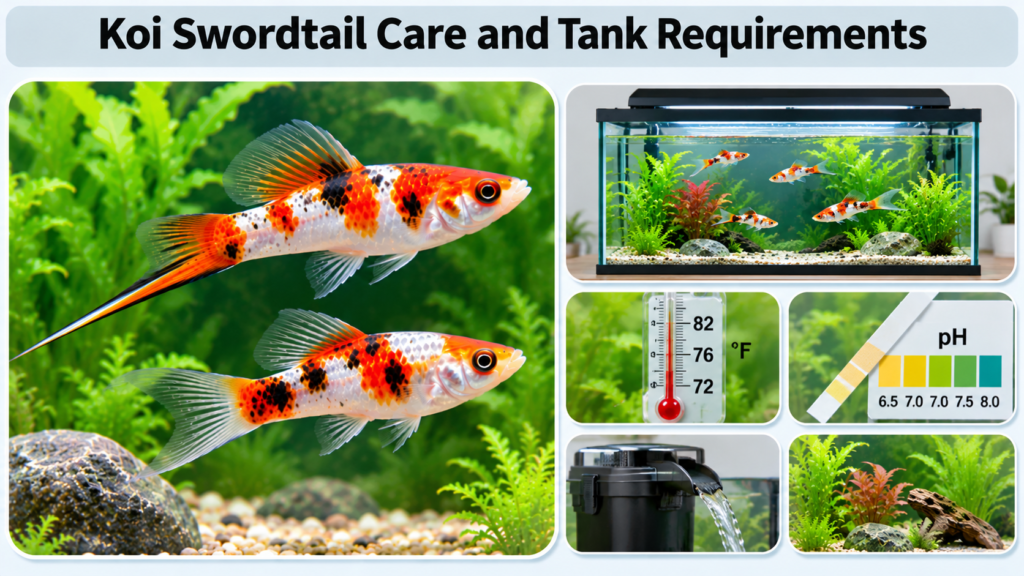
Koi swordtails are active swimmers that require enough aquarium space to move comfortably. While relatively hardy, they can experience stress when kept in overcrowded tanks or unstable water conditions. A properly cycled aquarium with efficient filtration, moderate water movement, and suitable hiding places provides a healthy environment for these colorful fish.
Ideal Tank Conditions
- Tank size: At least 30 gallons for a small group.
- Temperature: Approximately 72–82°F (22–28°C).
- Water pH: Around 7.0–8.3.
- Water hardness: Approximately 10–25 dGH.
- Filtration: Efficient biological filtration with moderate water movement.
- Lighting: Moderate lighting with shaded areas.
- Tank cover: A secure lid to prevent jumping.
Aquarium Plants and Decorations
Koi swordtails enjoy aquariums with both planted areas and open swimming space.
Java fern, hornwort, Vallisneria, and floating plants can provide shelter. Smooth rocks and driftwood also make suitable decorations.
Avoid filling the aquarium with excessive decorations because these active fish need room to swim.
Water Maintenance
Change approximately 20–30% of the aquarium water weekly, adjusting the amount according to water quality and stocking levels.
Test ammonia, nitrite, nitrate, and pH regularly. Ammonia and nitrite should remain at zero in a cycled aquarium.
Maintain stable temperatures and avoid sudden changes in water chemistry.
What Do Koi Swordtail Fish Eat?

Koi swordtails are omnivores that eat both plant and animal matter. Their diet resembles that of other ornamental swordtails and can include algae, small invertebrates, and prepared aquarium foods. Providing nutritional variety is important for healthy development, normal digestion, reproduction, and maintaining their attractive red, orange, and white coloration.
Best Foods for Koi Swordtails
- Tropical fish flakes: Provide balanced everyday nutrition.
- Small pellets: Offer convenient food for adult fish.
- Spirulina flakes: Supply vegetable-based nutrients.
- Brine shrimp: Provide additional protein.
- Daphnia: Suitable as occasional live or frozen food.
- Blanched vegetables: Small portions of zucchini or spinach add dietary variety.
How Often Should You Feed Koi Swordtails?
Feed adult koi swordtails once or twice daily.
Offer small amounts that they can consume within a couple of minutes. Remove uneaten food because excessive waste can reduce water quality.
Young fish need appropriately sized food and may benefit from more frequent feeding.
Koi Swordtail Behavior and Tank Mates
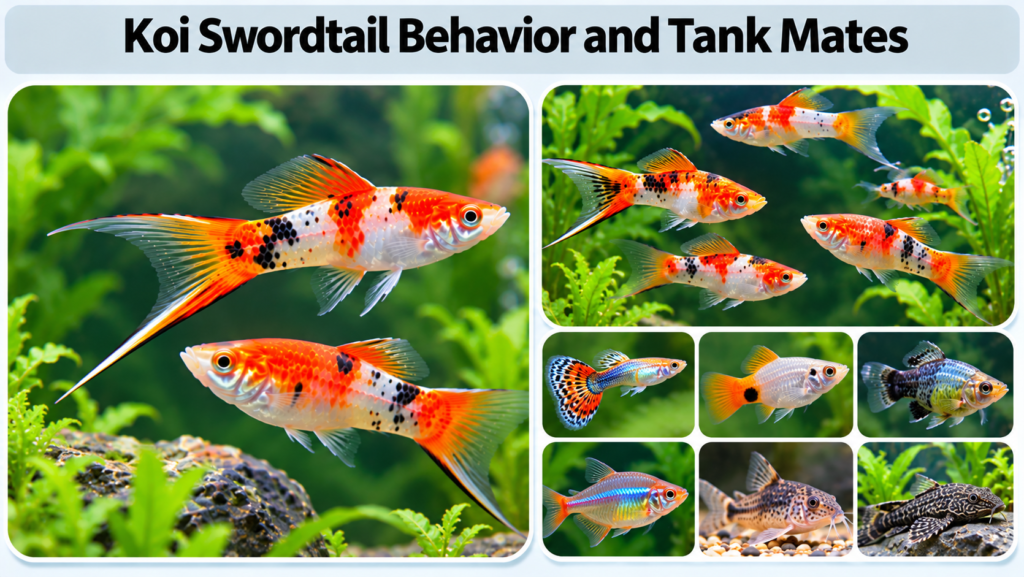
Koi swordtails are generally peaceful community fish, but they are active and sometimes assertive. Mature males may compete for dominance or chase females, particularly in smaller aquariums. Their behavior depends on available space, group composition, and individual temperament. Choosing compatible tank mates helps maintain a comfortable community environment.
Best Tank Mates for Koi Swordtails
Suitable companions may include:
- Platies
- Mollies
- Guppies
- Compatible rainbowfish
- Corydoras catfish
- Bristlenose plecos
Choose fish that tolerate similar water conditions and avoid aggressive species or persistent fin nippers.
Are Koi Swordtails Aggressive?
Koi swordtails are not usually highly aggressive, but males can become territorial.
Keeping one male with two or three females may reduce excessive attention toward individual females.
Provide plants and hiding areas so weaker fish can escape unwanted interactions.
Male and Female Koi Swordtail Fish
Male and female koi swordtails develop different reproductive features as they mature. Identifying their sex is important when planning aquarium groups or breeding programs. Their colorful markings are not reliable indicators of sex because both males and females can display similar koi patterns.
Male Koi Swordtail
Adult males usually develop a distinctive extension on the lower tail fin known as the sword.
They also possess a narrow, modified anal fin called a gonopodium, which is used for reproduction.
Some males mature later than others, so young fish may initially resemble females.
Female Koi Swordtail
Females generally have rounder bodies and fan-shaped anal fins.
They usually lack the male’s sword-shaped tail extension. A mature female may develop a noticeably enlarged abdomen during pregnancy.
The shape of the anal fin is more reliable for identification than body coloration.
Koi Swordtail Breeding and Pregnancy

Koi swordtails are livebearing fish that give birth to fully developed, free-swimming young. Breeding can occur naturally in a well-maintained aquarium containing mature males and females. However, maintaining specific Kohaku or Sanke color patterns across generations may require careful selection because offspring do not always inherit the exact markings of their parents.
How to Breed Koi Swordtails
Choose healthy adult fish with desirable coloration and maintain suitable water conditions.
A ratio of one male to two or three females can reduce repeated harassment.
Provide a balanced diet and sufficient swimming space. Females can store sperm and produce several broods without mating again.
Signs of a Pregnant Koi Swordtail
Pregnant females often develop enlarged, rounded abdomens.
A gravid area may appear near the rear of the abdomen, but it can be difficult to see in pale or heavily patterned fish.
Pregnancy commonly lasts around four to six weeks, depending on conditions. Abdominal swelling alone does not confirm pregnancy.
Caring for Koi Swordtail Fry
A female can give birth to dozens of fry in a single brood.
Newborn fish may be eaten by adults, so dense plants or a separate nursery aquarium are helpful.
Feed the fry finely crushed flakes, appropriately sized fry food, or newly hatched brine shrimp. Maintain excellent water quality to support growth.
Common Koi Swordtail Health Problems

Koi swordtails can develop health problems when exposed to poor water quality, unsuitable temperatures, aggressive tank mates, or inadequate nutrition. Early identification of unusual symptoms helps prevent problems from becoming more serious. Regular observation and consistent aquarium maintenance are essential for keeping these ornamental fish healthy.
Common Health Problems
- Ich: Small white spots appearing on the body or fins.
- Fin rot: Damaged or deteriorating fins.
- Fungal infections: Cotton-like growths on affected areas.
- Stress: Loss of appetite, hiding, or unusual swimming.
- Digestive problems: Abdominal swelling or abnormal waste.
How to Keep Koi Swordtails Healthy
Maintain a stable aquarium environment and avoid overcrowding.
Quarantine newly purchased fish before introducing them to an established aquarium.
If symptoms appear, test the water, assess the fish’s condition, and identify the underlying problem before choosing treatment.
FAQs
1. How Big Do Koi Swordtail Fish Get?
Koi swordtails commonly grow to approximately 4–5.5 inches in total length, although size varies. Females often have fuller bodies, while mature males develop elongated sword-shaped tails. Their final size depends on genetics, nutrition, available aquarium space, and overall health.
2. How Long Do Koi Swordtails Live?
Koi swordtails generally live around 3–5 years under suitable aquarium conditions. Their lifespan depends on genetics, diet, water quality, and stress levels. Providing clean water, balanced meals, adequate swimming space, and compatible tank mates can help support their long-term health.
3. What Is the Difference Between Kohaku and Sanke Koi Swordtails?
Kohaku koi swordtails mainly display red or orange patches on a white body. Sanke koi swordtails typically feature red, white, and black markings. Both are ornamental swordtail varieties with similar care requirements. Their names describe color patterns rather than separate biological species.
4. How Can You Tell if a Koi Swordtail Is Pregnant?
A pregnant koi swordtail often develops a rounded, swollen abdomen. Some females display a visible gravid area near the anal fin, although coloration can make it difficult to notice. Pregnancy usually lasts approximately four to six weeks, but abdominal swelling can also indicate other conditions.
5. Can Koi Swordtails Live With Guppies and Platies?
Yes, koi swordtails can usually live with guppies and platies in a spacious, well-maintained aquarium. These livebearers have broadly compatible freshwater requirements. However, swordtails may be more assertive, and they can hybridize with platies. Provide sufficient space, plants, and hiding areas to reduce conflict.