
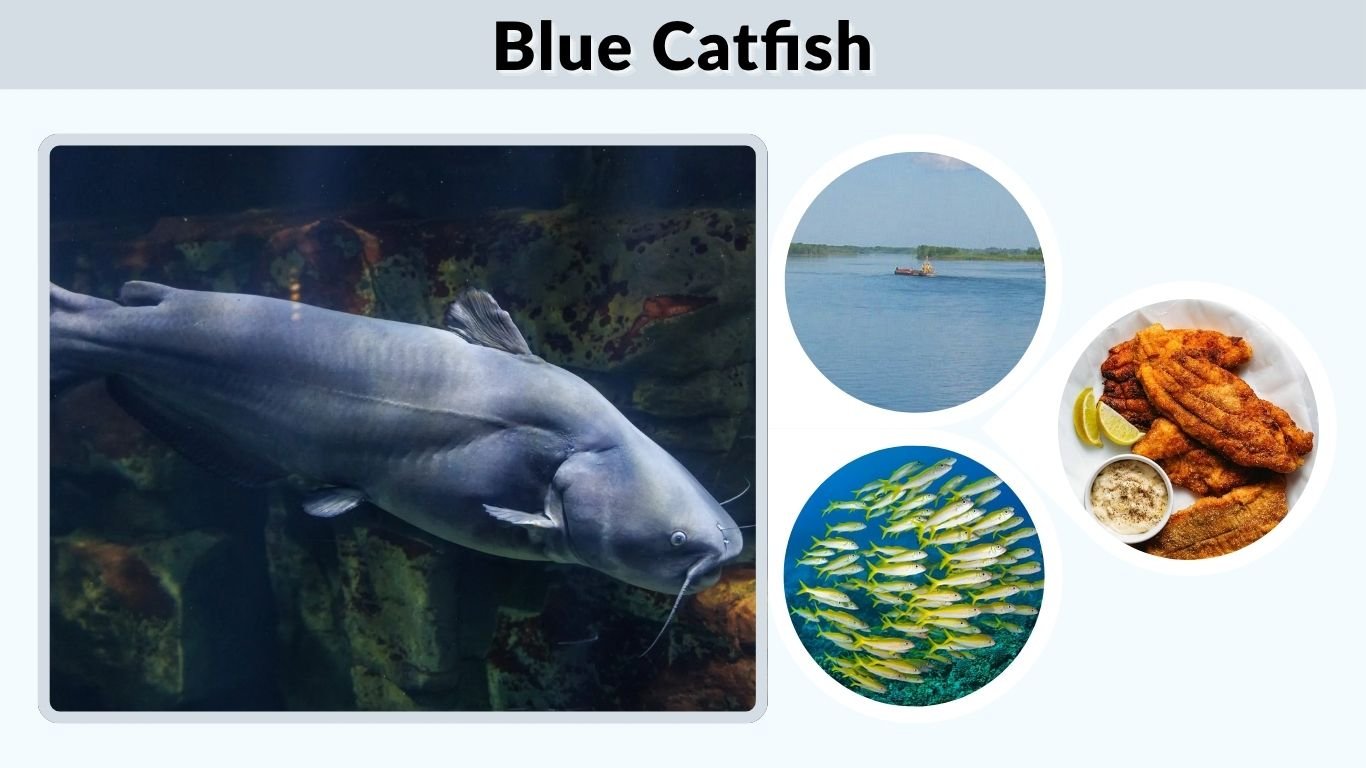
Blue catfish are large freshwater catfish known for their slate-blue color, forked tail, and powerful body. They are popular with anglers because they grow big, fight hard, and can reach trophy size in major rivers and reservoirs. The blue catfish is native to large river basins in North America, but it has also become invasive in places like the Chesapeake Bay. This guide explains blue catfish size, habitat, diet, identification, bait, records, and key differences from channel catfish.
What Is a Blue Catfish?
The blue catfish is a large North American catfish with the scientific name Ictalurus furcatus. It belongs to the family Ictaluridae and is one of the biggest freshwater sport fish in the United States. NOAA lists blue catfish as native to the Mississippi, Missouri, Ohio, and Rio Grande river basins, but also notes that they have been stocked in many other areas for recreational fishing.
Blue catfish are often found in big rivers, deep channels, reservoirs, and tributaries. They are strong swimmers and can tolerate different water conditions better than many people expect. In some regions, especially the Chesapeake Bay watershed, this ability has helped them spread quickly outside their native range.
Blue Catfish Identification
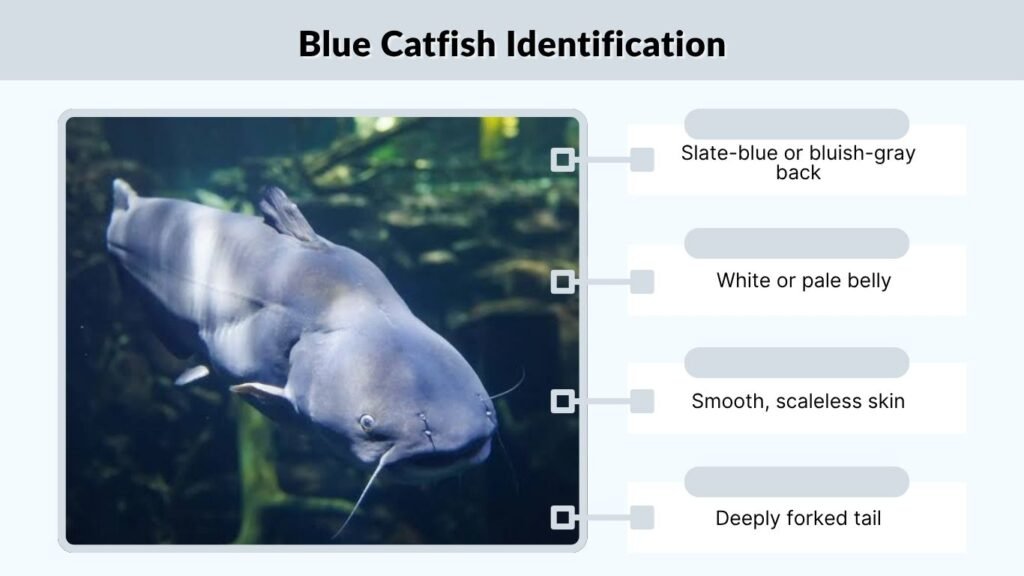
Blue catfish can look similar to channel catfish, especially when they are small. However, several features make them easier to identify once you know what to look for.
Key Features
- Slate-blue or bluish-gray back
- White or pale belly
- Smooth, scaleless skin
- Deeply forked tail
- Four pairs of whisker-like barbels
- Long, straight-edged anal fin
- Usually no dark spots on the body
- Heavy body shape in large adults
NOAA describes blue catfish as silvery-blue fish with white bellies, smooth skin, a flat dorsal fin, deeply forked tail, and four pairs of black barbels around the mouth.
Blue Catfish vs Channel Catfish
Blue catfish and channel catfish are commonly confused because both have forked tails and similar body shapes. The easiest difference is often the anal fin. Texas Parks and Wildlife notes that blue catfish usually have 30–35 anal fin rays and a slate-blue back fading to a white belly.
| Feature | Blue Catfish | Channel Catfish |
| Body color | Slate-blue to gray | Olive-brown, gray, or bluish |
| Spots | Usually no spots | Young fish often have spots |
| Tail | Deeply forked | Forked |
| Anal fin | Longer, straighter edge | More rounded edge |
| Adult size | Often larger | Usually smaller |
| Body shape | Heavy and muscular | More slender |
Which One Gets Bigger?
Blue catfish usually grow larger than channel catfish. While channel catfish can reach impressive sizes, blue catfish are the true giants among North American ictalurid catfish. NOAA says adults are often under 2 feet long but can grow to 5 feet and weigh more than 100 pounds.
Blue Catfish Size
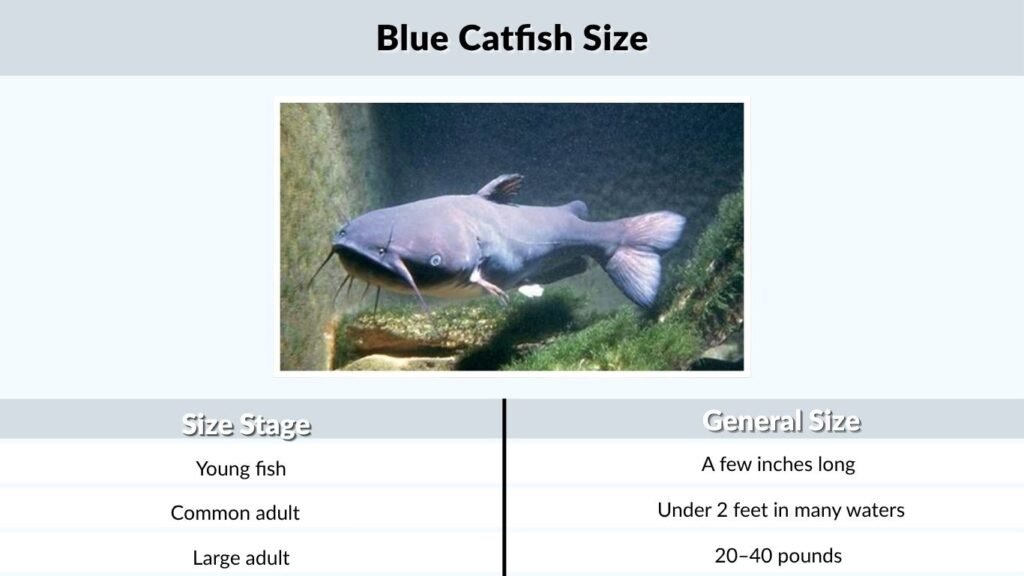
Blue catfish size depends on age, food supply, habitat, and fishing pressure. In good waters, they can grow quickly and become trophy fish.
Young blue catfish may only be a few inches long, but large adults can reach 20 to 40 pounds in strong populations. Texas Parks and Wildlife says blue catfish commonly reach 20–40 pounds and may exceed 100 pounds.
| Size Stage | General Size |
| Young fish | A few inches long |
| Common adult | Under 2 feet in many waters |
| Large adult | 20–40 pounds |
| Trophy fish | 50+ pounds |
| Giant blue catfish | 100+ pounds |
World Record Blue Catfish
The world record blue catfish is one of the most searched topics in this keyword group. According to IGFA records, Richard Nicholas Anderson caught a 143-pound blue catfish at Kerr Lake, Buggs Island, Virginia, on June 18, 2011.
This record shows how massive blue catfish can become when they have deep water, abundant food, and enough time to grow. Many trophy anglers target large reservoirs and major river systems because these waters can support giant fish.
Blue Catfish Habitat
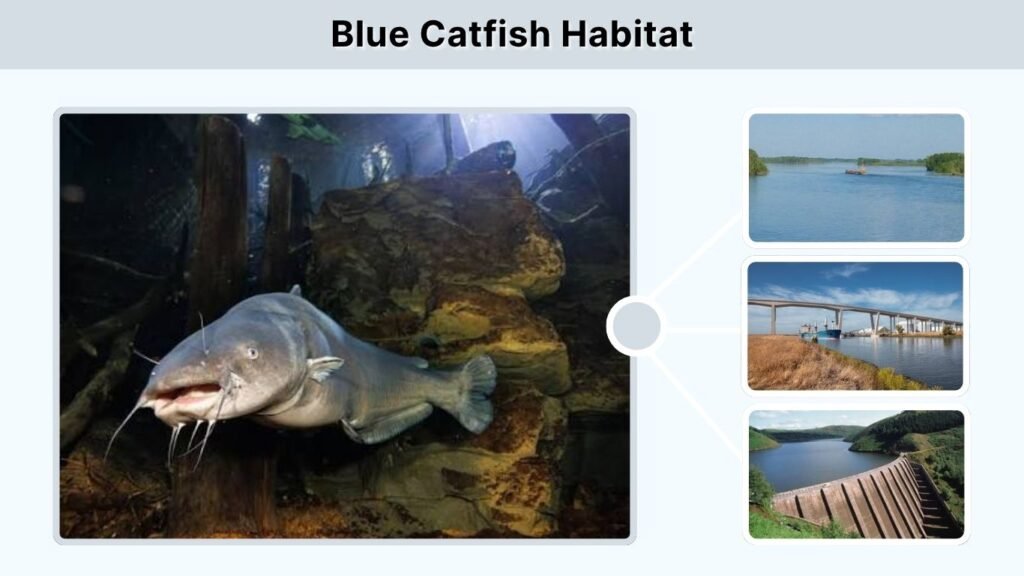
Blue catfish are mainly big-water fish. They prefer large rivers, deep channels, reservoirs, tributaries, tailwaters, and flowing pools. The U.S. Fish and Wildlife Service ecological summary notes that blue catfish inhabit open waters of large reservoirs, main river channels, backwaters, and embayments with substrates ranging from gravel and sand to silt and mud.
Large blue catfish often hold in deeper areas during the day and move to feed when conditions are right. They may use current breaks, ledges, holes, submerged structure, and areas below dams. In summer, they may move upstream to find cooler water, while in winter they may move downstream to warmer areas.
Blue Catfish Diet
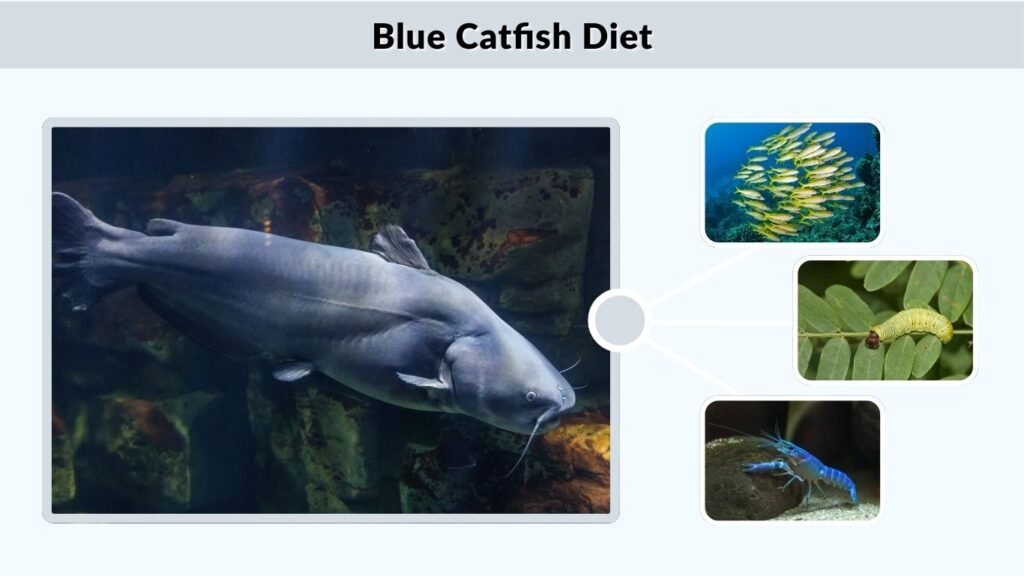
Blue catfish are opportunistic feeders. They eat what is available, and their diet changes as they grow. Smaller fish may eat insects and invertebrates, while larger blue catfish often feed heavily on fish and large aquatic animals.
Texas Parks and Wildlife notes that blue catfish eat a varied diet and begin eating fish earlier in life than channel catfish; individuals larger than eight inches commonly eat fish and large invertebrates.
Common blue catfish foods include:
- Small fish
- Shad and herring
- Insects and larvae
- Mussels and clams
- Crayfish
- Blue crabs in tidal areas
- Worms
- Dead or injured fish
- Other available aquatic animals
The U.S. Fish and Wildlife Service ecological summary describes blue catfish as highly omnivorous, with fish, mollusks, insect larvae, plant matter, decapods, and scavenged items all appearing in diet studies.
Best Bait for Blue Catfish
The best bait for blue catfish usually depends on local forage. In many rivers and reservoirs, fresh cut bait is one of the most effective choices because big blue catfish often feed on fish.
Good bait options include:
- Fresh cut shad
- Skipjack herring
- Cut bluegill where legal
- Cut perch where legal
- Fresh fish heads
- Chicken liver for smaller fish
- Prepared stink bait for smaller catfish
- Live bait where permitted
Fresh bait usually works better than old bait when targeting big blue catfish. Large fish often respond well to oily, natural bait that matches what they already eat in that water.
How to Catch Blue Catfish
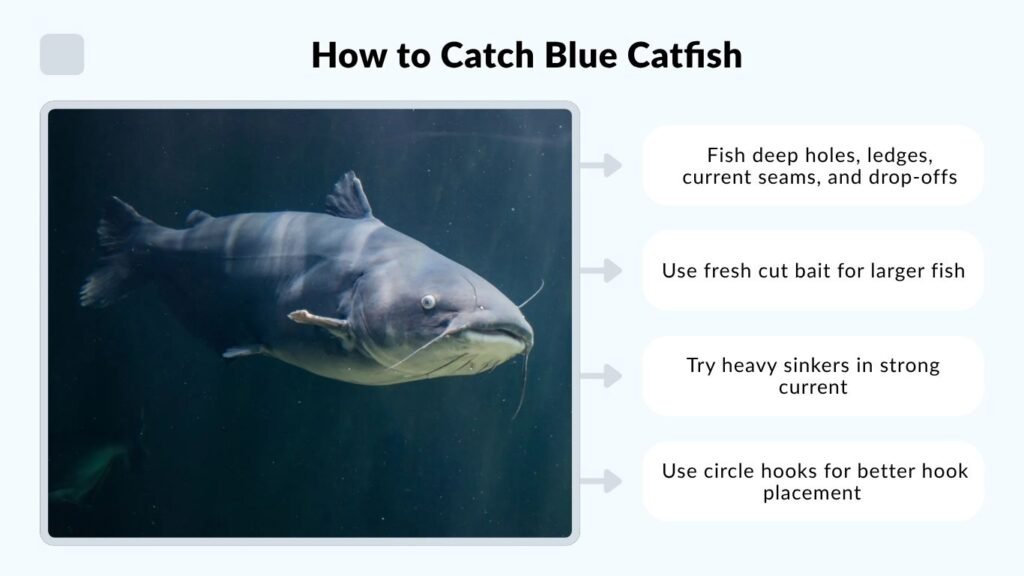
Blue catfish are commonly caught from boats, riverbanks, dams, and reservoirs. Many anglers fish near the bottom because blue catfish often search deep structure and current edges for food.
Fishing Tips
- Fish deep holes, ledges, current seams, and drop-offs
- Use fresh cut bait for larger fish
- Try heavy sinkers in strong current
- Use circle hooks for better hook placement
- Target dawn, dusk, night, or low-light periods
- Look for baitfish activity
- Use stronger rods and line for trophy fish
- Check local fishing regulations before keeping fish
NOAA notes that blue catfish are popular recreational fish in the Chesapeake Bay and are mainly caught using hook and line, with guide services targeting them in rivers such as the James and Potomac.
When Do Blue Catfish Spawn?
Blue catfish generally spawn in late spring to early summer. NOAA says they spawn once a year from late May into June, mostly in lower-salinity streams and smaller tributaries in the Chesapeake region. Females can produce thousands of eggs per kilogram of body weight.
Males build or guard nesting areas in protected spots. The U.S. Fish and Wildlife Service ecological summary notes that spawning often happens in sheltered areas such as behind rocks, root wads, undercut banks, or other places with reduced current.
Are Blue Catfish Good to Eat?
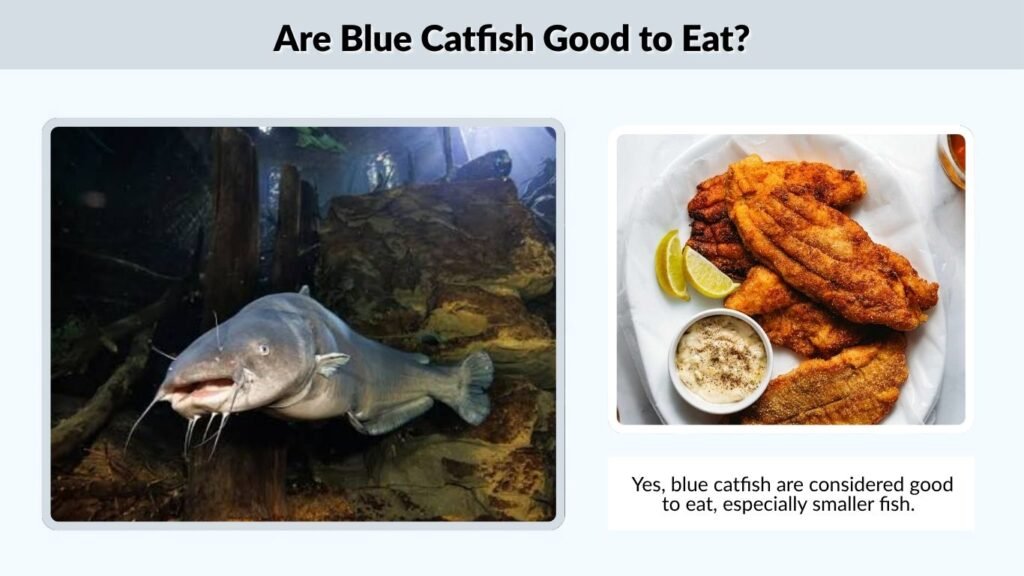
Yes, blue catfish are considered good to eat, especially smaller fish. NOAA describes blue catfish from the Chesapeake Bay as tasty and nutritious and notes that a 4-ounce serving has 19 grams of protein, 90 calories, and 1.5 grams of fat.
However, eating advice can vary by location and fish size because larger, older fish may accumulate more contaminants. NOAA notes that Maryland recommends recreational anglers fishing for dinner keep smaller blue catfish rather than very large fish.
Why Are Blue Catfish a Problem?
Blue catfish are not a problem everywhere. In their native range, they are an important sport fish and part of the river ecosystem. The problem happens when they are introduced into waters where they do not naturally belong.
In the Chesapeake Bay, blue catfish are considered invasive. NOAA says they have expanded through the watershed and may negatively affect native species such as striped bass, blue crab, shad, herring, and Atlantic sturgeon.
Blue catfish are successful invaders because they grow large, reproduce heavily, tolerate some salinity, and eat many types of prey. NOAA also explains that they were introduced to Virginia rivers decades ago and later spread through the Bay and into other river systems.
FAQs
How Big Do Blue Catfish Get?
Blue catfish can grow over 100 pounds in excellent waters. NOAA says they can reach 5 feet long and weigh more than 100 pounds. Most adults are much smaller, but trophy fish over 50 pounds are possible in strong river and reservoir populations.
What Is the Scientific Name of Blue Catfish?
The scientific name of blue catfish is Ictalurus furcatus. The species name “furcatus” refers to the forked tail, one of the important identification features of this fish. Texas Parks and Wildlife lists the species as Ictalurus furcatus.
What Do Blue Catfish Eat?
Blue catfish eat fish, insects, mollusks, crayfish, worms, crabs, and other available food. Small blue catfish eat more invertebrates, while larger fish often eat more fish and large aquatic prey. They are opportunistic feeders with a flexible diet.
Are Blue Catfish and Channel Catfish the Same?
No, blue catfish and channel catfish are different species. Blue catfish usually grow larger, lack body spots, and have a longer, straighter anal fin. Channel catfish are often more spotted when young and usually have a more rounded anal fin edge.
Can You Eat Blue Catfish?
Yes, blue catfish are edible and popular as food fish. Smaller blue catfish are often preferred for eating. In areas where they are invasive, harvesting them may also help reduce pressure on native species, but anglers should follow local fish consumption advisories.