
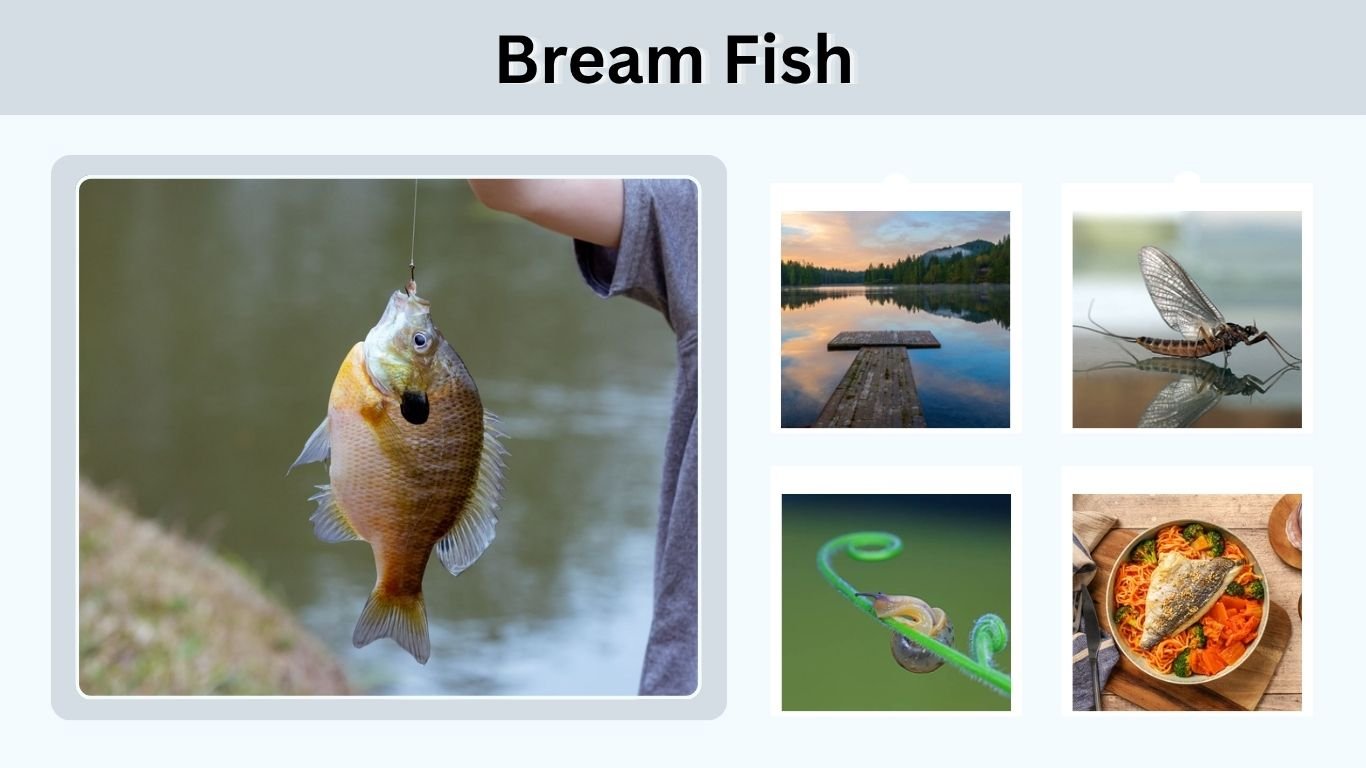
Bream fish are popular among freshwater and saltwater anglers because of their distinctive body shapes, widespread habitats, and value as food fish. However, the name “bream” can refer to several unrelated fish species, including European freshwater bream, North American bluegill, and marine sea bream. Understanding their identification features, feeding habits, and preferred environments makes it easier to recognize different types and improve your fishing success.
What Is a Bream Fish?
Bream fish is a common name applied to several groups of freshwater and marine fish. Most have deep, flattened bodies, noticeable scales, and relatively small mouths. However, they do not all belong to the same scientific family. The meaning of bream depends on the species and geographical region.
Freshwater and Saltwater Bream
In Europe, the name bream commonly refers to the common bream (Abramis brama), a freshwater species inhabiting lakes and rivers.
In the southeastern United States, anglers often use “bream” or “brim” for bluegill and several other sunfish.
Sea bream, meanwhile, commonly refers to marine fish in the family Sparidae, including gilthead sea bream. These species inhabit coastal waters rather than freshwater lakes.
Bream Fish Identification and Appearance
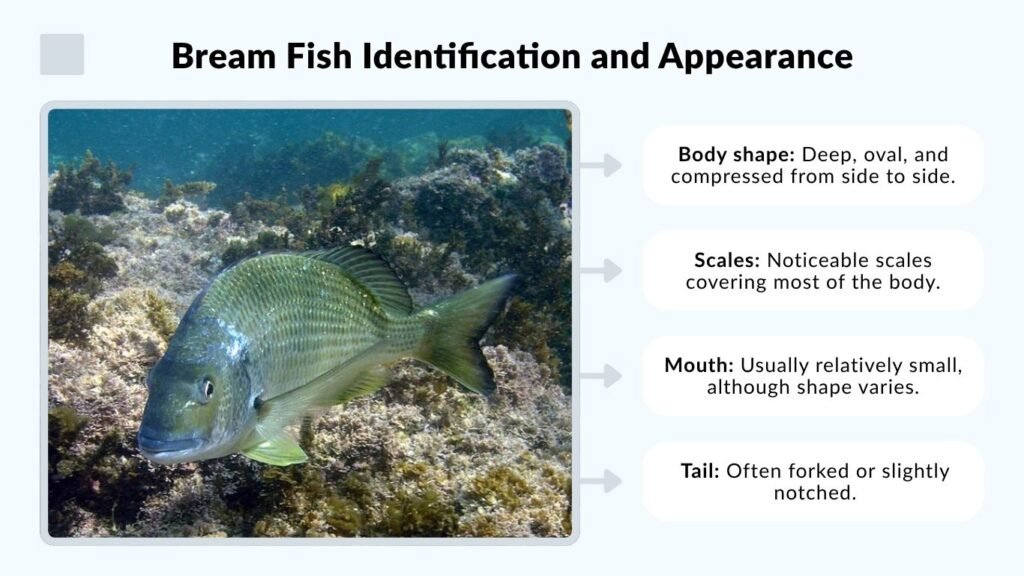
Although bream fish belong to different scientific groups, many share similar physical characteristics. Their compressed bodies make them recognizable, while differences in coloration, fins, and mouth structure help distinguish individual species. Understanding these features is especially useful when identifying fish caught in lakes, rivers, or coastal waters.
Physical Characteristics of Bream Fish
Common identification features include:
- Body shape: Deep, oval, and compressed from side to side.
- Scales: Noticeable scales covering most of the body.
- Coloration: Silver, bronze, olive, green, or reddish, depending on species.
- Mouth: Usually relatively small, although shape varies.
- Dorsal fin: Located along the upper body, with structure varying by species.
- Tail: Often forked or slightly notched.
What Does a Bream Fish Look Like?
European common bream have deep bodies, silvery or bronze sides, and relatively long anal fins. Young fish are generally brighter and more silvery, while mature individuals often develop darker bronze coloration.
Bluegill bream have rounded bodies, blue-colored gill areas, and darker vertical markings. Sea bream commonly have silvery bodies and stronger jaws adapted to feeding on marine invertebrates.
Common Types of Bream Fish
Several fish species are commonly known as bream throughout the world. Some inhabit freshwater lakes and rivers, while others live in coastal marine environments. The following examples represent familiar bream species encountered by recreational anglers and people interested in fish identification.
1. Common Bream
The common bream (Abramis brama) is a freshwater fish native to Europe and parts of Asia. It has a deep, laterally compressed body, a small extendable mouth, and silvery-brown to bronze coloration.
Common bream typically inhabit slow-moving rivers, canals, and lakes. They often form schools and search along the bottom for insect larvae, worms, and mollusks.
2. Bluegill Bream
The bluegill (Lepomis macrochirus) is a North American freshwater sunfish commonly called bream, especially in southern states.
It has a rounded body, blue coloration around its head, and a distinctive dark flap on its gill cover. Bluegill frequently inhabit ponds, lakes, rivers, and vegetated shorelines.
3. Gilthead Sea Bream
The gilthead sea bream (Sparus aurata) is a saltwater fish found primarily in the Mediterranean Sea and eastern Atlantic Ocean.
It has a silvery body and a recognizable golden band between its eyes. This species feeds on mollusks, crustaceans, and other marine animals and is widely valued as a food fish.
4. Red Sea Bream
The red sea bream (Pagrus major) is a marine fish found in the northwestern Pacific Ocean.
Its reddish-pink coloration and deep body distinguish it from many other bream species. It is particularly important in East Asian fisheries and cuisine.
Bream Fish Size and Growth
Bream fish sizes differ considerably between species. Small North American sunfish commonly called bream rarely reach the dimensions of larger European common bream or marine species. Their growth depends on environmental conditions, food availability, population density, and age.
How Big Do Bream Fish Get?
| Type of bream | Common adult length |
| Common bream | 10–20 inches |
| Bluegill bream | 6–10 inches |
| Gilthead sea bream | 8–14 inches |
| Red sea bream | 12–24 inches |
These are approximate adult length ranges rather than strict limits. Exceptional individuals may grow larger.
How Long Do Bream Fish Live?
Lifespan depends on the species. European common bream can live approximately 15–20 years, while bluegill generally have shorter lifespans.
Water quality, predation, fishing pressure, and food availability influence survival and growth.
Where Do Bream Fish Live?
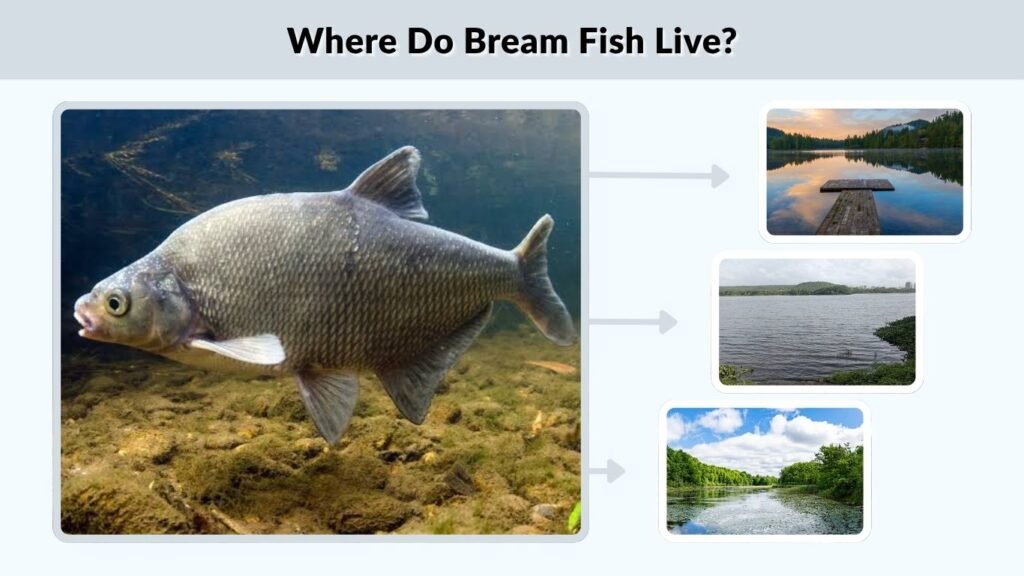
Bream fish inhabit many different aquatic environments, including freshwater lakes, slow-moving rivers, estuaries, and coastal marine waters. Their distribution depends on the species, and understanding these differences is essential when selecting fishing locations or identifying unfamiliar fish.
Freshwater Bream Habitat
Freshwater bream commonly inhabit:
- Lakes and reservoirs.
- Slow-moving rivers and streams.
- Freshwater ponds.
- Vegetated shorelines.
- River backwaters and canals.
- Areas with muddy or sandy bottoms.
European common bream generally prefer deeper, slower waters, where they feed near soft sediments.
Bluegill often concentrate around aquatic plants, fallen trees, docks, and other sheltered structures.
Sea Bream Habitat
Sea bream inhabit coastal waters, including rocky shorelines, sandy bottoms, seagrass beds, and estuaries.
Gilthead sea bream can tolerate varying salinity levels and may enter coastal lagoons or brackish environments. Adults are commonly associated with marine habitats containing abundant bottom-dwelling prey.
What Do Bream Fish Eat?
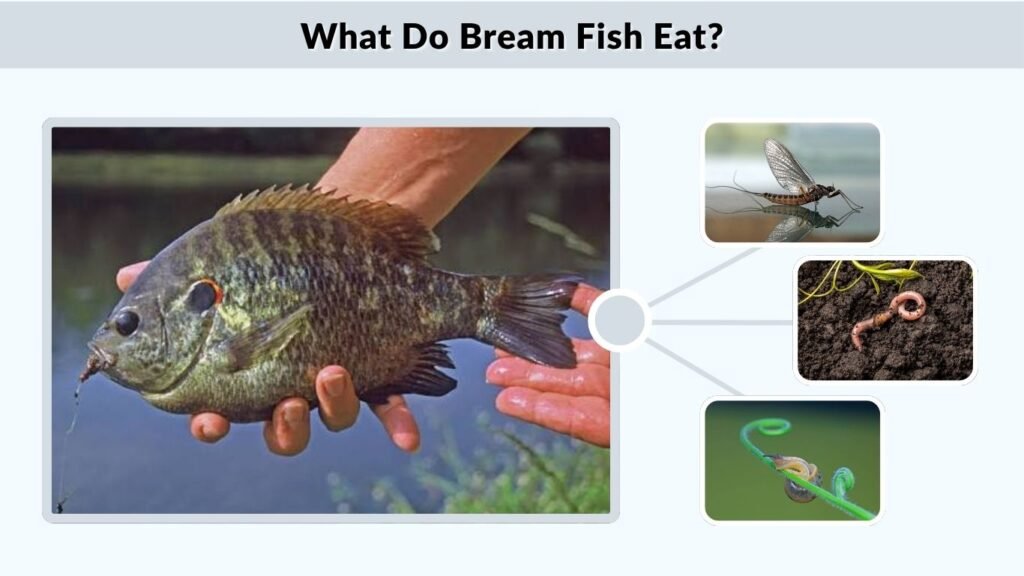
Bream fish have varied feeding habits depending on species, habitat, and age. Many freshwater bream consume aquatic invertebrates, while marine species feed on crustaceans and mollusks. Their diets may change seasonally as water temperatures and available food sources fluctuate.
Freshwater Bream Diet
Freshwater bream commonly eat:
- Aquatic insects and larvae.
- Earthworms and other worms.
- Small crustaceans.
- Snails and mollusks.
- Small amounts of algae or plant material.
- Zooplankton, particularly when young.
European common bream use their extendable mouths to collect food from bottom sediments.
Bluegill primarily consume insects and other small aquatic organisms.
What Do Sea Bream Eat?
Marine sea bream feed on animals such as crabs, shrimp, mussels, clams, and other shellfish.
Some species possess strong teeth capable of crushing hard shells. This feeding behavior explains why shrimp, shellfish, and other marine baits can be effective when targeting sea bream.
How to Catch Bream Fish: Fishing Tips
Bream fishing is popular among beginners and experienced anglers because many species can be caught using relatively simple equipment. Successful techniques depend on whether you are targeting North American bluegill, European common bream, or marine sea bream. Selecting suitable bait, tackle, and fishing locations improves your chances of catching fish.
Best Bait for Bream Fishing
Effective baits include:
- Earthworms: Reliable for bluegill and European freshwater bream.
- Crickets: Particularly effective for North American bluegill.
- Maggots: Popular for catching European common bream.
- Sweetcorn: Frequently used when targeting common bream.
- Small shrimp: Useful for some freshwater species and sea bream.
- Shellfish: Suitable for marine sea bream.
Bream Fishing Setup and Rigs
For bluegill fishing, an ultralight or light spinning rod with 4–8-pound fishing line is usually sufficient.
Use small hooks, often sizes 6–8, with a float or lightweight sinker. Worms or crickets suspended near vegetation can be especially effective.
European common bream are frequently targeted using float-fishing or feeder rigs. Groundbait may help attract and hold schools near the fishing area.
For sea bream, select tackle appropriate to the species, current, seabed, and fishing conditions.
Best Time to Fish for Bream
For North American bluegill, spring and summer can be productive, especially when fish gather in shallow spawning areas.
Early morning and late afternoon are often favorable fishing periods, although bluegill also feed during daylight.
European common bream may feed actively during low-light conditions, while sea bream fishing success often depends on tides, location, and seasonal movement.
Bream Fish vs. Bluegill: Are They the Same?
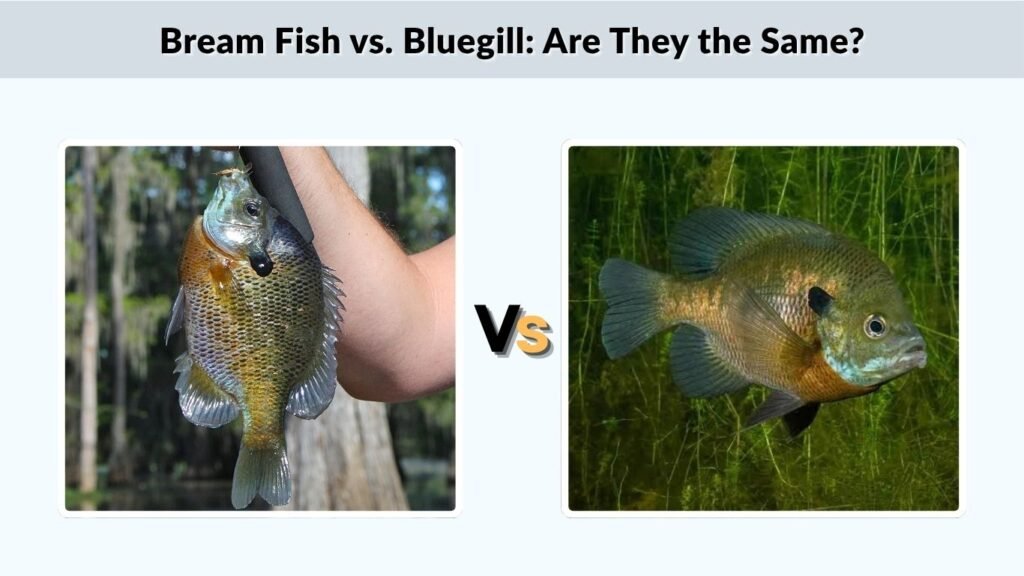
Bream and bluegill are sometimes used interchangeably, but they are not always the same fish. In the southeastern United States, the name bream commonly includes bluegill and other sunfish, such as redear and redbreast sunfish.
In Europe, common bream refers to an entirely different freshwater species.
| Feature | European Common Bream | Bluegill |
| Scientific name | Abramis brama | Lepomis macrochirus |
| Native region | Europe and parts of Asia | North America |
| Body shape | Deep and compressed | Deep and rounded |
| Color | Silver to bronze | Olive, blue, and yellow-orange |
| Habitat | Lakes, canals, slow rivers | Ponds, lakes, rivers |
Both are popular recreational fishing species, but their identification and fishing techniques differ.
Are Bream Fish Good to Eat?
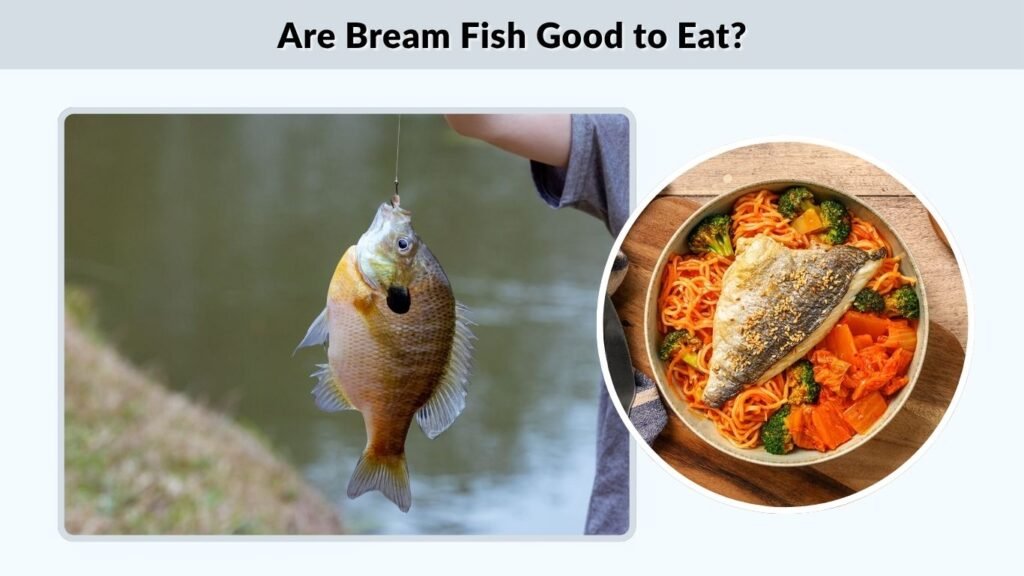
Yes, many bream species are edible. Bluegill is a popular panfish in the United States, while gilthead sea bream is widely consumed in Mediterranean cuisine. Their flavor, texture, and preparation methods vary by species.
How to Cook Bream Fish
Common cooking methods include frying, baking, and grilling.
For pan-fried freshwater bream, clean the fish, remove the internal organs, and prepare suitable fillets or whole dressed fish. Season with salt, pepper, and other preferred ingredients before cooking thoroughly.
Sea bream can be baked whole with lemon, herbs, and olive oil. Always remove the internal organs, handle raw fish hygienically, and check local consumption advisories for wild-caught fish.
FAQs
1. Are bream fish freshwater or saltwater fish?
Both. The name bream refers to freshwater species such as common bream and bluegill, as well as saltwater species such as gilthead sea bream.
2. What is the best bait for bream fishing?
Earthworms, crickets, and maggots are effective for many freshwater bream. Marine sea bream are frequently caught using shrimp, shellfish, and other natural saltwater baits.
3. Is bream fish the same as bluegill?
In the southeastern United States, bluegill is commonly called bream. However, bream is a broader common name and also refers to unrelated freshwater and marine species.
4. Can you eat freshwater bream fish?
Yes. Many freshwater bream species are edible, including bluegill and European common bream. However, flavor and preparation differ, and local fish consumption advisories should be checked.
5. What is the difference between bream and sea bream?
Freshwater bream inhabit inland waters such as lakes and rivers, while sea bream generally inhabit marine or coastal environments. The term covers different scientific groups rather than a single family of fish.