
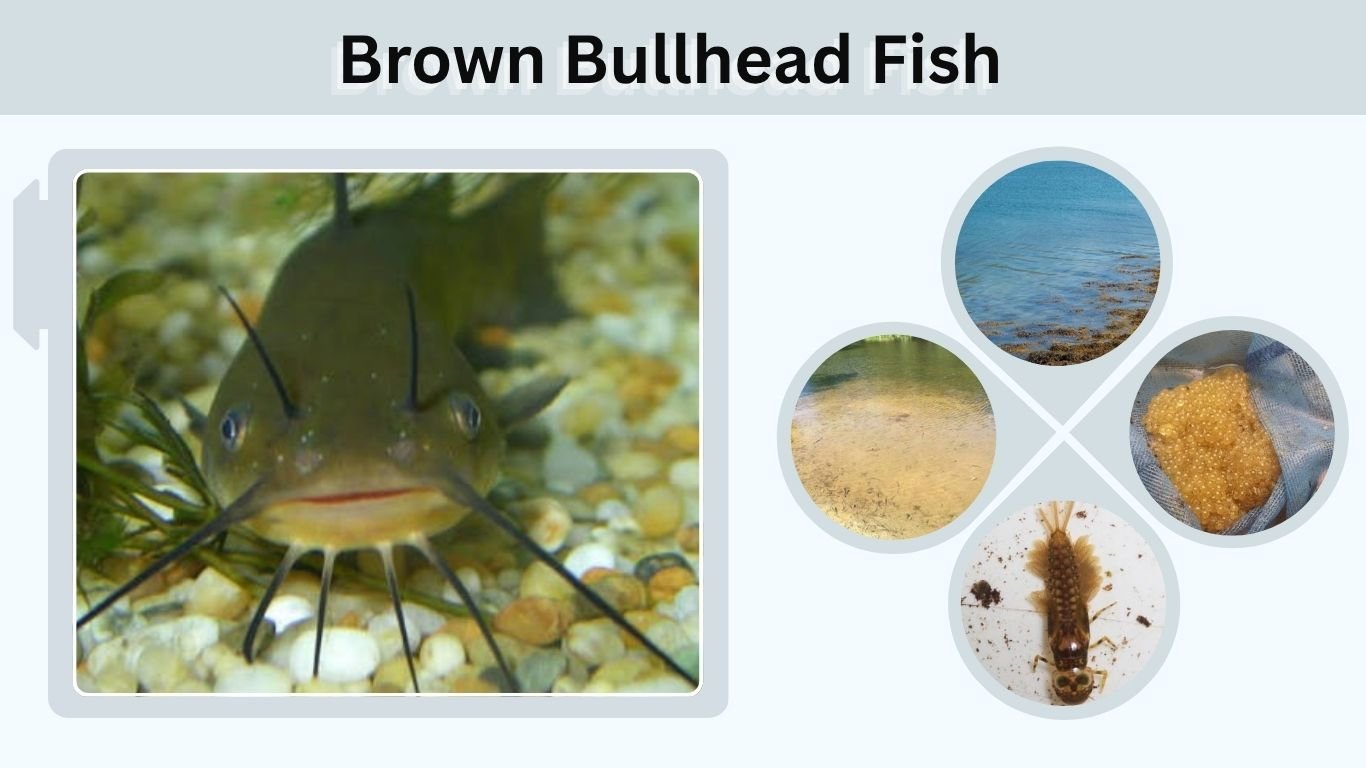
The brown bullhead fish is a hardy freshwater catfish known for its mottled brown body, sensitive whiskers, and ability to survive in muddy waters. Common throughout much of eastern North America, this bottom-dwelling species is popular among recreational anglers because it is relatively easy to catch. Understanding its appearance, habitat, feeding behavior, and fishing techniques can help you identify brown bullheads and catch them more successfully.
What Is a Brown Bullhead Fish?
The brown bullhead (Ameiurus nebulosus) is a freshwater fish belonging to the catfish family Ictaluridae. It is also called the horned pout, mud pout, or mud cat in certain regions. These fish have broad heads, scaleless bodies, and eight whisker-like barbels around their mouths. Their ability to tolerate low oxygen levels makes them well adapted to various freshwater habitats.
Brown Bullhead Fish Facts
- Scientific name: Ameiurus nebulosus
- Family: Ictaluridae
- Common names: Brown bullhead, horned pout, mud pout
- Average length: 7–15 inches
- Typical lifespan: 6–8 years
- Habitat: Freshwater lakes, ponds, and slow-moving rivers
- Diet: Omnivorous
- Native range: Much of eastern North America
Brown bullheads are primarily bottom-feeding fish, spending much of their time searching for food around vegetation, mud, and submerged structures.
Brown Bullhead Fish Identification
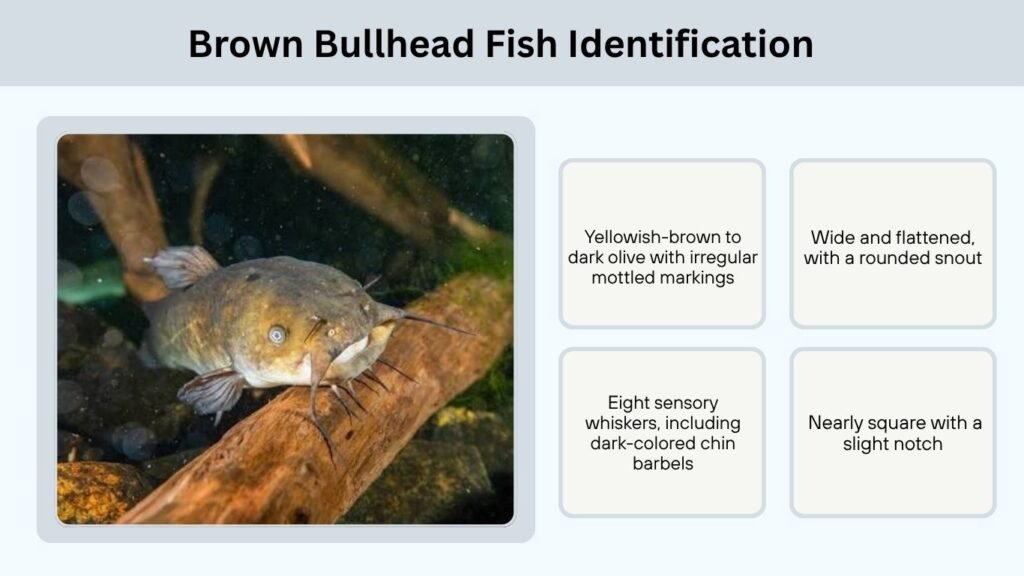
Identifying a brown bullhead fish requires examining its coloration, body shape, barbels, and fins. Although it resembles black and yellow bullheads, several physical characteristics help distinguish it. Its mottled brown sides and dark chin barbels are particularly useful identification clues. Adult fish also have relatively broad heads and slightly notched tails.
Physical Characteristics
Brown bullheads have several recognizable features:
- Body color: Yellowish-brown to dark olive with irregular mottled markings.
- Head: Wide and flattened, with a rounded snout.
- Barbels: Eight sensory whiskers, including dark-colored chin barbels.
- Skin: Smooth, slippery, and without scales.
- Tail: Nearly square with a slight notch.
- Pectoral fins: Strong spines with prominent serrations along their rear edges.
- Belly: Usually cream, pale yellow, or whitish.
Brown Bullhead vs. Black Bullhead
Brown bullheads usually have more noticeable mottled patterns than black bullheads. Their pectoral fin spines also have more prominent saw-like serrations.
Black bullheads generally display more uniform dark coloration, while brown bullheads frequently show irregular patches or spots.
Yellow bullheads differ because their chin barbels are typically pale or whitish rather than dark.
Brown Bullhead Fish Size and Lifespan
Brown bullheads are relatively small compared with larger catfish species, such as channel catfish and flathead catfish. Their growth depends on food availability, water temperature, habitat conditions, and age. Fish living in productive lakes may reach greater sizes than those inhabiting smaller ponds with limited food resources.
How Big Do Brown Bullhead Fish Get?
Most adult brown bullheads measure approximately 7–15 inches long and weigh between 0.3 and 2.2 pounds.
Larger individuals may approach 18–20 inches, although specimens of this size are uncommon in most fishing locations.
Brown bullheads often grow more slowly in crowded populations where food availability is limited.
How Long Do Brown Bullhead Fish Live?
Brown bullheads typically survive around 6–8 years in the wild, although lifespan varies with environmental conditions and predation.
Young fish are particularly vulnerable to larger predatory fish, turtles, and birds. Adults have fewer natural predators because of their defensive fin spines and relatively stocky bodies.
Where Do Brown Bullhead Fish Live?
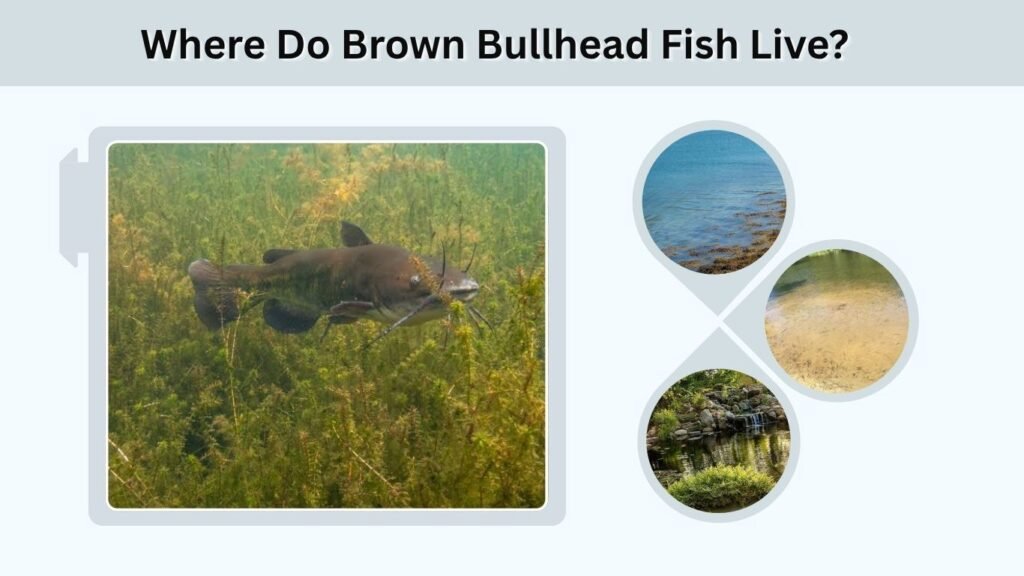
Brown bullhead fish inhabit a wide variety of freshwater environments across North America. They are commonly associated with quiet water, soft bottom sediments, and aquatic vegetation. Their tolerance of warm, muddy, and relatively low-oxygen conditions enables them to occupy habitats where some other freshwater fish struggle to survive.
Preferred Brown Bullhead Habitat
Brown bullheads commonly inhabit:
- Freshwater ponds and small lakes.
- Slow-moving rivers and streams.
- Reservoirs with muddy or sandy bottoms.
- Shallow areas containing aquatic vegetation.
- Quiet backwaters near submerged logs.
- Sheltered coves with limited currents.
They frequently remain close to underwater structures during daylight hours and move into feeding areas when light levels decrease.
Brown Bullhead Distribution
Brown bullheads are native to much of eastern North America, including portions of the Great Lakes and Mississippi River drainage systems.
They occur in states such as Michigan, Minnesota, New York, Pennsylvania, Vermont, and Wisconsin, as well as parts of eastern Canada.
The species has also been introduced into other regions, including western North America and several countries outside its native range.
What Do Brown Bullhead Fish Eat?
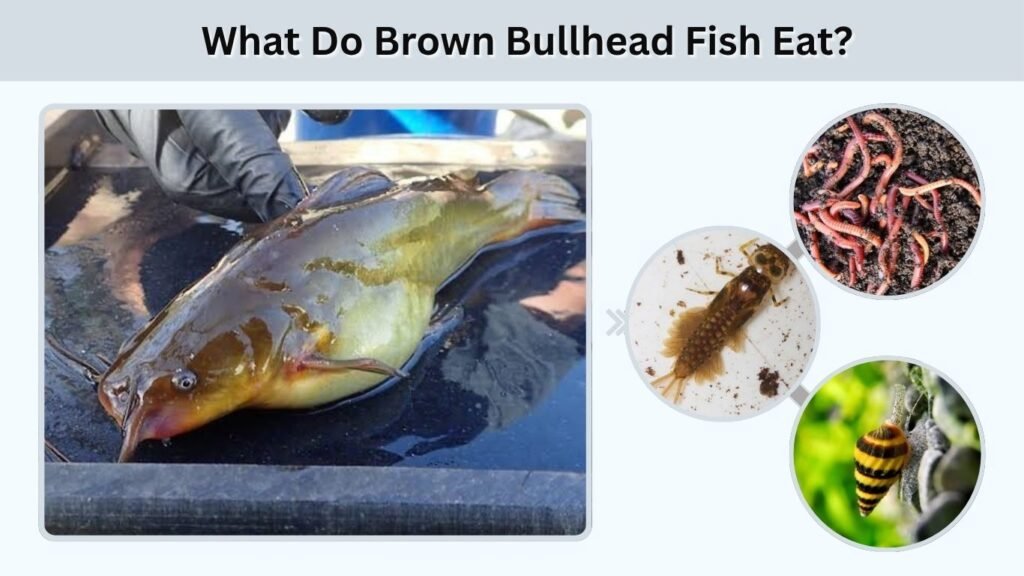
Brown bullheads are opportunistic omnivores that consume a mixture of animal and plant material. Their diet changes with age, habitat, and seasonal food availability. Young fish typically feed on tiny aquatic organisms, while adults eat larger invertebrates and occasional small fish. They primarily search for food near the bottom.
Brown Bullhead Diet
Common foods include:
- Aquatic insects and insect larvae.
- Earthworms and aquatic worms.
- Crayfish and small crustaceans.
- Snails and other mollusks.
- Small freshwater fish.
- Fish eggs.
- Aquatic plants and algae.
- Organic material and carrion.
How Do Brown Bullheads Find Food?
Brown bullheads rely heavily on their sense of smell and their sensitive barbels when searching for food.
These whisker-like structures help detect edible organisms in muddy water where visibility is limited.
Although they often feed at night, brown bullheads may also search for food during daylight, particularly in shaded or turbid environments.
How to Catch Brown Bullhead Fish
Brown bullhead fishing is popular among beginners because these fish readily accept natural bait and rarely require specialized equipment. A simple spinning rod, suitable hooks, and bottom-fishing rig are generally enough. Finding areas with soft sediments, submerged vegetation, or sheltered shorelines can significantly improve fishing opportunities.
Best Bait for Brown Bullhead Fishing
Several natural baits are effective when fishing for brown bullhead catfish.
- Nightcrawlers: One of the most dependable baits for catching brown bullheads.
- Earthworms: Excellent for small and medium-sized fish.
- Cut bait: Pieces of fish can attract feeding bullheads.
- Minnows: Useful for targeting larger individuals where legally permitted.
- Chicken liver: A strong-smelling bait that can produce bites.
- Shrimp: Another option for attracting bottom-feeding bullheads.
Natural bait positioned close to the bottom is especially effective because brown bullheads search for food using scent and taste.
Brown Bullhead Fishing Setup
A light or medium-light spinning rod around 6–7 feet long works well for most brown bullhead fishing situations.
Use approximately 6–10-pound fishing line with a small bottom rig. A hook around size 2–6, depending on bait size, is a practical starting point.
Attach a small sinker to keep the bait near the bottom. Allow the bait to remain relatively stationary, and watch the rod tip for gentle movements.
Best Time for Brown Bullhead Fishing
Evening and nighttime are generally productive periods for brown bullhead fishing because these fish often become more active in low-light conditions.
Spring and early summer can be particularly rewarding as water temperatures increase and fish move into shallower areas.
Fishing around vegetation, muddy banks, and submerged wood often produces good results.
Brown Bullhead Reproduction and Life Cycle
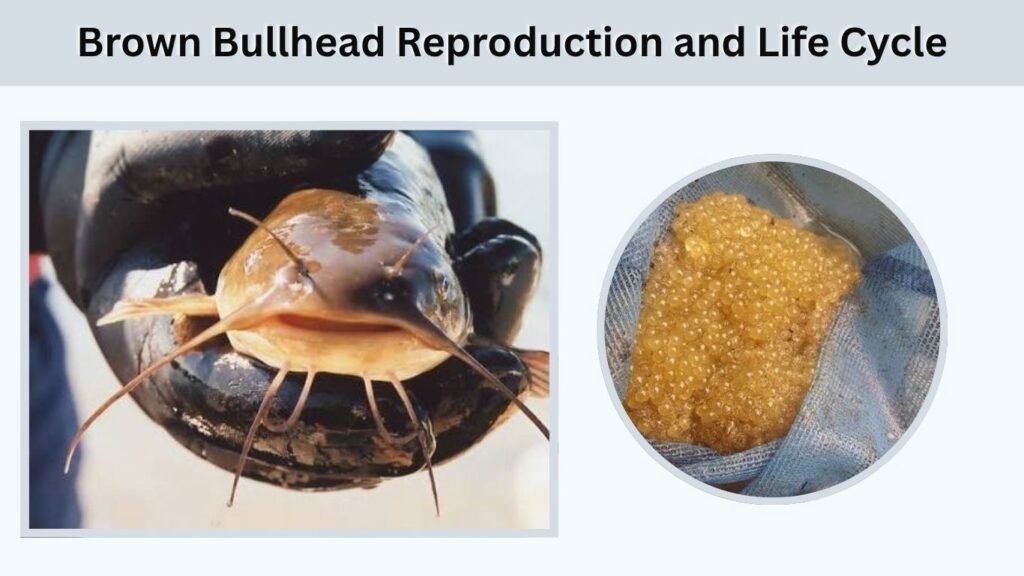
Brown bullheads usually reproduce during spring or early summer when water temperatures become suitable for spawning. Unlike many freshwater fish that abandon their eggs, brown bullheads provide parental care. Adults construct nests in protected locations, and one or both parents guard developing eggs and young fish from predators.
Brown Bullhead Spawning Behavior
The female typically prepares a shallow, saucer-shaped nest near vegetation, rocks, or submerged structures.
After spawning, one or both parents guard the eggs and circulate water around them using their fins.
Once the eggs hatch, the young fish may form tightly grouped schools protected by their parents.
This parental behavior helps improve offspring survival during the vulnerable early stages of development.
Are Brown Bullhead Fish Dangerous?
Brown bullheads are not aggressive toward humans, but their sharp dorsal and pectoral fin spines can cause painful puncture wounds. These spines function primarily as defensive structures against predators. Anglers should be particularly careful when removing hooks or handling fish that are actively struggling.
Safe Handling Tips
When handling brown bullheads, keep your fingers clear of the dorsal and pectoral spines. Wet your hands before touching the fish to reduce damage to its protective skin coating.
Use suitable pliers to remove hooks when necessary, and avoid squeezing the fish excessively.
If punctured by a spine, clean the wound and seek medical advice for severe pain, deep wounds, or signs of infection.
Can You Eat Brown Bullhead Fish?
Yes, brown bullhead fish are edible and are traditionally eaten in several North American regions. Their flesh has a mild flavor and is suitable for frying, baking, and other common cooking methods. However, water quality should always be considered before keeping fish for consumption.
How to Cook Brown Bullhead Fish
Fresh brown bullheads can be cleaned, skinned, and prepared whole or filleted.
Pan-frying is a popular cooking method. The fish can be coated lightly with seasoned flour or cornmeal before frying until the flesh is fully cooked.
Baking and grilling are alternative options for anglers who prefer different preparations.
Always check local fish consumption advisories before eating wild-caught bullheads, particularly from waters with known contamination concerns.
FAQs
1. Is a brown bullhead a catfish?
Yes. The brown bullhead belongs to the catfish family Ictaluridae. It shares characteristics such as barbels, scaleless skin, and sharp fin spines with other North American catfish.
2. What is the best time to catch brown bullhead fish?
Evening and nighttime are usually productive because brown bullheads frequently feed after dark. Spring and early summer often provide favorable fishing conditions.
3. Are brown bullhead fish good to eat?
Yes. Brown bullheads have edible, mild-flavored flesh. They are commonly fried or baked, although anglers should confirm that fish from their chosen waterbody are safe to consume.
4. Can you catch brown bullheads during winter?
Yes. Brown bullheads can be caught during winter, including through the ice where permitted and where ice conditions are safe. However, their feeding activity often decreases in colder water.
5. What is the difference between brown bullhead and yellow bullhead fish?
Brown bullheads usually have dark chin barbels and mottled sides. Yellow bullheads generally have pale chin barbels and more uniform yellowish or olive-brown coloration.