
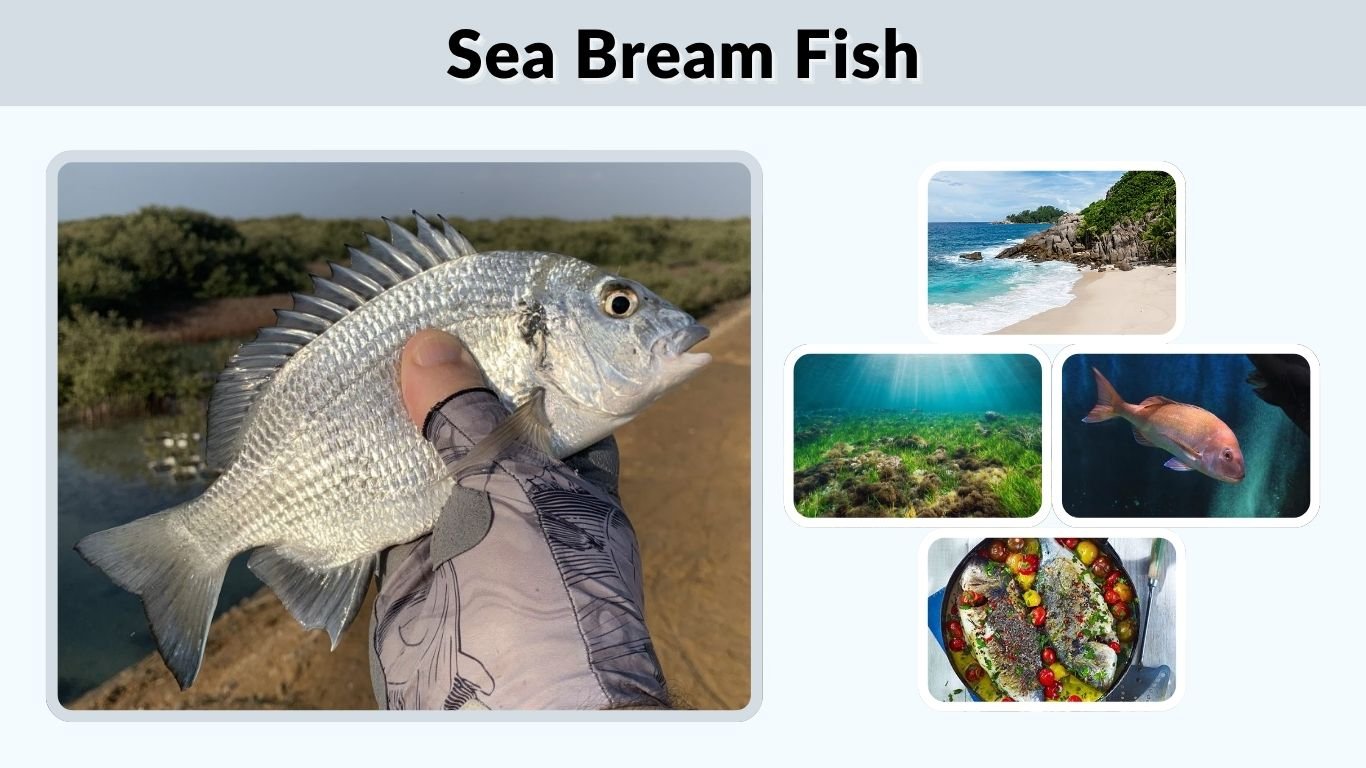
Sea bream fish are popular seafood choices known for their delicate flavor, tender white flesh, and impressive nutritional value. Found in coastal waters worldwide, these fish are especially common in Mediterranean and Asian cuisine. Whether you’re curious about different sea bream species, their habitats, health benefits, or the best ways to cook them, this guide covers everything you need to know about these versatile saltwater fish.
What Is a Sea Bream Fish?
Sea bream is a common name for several marine fish species, particularly members of the family Sparidae. These fish generally have deep, compressed bodies, prominent scales, and strong jaws. They inhabit coastal waters, rocky reefs, sandy seabeds, and estuaries. Gilthead sea bream is among the best-known species in Mediterranean seafood markets.
Sea Bream Fish Identification
Most sea bream species share several recognizable physical characteristics:
- Body shape: Oval, deep, and compressed from side to side.
- Color: Silver, gray, pink, red, or bronze, depending on species.
- Scales: Small, overlapping scales covering the body.
- Teeth: Strong teeth adapted for crushing shellfish.
- Tail: Usually moderately forked.
- Fins: A long dorsal fin containing sharp spines.
The scientific name varies by species. For example, gilthead sea bream is Sparus aurata, while red sea bream is Pagrus major.
Common Types of Sea Bream Fish
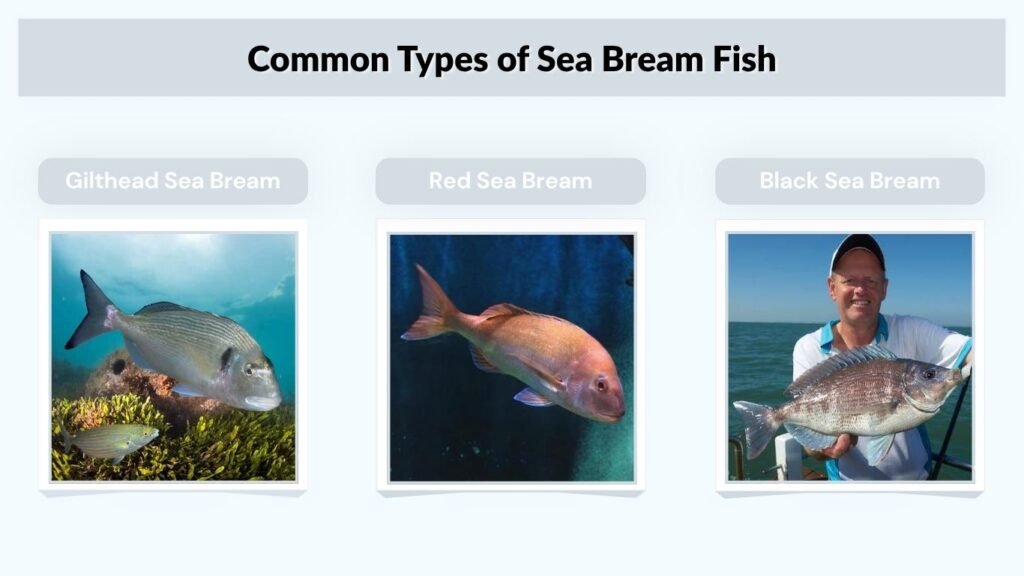
Sea bream includes numerous marine species with different appearances, sizes, and geographic distributions. Some are important commercial seafood species, while others are commonly caught by recreational anglers. Gilthead, red, and black sea bream are among the best-known varieties.
1. Gilthead Sea Bream
The gilthead sea bream (Sparus aurata) has a silver-gray body and a distinctive golden band between its eyes. Common in the Mediterranean Sea and eastern Atlantic Ocean, it is widely farmed for seafood production. Its mild, delicate flesh is especially popular for grilling and baking.
2. Red Sea Bream
Red sea bream (Pagrus major), also known as Japanese sea bream or madai, has pinkish-red scales and a streamlined body. Native to the northwestern Pacific Ocean, it is highly valued in Japanese cuisine and is frequently prepared by steaming, grilling, or other traditional methods.
3. Black Sea Bream
Black sea bream (Spondyliosoma cantharus) has a grayish-silver body with darker markings. It inhabits parts of the eastern Atlantic and Mediterranean. This species commonly occupies rocky coastal habitats and feeds on small marine organisms.
Where Do Sea Bream Fish Live?

Sea bream inhabit coastal marine environments across different regions of the world. Their preferred habitats vary by species, but many occur around reefs, rocky bottoms, seagrass meadows, and sandy seabeds. Some species also tolerate brackish water, particularly during their juvenile stages.
Sea Bream Habitat and Distribution
Common habitats include:
- Rocky coastal reefs and underwater ledges.
- Sandy or muddy seabeds.
- Seagrass meadows and sheltered bays.
- Coastal lagoons and estuaries.
- Shallow waters with abundant shellfish.
Gilthead sea bream occur mainly in the Mediterranean and eastern Atlantic, whereas Japanese red sea bream inhabit the northwestern Pacific.
What Do Sea Bream Fish Eat?
Sea bream are generally omnivorous or carnivorous, depending on the species. Their diets frequently include crabs, shrimp, worms, mollusks, small fish, and other bottom-dwelling organisms.
Their strong jaws and specialized teeth allow many species to crush shells and consume hard-bodied prey.
What Does Sea Bream Fish Taste Like?
Sea bream has a mild, slightly sweet flavor that appeals to people who enjoy delicate white fish. Its flesh is typically firm yet tender, with a moist texture when properly cooked. The taste varies slightly by species, diet, freshness, and cooking method.
Sea Bream Fish vs. Sea Bass
Both sea bream and sea bass are popular white-fleshed seafood choices.
| Feature | Sea Bream | Sea Bass |
| Flavor | Mild, slightly sweet | Mild, delicate |
| Texture | Firm and tender | Flaky and tender |
| Body shape | Deep and oval | More elongated |
| Cooking | Grilling, baking, frying | Grilling, baking, steaming |
Sea bream often has a slightly firmer texture, although individual species and preparation methods influence the final result.
Sea Bream Fish Nutrition and Health Benefits
Sea bream provides protein, beneficial fats, and essential vitamins and minerals. Its nutritional composition varies between species and between wild-caught and farm-raised fish. When prepared using methods such as baking or grilling, sea bream can be included in a balanced, nutritious diet.
Nutritional Benefits
- Protein: Supports muscle maintenance and tissue repair.
- Omega-3 fatty acids: Contribute to normal cardiovascular function.
- Vitamin B12: Supports nerve function and red blood cell production.
- Selenium: Helps protect cells against oxidative damage.
- Phosphorus: Contributes to healthy bones and teeth.
- Vitamin D: May be present in useful amounts, depending on the fish.
Is Sea Bream Fish Healthy?
Yes. Sea bream can be a nutritious alternative to heavily processed protein sources. However, nutritional values depend on species, portion size, and preparation.
Grilled or baked sea bream generally requires less added fat than deep-fried preparations.
How to Cook Sea Bream Fish
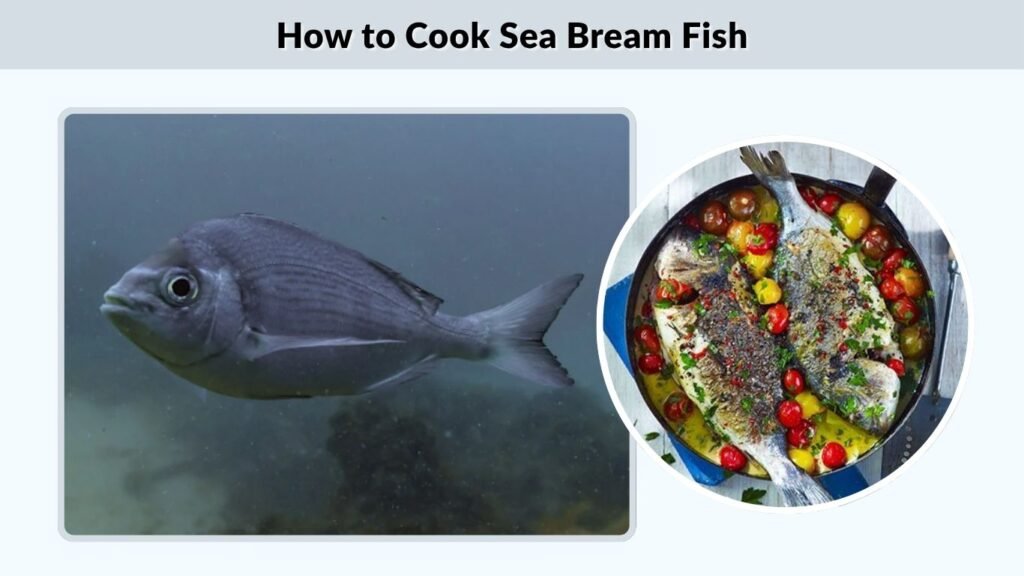
Sea bream is versatile and can be baked, grilled, pan-fried, or steamed. Its firm flesh holds together well during cooking, while its mild flavor complements lemon, garlic, olive oil, and fresh herbs. Whole sea bream is particularly suitable for Mediterranean-style recipes.
Easy Baked Sea Bream Fish Recipe
Ingredients
- 1 whole sea bream, cleaned and scaled
- 2 tablespoons olive oil
- 1 lemon, sliced
- 2 garlic cloves, minced
- Salt and black pepper
- Fresh parsley or thyme
Cooking Instructions
- Preheat your oven to 400°F (200°C).
- Rinse the cleaned fish if necessary and pat it dry.
- Rub olive oil, garlic, salt, and pepper over the fish.
- Place lemon slices and herbs inside the cavity.
- Bake for approximately 20–25 minutes, depending on thickness.
- Check that the thickest part reaches 145°F (63°C), then serve.
Cooking times vary with fish size and oven performance, so use a food thermometer rather than relying on time alone.
How to Choose Fresh Sea Bream Fish
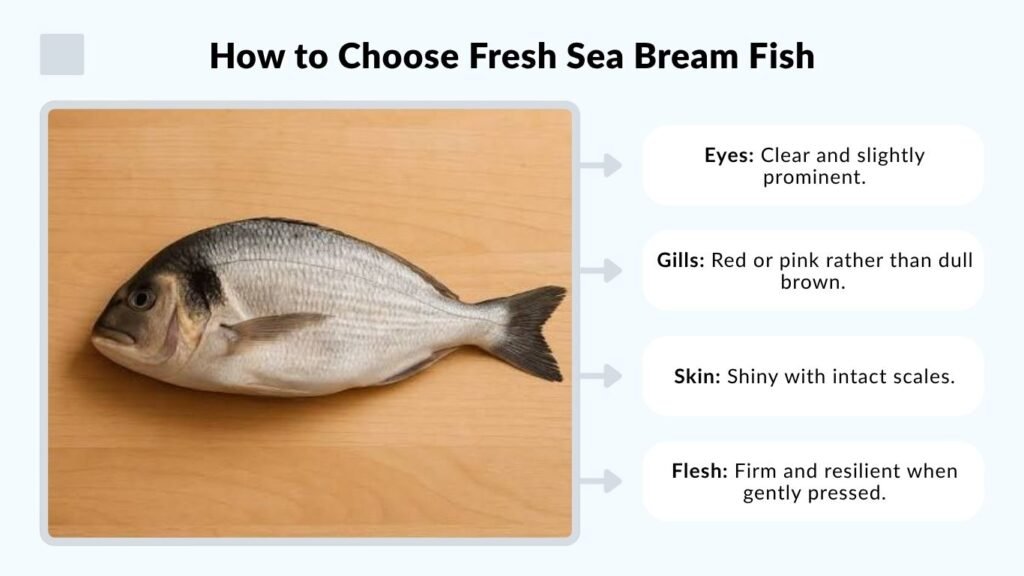
Selecting fresh sea bream is important for achieving the best taste, texture, and cooking results. Seafood markets often sell whole fish, cleaned fish, and fillets. Freshness, correct storage, and reliable identification are more useful purchasing considerations than appearance alone.
Signs of Fresh Sea Bream
Look for the following characteristics:
- Eyes: Clear and slightly prominent.
- Gills: Red or pink rather than dull brown.
- Skin: Shiny with intact scales.
- Flesh: Firm and resilient when gently pressed.
- Smell: Mild and fresh, without sour or ammonia-like odors.
Keep seafood refrigerated and cook or freeze it promptly.
FAQs
1. Is sea bream a saltwater fish?
Yes. Most sea bream species are marine fish, although some, including gilthead sea bream, can enter brackish lagoons and estuaries.
2. Is sea bream fish kosher?
Many commonly sold sea bream species have fins and removable scales, the required characteristics for kosher fish. However, the exact species must be identified, and processing requirements may also apply.
3. Is sea bream safe during pregnancy?
Properly cooked fish can be part of a healthy pregnancy diet. However, mercury levels vary among species, and “sea bream” is a broad market name. Pregnant individuals should verify the species and consult current fish-consumption guidance rather than assume every sea bream has the same mercury level. Avoid raw sea bream during pregnancy.
4. Do sea bream fish have bones?
Yes. Whole sea bream contains a backbone, ribs, and smaller pin bones. Remove bones carefully before eating, especially when serving children.
5. Can you grill sea bream fish?
Yes. Whole sea bream and fillets are suitable for grilling. Lightly oil the fish, season it, and cook until its internal temperature reaches 145°F (63°C).