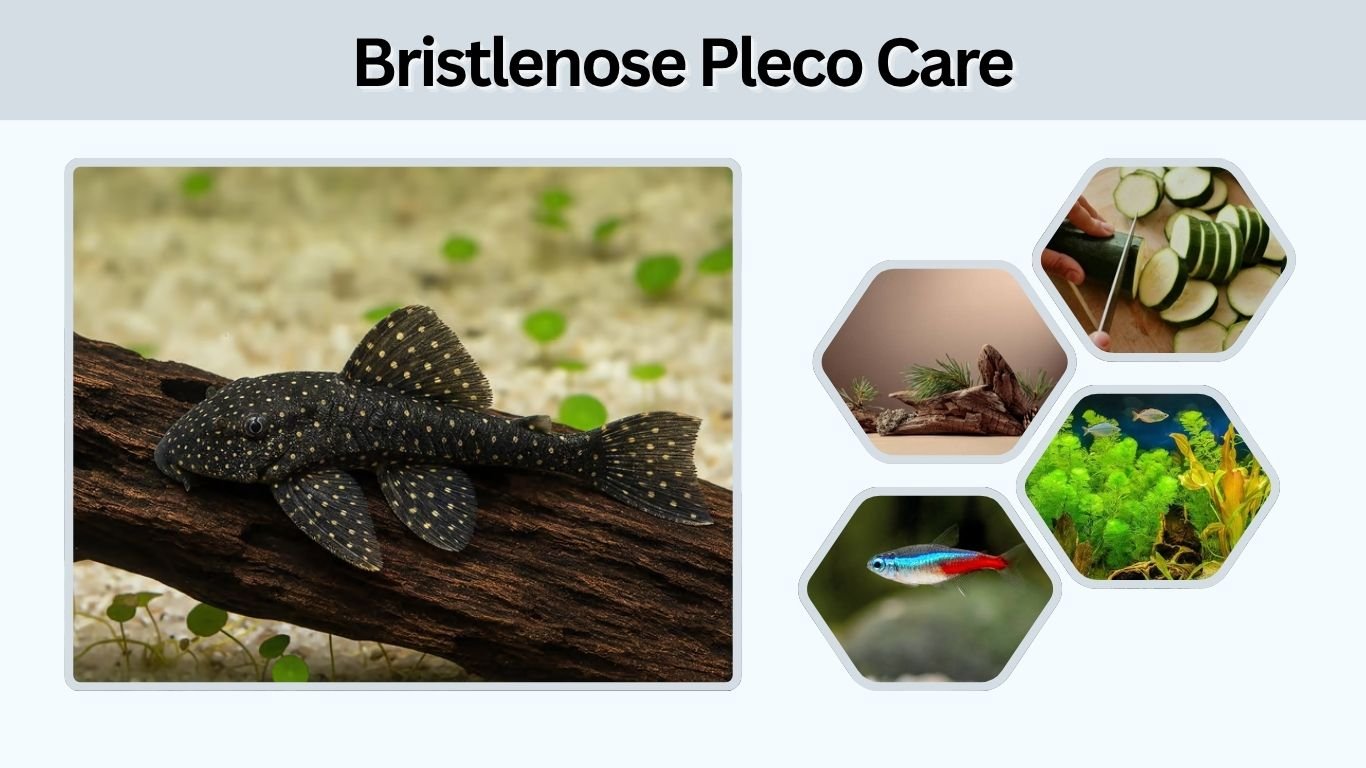
The Bristlenose Pleco is a popular freshwater aquarium fish known for its unusual facial bristles, peaceful personality, and algae-eating habits. Unlike larger pleco species, these small catfish remain manageable in home aquariums and adapt well to community tanks. They also come in several attractive colors, including albino, super red, and longfin varieties. However, proper care requires more than allowing them to eat algae. Understanding Bristlenose Pleco size, lifespan, tank requirements, water temperature, feeding habits, and breeding behavior helps keep these fascinating fish healthy.
What Is a Bristlenose Pleco?
The Bristlenose Pleco is a freshwater catfish belonging to the genus Ancistrus and the family Loricariidae. Native to South America, these bottom-dwelling fish inhabit freshwater environments with submerged wood, rocks, and natural hiding places.
Their flattened bodies, sucker-shaped mouths, and distinctive facial bristles make them easy to recognize. They are also called Bristlenose Catfish or Bushynose Plecos.
Bristlenose Pleco Identification
- Scientific Name: Ancistrus spp.
- Common Name: Bristlenose Pleco
- Family: Loricariidae
- Origin: South America
- Adult Size: Usually 4–5 inches
- Lifespan: Approximately 5–10 years
- Temperament: Generally peaceful
- Diet: Mainly algae, biofilm, and plant-based foods
- Care Level: Beginner-friendly
Bristlenose Pleco Size and Lifespan
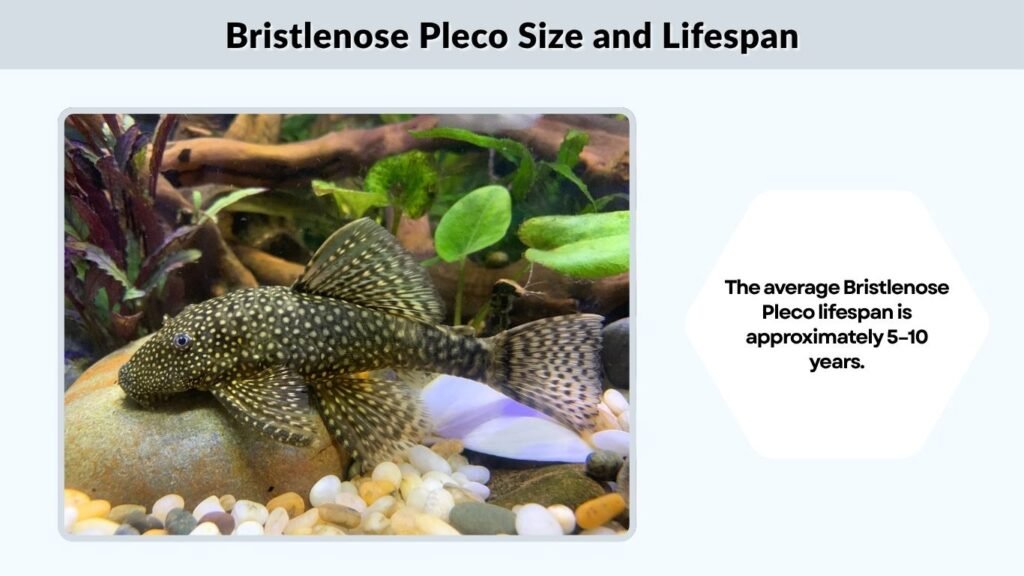
Bristlenose Plecos are popular because they stay considerably smaller than common plecos. Their compact size makes them suitable for many freshwater aquariums, although they still need enough bottom space to explore.
Their growth and longevity depend on genetics, nutrition, water quality, and aquarium maintenance.
How Big Do Bristlenose Plecos Get?
A full-grown Bristlenose Pleco usually measures 4–5 inches, although some individuals reach approximately 6 inches.
Young fish grow relatively quickly when provided with nutritious food and suitable conditions. Growth gradually slows as they approach adulthood.
Albino, super red, and most other common color varieties generally reach similar adult sizes.
How Long Do Bristlenose Plecos Live?
The average Bristlenose Pleco lifespan is approximately 5–10 years. Some individuals survive longer with excellent care.
Clean water, a balanced diet, stable temperatures, and low stress contribute to their longevity. Poor nutrition and deteriorating water quality can significantly shorten their lives.
Bristlenose Pleco Tank Size and Aquarium Setup
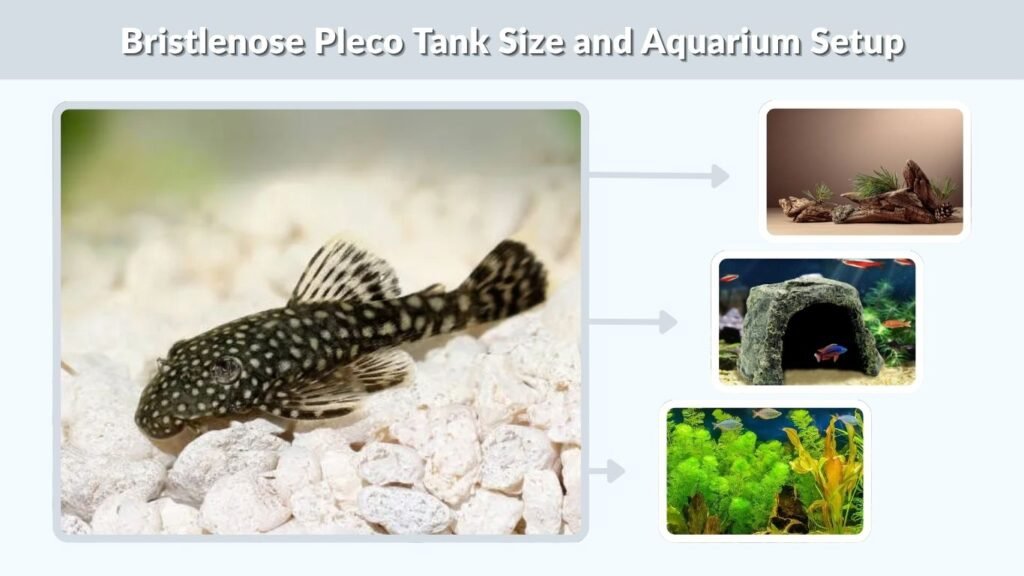
A properly arranged aquarium supports natural grazing, resting, and hiding behaviors. Although Bristlenose Plecos are relatively small, they remain active around the bottom and decorations.
Providing adequate space and suitable hiding areas helps reduce stress and territorial disagreements.
Minimum Bristlenose Pleco Tank Size
A 20-gallon aquarium is a commonly recommended minimum for one adult Bristlenose Pleco. However, a 29–30-gallon tank provides additional space and makes maintaining stable conditions easier.
Larger aquariums are recommended when keeping several plecos or other bottom-dwelling fish.
Choose a tank with sufficient floor space rather than relying entirely on aquarium height.
Essential Aquarium Setup
- Substrate: Use smooth gravel or aquarium sand to protect the fish.
- Driftwood: Provide natural grazing surfaces and additional shelter.
- Caves: Include secure hiding spots, especially for adult males.
- Plants: Add hardy aquatic plants for cover and a natural environment.
- Filtration: Install an effective filter to maintain clean, oxygenated water.
- Lighting: Use moderate lighting and provide shaded resting areas.
Avoid overcrowding the bottom of the aquarium with decorations that restrict movement.
Bristlenose Pleco Water Temperature and Conditions
Maintaining stable water conditions is essential for keeping Bristlenose Plecos healthy. These tropical freshwater fish tolerate a reasonable range of conditions, but sudden changes can cause stress.
Their aquarium should have efficient filtration, adequate oxygen, and regularly tested water.
Ideal Water Parameters
- Temperature: 72–80°F (22–27°C)
- pH Level: Approximately 6.0–7.5
- Water Hardness: Roughly 2–18 dGH
- Ammonia: 0 ppm
- Nitrite: 0 ppm
- Nitrate: Keep low through routine maintenance
Use a reliable aquarium heater when necessary to maintain a consistent temperature.
Regular partial water changes, substrate cleaning, and filter maintenance help prevent harmful waste accumulation. Always cycle a new aquarium before introducing fish.
What Do Bristlenose Plecos Eat?
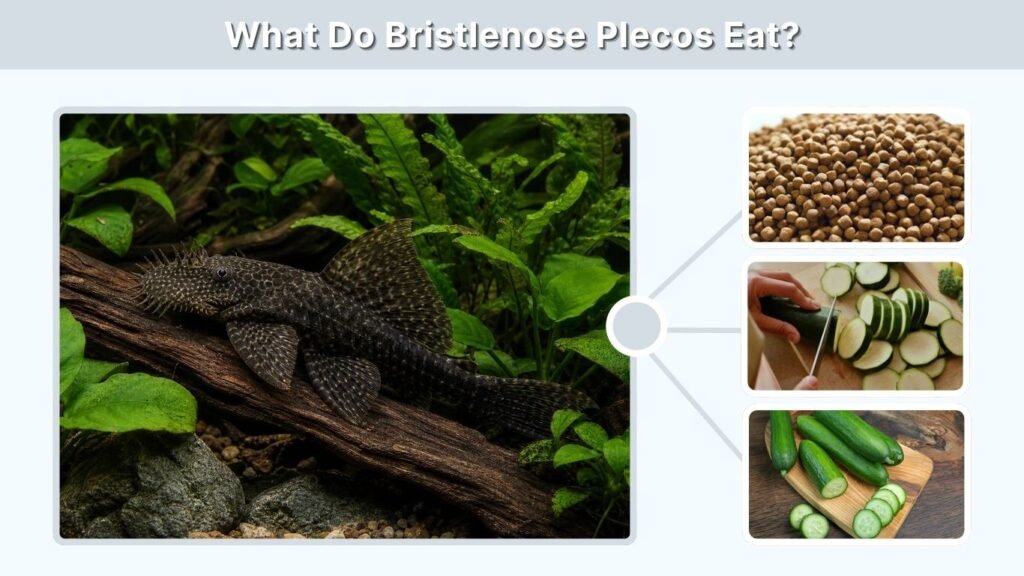
Bristlenose Plecos naturally graze on algae, biofilm, and organic material found on submerged surfaces. However, algae growing inside an aquarium rarely supplies enough nutrition by itself.
A balanced Bristlenose Pleco diet should include appropriate sinking foods, vegetables, and occasional protein-rich supplements.
Best Foods for Bristlenose Plecos
- Algae Wafers: Provide a convenient staple food formulated for grazing fish.
- Zucchini: Offer lightly blanched slices as a nutritious vegetable supplement.
- Cucumber: Feed occasionally for dietary variety.
- Spinach: Offer small amounts of softened leaves.
- Sinking Pleco Pellets: Choose high-quality foods suitable for Ancistrus.
- Protein Foods: Provide small occasional portions of suitable protein-rich fish food.
Feeding Habits and Schedule
Bristlenose Plecos are most active during the evening and nighttime. Offering food shortly before or after the aquarium lights turn off can help them feed comfortably.
Provide appropriately sized portions and remove uneaten vegetables before they decay.
Never depend entirely on algae or leftover food from other aquarium fish.
Popular Bristlenose Pleco Types and Colors
Bristlenose Plecos are available in numerous attractive varieties. Selective breeding has produced different colors, patterns, and fin shapes, making these fish particularly appealing to aquarium enthusiasts.
Many popular varieties are color or fin forms rather than separate species.
Common Bristlenose Pleco Varieties
The Common Bristlenose Pleco usually has brown, gray, or dark coloration with lighter markings.
The Albino Bristlenose Pleco displays pale yellow or cream coloring with reddish eyes. The Super Red Bristlenose Pleco has striking orange-red coloration.
The Longfin Bristlenose Pleco develops extended, flowing fins, while the Blue-Eyed Lemon Bristlenose Pleco combines yellow coloration with blue eyes.
Other popular varieties include Calico, Snow White, Green Dragon, Starlight, and certain Peppermint Bristlenose Plecos.
Bristlenose Pleco Male vs Female
Male and female Bristlenose Plecos share similar body shapes, but mature fish develop noticeable physical differences.
Males typically have prominent, branching bristles extending across their snouts and heads. Females usually have much smaller bristles, often concentrated around the mouth.
Adult males may also become more territorial when defending caves or breeding areas.
These differences become easier to recognize as fish mature.
Bristlenose Pleco Tank Mates and Behavior

Bristlenose Plecos are generally peaceful fish that spend much of their time resting, exploring surfaces, and searching for food.
They usually coexist successfully with peaceful community fish that prefer similar water conditions.
Suitable Bristlenose Pleco Tank Mates
Tetras, rasboras, peaceful rainbowfish, and many small community fish can make suitable companions.
Avoid aggressive species that may injure or repeatedly disturb them.
Multiple adult male Bristlenose Plecos may compete over caves and territory. Keeping additional plecos requires more space and separate hiding areas.
Bristlenose Pleco Breeding
Bristlenose Plecos are among the easier pleco groups to breed in home aquariums. Healthy mature pairs may reproduce when provided with suitable caves, stable water conditions, and adequate food.
The female typically deposits eggs inside a sheltered cavity. The male fertilizes the eggs and guards them, often fanning water across the clutch.
The eggs generally hatch within several days, depending on temperature. Newly hatched fry initially depend on their yolk sacs before beginning to feed.
Once free-swimming, young plecos need suitable small sinking foods, soft vegetables, and clean, well-oxygenated water.
Common Bristlenose Pleco Health Problems
Although Bristlenose Plecos are relatively hardy, poor aquarium conditions may cause health problems.
Undernourishment, fungal infections, parasites, and injuries can affect their well-being.
Warning signs include unusual inactivity, loss of appetite, damaged fins, visible spots, abnormal swelling, or a noticeably sunken belly.
Regularly check water parameters, provide a nutritious diet, and quarantine new fish when appropriate. Seek advice from a qualified aquatic veterinarian when illness is suspected.
FAQs
1. Are Bristlenose Plecos Good for Beginners?
Yes, Bristlenose Plecos are suitable for beginners who can maintain a properly cycled aquarium. Their peaceful behavior, manageable adult size, and adaptable feeding habits make them easier to keep than many larger pleco species. However, they still require regular feeding and maintenance.
2. Do Bristlenose Plecos Eat Algae?
Yes, Bristlenose Plecos regularly graze on algae and biofilm growing on aquarium surfaces. However, they cannot survive healthily on algae alone in most home aquariums. Supplement their natural grazing with suitable algae wafers, vegetables, and balanced sinking foods.
3. Can Bristlenose Plecos Live Alone?
Yes, Bristlenose Plecos can live alone without experiencing the social problems associated with keeping schooling fish individually. A single adult can thrive in a properly maintained aquarium with adequate hiding places, nutritious food, and suitable water conditions.
4. How Fast Do Bristlenose Plecos Grow?
Bristlenose Plecos generally grow fastest during their juvenile stages and gradually slow as they mature. Many approach adult size within roughly one to two years, although growth varies depending on genetics, diet, temperature, and aquarium conditions.
5. Do Bristlenose Plecos Eat Fish Poop?
No, Bristlenose Plecos should not be considered fish waste cleaners. Although they graze on algae and organic material, fish feces are not a suitable food source. Aquarium owners must still remove accumulated waste and perform regular water changes.