

Guppy fish are among the most popular freshwater aquarium fish because of their beautiful colors, peaceful behavior, and easy care requirements. However, many fishkeepers wonder about the average guppy fish lifespan and how to help their pets live longer. Most guppies live for 2–3 years, although some can survive for 4–5 years under excellent conditions. Their lifespan depends on water quality, temperature, genetics, nutrition, and tank environment. Understanding these factors can help you keep your guppies healthy and active throughout their lives.
How Long Do Guppy Fish Live?
The average guppy fish lifespan is approximately 2–3 years in a home aquarium. Guppies (Poecilia reticulata) are small tropical freshwater fish that grow and reproduce relatively quickly. Their actual lifespan varies depending on their living conditions, breeding history, and overall health.
Guppies raised in stable, well-maintained aquariums may live longer than those exposed to pollution, disease, or stressful environments.
Average Guppy Lifespan
| Guppy category | Typical or possible lifespan |
|---|---|
| Guppies in home aquariums | 2–3 years |
| Guppies with excellent care | Up to 4–5 years |
| Wild guppies | Variable; often shortened by predation |
| Male guppies | Usually around 2–3 years |
| Female guppies | Usually around 2–3 years |
Guppy Fish Lifespan in the Wild vs. Captivity
Guppies inhabit freshwater streams, rivers, and other aquatic environments in their native range in northern South America and the Caribbean. Their lifespans can differ considerably between wild and captive environments because of environmental conditions.
Guppy Lifespan in the Wild
Wild guppies face numerous challenges, including predators, parasites, changing water conditions, and competition for food. Larger fish and other aquatic predators frequently hunt guppies, making survival more difficult.
However, surviving wild guppies do not necessarily age faster. Research published in PLOS Biology found that guppy populations exposed to high predation pressure evolved different reproductive schedules and lifespans. This demonstrates how complex their natural longevity can be.
Guppy Lifespan in Aquariums
Aquarium guppies are protected from most natural predators and receive regular food. With proper filtration, stable temperature, and suitable tankmates, they can live their full natural lifespan.
Nevertheless, overcrowding, ammonia buildup, and sudden temperature changes can shorten their lives. A well-established aquarium generally provides more predictable conditions than a poorly maintained tank.
Male vs. Female Guppy Fish Lifespan

Male and female guppies share a similar typical lifespan, although their health and reproductive demands differ.
Male Guppy Lifespan
Male guppies generally live around 2–3 years under suitable aquarium conditions. They are usually smaller than females and display brighter colors and longer, decorative fins.
Their lifespan can be affected by genetics, aggression from tankmates, and the stress of constantly pursuing females. Long-finned fancy varieties may also be more vulnerable to fin damage.
Female Guppy Lifespan
Female guppies also typically live around 2–3 years, with some surviving longer in excellent conditions.
Females are generally larger and have less elaborate coloration. Because they reproduce frequently, pregnancy and repeated breeding can place demands on their bodies. Maintaining a nutritious diet, adequate space, and appropriate group composition helps protect their health.
Neither sex can reliably be expected to live longer solely because it is male or female.
What Factors Affect Guppy Fish Lifespan?

Several environmental and biological factors influence how long guppies survive. Understanding these factors helps aquarium owners prevent avoidable health problems.
1. Water Quality
Poor water quality is one of the most serious threats to aquarium guppies. Ammonia and nitrite are toxic, while excessive nitrate concentrations can contribute to unhealthy conditions.
A properly cycled aquarium, functioning biological filtration, regular water testing, and partial water changes help keep water safe.
2. Water Temperature
Guppies thrive in warm, relatively stable freshwater. A practical target is approximately 74–78°F (23–26°C), within the broader commonly recommended range of 72–82°F (22–28°C).
Research shows that developmental temperature influences guppy growth and age at maturity. However, higher temperature does not automatically mean a shorter lifespan in every situation. Avoid sustained overheating and sudden temperature fluctuations.
3. Genetics and Breeding
Genetic background can influence disease susceptibility, physical development, and longevity.
Some heavily selected fancy guppy strains may have inherited health weaknesses. Purchasing fish from responsible breeders and avoiding repeated close-relative breeding can help maintain healthier populations.
4. Diet and Nutrition
Guppies are omnivores that require a balanced diet. Poor-quality food, nutritional deficiencies, and overfeeding can negatively affect their health.
A varied diet containing quality aquarium flakes or micro-pellets, occasional live or frozen foods, and suitable plant-based ingredients supports healthy development.
5. Stress and Overcrowding
Guppies are social fish, but overcrowded aquariums can increase aggression, competition, and waste accumulation.
Aggressive tankmates, constant chasing, inadequate hiding places, and frequent environmental changes can also create chronic stress, potentially reducing longevity.
How to Increase Guppy Fish Lifespan
Providing appropriate daily care can improve your guppies’ chances of living for several years. The following practices help create a healthier aquarium environment.
Maintain Ideal Water Conditions
Regularly monitor aquarium temperature, pH, ammonia, nitrite, and nitrate. Guppies generally prefer neutral to slightly alkaline water with moderate mineral content.
| Water parameter | Recommended target |
|---|---|
| Temperature | 74–78°F (23–26°C) |
| pH | 7.0–7.8 |
| Ammonia | 0 ppm |
| Nitrite | 0 ppm |
| Nitrate | Preferably below 20 ppm |
| Tank size | 10 gallons or larger for a small group |
Avoid sudden changes in water chemistry, even when correcting an unsuitable parameter.
Provide a Balanced Diet
Feed guppies small portions of high-quality fish food once or twice daily. Offer occasional brine shrimp, daphnia, or other appropriately sized foods for dietary variety.
Remove excess food before it decomposes and pollutes the aquarium. Proper nutrition supports immunity, coloration, and general health.
Choose a Suitable Tank Size
A 10-gallon aquarium is a practical starting point for a small group of guppies. Larger aquariums offer more swimming space and make water quality easier to maintain.
Include aquatic plants such as Java moss, hornwort, or Java fern. Plants provide shelter and help create a comfortable environment.
Prevent Disease and Stress
Observe guppies daily for unusual swimming patterns, damaged fins, or reduced appetite. Quarantine newly purchased fish before introducing them into an established aquarium.
Choose peaceful tankmates and avoid aggressive species that may chase or injure guppies.
For mixed-sex groups, keeping approximately two or three females per male can distribute mating attention, although breeding and population growth must also be managed.
Signs Your Guppy Fish Is Getting Old
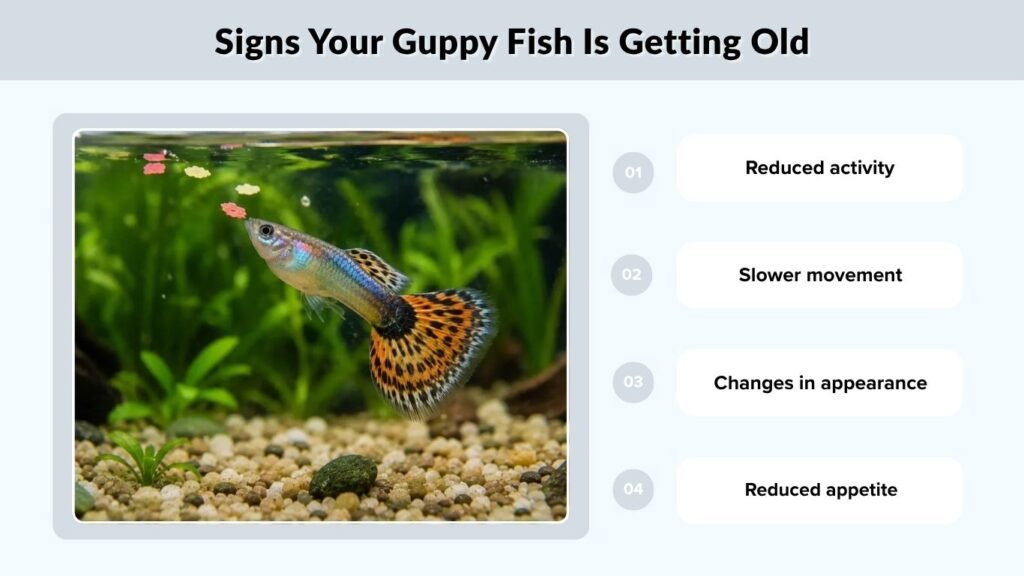
As guppies age, they may gradually become less active. However, aging symptoms can resemble signs of illness, making careful observation important.
Common age-related changes may include:
- Reduced activity: Older guppies may swim less frequently.
- Slower movement: They may move more slowly than younger fish.
- Changes in appearance: Some develop faded coloration or a less robust body.
- Reduced appetite: Aging fish may become less enthusiastic about feeding.
- Decreased reproductive activity: Breeding may become less frequent with age.
These symptoms do not automatically indicate old age. Sudden lethargy, appetite loss, abnormal swimming, or physical deterioration should prompt immediate water testing and investigation of possible disease.
Why Do Guppy Fish Die Early?
Some guppies die within weeks or months of purchase rather than surviving their expected lifespan. Premature death is often associated with unsuitable environmental conditions, pre-existing health problems, or transportation stress.
Common causes include uncycled aquariums, toxic ammonia or nitrite levels, temperature fluctuations, overcrowding, and infectious diseases.
Newly purchased guppies may already be several months old, so their remaining lifespan can be shorter than expected.
To prevent premature deaths, establish the aquarium’s biological filtration before introducing fish, avoid sudden water changes, and monitor new arrivals carefully.
Frequently Asked Questions
1. Can guppy fish live for 5 years?
Yes, some guppies can live for 4–5 years under exceptional conditions. However, this is longer than the typical lifespan, and most aquarium guppies survive approximately 2–3 years.
2. How long do guppies live without a filter?
There is no reliable fixed lifespan for guppies without a filter. A properly maintained, biologically balanced aquarium can sometimes support fish without conventional filtration, but small unfiltered tanks are especially vulnerable to dangerous water-quality changes.
3. How long do fancy guppies live?
Fancy guppies generally have a lifespan similar to common guppies, approximately 2–3 years. However, selective breeding, inherited health issues, and delicate fins can influence their longevity.
4. Do guppies live longer in colder water?
Not necessarily. Cooler temperatures within their acceptable range can slow metabolism, but excessively cold water can compromise normal health. Maintaining stable, suitable temperatures is more important than deliberately lowering the temperature to extend lifespan.
5. What is the longest a guppy fish can live?
Some aquarium-care sources report guppies reaching approximately five years, but this is uncommon. There is no universally established maximum lifespan for every guppy strain, and individual longevity depends on genetics, environment, and health.