

Guppy fish are among the most popular freshwater aquarium fish because of their bright colors, peaceful behavior, and relatively easy care requirements. These small tropical fish are excellent for beginners and experienced aquarium owners alike. Guppies come in many beautiful varieties, featuring colorful tails and attractive patterns. They also reproduce quickly, making them interesting fish to raise at home. Understanding guppy fish care, including tank size, water temperature, feeding, breeding, and lifespan, helps keep these active fish healthy and comfortable.
What Is a Guppy Fish?
The guppy (Poecilia reticulata) is a small freshwater fish belonging to the Poeciliidae family. Guppies originate from northeastern South America and the Caribbean, where they inhabit streams, ponds, and other warm freshwater environments.
Guppies are sometimes called “million fish” because of their remarkable reproductive ability. Unlike egg-laying aquarium fish, guppies give birth to live young called fry.
Their peaceful temperament, adaptable nature, and colorful appearance make them suitable for many community aquariums. However, providing clean water, balanced nutrition, and suitable tank conditions is essential for their long-term health.
Guppy Fish Quick Facts
| Characteristic | Details |
| Scientific name | Poecilia reticulata |
| Common name | Guppy, Million Fish |
| Family | Poeciliidae |
| Adult size | Approximately 1–2.5 inches |
| Lifespan | Usually 2–3 years |
| Minimum recommended tank | 10 gallons for a small group |
| Water temperature | 74–80°F (23–27°C) |
| Preferred pH | 7.0–8.0 |
| Diet | Omnivorous |
| Temperament | Peaceful and active |
| Breeding | Livebearer |
| Care level | Beginner-friendly |
Guppy Fish Appearance and Popular Types
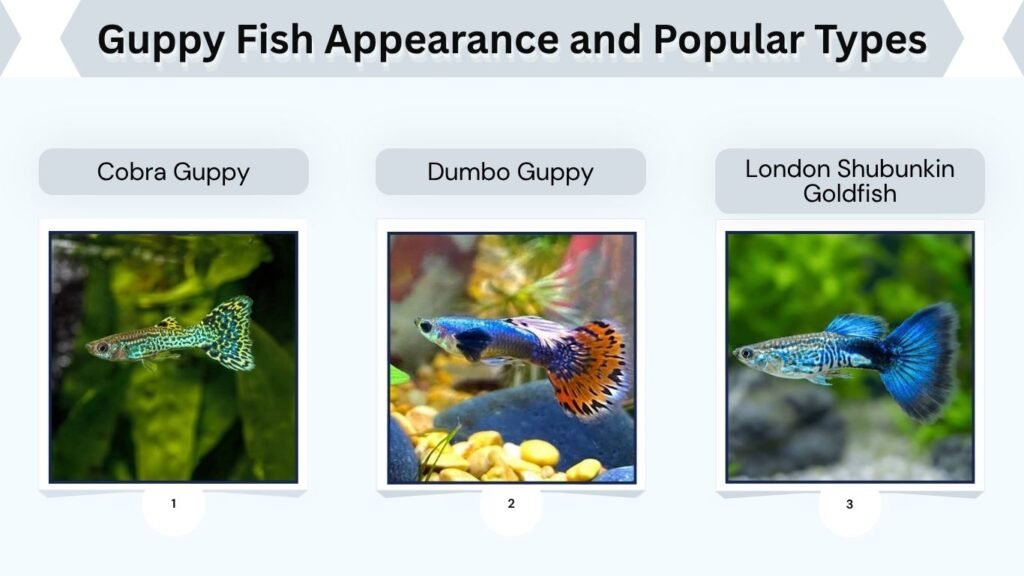
Guppy fish are famous for their colorful bodies, decorative tails, and impressive variety of patterns. Selective breeding has produced numerous varieties with different combinations of red, yellow, orange, blue, black, and white.
Male vs. Female Guppy
Male guppies are generally smaller, slimmer, and more colorful than females. They typically have larger decorative tail fins and a modified anal fin called a gonopodium.
Female guppies are usually larger, with rounder bodies and less elaborate coloration. Mature females may also display a dark gravid spot near the rear of their abdomen.
Popular Guppy Fish Types
- Cobra Guppy: Features distinctive snakeskin-like markings across its body and fins.
- Dumbo Guppy: Known for unusually large, wing-like pectoral fins.
- Koi Guppy: Displays attractive white, orange, and red patterns resembling koi fish.
- Blue Guppy: Features striking blue shades, sometimes with metallic coloration.
- Fancy Guppy: A broad name covering selectively bred guppies with decorative tails and colorful patterns.
Although these guppy varieties differ in appearance, their basic aquarium care requirements are generally similar.
Guppy Fish Tank Size and Setup
A properly arranged guppy fish tank provides comfortable swimming space, stable water conditions, and protection from stress. Guppies are active swimmers that spend considerable time exploring the middle and upper sections of an aquarium.
Ideal Guppy Tank Size
A 10-gallon aquarium is a practical starting size for a small group of guppies. A 20-gallon tank offers additional swimming space and makes maintaining stable water conditions easier.
Guppies should live in groups rather than alone. Beginners can keep a small group of males to avoid unexpected breeding.
If keeping both sexes together, maintain approximately two or three females per male to reduce persistent mating harassment.
Aquarium Plants and Decorations
Live aquarium plants provide hiding places, improve the aquarium environment, and offer protection for newborn guppies.
Suitable plants include guppy grass, Java moss, hornwort, and floating plants. Arrange decorations around the tank edges while leaving open areas for swimming.
A gentle aquarium filter, thermometer, and suitable heater are also important. Use a securely fitted lid because guppies can jump from uncovered aquariums.
Ideal Guppy Water Temperature and Conditions

Maintaining appropriate water parameters is one of the most important parts of guppy fish care. Although guppies can tolerate some variation, they remain healthier when temperature and water chemistry are stable.
The following conditions are practical targets for a guppy aquarium.
| Water parameter | Recommended level |
| Temperature | 74–80°F (23–27°C) |
| pH | 7.0–8.0 |
| General hardness | About 6–18 dGH |
| Ammonia | 0 ppm |
| Nitrite | 0 ppm |
| Nitrate | Preferably below 20 ppm |
Guppies generally prefer moderately hard to hard water containing suitable dissolved minerals. Avoid sudden changes in water temperature or pH.
Before introducing fish, establish a functioning biological filter through the aquarium nitrogen cycle. Perform partial water changes of approximately 20–25% weekly as needed, based on stocking and water tests.
Always treat replacement tap water with an appropriate water conditioner. Regular testing and maintenance help prevent harmful waste accumulation.
What Do Guppy Fish Eat?
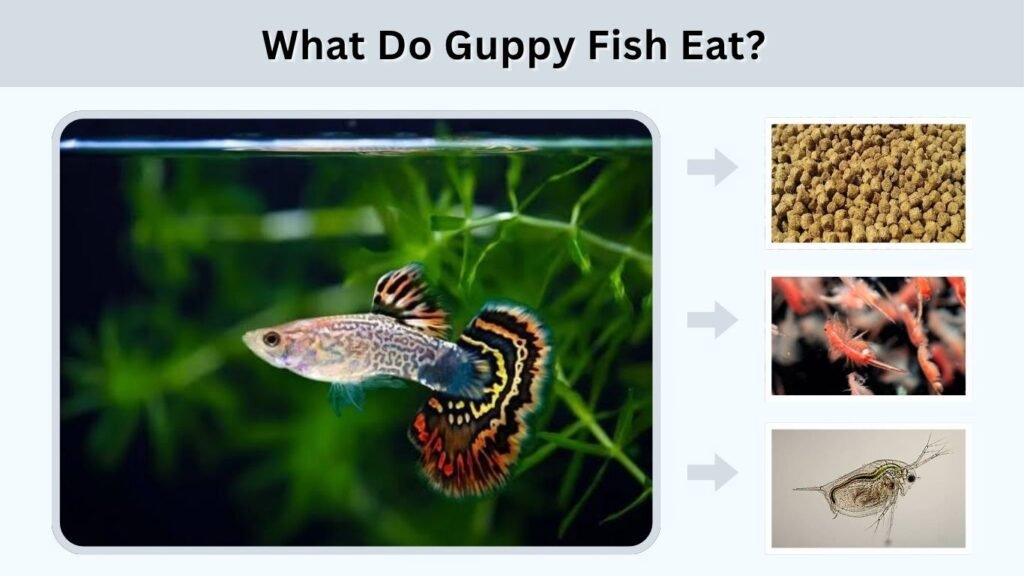
Guppies are omnivorous fish that consume both animal and plant-based foods. In their natural habitats, they feed on small aquatic organisms, algae, and other available food particles.
A varied and balanced diet supports healthy growth, strong coloration, and normal reproductive activity.
Suitable guppy food includes:
- High-quality flakes: Provide balanced everyday nutrition.
- Micro-pellets: Offer convenient food containing essential nutrients.
- Brine shrimp: Supply protein and encourage natural feeding behavior.
- Daphnia: Provide an additional source of animal-based nutrition.
- Spirulina-based food: Adds useful plant-derived nutrients.
Feed adult guppies small portions once or twice daily, offering only what they can consume in approximately one or two minutes.
Avoid overfeeding because leftover food decomposes and reduces water quality. Younger guppies require smaller food particles and more frequent feeding as they grow.
Best Tank Mates for Guppy Fish
Guppies are peaceful community fish that usually get along with other small, nonaggressive aquarium species. Choosing suitable tank mates reduces stress and protects their delicate fins.
Good guppy tank mates may include small Corydoras catfish, platies, mollies, and certain peaceful rasboras. Compatibility also depends on matching water chemistry, temperature, tank size, and available swimming space.
Avoid housing guppies with large predatory fish or aggressive fin-nipping species. These fish may injure guppies or damage their flowing tails.
Goldfish are generally unsuitable companions because their temperature requirements and adult sizes differ.
Guppy Fish Breeding and Pregnancy

Guppy breeding is relatively easy because these fish reproduce naturally when mature males and females share suitable aquarium conditions. Their ability to produce live young makes them especially interesting to aquarium enthusiasts.
How to Tell if a Guppy Is Pregnant
Pregnant female guppies often develop noticeably rounded abdomens. Their gravid spots may also appear darker as pregnancy progresses.
Guppy pregnancy generally lasts approximately three to four weeks, although water temperature and individual conditions affect the timing.
A female may produce several dozen fry in one brood, depending on her age, size, and condition.
How to Care for Guppy Fry
Newborn guppies are miniature, free-swimming fish that can begin feeding soon after birth.
Provide dense plants or a separate rearing aquarium because adult guppies sometimes eat their young. A sponge filter or protected filter intake prevents small fry from being drawn into equipment.
Feed newly born guppies finely crushed food, specialized fry food, or appropriately sized newly hatched brine shrimp.
Female guppies can store sperm and produce additional broods after being separated from males. Therefore, planning for population growth is essential.
Guppy Fish Lifespan and Common Health Problems
The average guppy fish lifespan is approximately two to three years, although genetics, water conditions, nutrition, and disease can influence survival.
Healthy guppies usually display active swimming behavior, strong appetites, bright coloration, and undamaged fins.
Common health concerns include ich, fin rot, bacterial infections, and parasitic diseases. Warning signs may include white spots, clamped fins, unusual swimming, rapid breathing, or reduced appetite.
Regular water testing, avoiding overcrowding, quarantining new fish, and maintaining a nutritious diet help reduce health problems.
If symptoms persist or several fish become ill, seek guidance from a qualified aquatic veterinarian rather than applying medications without identifying the cause.
FAQs
1. How many guppies should be kept together?
Guppies are social fish and generally do best in groups. A small group of four to six compatible guppies can be suitable for a properly maintained aquarium with adequate space.
2. Can guppy fish live without an air pump?
Yes. Guppies can live without a separate air pump if the aquarium has sufficient oxygen exchange through filtration and surface movement. However, adequate aeration is essential for healthy fish.
3. How long do guppy fish live?
Guppy fish generally live for two to three years under suitable aquarium conditions. Healthy food, clean water, stable temperatures, and responsible breeding practices can support their natural lifespan.
4. How often do guppy fish breed?
Healthy female guppies can produce young approximately every four weeks under favorable conditions. Breeding frequency varies with temperature, maturity, nutrition, and the condition of individual fish.
5. Are guppy fish good for beginners?
Yes. Guppy fish are considered beginner-friendly because they are peaceful, relatively hardy, and easy to feed. However, they still require an established aquarium, clean water, suitable temperature, and regular maintenance.