

The horseface loach is a fascinating freshwater fish recognized by its long snout, slender body, and unusual sand-burrowing behavior. Native to Southeast Asia, this peaceful bottom-dweller spends much of its time searching through soft sand for food. Although horseface loaches are relatively peaceful, they require specific aquarium conditions to remain healthy and active. Proper tank size, water temperature, substrate, and compatible tank mates are essential for successful care. This guide explains horseface loach size, lifespan, diet, breeding, behavior, and everything you should know before keeping one.
What Is a Horseface Loach?
The horseface loach, commonly identified as Acantopsis dialuzona, is a freshwater fish belonging to the Cobitidae family. It naturally inhabits sandy rivers and streams throughout parts of Southeast Asia, including Malaysia, Indonesia, and southern Thailand.
Its elongated snout resembles a horse’s face, giving the species its common name. Its light brown or sandy body features darker spots and markings that provide camouflage against riverbeds.
Several closely related Acantopsis species are also sold as horseface loaches, so identification and adult sizes can vary.
Horseface Loach Size and Lifespan
A full-grown horseface loach commonly reaches approximately 6–8 inches (15–20 cm), although some individuals can grow to around 10 inches (25 cm) or more.
Juveniles are considerably smaller, which sometimes leads aquarists to underestimate their adult space requirements.
Horseface loaches may live approximately 8–12 years with suitable care, although reliable lifespan records are limited. Clean water, proper feeding, sufficient swimming space, and a stress-free environment contribute to long-term health.
Horseface Loach Tank Size and Care Requirements

Horseface loaches need spacious aquariums with soft substrates that allow natural burrowing. Their care requirements differ from those of many ordinary bottom-dwelling community fish.
Ideal Tank Conditions
- Tank size: A 55–75-gallon aquarium or larger, preferably at least 48 inches long.
- Water temperature: Approximately 75–82°F (24–28°C).
- pH level: Around 6.0–8.0.
- Water hardness: Approximately 1–12 dGH.
- Substrate: A deep layer of fine, soft sand.
- Filtration: Well-oxygenated water with moderate to strong circulation.
- Lighting: Moderate or subdued lighting with shaded areas.
Aquarium Setup and Maintenance
Provide open sandy areas alongside driftwood, smooth rocks, and suitable hiding places. A sand depth of approximately 2–3 inches allows horseface loaches to bury themselves comfortably.
Avoid sharp gravel, which can damage their sensitive snouts and undersides. Keep water conditions stable and perform regular partial water changes.
What Do Horseface Loaches Eat?

Horseface loaches are primarily bottom-feeding omnivores that consume small aquatic animals and other edible material found within sandy substrates.
Their elongated snouts help them sift through sand in search of worms, insect larvae, small crustaceans, and other invertebrates.
Best Foods for Horseface Loaches
- Sinking pellets: Provide a balanced staple diet.
- Bloodworms: Offer frozen or live bloodworms occasionally.
- Brine shrimp: Supply additional protein and dietary variety.
- Daphnia: Provide small aquatic crustaceans.
- Tubifex worms: Offer from safe, reliable sources.
- Sinking wafers: Supplement their regular feeding routine.
Do Horseface Loaches Eat Snails?
Horseface loaches may consume very small snails or other tiny mollusks while searching through sand. However, they are not reliable snail-control fish.
Larger aquarium snails are generally less likely to be eaten. Unlike some Botia loaches, horseface loaches mainly specialize in finding small prey hidden within the substrate.
Horseface Loach Tank Mates and Compatibility
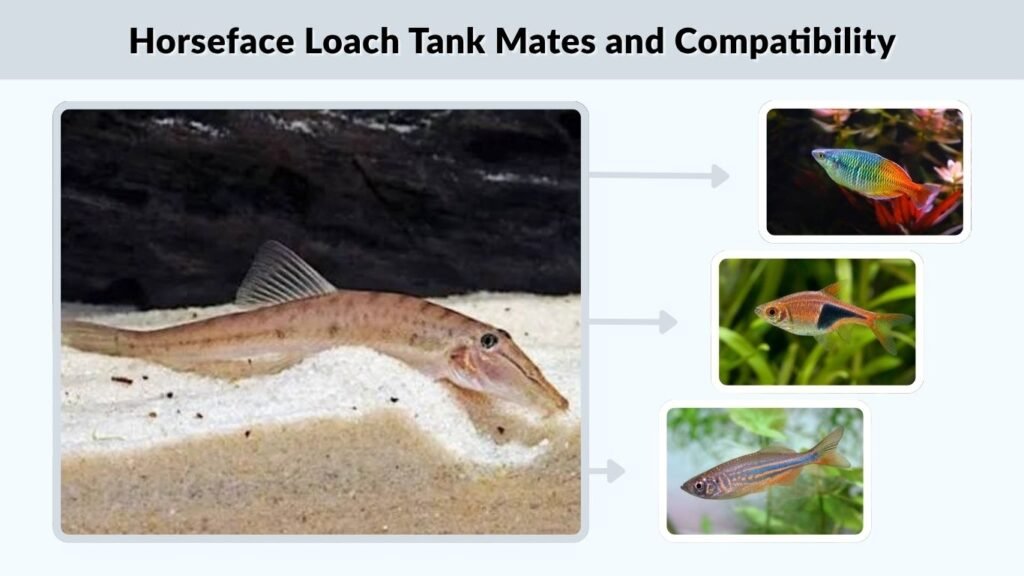
Horseface loaches are generally peaceful and rarely show serious aggression toward suitable aquarium companions.
However, their shy behavior means aggressive or excessively competitive fish may prevent them from feeding properly.
Suitable Horseface Loach Tank Mates
- Rainbowfish: Peaceful species with matching water requirements.
- Rasboras: Active schooling fish that occupy upper water levels.
- Peaceful tetras: Suitable species can coexist in spacious aquariums.
- Danios: Some warm-water species can make compatible companions.
- Other horseface loaches: They can coexist in loose groups when space allows.
Fish and Invertebrates to Avoid
Aggressive cichlids, large predatory fish, and territorial bottom-dwellers are generally unsuitable companions.
Small shrimp and newly hatched shrimp may become food, although larger shrimp are less vulnerable.
Choose peaceful species that do not compete excessively for food along the aquarium bottom.
Horseface Loach Behavior and Burrowing Habits
Horseface loaches are naturally shy fish that spend considerable time beneath the substrate. Their ability to disappear into sand is one of their most distinctive characteristics.
They often become more active during the evening or when aquarium lighting is reduced.
Why Do Horseface Loaches Hide?
Hiding is normal behavior. Their sandy coloration and burrowing instincts protect them from predators in natural habitats.
An individual may remain buried with only its eyes and snout visible for extended periods.
Providing fine sand and suitable shelter helps reduce stress and encourages natural activity.
Can Horseface Loaches Be Kept Alone?
Horseface loaches can sometimes survive individually, but keeping several together is generally preferable when sufficient space is available.
Unlike tightly schooling fish, they form loose social associations. A small group of at least three, preferably more, allows natural interactions without forcing them into constant contact.
Horseface Loach Breeding and Reproduction
Breeding horseface loaches in home aquariums is extremely uncommon. Their reproductive behavior remains poorly documented compared with many popular aquarium species.
They are presumed to reproduce by laying eggs, but dependable captive-breeding methods have not been established.
Females may develop fuller bodies when mature, although distinguishing males from females can be difficult.
Aquarists should not interpret a swollen abdomen as definite evidence of eggs because digestive problems or illness can cause similar changes.
Horseface Loach Health and Common Problems
Horseface loaches can experience stress-related illnesses when exposed to poor water quality, unsuitable substrates, or aggressive tank mates.
Damage to their snouts and skin is especially concerning because these structures are essential for natural feeding.
Persistent loss of appetite, unusual swimming, rapid breathing, visible spots, or damaged skin should prompt immediate attention.
Check ammonia, nitrite, temperature, and oxygenation before selecting treatment. Some loaches are sensitive to certain aquarium medications, so follow species-appropriate veterinary advice.
Where to Buy Horseface Loaches
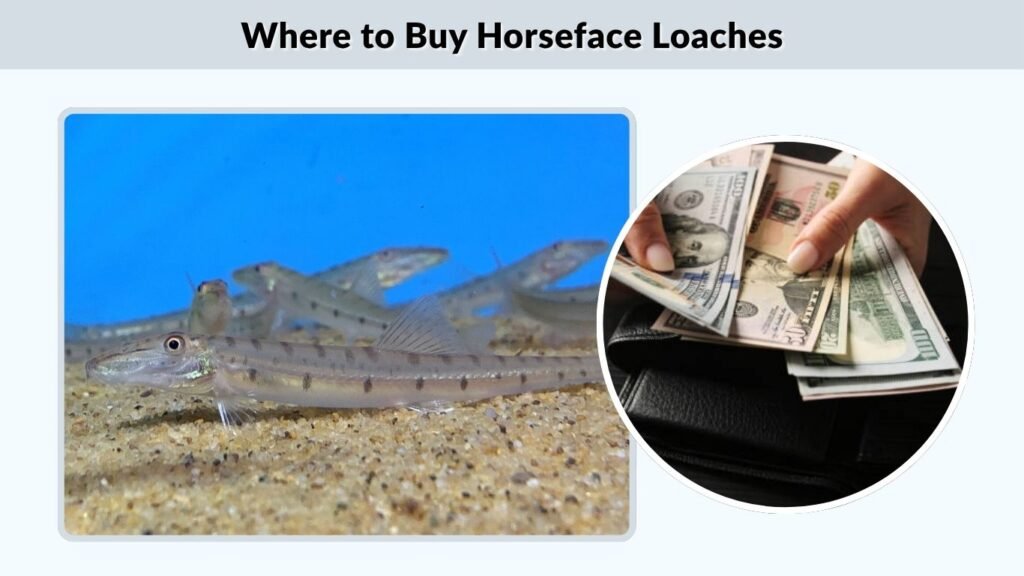
Horseface loaches may be available through specialized aquarium stores and reputable online freshwater fish suppliers. Availability and price depend on location, fish size, and species identification.
What to Check Before Buying
- Healthy appearance: Choose fish with clear eyes and undamaged snouts.
- Active behavior: Look for normal movement and sand-sifting activity.
- Body condition: Avoid severely thin or visibly injured individuals.
- Species identification: Confirm the scientific name whenever possible.
- Aquarium requirements: Ensure sufficient space before purchasing.
FAQs
How Big Does a Horseface Loach Get?
A horseface loach commonly reaches 6–8 inches in length, although some specimens grow to approximately 10 inches or more. Adult size varies between closely related species. A spacious aquarium with adequate floor space is essential.
Do Horseface Loaches Eat Shrimp?
Horseface loaches may eat very small shrimp, particularly newly hatched individuals. Larger adult shrimp are less vulnerable, but compatibility is not guaranteed. A separate breeding aquarium is safer if maintaining a healthy ornamental shrimp colony is important.
Can Horseface Loaches Live With Rainbowfish?
Yes, many peaceful rainbowfish can coexist with horseface loaches when their water temperature and aquarium requirements match. Rainbowfish generally occupy the middle and upper water levels, reducing direct competition with these bottom-dwelling loaches.
Why Is My Horseface Loach Always Hiding?
Horseface loaches naturally bury themselves in sand, especially during daylight hours. This behavior is usually normal. However, constant hiding combined with poor appetite, unusual breathing, or weight loss may indicate stress, unsuitable water conditions, or illness.
Are Horseface Loaches Difficult to Keep?
Horseface loaches require moderate aquarium experience because they need soft sand, clean oxygen-rich water, and sufficient space. They are generally peaceful, but their specialized burrowing habits make them less suitable for small or poorly maintained aquariums.