
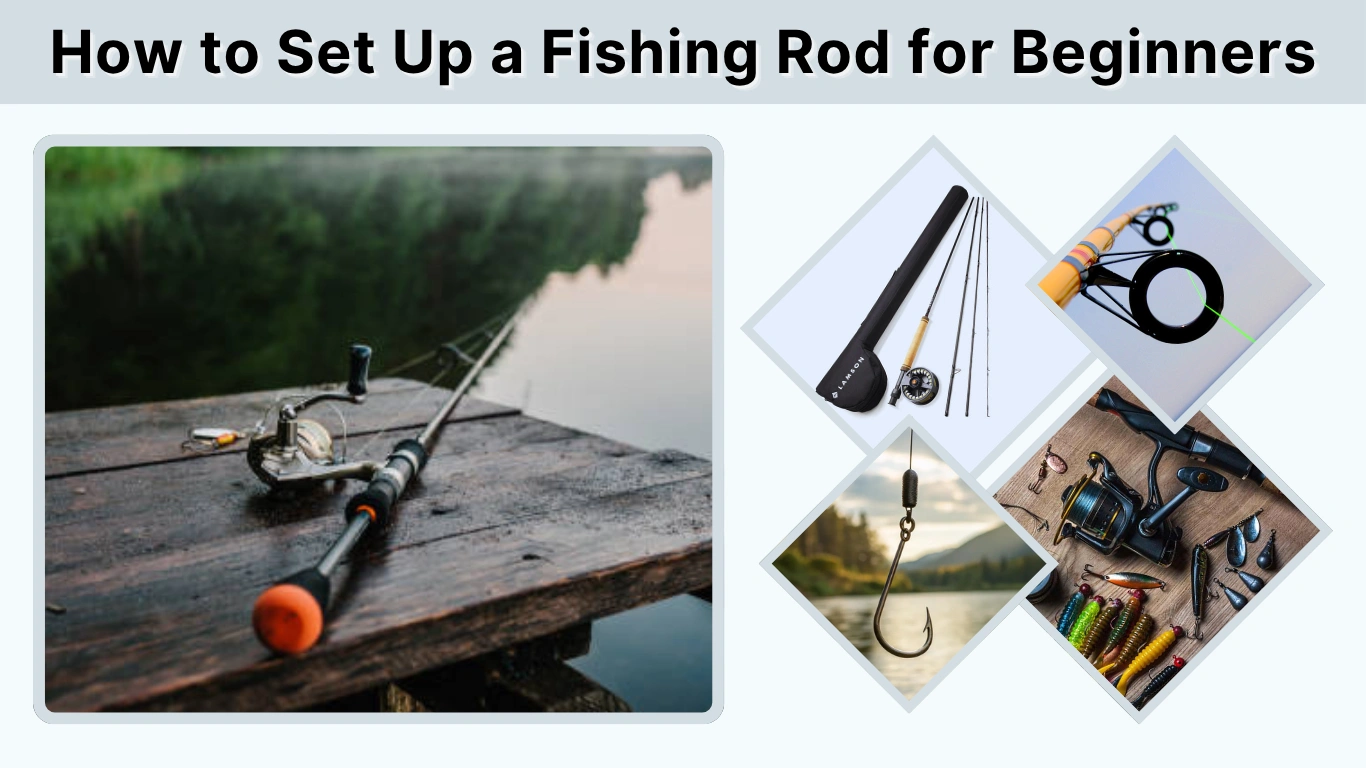
Setting up a fishing rod for the first time can feel confusing for beginners, but it’s actually a simple process once you understand the basics. A properly set up rod improves your casting, helps you catch fish more easily, and prevents common frustrations.
Whether you’re fishing in a lake, river, or ocean, having the right setup is essential. In this guide, you’ll learn the basic parts of a fishing rod, the equipment you need, and how to set everything up step by step.
Understanding the Basic Parts of a Fishing Rod
Before you begin setting up your rod, it’s important to understand the main components. Knowing what each part does will make the setup process much easier.
Rod and Reel
The fishing rod is the long pole that helps you cast your line into the water. The reel is attached to the rod and is used to hold and control the fishing line.
Together, the rod and reel allow you to cast your bait, control the line, and reel in fish. Most beginners use a rod and reel combo because it’s easier to set up and use.
Fishing Line
The fishing line is what connects your rod to the hook and bait. It plays a crucial role in catching fish, as it must be strong enough to handle the weight and movement of the fish.
Different types of fishing lines are available, and choosing the right one can make a big difference in your success.
Hooks, Sinkers, and Floats
Hooks are used to catch the fish, while sinkers (weights) help your bait sink into the water. Floats, also known as bobbers, keep your bait at a certain depth and help you detect when a fish bites.
These components work together to create a basic fishing setup.
What You Need to Set Up a Fishing Rod
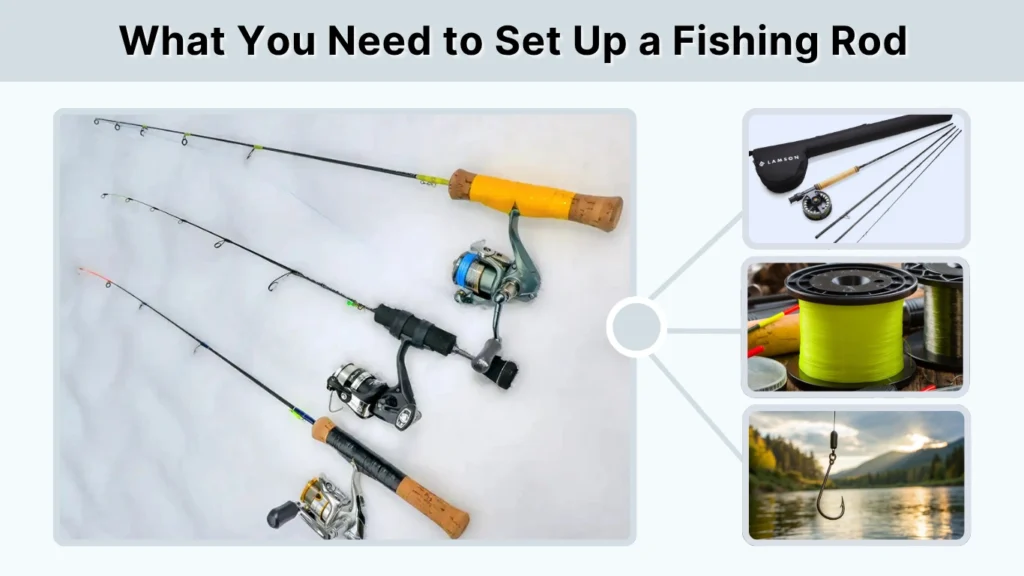
Having the right equipment makes the setup process quick and stress-free. Beginners should start with simple gear before trying more advanced setups.
Essential Equipment
- Fishing rod and reel combo
- Fishing line (monofilament is best for beginners)
- Hooks and sinkers
- Bobber (float)
Starting with these basic items allows you to create a simple and effective fishing rig without unnecessary complexity.
Optional Tools
- Scissors or line cutter
- Pliers for removing hooks
- Tackle box for organization
While not required, these tools can make the setup process easier and more convenient.
Fishing Line Types and When to Use Them
Choosing the right fishing line is important because it affects strength, flexibility, and visibility in the water.
Monofilament Line
Monofilament is the most popular choice for beginners. It is flexible, easy to handle, and affordable.
It also stretches slightly, which helps absorb shock when a fish pulls on the line. This makes it forgiving for those still learning how to fish.
Braided Line
Braided line is much stronger than monofilament and does not stretch. This makes it more sensitive, allowing you to feel even small bites.
However, it can be harder to manage and is usually better suited for more experienced anglers.
Fluorocarbon Line
Fluorocarbon line is nearly invisible in water, making it useful for clear conditions where fish are easily spooked.
It is stronger than monofilament but less flexible, so beginners may find it slightly more difficult to use.
Fishing Line Strength Guide (Quick Table)
Choosing the correct line strength helps you match your setup to the type of fish you want to catch.
| Fish Type | Recommended Line Strength |
| Small fish (panfish) | 4–6 lb |
| Medium fish (bass) | 8–12 lb |
| Large fish | 15–20 lb |
| Saltwater fishing | 20+ lb |
This table provides a simple guideline to help beginners select the right line for different fishing situations.
How to Set Up a Fishing Rod Step by Step
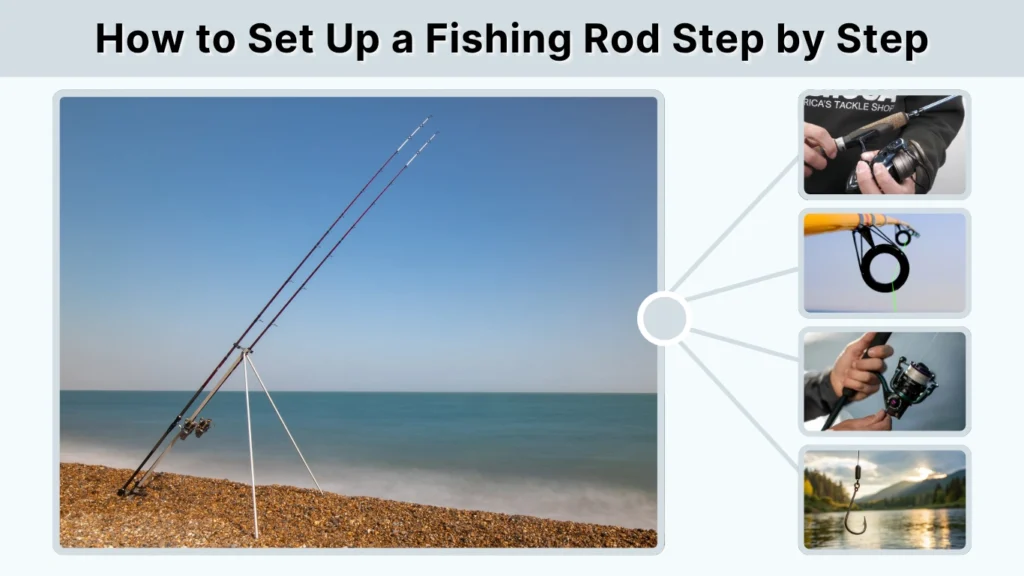
Setting up your fishing rod correctly ensures better performance and increases your chances of catching fish.
Step 1: Attach the Reel to the Rod
Start by securing the reel to the rod. Most rods have a reel seat where the reel fits. Place the reel into the seat and tighten it until it is firmly attached.
Make sure it is secure, but avoid over-tightening to prevent damage.
Step 2: Thread the Fishing Line Through the Guides
Once the reel is attached, take the end of the fishing line and thread it through the guides (the small rings along the rod).
Start from the base near the reel and work your way to the tip. Make sure the line is properly aligned and not tangled.
Step 3: Tie the Fishing Line to the Reel
After threading the line, tie it securely to the reel spool. Use a simple knot that holds firmly and does not slip.
Once tied, wind the line onto the reel evenly to avoid tangles and ensure smooth casting.
Step 4: Add a Hook
Once your line is properly attached and threaded, the next step is to tie a hook at the end of the line.
Use a simple and secure knot, such as an improved clinch knot, to attach the hook. Make sure the knot is tight and trimmed neatly to avoid slipping. A properly tied hook ensures you won’t lose fish when they bite.
Step 5: Attach Sinkers and Bobber
After adding the hook, you can attach sinkers (weights) and a bobber if needed. Sinkers help your bait sink into the water, while the bobber keeps your bait at a specific depth and signals when a fish bites.
Place the sinker a few inches above the hook, and attach the bobber higher up on the line. The exact placement depends on the depth of the water and the type of fish you are targeting.
Common Mistakes Beginners Should Avoid
Even with a simple setup, beginners often make small mistakes that can affect their fishing success. Avoiding these issues will make your experience smoother and more enjoyable.
Using the Wrong Line Strength
- A line that is too light can break easily when catching bigger fish
- A line that is too heavy can reduce casting distance
- Always match the line strength to the type of fish you want to catch
Choosing the right line strength is essential for both performance and durability.
Poor Knot Tying
- Loose knots can slip and cause you to lose your catch
- Weak knots may break under pressure
- Always test your knots before casting
Practicing basic knots at home can help you gain confidence and avoid problems while fishing.
Incorrect Bobber or Weight Placement
- Poor placement affects how your bait moves in the water
- It can reduce your chances of attracting fish
- Proper balance improves casting and bite detection
Adjusting the position of your bobber and sinker based on water depth can make a big difference.
Tips to Make Your First Fishing Setup Easier
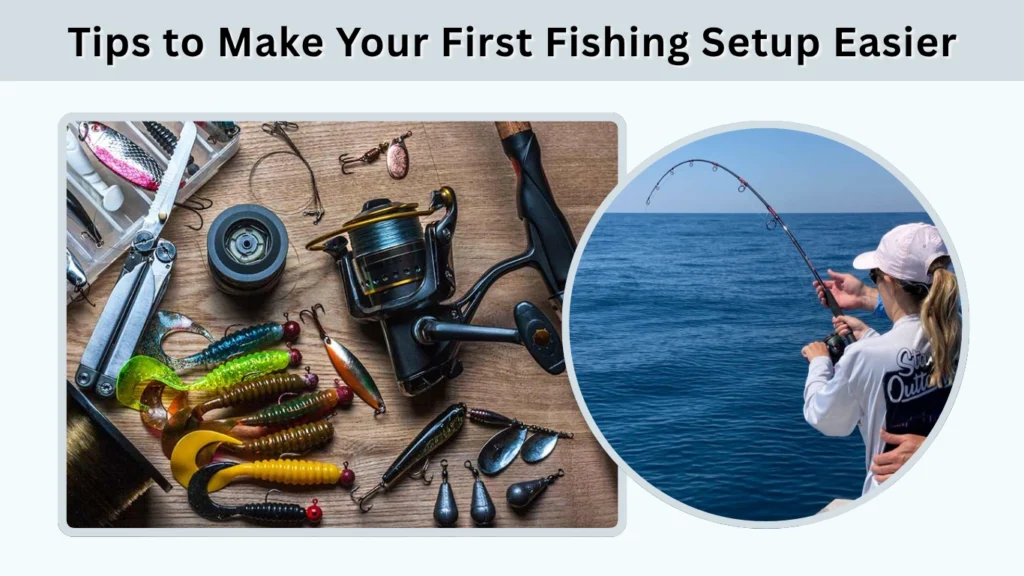
Starting with simple techniques and a basic setup can make your first fishing experience much more enjoyable.
Start With a Simple Setup
Using a basic rig with a hook, sinker, and bobber is the easiest way to begin. Complex setups are not necessary for beginners and can make learning more difficult.
Simple setups are effective for catching a wide range of fish and help you focus on learning the basics.
Practice Before Fishing
Before heading out, practice setting up your rod at home. This helps you become familiar with the equipment and reduces mistakes when you are at the water.
Practicing also helps you tie knots more confidently and handle your gear more efficiently.
Ask for Help at Local Stores
Local fishing stores are great places to get advice. Staff members can recommend the right gear, show you how to set up your rod, and answer beginner questions.
Getting guidance from experienced anglers can save you time and improve your success.
FAQs
What is the easiest fishing rod setup for beginners?
The easiest setup is a basic rig with a hook, sinker, and bobber. This simple combination works well for many types of fish and is easy to assemble. It allows beginners to focus on learning casting and handling techniques.
Do I need a bobber when fishing?
A bobber is not always required, but it is helpful for beginners. It keeps your bait at a certain depth and makes it easier to see when a fish bites. It is especially useful when fishing in shallow water.
What type of fishing line is best for beginners?
Monofilament line is the best choice for beginners. It is easy to handle, affordable, and flexible. Its slight stretch also helps absorb the shock when a fish pulls, making it more forgiving for new anglers.
How long does it take to set up a fishing rod?
For beginners, setting up a fishing rod usually takes about 10 to 15 minutes. With practice, it becomes much faster. Once you understand the steps, you can set up your rod in just a few minutes.