
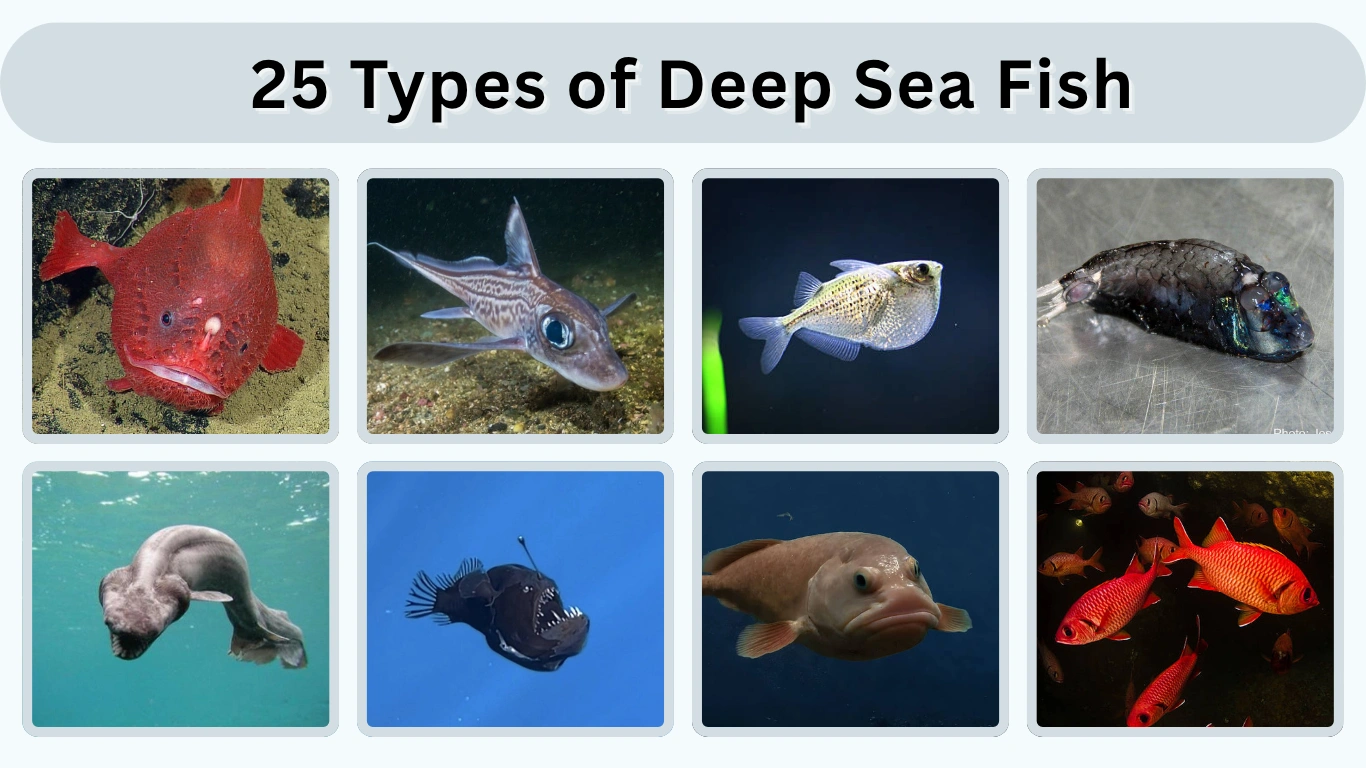
Deep-sea fish are some of the most mysterious and fascinating creatures on Earth. Living in the darkest parts of the ocean, they have developed incredible adaptations to survive extreme pressure, freezing temperatures, and total darkness. From glowing lures to transparent heads, each species has unique features that make it perfectly suited for life far below the surface.
In this guide, you’ll explore 25 types of deep-sea fish, each with its own distinct characteristics, habitat, diet, and behavior. This list highlights the diversity of life in the deep ocean and helps you better understand how these extraordinary creatures survive in one of the most extreme environments on the planet.
1. Anglerfish
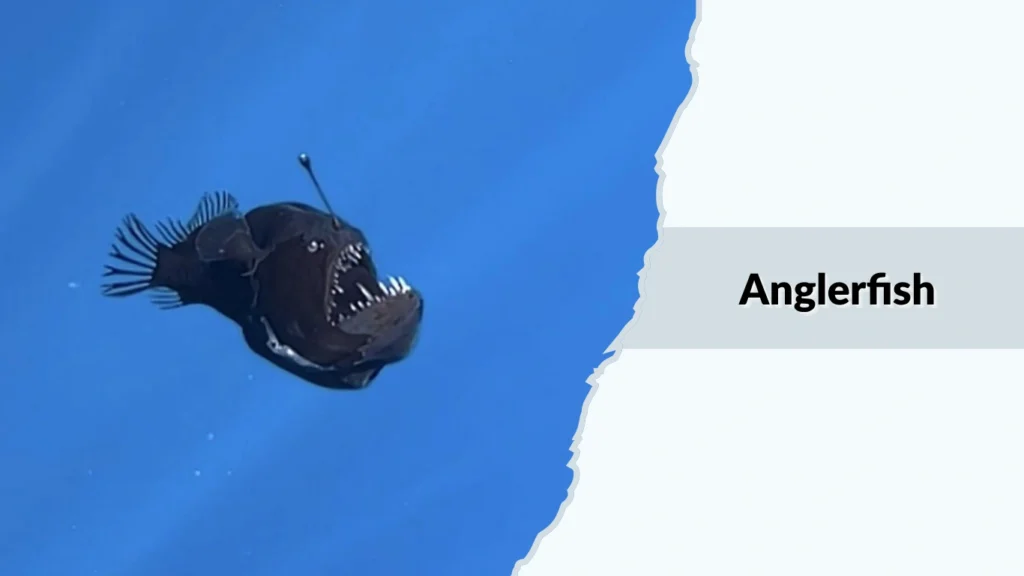
Anglerfish are among the most fascinating deep-sea creatures, instantly recognized for their unusual shape and glowing lure. Found in the darkest parts of the ocean, they have evolved unique adaptations to survive extreme pressure, cold temperatures, and complete darkness. Their bioluminescent feature makes them one of the most iconic examples of deep-sea life.
Identification
- Large head with a disproportionately small body
- Wide mouth filled with long, sharp, inward-pointing teeth
- A glowing lure (esca) attached to a rod-like structure on the head
- Dark coloration, usually black or deep brown
- Soft, flexible body adapted to high-pressure environments
Habitat
Anglerfish inhabit the deep ocean, typically ranging from about 200 meters to more than 2,000 meters below the surface. These zones receive little to no sunlight, making them completely dark. The environment is cold, often near freezing, and the pressure is extremely high. Anglerfish are well adapted to these harsh conditions, allowing them to thrive where many other species cannot survive.
Diet
Anglerfish are carnivores that primarily feed on smaller fish, shrimp, and other marine organisms. They use their bioluminescent lure to attract prey in the darkness. Once the prey gets close enough, the anglerfish quickly snaps its jaws shut, swallowing it whole. Their large mouths allow them to consume prey nearly as big as themselves.
Behavior
Anglerfish are generally solitary and rely on patience rather than speed. They remain still for long periods, using their glowing lure to trick prey. Some species display a unique reproductive behavior where the male attaches itself permanently to the female, eventually becoming dependent on her for survival.
2. Gulper Eel
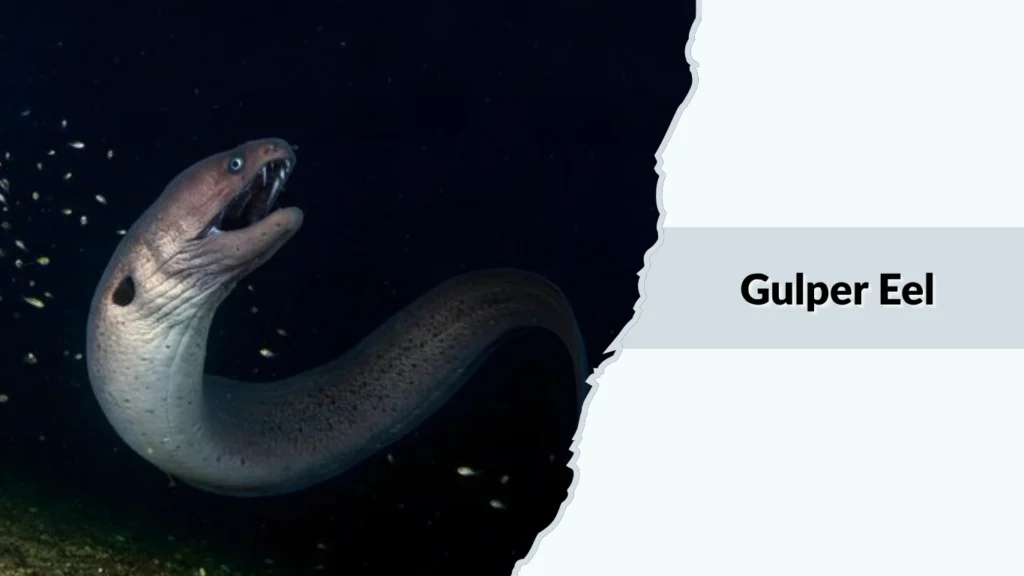
The gulper eel, also known as the pelican eel, is a strange-looking deep-sea fish famous for its enormous mouth and long, whip-like tail. It lives in the deep ocean where food is scarce, and its unique body structure helps it survive in such an extreme environment. Its ability to consume large prey makes it a remarkable deep-sea predator.
Identification
- Extremely large mouth that can open wider than its body
- Long, thin body resembling an eel
- Small eyes compared to body size
- Expandable throat pouch similar to a pelican
- Dark black or deep brown coloration
Habitat
Gulper eels are found in deep ocean waters, usually between 500 and 3,000 meters below the surface. These depths are part of the bathypelagic zone, where sunlight cannot penetrate. The environment is cold, dark, and under intense pressure. Gulper eels are widely distributed across the world’s oceans, often drifting in open water rather than staying near the seabed.
Diet
Gulper eels are carnivorous and have a very flexible diet due to their massive mouths. They feed on fish, crustaceans, and plankton. Their expandable jaws allow them to swallow prey much larger than themselves. Since food is rare in the deep sea, this ability gives them a major survival advantage.
Behavior
Gulper eels are not strong swimmers and tend to drift slowly through the water. They use their large mouths to scoop up prey rather than chase it. Their long tail may have a glowing tip, which could help attract prey in the darkness. They are solitary creatures and rarely interact with others except during reproduction.
3. Fangtooth
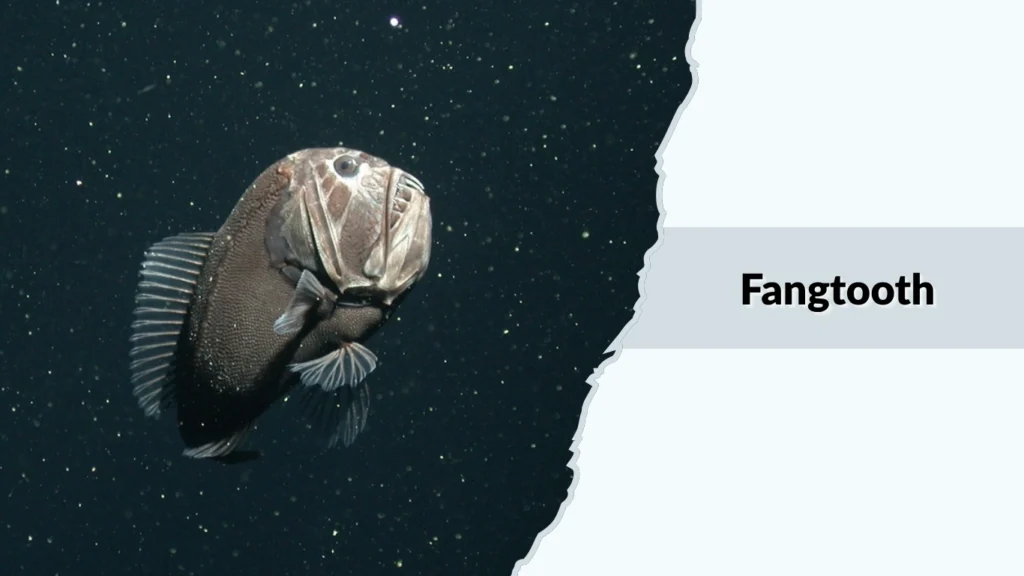
The fangtooth is a deep-sea fish known for its intimidating appearance, especially its extremely long teeth. Despite its fierce look, it is relatively small in size. It lives in the dark depths of the ocean and is one of the deepest-living fish species, perfectly adapted to survive in extreme conditions.
Identification
- Large head with a small, compressed body
- Extremely long, sharp teeth that do not fit inside its mouth
- Dark brown to black coloration
- Small eyes positioned high on the head
- Rough, scaly skin
Habitat
Fangtooth fish are found at depths ranging from about 200 meters to over 5,000 meters, making them one of the deepest-dwelling fish. They inhabit tropical and temperate oceans worldwide. The environment is completely dark, cold, and under immense pressure. Younger fangtooths tend to live in shallower waters before moving deeper as they mature.
Diet
Fangtooths are carnivorous predators that feed on smaller fish and crustaceans. Their large teeth help them and hold onto prey in the dark. Even though they are not fast swimmers, they rely on ambush tactics to capture food efficiently in an environment where meals are rare.
Behavior
Fangtooths are solitary and aggressive hunters. They do not rely on speed but instead wait for prey to come close. Their intimidating teeth ensure that once prey is caught, it cannot escape. Like many deep-sea species, they have slow metabolisms and conserve energy to survive long periods without food.
4. Viperfish
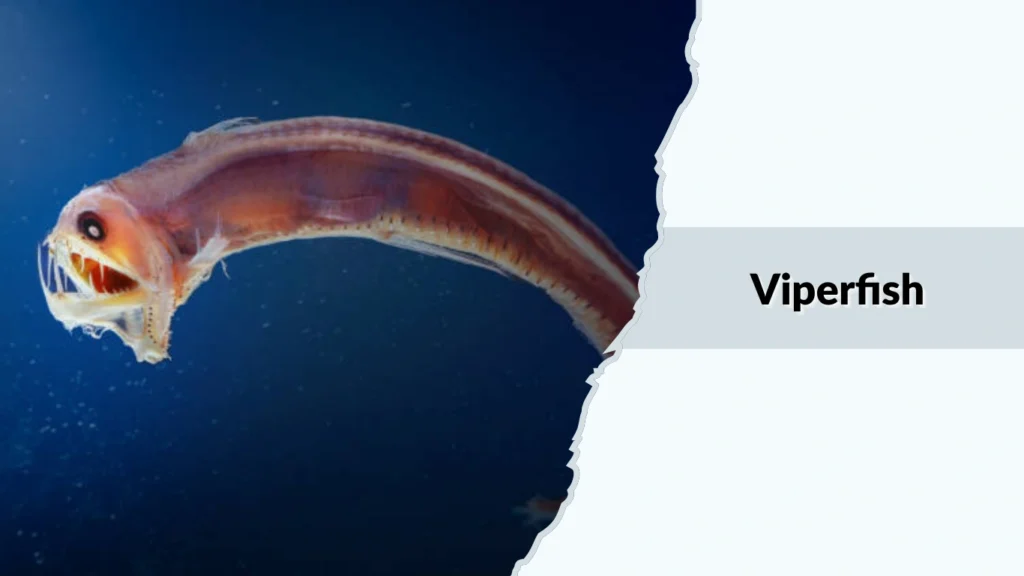
The viperfish is a fearsome deep-sea predator known for its needle-like teeth and glowing features. It inhabits the dark depths of the ocean and uses bioluminescence to hunt prey. Despite its small size, its terrifying appearance and efficient hunting methods make it one of the most notable deep-sea fish.
Identification
- Long, slender body with a silvery-blue or dark color
- Large head with extremely long, fang-like teeth
- Lower teeth are so long they extend outside the mouth
- Bioluminescent organs along the body
- A glowing lure near the dorsal fin
Habitat
Viperfish are typically found at depths between 200 and 5,000 meters in tropical and temperate oceans around the world. They live in zones where sunlight does not reach, making the environment completely dark. During nighttime, some viperfish migrate closer to the surface to feed, then return to deeper waters during the day.
Diet
Viperfish are carnivorous and feed mainly on small fish and crustaceans. They use their glowing lure to attract prey in the darkness. Once the prey gets close, the viperfish quickly strikes and traps it with its long teeth. Their large mouths allow them to swallow prey whole, even if it is relatively large.
Behavior
Viperfish are solitary hunters and rely on stealth rather than speed. They remain still in the water, using their bioluminescent features to lure prey. When hunting, they can strike quickly with precision. Their slow metabolism helps them survive in an environment where food is limited and unpredictable.
5. Dragonfish
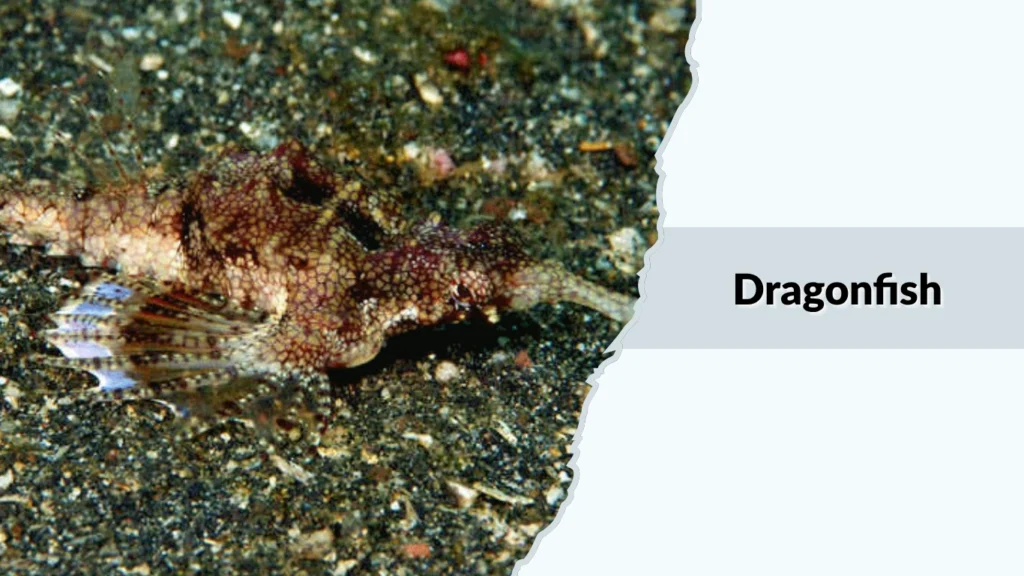
Dragonfish are mysterious deep-sea predators known for their elongated bodies, sharp teeth, and glowing features. They are highly adapted to life in complete darkness and are often considered one of the most striking bioluminescent fish in the deep ocean.
Identification
- Long, slender body with a dark or black coloration
- Large mouth filled with sharp, fang-like teeth
- Bioluminescent organs along the body
- A barbel (whisker-like structure) with a glowing tip
- Transparent or barely visible skin in some species
Habitat
Dragonfish are found in deep ocean waters, typically between 200 and 2,000 meters below the surface. They inhabit tropical and temperate regions across the world’s oceans. These depths are completely dark, cold, and under intense pressure, making them a challenging environment where only specialized species like dragonfish can survive.
Diet
Dragonfish are carnivorous and feed on smaller fish, shrimp, and other deep-sea creatures. They use their bioluminescent barbel to attract prey in the darkness. Once the prey approaches, they quickly capture it using their sharp teeth. Their ability to produce red light, which many deep-sea animals cannot see, gives them a unique advantage while hunting.
Behavior
Dragonfish are solitary and stealthy hunters. They rely heavily on their glowing features to lure prey rather than chasing it. These fish have slow metabolisms, allowing them to conserve energy in a food-scarce environment. Their ability to remain nearly invisible in the dark helps them avoid predators while ambushing prey.
6. Barreleye Fish
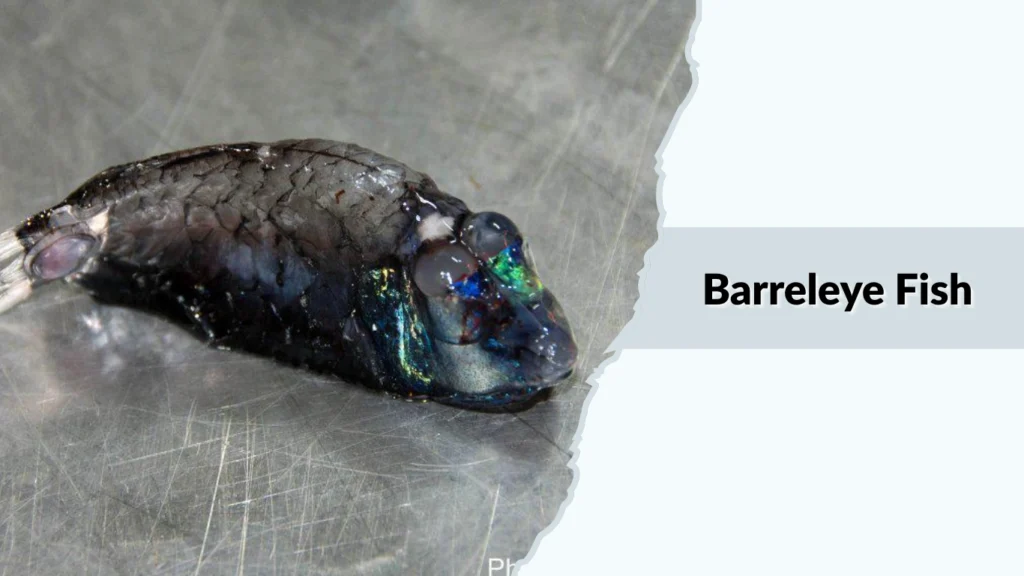
The barreleye fish is a unique deep-sea species famous for its transparent head and unusual eyes. This strange appearance allows it to look upward through its head to spot prey in the dark ocean. It is one of the most fascinating examples of deep-sea adaptation.
Identification
- Transparent, dome-shaped head filled with fluid
- Bright green, tubular eyes that can rotate
- Small, dark-colored body
- Flat fins for slow, controlled movement
- Soft and fragile body structure
Habitat
Barreleye fish are typically found at depths between 600 and 800 meters in the ocean. They live in dimly lit zones where very little sunlight reaches. These fish are most commonly observed in the Pacific Ocean, especially off the coast of California. The environment is cold and dark, requiring specialized adaptations for survival.
Diet
Barreleye fish mainly feed on small fish, jellyfish, and plankton. Their upward-facing eyes help them detect silhouettes of prey above them. Once they locate food, they move carefully to capture it. They are believed to also steal food from jellyfish tentacles without being harmed.
Behavior
Barreleye fish are slow-moving and cautious. They usually remain still, scanning the water above with their sensitive eyes. When prey is detected, their eyes can rotate forward to help them capture it. Their transparent head protects their eyes while allowing them to see clearly in the dark environment.
7. Frilled Shark
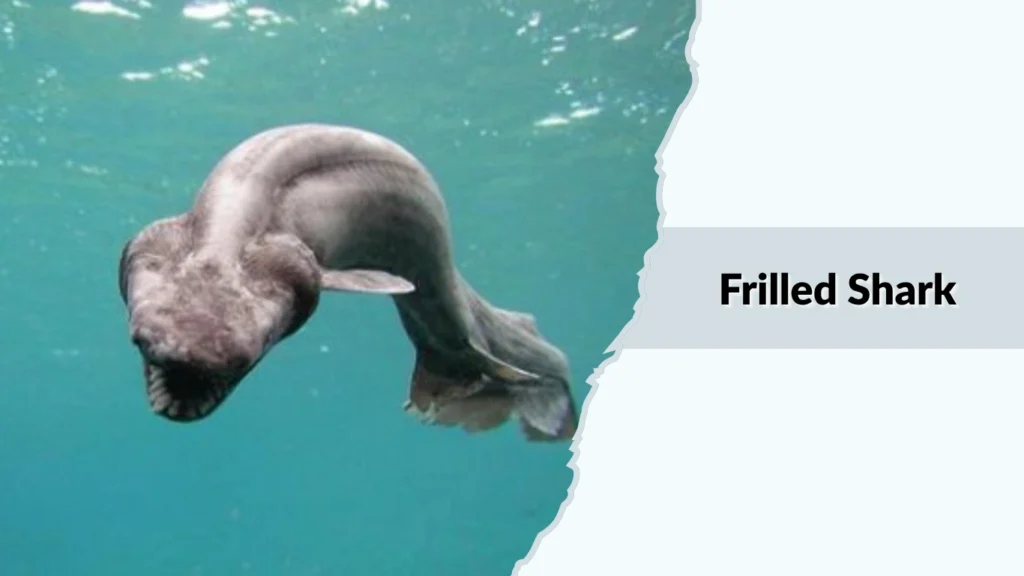
The frilled shark is a rare and primitive deep-sea fish that resembles an ancient creature from prehistoric times. Often called a “living fossil,” it has remained largely unchanged for millions of years. Its eel-like body and unusual features make it one of the most fascinating deep-sea predators.
Identification
- Long, eel-like body with a dark brown or gray color
- Frilled gill slits that give it its name
- Large mouth with rows of sharp, needle-like teeth
- Short fins compared to its body length
- Flexible jaw that allows it to swallow large prey
Habitat
Frilled sharks are typically found at depths between 500 and 1,500 meters, though they may sometimes come closer to the surface. They inhabit deep waters in the Atlantic and Pacific Oceans. These environments are cold, dark, and under high pressure, where the shark can move slowly and remain mostly hidden.
Diet
Frilled sharks are carnivores that mainly feed on squid, fish, and other small sharks. Their flexible jaws and numerous teeth allow them to slip prey easily. They are capable of swallowing prey whole, even if it is relatively large compared to their body size.
Behavior
Frilled sharks are slow swimmers and rely on stealth rather than speed. They often drift quietly through the water, waiting for prey to come within reach. When attacking, they can lunge forward suddenly like a snake. Their low-energy lifestyle helps them survive in deep-sea environments where food is not always available.
8. Goblin Shark
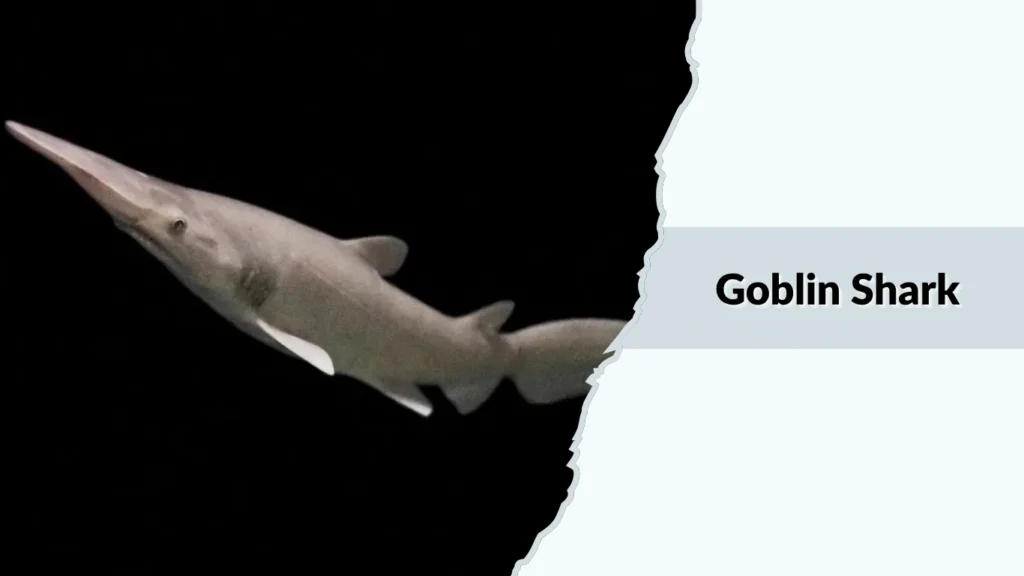
The goblin shark is a rare deep-sea shark known for its strange appearance and extendable jaw. Often called a “living fossil,” it has existed for millions of years with very little change. Its unusual features make it one of the most distinctive and mysterious sharks in the ocean.
Identification
- Long, flattened snout (rostrum)
- Pinkish or pale gray body color
- Protrusible jaw that can extend outward
- Sharp, nail-like teeth
- Soft, flabby body with small fins
Habitat
Goblin sharks are usually found at depths between 200 and 1,200 meters. They inhabit deep waters along continental slopes and underwater canyons in oceans worldwide. These areas are dark, cold, and have high pressure, making them suitable for slow-moving species like the goblin shark.
Diet
Goblin sharks are carnivorous and feed mainly on fish, squid, and crustaceans. They use their highly sensitive snout to detect electric signals from prey. When close enough, they rapidly extend their jaws to snatch prey with precision. This unique feeding method allows them to catch fast-moving animals despite their slow speed.
Behavior
Goblin sharks are solitary and sluggish swimmers. They rely on stealth and their specialized jaw rather than chasing prey. Their slow metabolism helps them survive in environments where food is scarce. They are rarely seen by humans due to their deep-sea habitat and elusive nature.
9. Hatchetfish
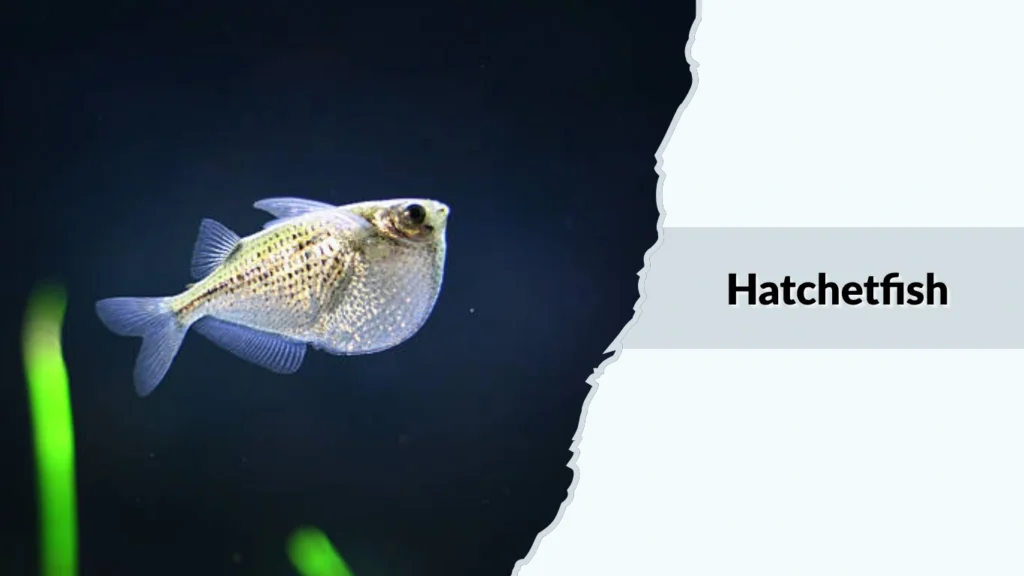
Hatchetfish are small, deep-sea fish known for their thin, silver bodies that resemble the shape of a hatchet. They are masters of camouflage, using light-producing organs to blend into their surroundings and avoid predators in the dark ocean depths.
Identification
- Thin, flattened body shaped like a hatchet blade
- Silvery, reflective scales
- Large, upward-facing eyes
- Bioluminescent organs (photophores) on the underside
- Small size, usually only a few centimeters long
Habitat
Hatchetfish live in deep ocean waters, typically between 200 and 1,000 meters below the surface. They are commonly found in tropical and temperate oceans worldwide. These depths are dimly lit or completely dark, providing the perfect environment for their light-based camouflage.
Diet
Hatchetfish feed mainly on small crustaceans, plankton, and tiny fish. They rely on their upward-facing eyes to spot prey above them. Once they detect movement, they swim quickly to capture it. Their diet is adapted to the limited food availability in deep-sea environments.
Behavior
Hatchetfish are known for their vertical migration behavior. During the night, they move closer to the surface to feed, and during the day, they return to deeper waters to avoid predators. Their bioluminescence helps them hide by matching the faint light from above, making them nearly invisible from below.
10. Lanternfish
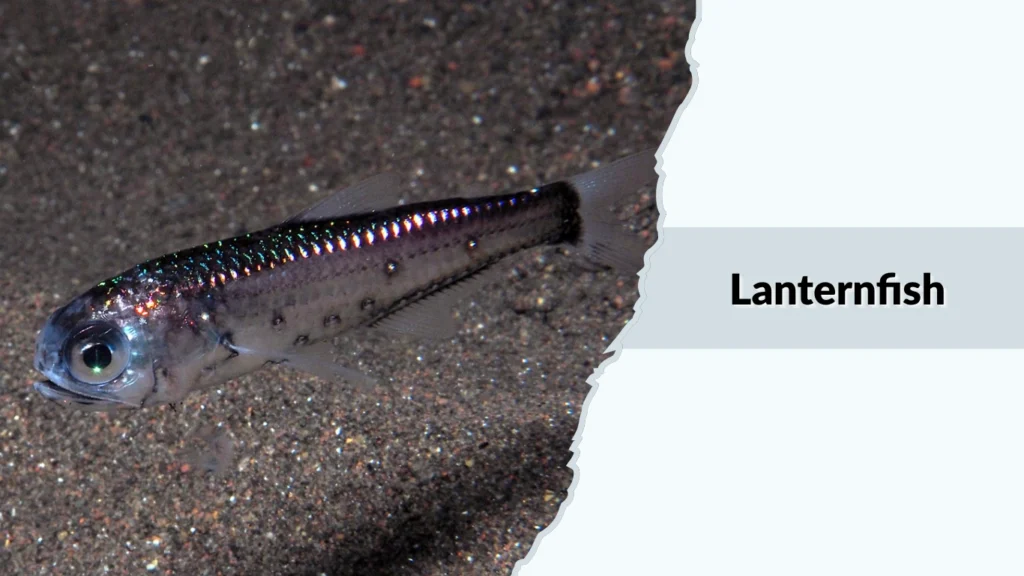
Lanternfish are among the most abundant deep-sea fish and play a crucial role in the ocean ecosystem. They are known for their small size and light-producing organs, which help them survive in the dark depths. Despite their size, they are a major food source for many marine animals.
Identification
- Small, slender body
- Dark blue, black, or silver coloration
- Rows of bioluminescent organs (photophores) along the body
- Large eyes adapted to low light
- Forked tail for efficient swimming
Habitat
Lanternfish are found in oceans worldwide, typically at depths between 200 and 1,000 meters during the day. They inhabit dim to completely dark zones of the ocean. At night, they migrate closer to the surface, making them one of the most important species involved in daily vertical migration.
Diet
Lanternfish feed mainly on plankton, small crustaceans, and tiny fish. They take advantage of their nighttime movement to the surface where food is more abundant. Their feeding habits help transfer energy from surface waters to deeper ocean layers.
Behavior
Lanternfish are known for their daily vertical migration. They rise to the surface at night to feed and return to deeper waters during the day to avoid predators. Their bioluminescent organs may help them communicate, attract mates, or camouflage themselves in faint light.
11. Snipe Eel
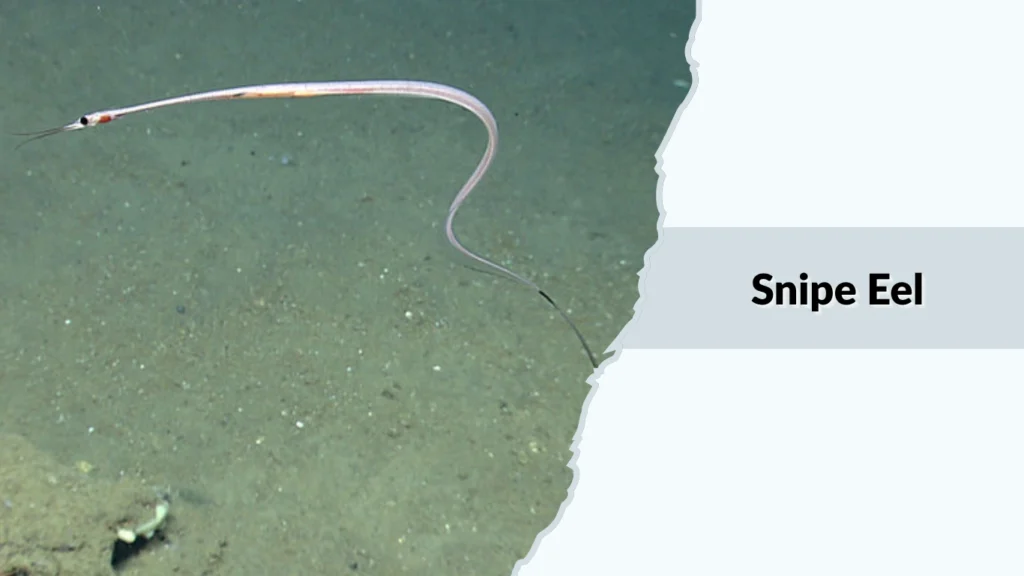
The snipe eel is a deep-sea fish known for its extremely long, slender body and beak-like jaws. Its unusual shape makes it one of the most distinctive creatures in the deep ocean. Despite its fragile appearance, it is well adapted to survive in dark, high-pressure environments.
Identification
- Very long, thin, eel-like body
- Extended, beak-shaped jaws
- Small, pointed teeth
- Light brown or pale coloration
- Flexible and delicate body structure
Habitat
Snipe eels are typically found at depths between 300 and 2,000 meters. They inhabit open ocean waters rather than staying close to the seabed. These regions are dark and cold, with very little light penetration. Their lightweight bodies help them move easily through deep waters.
Diet
Snipe eels mainly feed on small crustaceans and plankton. Their long jaws help them पकड़ tiny prey drifting in the water. Instead of chasing food, they rely on slow movement and opportunistic feeding in areas where prey is available.
Behavior
Snipe eels are slow swimmers and tend to drift with ocean currents. They are not aggressive hunters and rely on their long jaws to capture small prey. Their fragile bodies suggest they avoid fast movement, conserving energy in a food-scarce deep-sea environment.
12. Blobfish
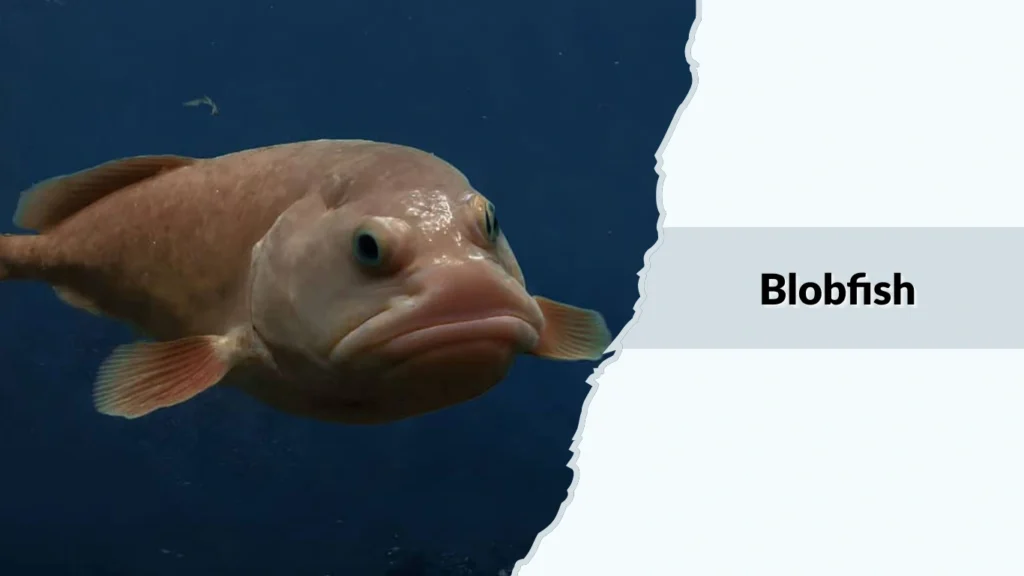
The blobfish is one of the most well-known deep-sea fish due to its unusual, gelatinous appearance. While it may look strange out of water, its body is perfectly adapted to the high-pressure environment of the deep ocean, where it appears more like a typical fish.
Identification
- Soft, jelly-like body with a loose structure
- Pale pink or gray coloration
- Large head with a drooping, rounded shape
- Small eyes and a wide mouth
- Lack of a swim bladder
Habitat
Blobfish are found at depths between 600 and 1,200 meters, mainly in the waters off Australia, Tasmania, and New Zealand. These depths are extremely dark and cold, with intense pressure. Their bodies are adapted to these conditions, allowing them to float just above the seafloor without using much energy.
Diet
Blobfish feed on small crustaceans, sea urchins, and other organic matter that drifts along the ocean floor. They are not active hunters; instead, they consume whatever edible material passes by. This feeding strategy helps them survive in an environment where food is limited.
Behavior
Blobfish are slow-moving and passive creatures. They spend most of their time hovering just above the seabed, conserving energy. Due to their low-density bodies, they do not need to swim actively. Their appearance changes drastically when brought to the surface because of the sudden drop in pressure.
13. Black Swallower
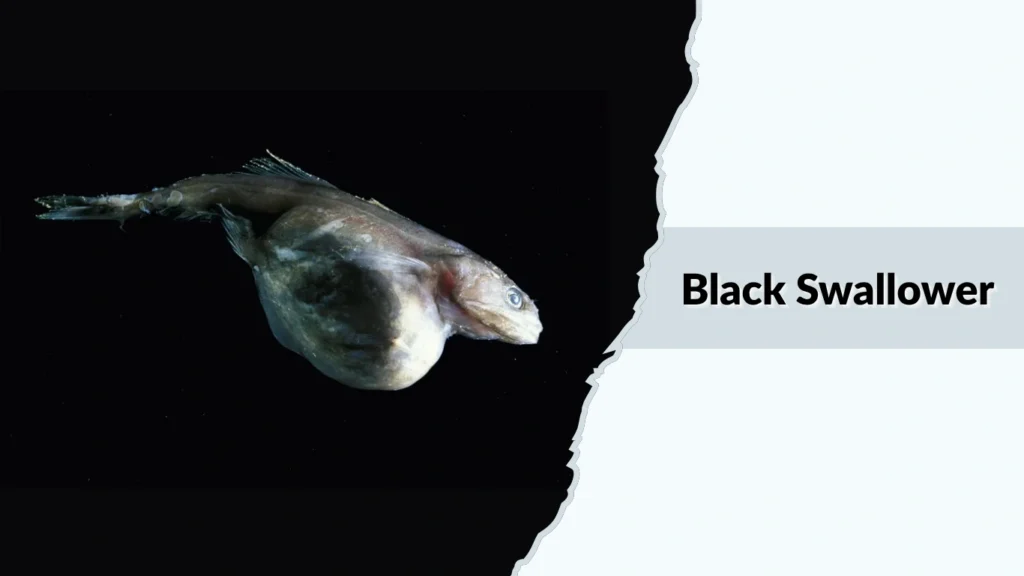
The black swallower is a remarkable deep-sea fish famous for its ability to swallow prey much larger than itself. This unique adaptation allows it to survive in an environment where food is scarce and unpredictable.
Identification
- Small, elongated body with a dark black color
- Large mouth with sharp, curved teeth
- Expandable stomach that can stretch significantly
- Thin, scaleless skin
- Long tail with a narrow shape
Habitat
Black swallowers are typically found at depths between 700 and 2,700 meters in tropical and subtropical oceans. They inhabit deep, dark waters where sunlight cannot reach. These conditions are cold and high-pressure, requiring specialized adaptations for survival.
Diet
Black swallowers are carnivorous and mainly feed on fish and other marine animals. Their most notable ability is swallowing prey larger than their own body. Their stomach can expand to hold large meals, allowing them to take advantage of rare feeding opportunities in the deep sea.
Behavior
Black swallowers are solitary and rely on opportunistic feeding. They do not actively chase prey but instead capture what they can when the opportunity arises. After consuming a large meal, they may go long periods without eating, conserving energy in the deep-sea environment.
14. Tripod Fish
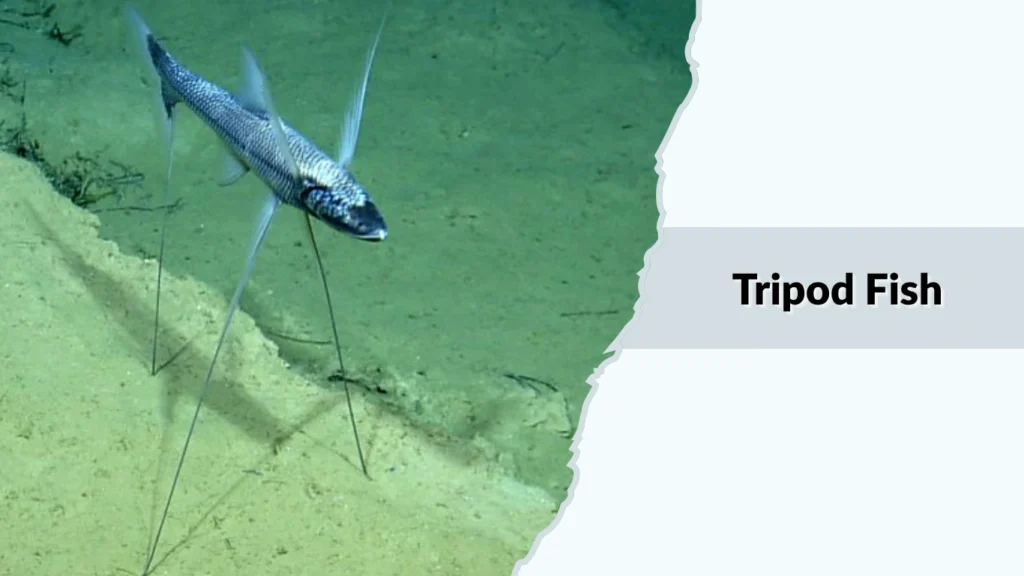
The tripod fish is a unique deep-sea species known for its long, thin fin rays that allow it to stand on the ocean floor like a tripod. This unusual adaptation helps it remain still while waiting for prey in the dark depths.
Identification
- Slender body with a pale or light coloration
- Extremely long fin rays forming a tripod-like structure
- Small head with reduced eyes
- Elongated tail and fins
- Soft body adapted to deep-sea pressure
Habitat
Tripod fish are found at depths between 900 and 4,500 meters, often resting on the seafloor. They inhabit deep ocean basins where sunlight does not reach. The environment is cold, dark, and has very high pressure, making it suitable for their low-energy lifestyle.
Diet
Tripod fish feed on small crustaceans and plankton that drift in ocean currents. They position themselves facing the current and use their fins to detect movement. When prey comes close, they quickly capture it without needing to move much.
Behavior
Tripod fish are mostly stationary and spend long periods standing on the seabed using their extended fins. They face into the current to maximize feeding opportunities. This behavior helps them conserve energy while still effectively catching food in an environment where resources are limited.
15. Stoplight Loosejaw
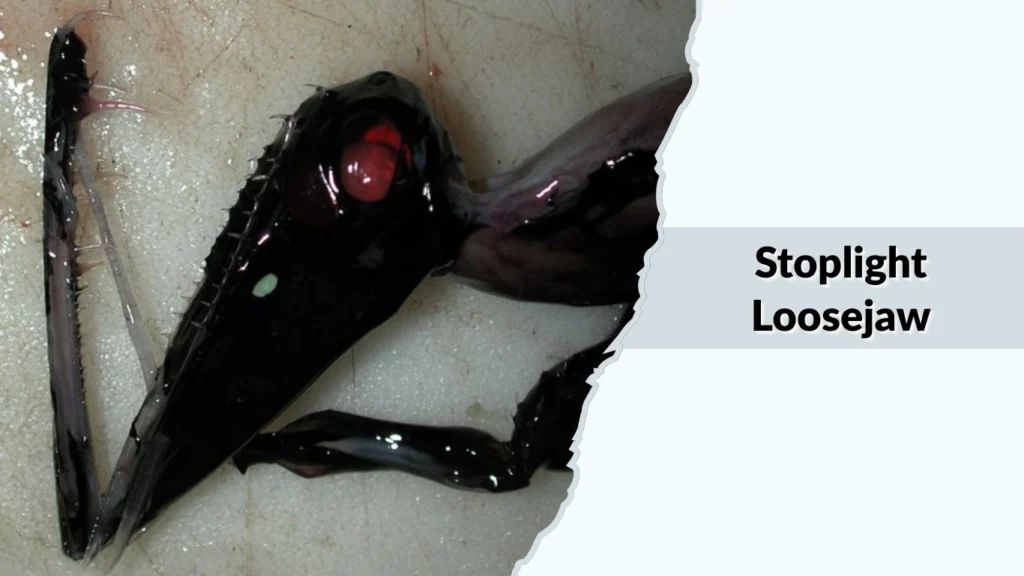
The stoplight loosejaw is a fascinating deep-sea fish known for its unusual jaw structure and ability to produce red bioluminescent light. This rare adaptation allows it to hunt prey that cannot detect red wavelengths, giving it a major advantage in the dark ocean.
Identification
- Slender, elongated body with a dark coloration
- Extremely loose, hinged jaw that can open wide
- Needle-like teeth suited for prey
- Bioluminescent organs, including a red light emitter
- Small eyes adapted for low-light vision
Habitat
Stoplight loosejaws are typically found at depths between 500 and 2,000 meters in tropical and temperate oceans. These regions are completely dark, with high pressure and cold temperatures. Their unique adaptations make them well-suited for survival in such extreme conditions.
Diet
They are carnivorous and mainly feed on small fish and crustaceans. Their ability to produce red light allows them to see prey that other deep-sea creatures cannot detect. Once prey is located, they use their flexible jaw to quickly capture and swallow it.
Behavior
Stoplight loosejaws are solitary and stealthy hunters. They move slowly through the water, using their specialized vision and bioluminescence to locate prey. Their loose jaw allows them to snap shut quickly, making their hunting technique highly effective in a low-energy environment.
16. Chimaera (Ghost Shark)
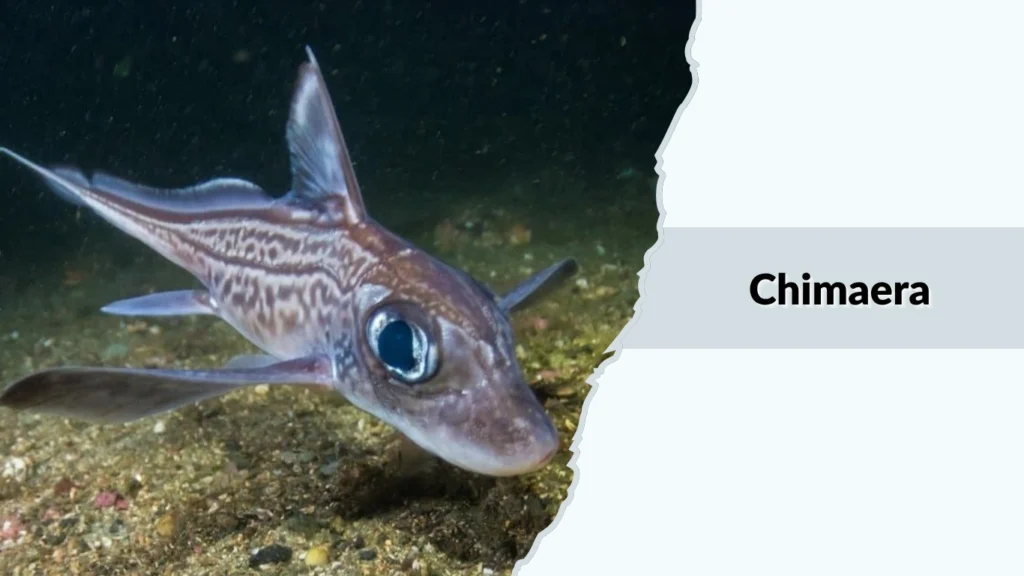
Chimaeras, often called ghost sharks, are deep-sea fish related to sharks and rays. They have a smooth, ghost-like appearance and are known for their long, tapering tails. These ancient fish have existed for millions of years and are well adapted to life in deep ocean waters.
Identification
- Smooth, pale or silvery body
- Large head with big, reflective eyes
- Long, tapering tail
- Wing-like pectoral fins
- Tooth plates instead of sharp teeth
Habitat
Chimaeras are usually found at depths between 200 and 2,600 meters. They inhabit deep ocean floors across the world, often near continental slopes. These areas are dark, cold, and under high pressure, providing the ideal environment for their slow-moving lifestyle.
Diet
Chimaeras feed mainly on bottom-dwelling creatures such as crustaceans, mollusks, and small fish. Their strong tooth plates allow them to crush hard shells easily. They search for food along the seabed, using their sensitive snouts to detect prey.
Behavior
Chimaeras are generally solitary and slow swimmers. They glide gracefully through the water using their large fins. These fish are not aggressive and rely on steady movement and sensory detection to find food. Their calm behavior helps them conserve energy in the deep-sea environment.
17. Pelican Eel
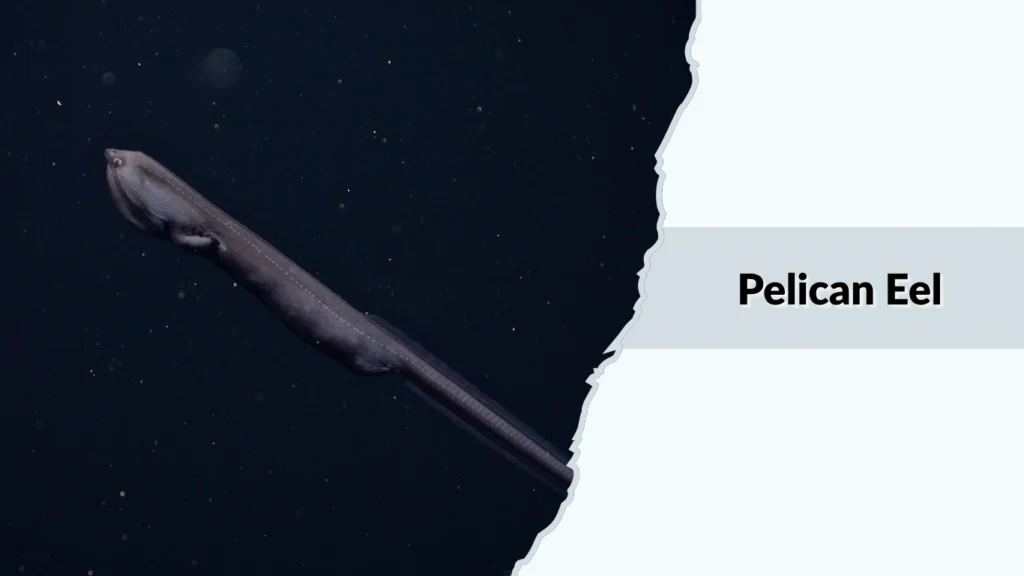
The pelican eel, closely related to the gulper eel, is a deep-sea fish known for its mouth and expandable throat. Its unusual appearance and feeding strategy make it one of the most distinctive creatures of the deep ocean.
Identification
- Extremely large mouth that can stretch wider than its body
- Long, slender, eel-like body
- Expandable throat pouch similar to a pelican
- Small eyes and thin tail
- Dark black or deep brown coloration
Habitat
Pelican eels are found at depths ranging from about 500 to 3,000 meters in oceans worldwide. They inhabit open deep waters where sunlight cannot reach. These regions are cold, dark, and under immense pressure, making them suitable for species adapted to low-energy living.
Diet
Pelican eels feed on small fish, crustaceans, and plankton. Their huge mouths allow them to scoop up large amounts of water along with prey. This feeding method helps them survive in areas where food is scarce and unpredictable.
Behavior
Pelican eels are slow swimmers and tend to drift in the deep ocean. They do not actively chase prey but rely on their large mouths to capture food when the opportunity arises. Their long tail may produce light, which could help attract prey in the darkness.
18. Vampire Squid
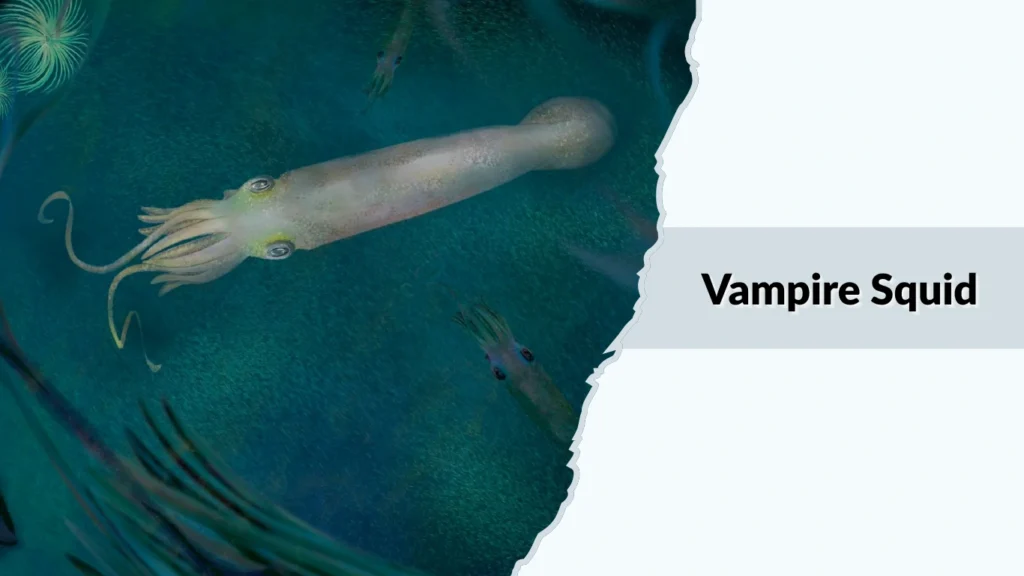
The vampire squid is a unique deep-sea creature despite its name, as it is neither a true squid nor an octopus. It is known for its dark color, webbed arms, and ability to survive in extremely low-oxygen environments where few other animals can live.
Identification
- Dark black or deep red body
- Webbing connecting its arms, forming a cloak-like structure
- Large, bright blue eyes
- Short spines along the arms
- Bioluminescent organs that produce light
Habitat
Vampire squid are typically found at depths between 600 and 900 meters. They live in oxygen minimum zones, where oxygen levels are extremely low. These areas are dark, cold, and inhospitable for most marine life, but the vampire squid is specially adapted to thrive there.
Diet
Unlike many deep-sea predators, vampire squid do not actively hunt live prey. They feed on marine snow, which includes dead organic matter, plankton, and small particles drifting in the water. They use sticky filaments to collect this material and consume it efficiently.
Behavior
Vampire squid are slow-moving and non-aggressive. When threatened, they turn themselves inside out in a defensive posture called the “pineapple pose.” Their bioluminescent abilities help confuse predators, allowing them to escape in the darkness.
19. Deep Sea Lizardfish
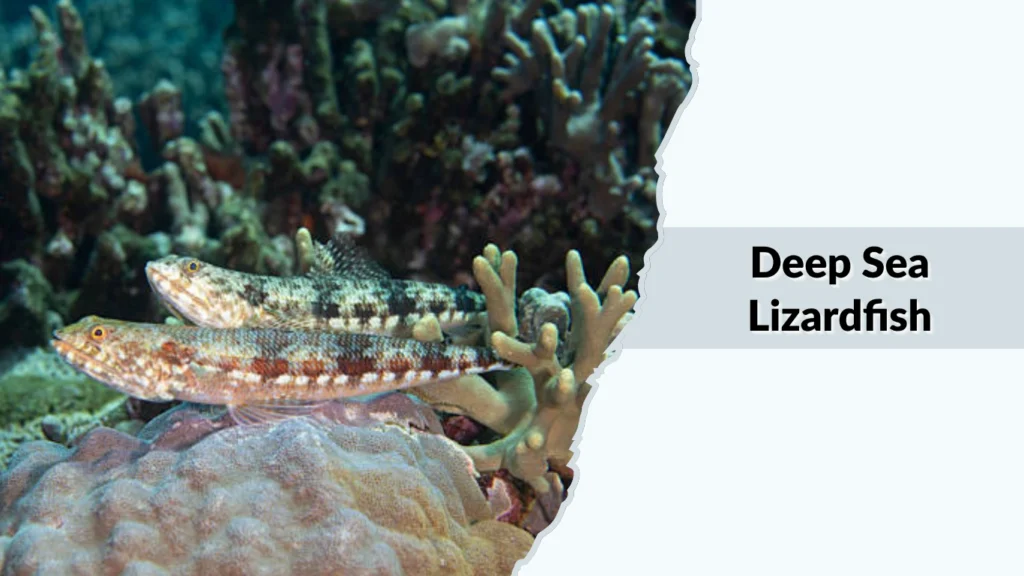
The deep sea lizardfish is a predatory fish known for its sharp teeth and ambush hunting style. It resembles shallow-water lizardfish but has developed special adaptations to survive in the dark, high-pressure conditions of the deep ocean.
Identification
- Long, cylindrical body with a pale or grayish color
- Large mouth filled with sharp, pointed teeth
- Prominent jaw that extends outward
- Small eyes adapted to low light
- Smooth body with reduced scales
Habitat
Deep sea lizardfish are typically found at depths between 1,000 and 3,000 meters. They live near the ocean floor in deep-sea environments where sunlight does not reach. These habitats are cold, dark, and under intense pressure, making them suitable for slow-moving predators.
Diet
They are carnivorous and feed mainly on smaller fish and crustaceans. Deep sea lizardfish use ambush tactics, staying still until prey comes close. Once within reach, they quickly strike and पकड़ their prey using their sharp teeth.
Behavior
Deep sea lizardfish are solitary and rely on patience rather than speed. They often remain motionless on or near the seabed, waiting for prey to pass by. Their stillness helps conserve energy, which is essential in an environment where food is limited and unpredictable.
20. Bigscale Fish
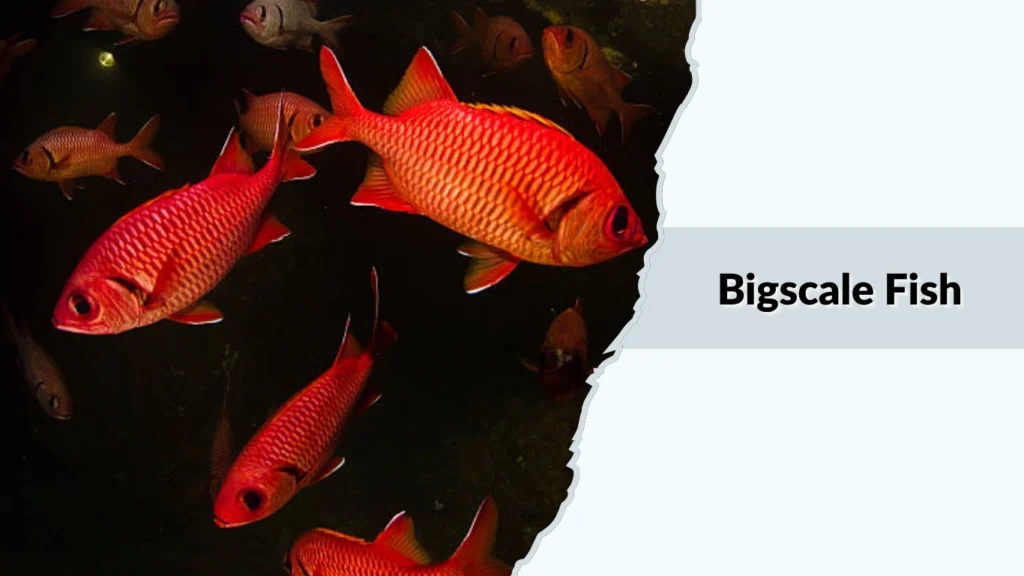
Bigscale fish are deep-sea species known for their noticeably large, shiny scales and streamlined bodies. These fish are adapted to survive in the dark ocean depths, where their reflective scales may help them blend into faint light from above.
Identification
- Body covered with large, reflective scales
- Slender, elongated body shape
- Dark or silvery coloration
- Large eyes adapted for low-light conditions
- Small fins for steady movement
Habitat
Bigscale fish are typically found at depths between 200 and 1,000 meters. They inhabit midwater regions of the ocean, often in tropical and temperate seas. These zones are dimly lit, with limited sunlight penetration, creating an environment where camouflage is essential for survival.
Diet
Bigscale fish are carnivorous and feed on small fish, plankton, and crustaceans. They rely on their vision to detect prey in low light. Once prey is spotted, they swim quickly to capture it. Their diet helps maintain the balance of the deep-sea food chain.
Behavior
Bigscale fish are generally active swimmers compared to many deep-sea species. They move through the water in search of food rather than waiting for prey. Their reflective scales may help them avoid predators by blending with the faint light, making them harder to detect.
21. Spookfish
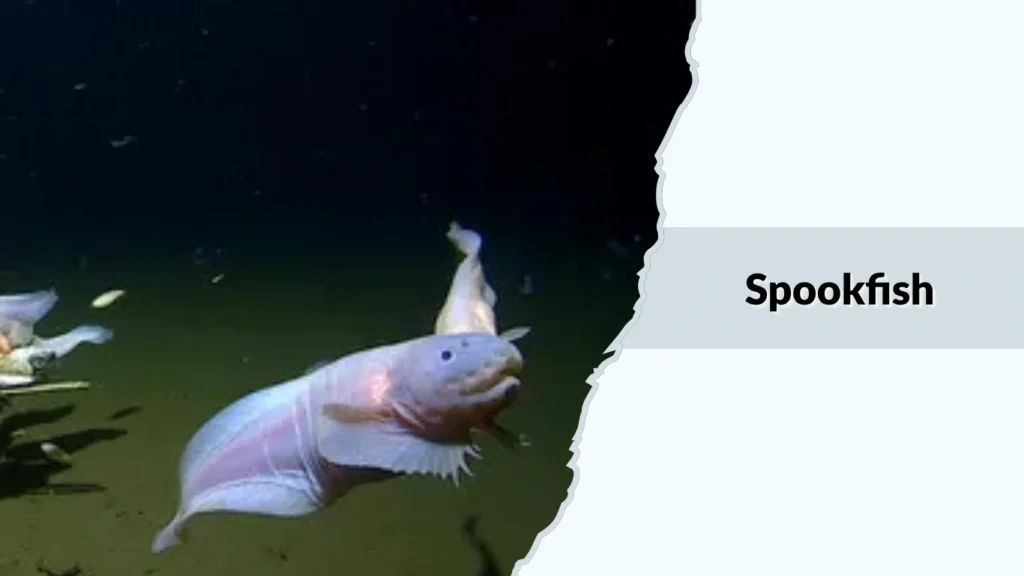
Spookfish are unusual deep-sea fish known for their reflective eyes and ability to detect faint light in the dark ocean. Their name comes from their ghostly appearance and unique visual adaptations that help them survive in deep waters.
Identification
- Small, slender body with a dark coloration
- Highly reflective eyes with a mirror-like structure
- Upward-facing vision adapted to detect light
- Thin, delicate fins
- Slightly transparent or silvery body
Habitat
Spookfish are typically found at depths between 300 and 1,000 meters. They inhabit midwater regions of tropical and temperate oceans. These depths receive very little sunlight, creating a dim environment where their specialized vision becomes essential for survival.
Diet
Spookfish feed mainly on small crustaceans and plankton. They use their advanced eyesight to detect tiny movements and faint light reflections from prey. Once prey is located, they move quickly to capture it, making the most of limited feeding opportunities.
Behavior
Spookfish are solitary and cautious swimmers. They rely heavily on their vision rather than speed or strength. Their reflective eyes allow them to spot predators and prey in low light conditions. This adaptation helps them survive in the deep sea, where visibility is extremely limited.
22. Telescope Fish
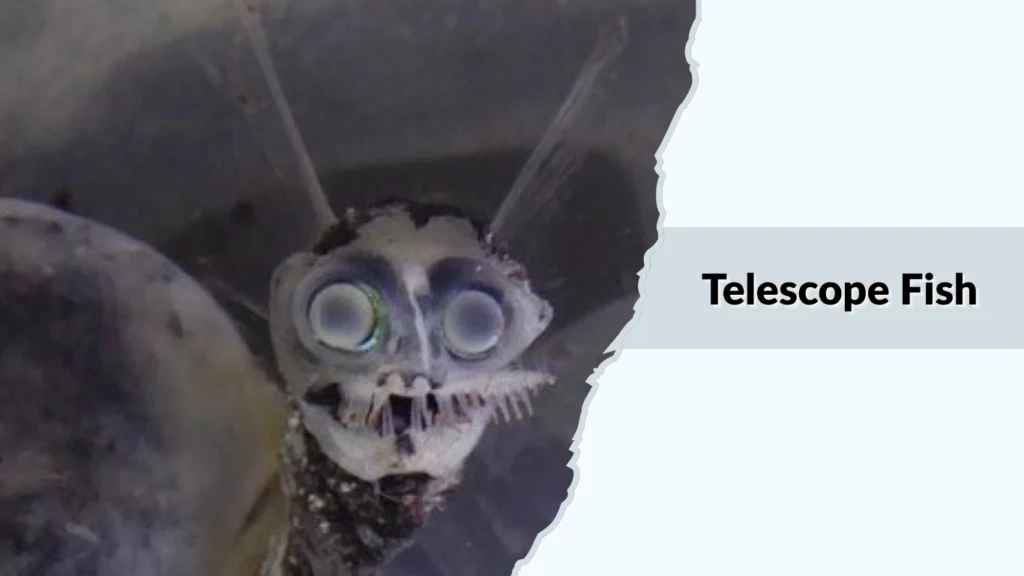
The telescope fish is a deep-sea species known for its large, tube-shaped eyes that help it see in extremely low-light conditions. Its unusual vision system makes it highly effective at spotting prey in the dark ocean depths.
Identification
- Elongated body with a dark or silvery color
- Large, tubular eyes that project outward
- Small mouth with fine teeth
- Slender body adapted for deep-sea life
- Soft fins for slow, controlled movement
Habitat
Telescope fish are usually found at depths between 500 and 1,500 meters in tropical and temperate oceans. These areas are dimly lit or completely dark, with cold temperatures and high pressure. Their specialized eyes allow them to function effectively in such environments.
Diet
Telescope fish are carnivorous and mainly feed on small fish and crustaceans. Their large eyes help them detect faint light and movement from prey. Once they identify a target, they move in to capture it with quick, precise motions.
Behavior
Telescope fish are slow swimmers and tend to conserve energy. They rely on their excellent vision rather than speed to find food. Their large eyes are highly sensitive, allowing them to detect even the slightest movement in the darkness, giving them an advantage in hunting.
23. Deep Sea Angler
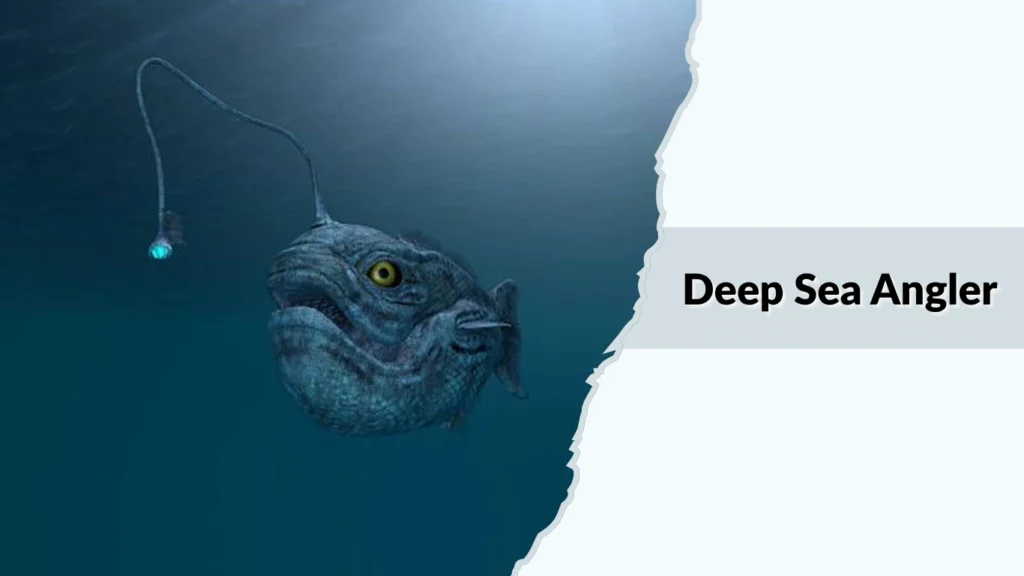
Deep sea anglerfish are a group of anglerfish species specifically adapted to extreme ocean depths. They are best known for their glowing lure and unusual reproductive behavior, making them one of the most iconic deep-sea predators.
Identification
- Small to medium-sized body with a large head
- Wide mouth filled with sharp, curved teeth
- Bioluminescent lure extending from the head
- Dark black or brown coloration
- Soft body adapted to high-pressure environments
Habitat
Deep sea anglers are found at depths ranging from 300 to over 2,000 meters. They inhabit the darkest regions of the ocean, where sunlight cannot reach. These areas are extremely cold and under intense pressure, requiring specialized adaptations for survival.
Diet
They are carnivorous and feed on small fish, crustaceans, and other marine organisms. Their glowing lure attracts prey in the darkness. Once prey approaches, they quickly capture it using their large mouths and sharp teeth.
Behavior
Deep sea anglers are solitary and rely on ambush hunting. They remain still, using their bioluminescent lure to draw prey closer. In many species, males attach themselves to females permanently, relying on them for nutrients while providing reproductive support.
24. Slickhead
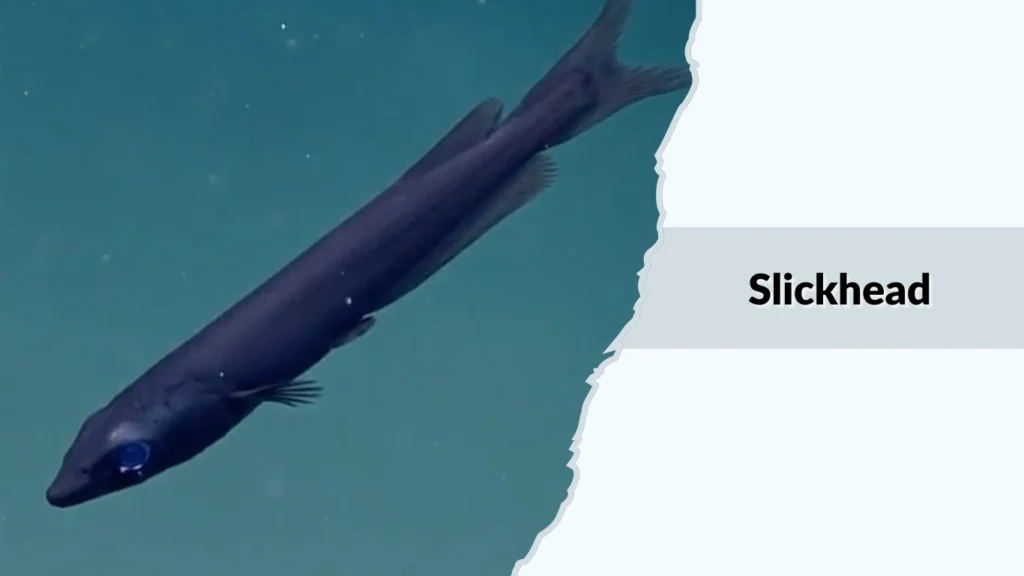
Slickheads are deep-sea fish known for their smooth, scaleless heads and elongated bodies. They are widely distributed in deep ocean waters and are adapted to survive in dark, high-pressure environments.
Identification
- Smooth, scaleless head
- Slender, elongated body
- Silvery or gray coloration
- Large eyes adapted for low light
- Soft fins for slow swimming
Habitat
Slickheads are typically found at depths between 300 and 3,000 meters. They inhabit deep ocean waters across the globe, often in areas with soft seabeds. These regions are cold, dark, and under high pressure, making them suitable for their slow-moving lifestyle.
Diet
Slickheads are carnivorous and feed on small fish, crustaceans, and plankton. They search for food in deep waters, relying on their vision and sensory abilities to detect prey. Their diet helps them survive in an environment where food sources are limited.
Behavior
Slickheads are generally slow swimmers and conserve energy to survive in the deep sea. They move steadily through the water rather than chasing prey aggressively. Their calm behavior and efficient energy use are key adaptations to life in a food-scarce environment.
25. Coffinfish
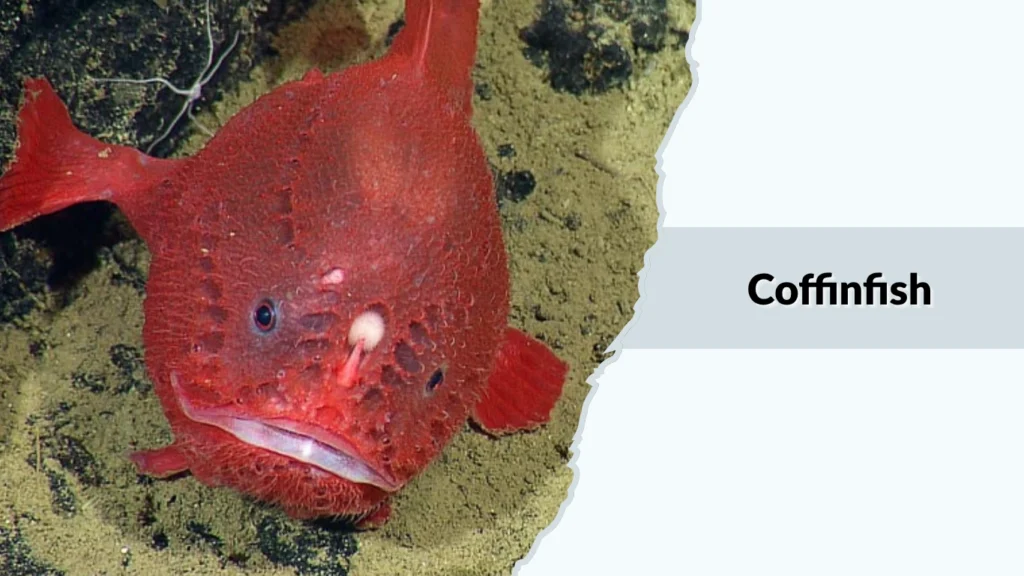
The coffinfish is a deep-sea anglerfish known for its rounded, inflated body and unusual ability to expand itself. Its name comes from its boxy, coffin-like shape. This fish is well adapted to life on the ocean floor in dark, high-pressure environments.
Identification
- Rounded, box-shaped body
- Ability to inflate its body when threatened
- Rough, spiny skin
- Small fins and short tail
- Bioluminescent lure on the head
Habitat
Coffinfish are typically found at depths between 100 and 1,500 meters. They live on or near the seafloor in deep ocean regions, especially in tropical and subtropical waters. These environments are dark, cold, and have high pressure, requiring specialized adaptations.
Diet
Coffinfish are carnivorous and feed on small fish and crustaceans. They use their lure to attract prey in the darkness. Once the prey gets close, they quickly capture it with their mouth. Their feeding strategy relies on patience rather than active hunting.
Behavior
Coffinfish are slow-moving and mostly sedentary. They often rest on the seabed and wait for prey to approach. When threatened, they can inflate their bodies to appear larger and discourage predators. Their low-energy lifestyle helps them survive in deep-sea conditions.
FAQs
What is a deep-sea fish?
Deep-sea fish are species that live in the ocean at depths where sunlight cannot reach, usually below 200 meters. These fish are specially adapted to extreme conditions such as high pressure, low temperatures, and complete darkness, often developing unique features like bioluminescence.
Why do many deep-sea fish glow?
Many deep-sea fish produce light through a process called bioluminescence. This helps them attract prey, communicate, or hide from predators by blending with faint light from above. It is an important survival adaptation in the dark ocean environment.
How do deep-sea fish survive high pressure?
Deep-sea fish have soft, flexible bodies and special cellular structures that allow them to withstand intense pressure. Unlike surface fish, they lack air-filled spaces like swim bladders, which could collapse under extreme pressure.
What do deep-sea fish eat?
Deep-sea fish mainly eat smaller fish, crustaceans, and organic matter that drifts down from upper ocean layers. Since food is scarce, many species are opportunistic feeders and can survive long periods without eating.
Are deep-sea fish dangerous to humans?
Most deep-sea fish are not dangerous to humans. They live far below the surface and rarely come into contact with people. Although some look frightening, they are generally harmless and adapted only to their deep-sea environment.