

The tench fish is a fascinating freshwater species known for its olive-green body, reddish eyes, and preference for quiet, vegetation-rich waters. Scientifically called Tinca tinca, this fish commonly inhabits lakes, ponds, canals, and slow-moving rivers across Europe and parts of Asia. Tench are popular among freshwater anglers because of their strong fighting ability and cautious feeding behavior. They are also valued as ornamental pond fish, particularly the golden tench variety. Understanding tench fish size, appearance, habitat, diet, lifespan, reproduction, and fishing techniques reveals what makes this species unique.
What Is a Tench Fish?
The tench (Tinca tinca) is a freshwater fish closely related to carp and other members of the cypriniform group. Sometimes called the doctor fish, tench have a distinctive appearance and are particularly well adapted to living near muddy bottoms and aquatic vegetation.
Although they share similarities with common carp, tench are a separate species with smaller scales, a different body shape, and distinctive reddish eyes.
| Characteristics | Details |
| Scientific Name | Tinca tinca |
| Common Name | Tench |
| Other Name | Doctor Fish |
| Habitat | Lakes, ponds, canals, slow rivers |
| Native Range | Europe and western Asia |
| Typical Size | Approximately 30–50 cm |
| Maximum Recorded Length | About 84 cm |
| Lifespan | Commonly 10–15 years or longer |
| Diet | Omnivorous |
| Color | Olive-green, bronze, or golden |
| Behavior | Generally peaceful, bottom-feeding |
Tench Fish Appearance and Identification
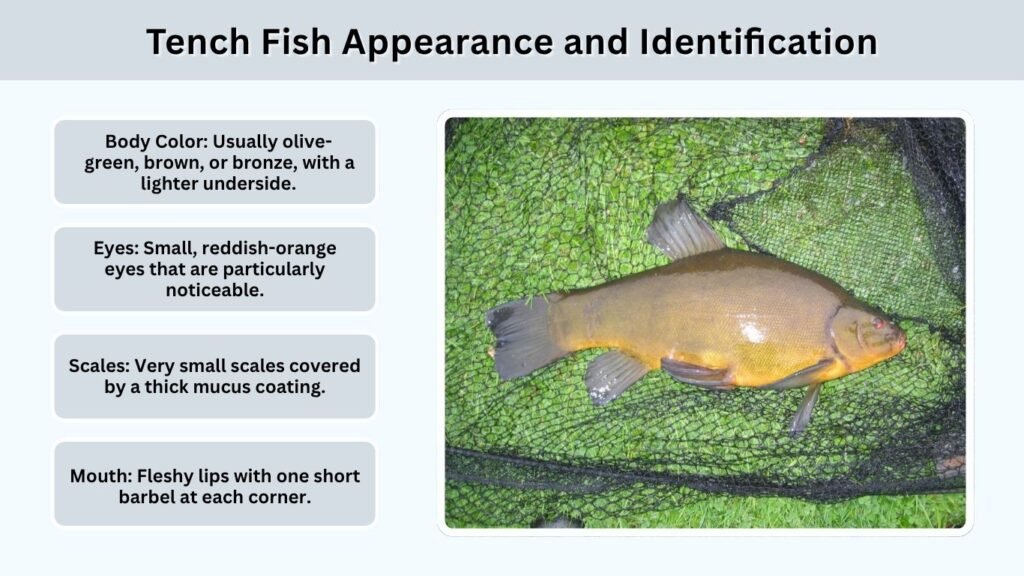
Tench have thick, muscular bodies covered with extremely small scales embedded beneath a protective mucus layer. This coating creates their characteristic smooth, slippery appearance. Their physical features help them navigate dense underwater vegetation and locate food along the bottom.
How to Identify a Tench Fish
Several distinctive characteristics help distinguish tench from other freshwater species.
- Body Color: Usually olive-green, brown, or bronze, with a lighter underside.
- Eyes: Small, reddish-orange eyes that are particularly noticeable.
- Scales: Very small scales covered by a thick mucus coating.
- Mouth: Fleshy lips with one short barbel at each corner.
- Fins: Rounded fins and a relatively broad tail.
Male tench generally have larger pelvic fins with thickened leading rays, particularly when mature. Females often possess smaller, more rounded pelvic fins.
Their colors can vary depending on environmental conditions and genetics.
Tench Fish Size and Lifespan
Tench are relatively slow-growing freshwater fish. Their growth depends on food availability, habitat quality, genetics, and competition with other fish. Individuals living in productive lakes may grow considerably larger than those inhabiting smaller waters.
How Big Do Tench Fish Get?
Adult tench commonly measure approximately 30–50 centimeters (12–20 inches), although larger individuals can exceed 60 centimeters.
Exceptional specimens may reach about 84 centimeters (33 inches). Most tench caught by recreational anglers are much smaller than this maximum.
Their weight also varies considerably. Large specimens can weigh several kilograms, making them attractive targets for experienced freshwater anglers.
How Long Do Tench Live?
The typical tench lifespan is around 10–15 years, although some individuals may live longer under favorable conditions.
Tench grow slowly compared with many smaller freshwater fish. Stable habitats, sufficient food, and suitable water quality contribute to their long-term survival.
Where Do Tench Fish Live?

Tench naturally inhabit freshwater environments throughout much of Europe and parts of western Asia. They prefer still or slow-moving water with abundant aquatic vegetation and relatively soft bottoms.
Natural Tench Fish Habitat
Typical tench habitats include:
- Lakes: Shallow, vegetation-rich areas with muddy bottoms.
- Ponds: Quiet waters containing aquatic plants and natural food.
- Canals: Slow-moving waterways with sheltered feeding areas.
- Rivers: Calm backwaters and slower sections with limited currents.
Tench usually remain near underwater plants and bottom sediments, where they search for food and avoid disturbance.
They tolerate relatively low oxygen levels better than many freshwater species, although good water quality remains important for healthy populations.
Where Are Tench Found?
Tench occurs naturally across much of Europe and western Asia. They have also been introduced into parts of North America and other regions.
Because introduced populations may compete with native aquatic species, releasing tench into natural waterways can cause ecological problems.
What Do Tench Fish Eat?

Tench are omnivorous bottom feeders that consume small aquatic animals and some plant material. They use their sensitive mouths and short barbels to search for food among sediment and vegetation.
Natural Tench Fish Diet
Their natural food includes:
- Aquatic insect larvae: Including midge, mayfly, and caddisfly larvae.
- Small Mollusks: Snails and other soft-bodied aquatic animals.
- Worms: Various small worms living in bottom sediment.
- Crustaceans: Small freshwater invertebrates.
- Plant Material: Seeds, organic debris, and soft vegetation.
Young tench initially feed on tiny aquatic organisms, including zooplankton.
Adult fish primarily search the bottom for food, often disturbing small amounts of sediment while feeding.
Golden Tench Fish: Appearance and Characteristics
Golden tench are ornamental color varieties of the ordinary tench species. Unlike wild tench, which usually display dark green or bronze coloration, golden tench have bright yellow, orange, or golden bodies.
Golden Tench vs. Common Tench
The most noticeable difference is coloration. Golden tench have selectively bred color variations, while common tench typically possess natural olive-green pigmentation.
Both belong to the same species and share similar feeding habits, environmental requirements, and general behavior.
Golden tench are particularly popular in ornamental garden ponds because their bright coloration makes them easier to observe.
However, their visibility may also make them more vulnerable to fish-eating birds and other predators.
Tench Fish Breeding and Reproduction
Tench reproduce by laying eggs among submerged aquatic vegetation. Breeding generally occurs during late spring or summer when water temperatures rise sufficiently.
How Do Tench Fish Reproduce?
During spawning, mature females release numerous small, sticky eggs that attach to underwater plants.
Males fertilize these eggs externally, allowing embryos to develop in suitable water conditions.
The eggs typically hatch after several days, depending on temperature.
Newly hatched tench remain close to dense aquatic vegetation, which provides shelter from predators.
Tench usually reach sexual maturity after several years. Successful reproduction depends heavily on warm seasonal conditions and suitable spawning habitat.
Tench Fishing: Best Baits, Locations and Techniques
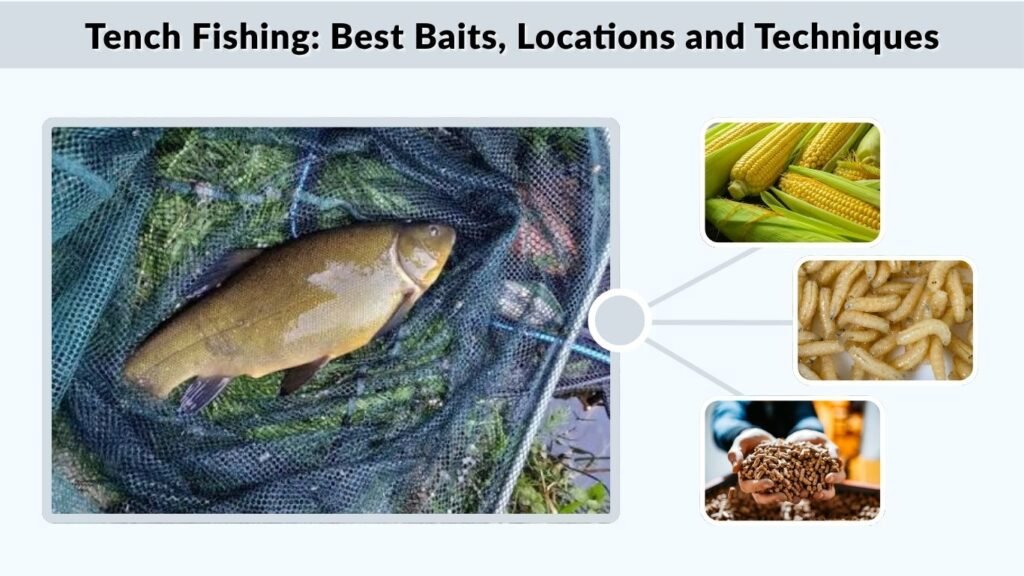
Tench fishing is popular because these fish are cautious feeders that can put up a strong fight when hooked. Successful anglers often target vegetation-rich lakes, ponds, and slow-moving waterways where they naturally forage.
Best Time for Tench Fishing
Spring and summer are productive periods for tench fishing, particularly when water temperatures become warmer and fish feed more actively.
Early morning is often an excellent time to catch tench. Feeding activity varies by location, season, and weather conditions, so anglers may also experience success later in the day.
Best Bait for Tench Fishing
Popular tench fishing baits include:
- Sweetcorn: A widely used bait for tench.
- Maggots: Effective for attracting bottom-feeding fish.
- Earthworms: Natural bait suitable for tench fishing.
- Pellets: Useful in fisheries where fish are accustomed to them.
- Boilies: Sometimes effective when targeting larger specimens.
How to Catch Tench
Float fishing and bottom fishing are both effective techniques.
Position the bait close to the bottom near aquatic vegetation, but avoid excessively dense weeds that could cause snagging.
Use appropriate tackle, watch carefully for subtle bites, and avoid creating unnecessary disturbance.
When handling a caught tench, use wet hands and suitable unhooking equipment to protect its delicate mucus coating.
Always follow local fishing regulations and seasonal restrictions.
FAQs
1. Is a Tench Fish the Same as a Carp?
No. Tench and common carp are separate species, although they are related and share similar bottom-feeding habits.
2. Are Tench Fish Rare?
Tench are widespread in suitable European freshwater habitats, although their abundance varies considerably between regions and individual waterways.
3. Can Tench Live in Garden Ponds?
Yes. Tench, including golden varieties, can live in suitably large, well-maintained garden ponds with adequate oxygen, vegetation, and natural food.
4. Why Are Tench Called Doctor Fish?
The nickname comes from an old belief that the tench’s slippery mucus could heal injured fish. This traditional belief does not establish that tench have medicinal abilities.
5. What Is the Best Bait for Tench Fishing?
Sweetcorn, maggots, and earthworms are among the most commonly used tench baits. The best choice depends on local conditions and the feeding preferences of the fish.