
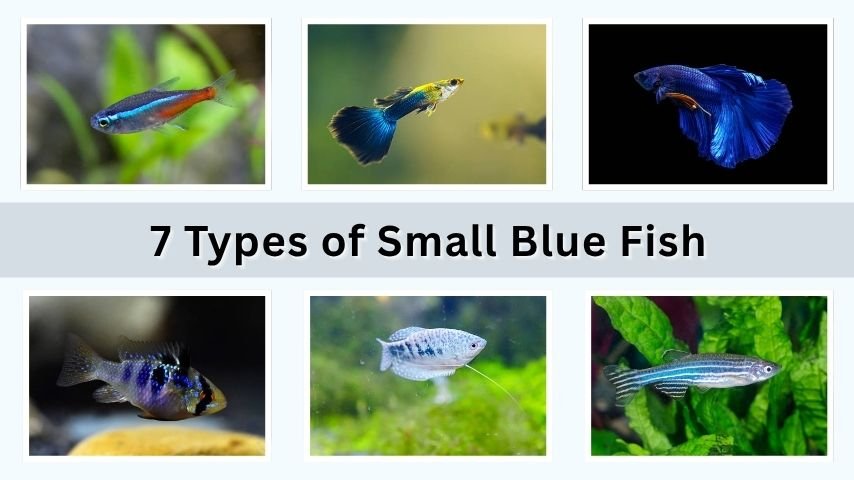
Small blue fish can make a freshwater aquarium look bright, peaceful, and colorful. Some have glowing blue stripes, while others show metallic blue bodies, blue fins, or soft bluish patterns. Popular choices include neon tetras, blue guppies, blue bettas, blue ram cichlids, blue gouramis, blue danios, and blue platies. Each fish has its own size, behavior, and care needs, so proper identification helps you choose the right species for your tank.
1. Neon Tetra
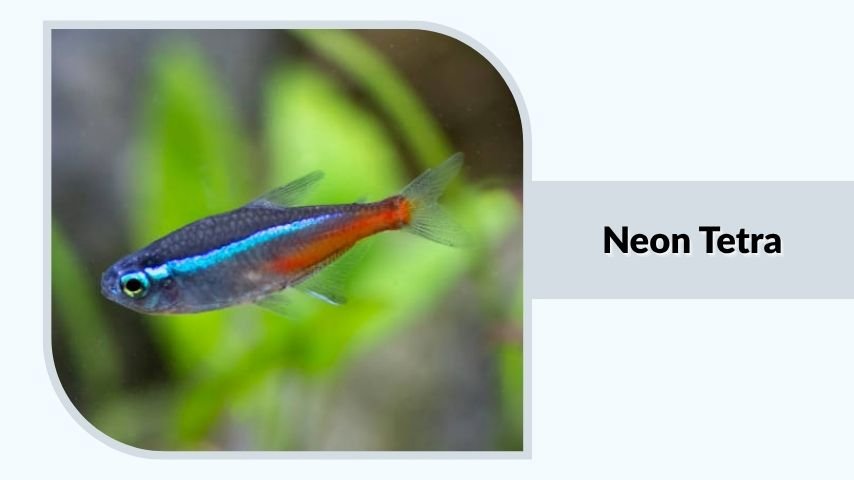
Neon tetra is one of the most popular small blue fish for freshwater aquariums. Its bright blue stripe, peaceful behavior, and tiny size make it a favorite choice for planted tanks and small community setups. This fish looks best in groups, where its glowing blue color becomes more noticeable as it swims with other neon tetras.
Identification
- Small freshwater schooling fish
- Bright neon-blue stripe from head to tail area
- Red stripe on the lower back half of the body
- Slim, torpedo-shaped body
- Usually grows around 1 to 1.5 inches
- Peaceful and active swimmer
- Best kept in groups of 6 or more
Appearance
The neon tetra has a shiny blue stripe that reflects light and gives the fish its famous glowing look. Its lower body has a red marking that starts around the middle and continues toward the tail. The body is small, slim, and slightly transparent, which makes the blue color stand out strongly in planted or darker aquariums.
Behavior
Neon tetras are peaceful schooling fish that feel safest in groups. They usually swim in the middle area of the tank and move together when comfortable. If kept alone or in very small numbers, they may become shy, stressed, or less colorful. A calm environment helps them show their best behavior.
Care Needs
Neon tetras need clean, stable water and a fully cycled aquarium. They do well in planted tanks with gentle filtration and hiding places. Sudden water changes or poor water quality can stress them, so regular maintenance is important. They should be kept with other peaceful fish that are not large enough to eat them.
2. Blue Guppy
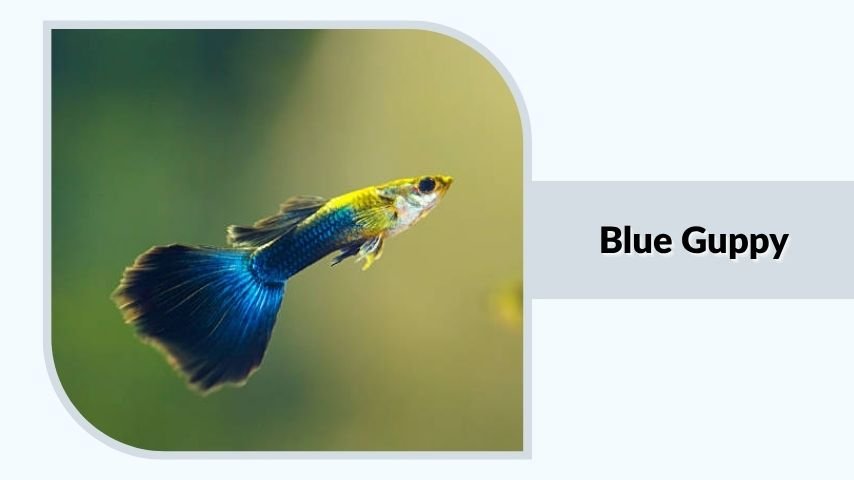
Blue guppy is a small, colorful freshwater fish known for its bright body color and decorative tail. It is active, peaceful, and easy to keep in many beginner aquariums. Male blue guppies are usually more colorful than females, making them popular for small tanks, planted tanks, and peaceful community aquariums.
Identification
- Small freshwater livebearer
- Blue body, blue tail, or blue pattern depending on variety
- Males are usually brighter and smaller than females
- Females are usually larger with duller colors
- Usually grows around 1.5 to 2 inches
- Active and peaceful community fish
- Gives birth to live fry instead of laying eggs
Appearance
Blue guppies come in many shades, from light sky blue to deep metallic blue. Some have blue tails only, while others show blue across the body and fins. Males often have long, flowing tails and stronger color patterns. Females are usually less colorful, but some female guppies can still show blue markings.
Behavior
Blue guppies are active fish that spend much of the day swimming in the middle and upper parts of the tank. They are social and usually peaceful with other small community fish. Males may chase females often, so a balanced group or male-only setup can help reduce stress in a small aquarium.
Care Needs
Blue guppies need clean, stable water and a properly cycled tank. They are hardy, but poor water quality can still cause disease or fin damage. A planted aquarium gives them shelter and helps fry survive. Because guppies breed quickly, the tank should not be overcrowded, especially in small setups.
3. Blue Betta
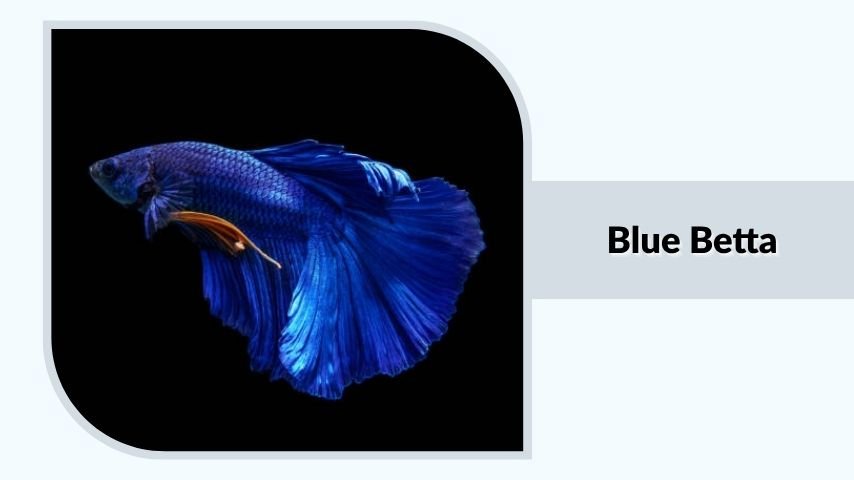
Blue betta is a beautiful small freshwater fish known for its bold color, flowing fins, and strong personality. It can be kept in a small tank, but it is usually best as a centerpiece fish rather than a busy community fish. Male bettas are especially colorful, while females may have shorter fins and a calmer look.
Identification
- Small freshwater labyrinth fish
- Bright blue, royal blue, steel blue, or turquoise body
- Long flowing fins in many male varieties
- Females usually have shorter fins
- Usually grows around 2 to 3 inches
- Can breathe air from the surface
- Often territorial, especially males
Appearance
Blue bettas come in many shades, including deep royal blue, metallic blue, turquoise, and blue-green. Their fins may be short, long, round, spiky, or flowing depending on the variety. Male bettas are usually more dramatic in color and fin shape, while females are often smaller with shorter fins but can still be very attractive.
Behavior
Blue bettas are intelligent and curious fish, but they can be territorial. Males should not be kept together because they may fight. A betta may live with some peaceful tank mates, but compatibility depends on the individual fish, tank size, and setup. Slow-moving tank mates and fin nippers should be avoided.
Care Needs
Blue bettas need warm, clean, stable water and gentle filtration. They do best in tanks with plants, hiding places, and easy access to the surface for breathing. Strong water flow can stress long-finned bettas. A heater is usually important because bettas are tropical fish and prefer steady warm temperatures.
4. Blue Ram Cichlid
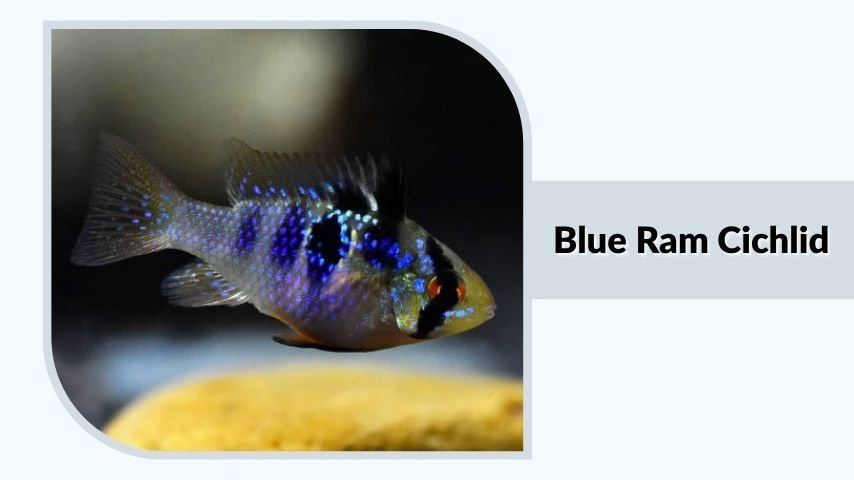
Blue ram cichlid is a small, colorful freshwater fish with bright blue spots, yellow tones, and a peaceful personality compared with many other cichlids. It is often chosen as a centerpiece fish for planted community tanks. Although it stays small, it needs clean, stable, warm water and should be kept with calm tank mates.
Identification
- Small freshwater cichlid
- Bright blue spots across the body and fins
- Yellow, gold, or orange color on the front body
- Black markings near the head and body
- Usually grows around 2 to 3 inches
- Peaceful compared with many cichlids
- Best for warm, stable aquariums
Appearance
The blue ram cichlid has a colorful body with electric blue speckles, yellow-gold shading, and dark markings. Its fins may show red, blue, and black details, making it one of the most attractive small blue fish. Healthy blue rams often look brightest in planted tanks with good water quality and low stress.
Behavior
Blue ram cichlids are generally peaceful, but they can become territorial when breeding. They usually stay near the lower and middle areas of the tank, exploring plants, rocks, and open spaces. They do best with calm fish that will not bully them or compete too aggressively for food.
Care Needs
Blue ram cichlids need warm, clean, and very stable water. They are more sensitive than many beginner fish, so they are best for aquariums that are already mature and well-maintained. A planted tank with hiding spots, soft substrate, and gentle tank mates helps them feel secure and show their best color.
5. Blue Gourami
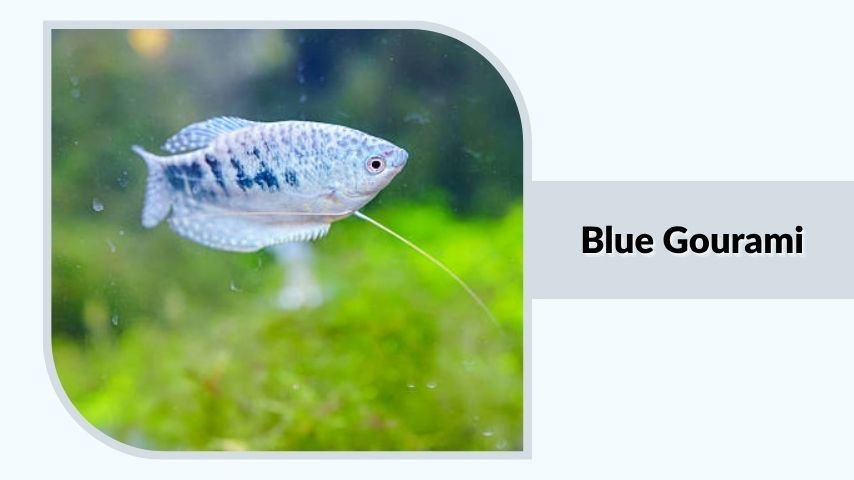
Blue gourami is a beautiful freshwater fish with a soft blue body and calm appearance. It is larger than many small blue fish, so it needs more space than tiny species like neon tetras or guppies. This fish can work well in peaceful community tanks when kept with suitable tank mates and enough hiding places.
Identification
- Freshwater labyrinth fish
- Pale blue to silvery-blue body
- Usually has dark spots on the body
- Long feeler-like pelvic fins
- Usually grows around 4 to 5 inches
- Can breathe air from the surface
- Semi-peaceful but may become territorial
Appearance
The blue gourami has a smooth blue or silver-blue body with dark markings that make it easy to recognize. Its long, thread-like pelvic fins are used to feel around the tank. Healthy blue gouramis often show a soft metallic shine, especially under good aquarium lighting.
Behavior
Blue gouramis are generally calm, but they can become territorial as they mature. Males may chase other gouramis or slow-moving fish if the tank is too small. They usually swim in the middle and upper areas of the aquarium and often visit the surface because they can breathe air.
Care Needs
Blue gouramis need clean, warm, stable water and enough swimming space. A planted tank with floating plants and hiding spots helps reduce stress. They should not be kept in very tiny tanks because they grow larger than many nano fish. Gentle filtration and peaceful tank mates are best for long-term care.
6. Blue Danio
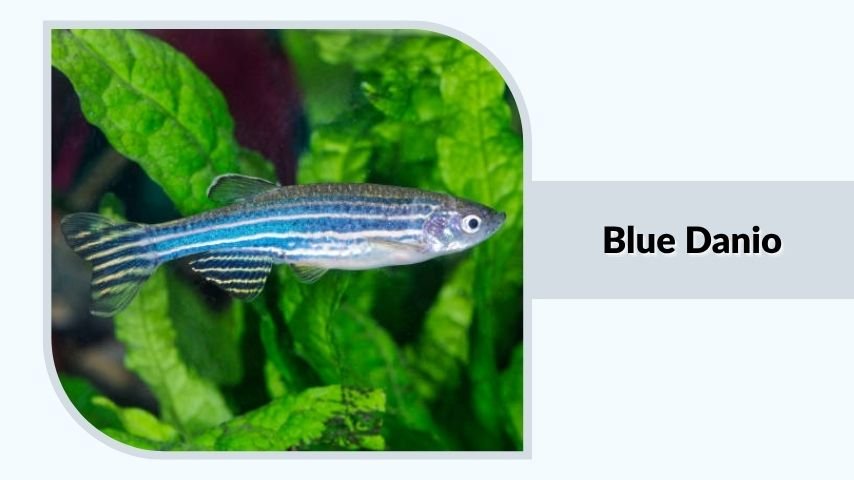
Blue danio is a small, active freshwater fish with a slim body and bluish color pattern. It is hardy, fast-moving, and often suitable for beginner community tanks. Because it is energetic, it needs open swimming space and should be kept with other peaceful fish that can handle its active nature.
Identification
- Small freshwater schooling fish
- Slim body with blue or bluish stripes
- Usually grows around 1.5 to 2 inches
- Very active and fast swimmer
- Best kept in groups of 6 or more
- Peaceful but energetic
- Often swims in the upper and middle tank areas
Appearance
Blue danios have a sleek body with blue tones or bluish horizontal striping, depending on the variety. Their body shape is narrow and built for quick movement. Under aquarium lighting, their blue markings can look shiny and more noticeable, especially when they swim together in a group.
Behavior
Blue danios are lively fish that spend much of their time swimming quickly around the tank. They are social and feel better in groups. If kept in too small a group, they may become nervous or chase other fish more often. Their active movement makes them better for tanks with enough open space.
Care Needs
Blue danios need clean, stable water and a well-filtered aquarium. They are hardy compared with many delicate fish, but they still need regular water changes and proper tank cycling. A mix of open swimming space and plants works well. They should be kept with peaceful tank mates that are not too slow or easily stressed.
7. Blue Platy
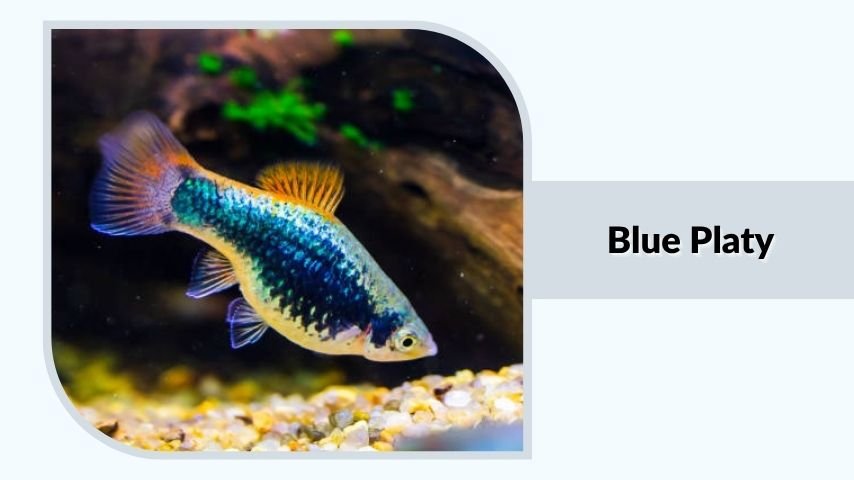
Blue platy is a small, peaceful freshwater fish that adds soft blue color to community aquariums. It is hardy, active, and easier to care for than many delicate species. Blue platies are good for beginner tanks, but they breed quickly, so the tank should be managed carefully to avoid overcrowding.
Identification
- Small freshwater livebearer
- Blue, bluish-gray, or metallic blue body
- Short rounded fins
- Usually grows around 2 to 3 inches
- Peaceful and active community fish
- Gives birth to live fry instead of laying eggs
- Hardy and beginner-friendly
Appearance
Blue platies have a rounded body shape with soft blue, silvery-blue, or metallic blue coloring. Some may have darker markings on the tail or fins, depending on the variety. Their simple body shape and bright color make them easy to notice in planted tanks and peaceful community setups.
Behavior
Blue platies are active and social fish that usually swim in the middle and upper areas of the tank. They are generally peaceful and mix well with other calm community fish. Males may chase females during breeding, so a balanced group and enough hiding places help reduce stress.
Care Needs
Blue plants need clean, stable water and a properly cycled aquarium. They are hardy, but they still need regular water changes and good filtration. A planted tank gives them shelter and helps young fry survive. Since they breed often, a small tank can become crowded quickly without population control.
FAQs
What is the most popular small blue fish for aquariums?
Neon tetra is one of the most popular small blue fish because of its bright blue stripe, peaceful nature, and small size. It works well in planted community tanks and looks best when kept in a group of 6 or more.
Which small blue fish is best for beginners?
Blue guppy, blue platy, and neon tetra are good beginner-friendly choices. They are peaceful, colorful, and easier to care for than more sensitive fish. However, they still need a properly cycled tank, clean water, and suitable tank mates.
Can small blue fish live together in one tank?
Yes, many small blue fish can live together if they are peaceful and have similar care needs. Neon tetras, blue guppies, and blue platies can work in community tanks, but territorial fish like blue bettas and blue gouramis need more careful planning.
Do small blue fish need a planted tank?
A planted tank is highly recommended because plants provide hiding places, reduce stress, and make blue colors stand out. Fish like neon tetras, blue rams, and blue bettas often look healthier and more comfortable in aquariums with live or artificial plants.
What should small blue fish eat?
Most small blue fish eat flakes, micro pellets, frozen foods, and live foods. The food should match the fish’s mouth size and diet. A varied diet helps improve color, growth, energy, and overall health in small freshwater aquarium fish.