
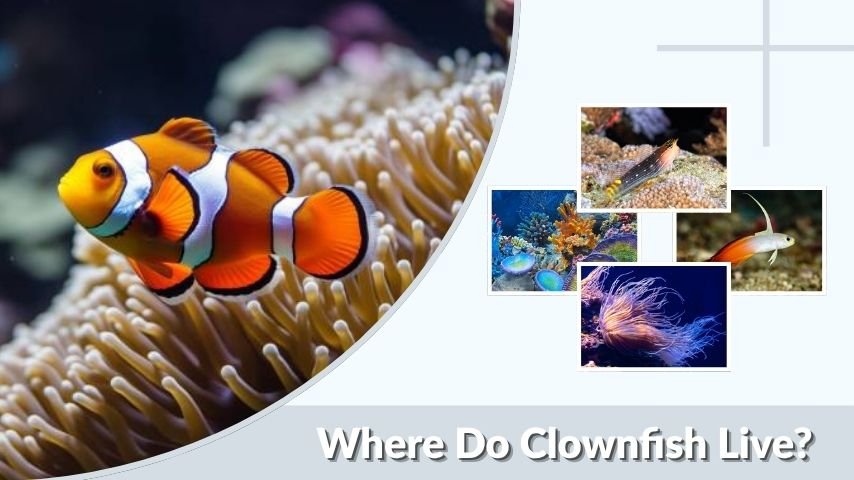
Clownfish live in warm saltwater habitats, mainly around coral reefs and sea anemones in the Indian and Pacific Oceans. They are famous for their close relationship with anemones, which protect them from many predators. This guide explains where clownfish live, what they live in, how long they live, and whether they can survive in freshwater or home aquariums.
Where Do Clownfish Live?
Clownfish live in tropical saltwater environments. In the wild, they are found in shallow reef areas where warm water, coral, and sea anemones provide food and shelter.
Where Clownfish Live in the Ocean
Clownfish are native to warm parts of the Indian Ocean and Pacific Ocean. They are commonly associated with coral reef regions, including areas near Southeast Asia, northern Australia, and the Great Barrier Reef.
They usually stay close to their host anemone rather than swimming long distances. This makes their home range much smaller than many other reef fish.
Do Clownfish Live in Coral Reefs?
Yes, clownfish live in coral reef ecosystems. Coral reefs provide shelter, food sources, and a rich habitat filled with small marine organisms.
However, clownfish are not usually found swimming freely across the entire reef. They often stay near a specific anemone, which becomes their main home and protection zone.
How Deep Do Clownfish Live?
Clownfish usually live in shallow ocean water where sunlight can reach coral reefs and anemones. They are most often found in reef areas that are not extremely deep.
This shallow habitat gives them access to food, warmth, and anemones that need enough light to survive.
What Do Clownfish Live In?
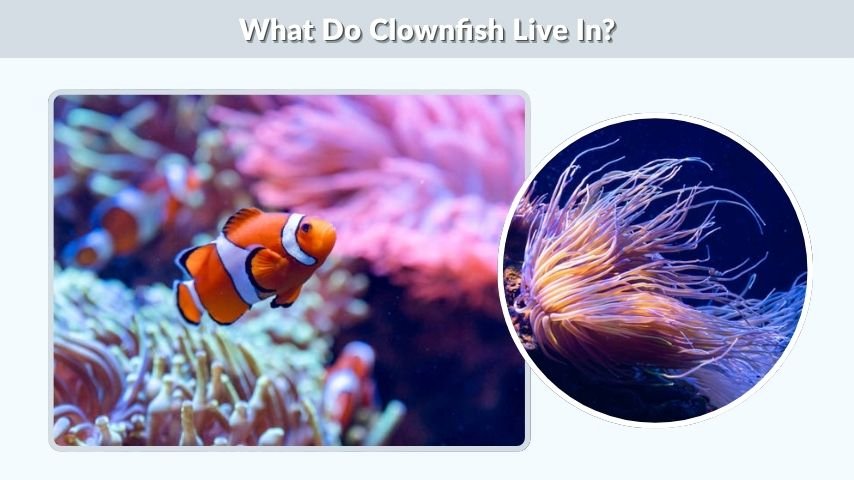
Clownfish are best known for living in sea anemones. Many people ask what plant clownfish live in, but anemones are animals, not plants.
Clownfish Live in Sea Anemones
Clownfish often live among the tentacles of sea anemones. The anemone provides protection because its stinging tentacles can scare away or harm many predators.
The clownfish also benefits the anemone by bringing movement, nutrients, and sometimes leftover food. This relationship is one of the most famous examples of cooperation in the ocean.
What Is the Thing Clownfish Live In?
The “thing” clownfish live in is usually a sea anemone. Anemones look like underwater flowers, but they are living animals related to jellyfish and corals.
Not every clownfish lives in the same type of anemone. Different clownfish species may prefer different host anemones.
Can Clownfish Live Without an Anemone?
Yes, clownfish can live without an anemone, especially in aquariums. Many tank-bred clownfish live healthy lives without one.
In a home tank, clownfish may choose a coral, rock, corner, or decoration as their territory. An anemone is not required for survival, but it is part of their natural wild habitat.
Why Do Clownfish Live in Anemones?
Clownfish live in anemones because the relationship helps them survive. The anemone protects the clownfish, and the clownfish can help the anemone in return.
Protection From Predators
Anemones have stinging tentacles that can hurt many fish. Clownfish can hide among these tentacles when predators come close.
This protection is especially important because clownfish are small and could be eaten by larger reef fish if they were not protected.
Why Can Clownfish Live in Anemones?
Clownfish can live in anemones because they have a special mucus coating on their bodies. This coating helps protect them from the anemone’s sting.
The clownfish may also slowly adjust to the anemone by touching it carefully before fully entering its tentacles.
How Clownfish Help Anemones
Clownfish may help anemones by moving water around their tentacles, chasing away some threats, and providing waste that acts as nutrients.
Their relationship is often described as mutualistic because both animals can benefit.
Clownfish Habitat Table
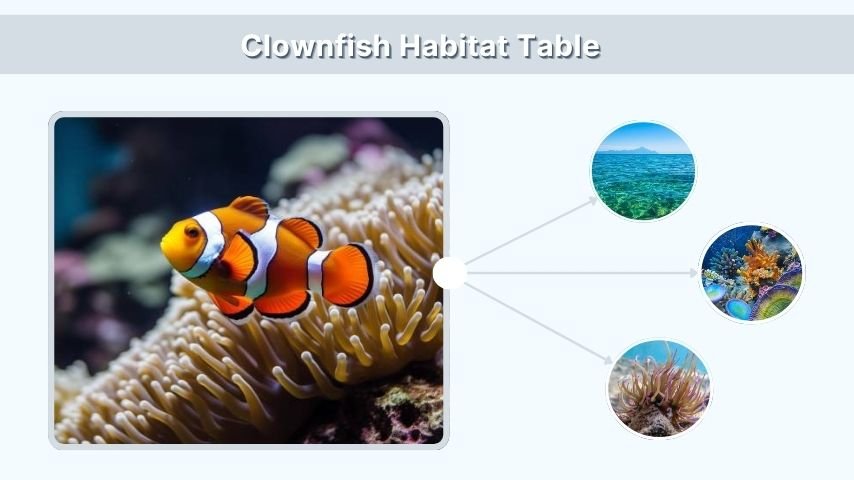
The table below summarizes where clownfish live and what they need in the wild or in aquariums.
| Habitat Feature | Wild Clownfish | Aquarium Clownfish |
|---|---|---|
| Water type | Saltwater | Saltwater only |
| Main habitat | Coral reefs | Marine aquarium |
| Shelter | Sea anemones | Rock, coral, or anemone |
| Temperature | Warm tropical water | Stable warm water |
| Social setup | Pair or small group | Alone, pair, or planned tank mates |
| Freshwater survival | No | No |
Can Clownfish Live in Freshwater?
Clownfish cannot live in freshwater. They are marine fish, which means their bodies are adapted to saltwater conditions.
Do Clownfish Live in Freshwater?
No, clownfish do not live in freshwater. They do not naturally live in rivers, lakes, ponds, or freshwater aquariums.
A freshwater tank does not have the right salinity or chemistry for clownfish. Placing a clownfish in freshwater would cause severe stress and could quickly kill the fish.
Can Clownfish Live in Tap Water?
No, clownfish cannot live in plain tap water. Even if tap water is treated to remove chlorine, it is still not saltwater.
Clownfish need properly mixed marine saltwater, stable salinity, a cycled tank, and saltwater aquarium equipment.
Can Clownfish Live in Brackish Water?
Clownfish should not be kept in brackish water. Brackish water is partly salty, but it is not the same as full marine saltwater.
For healthy long-term care, clownfish need a saltwater aquarium.
How Long Do Clownfish Live?
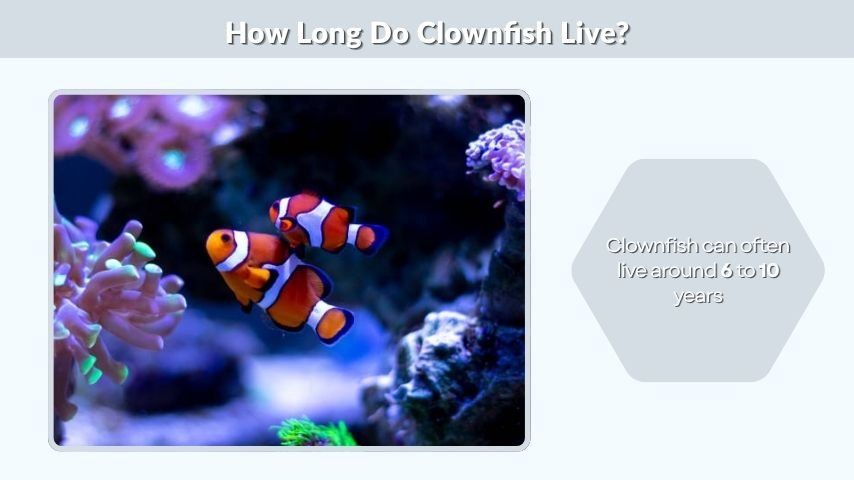
Clownfish can live for several years when they have a safe habitat, good food, and stable water conditions.
How Long Do Clownfish Live in the Wild?
In the wild, clownfish may live for several years, but their lifespan depends on predators, habitat quality, food availability, and environmental conditions.
Living close to an anemone helps protect them, but wild clownfish still face risks from larger fish, reef changes, and disease.
How Long Do Clownfish Live in Captivity?
In captivity, clownfish can often live around 6 to 10 years with proper care. Some may live longer in well-maintained aquariums.
Tank-bred clownfish often adapt well to aquarium life. Their lifespan depends on water quality, diet, tank size, stress, and disease prevention.
How Long Can Clownfish Live Without Food?
A healthy adult clownfish may survive for several days without food, but this is not ideal. Regular feeding is important for long-term health.
If you will be away, use an automatic feeder or ask someone experienced to feed small portions. Overfeeding while you are gone can be more dangerous than slightly underfeeding.
Can Clownfish Live Together?
Clownfish can live together, but their social behavior needs to be understood. They are not always peaceful with every clownfish.
Can Clownfish Live Alone?
Yes, a clownfish can live alone in a properly maintained saltwater aquarium. A single clownfish may choose a territory and live comfortably without another clownfish.
However, many aquarists keep clownfish as a pair because paired clownfish show interesting natural behavior.
Can 2 Clownfish Live Together?
Yes, two clownfish can often live together if introduced carefully. A pair is one of the most common clownfish setups.
Usually, one becomes the larger female and the other becomes the smaller male. A bonded pair can live together peacefully in a suitable tank.
Can 3 Clownfish Live Together?
Three clownfish are usually not recommended in small or average home aquariums. Two may pair off and bully the third.
Large clownfish groups are possible only in specialized setups and are better left to experienced saltwater aquarists.
What Fish Can Live With Clownfish?
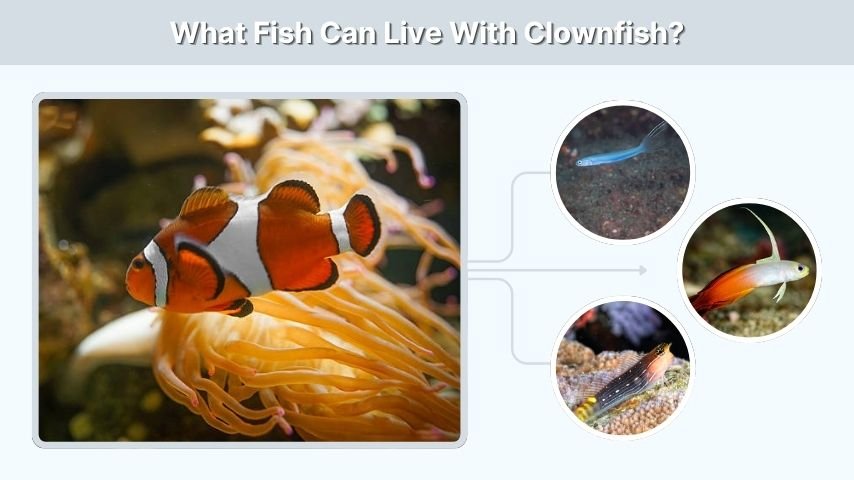
Clownfish can live with many peaceful saltwater fish. The best tank mates depend on tank size, temperament, and water needs.
Good Tank Mates for Clownfish
Suitable tank mates may include:
- Gobies
- Firefish
- Royal grammas
- Small blennies
- Cardinalfish
- Cleaner shrimp
- Snails
- Hermit crabs
These animals usually work well in peaceful saltwater community tanks.
Can Blue Tang and Clownfish Live Together?
A blue tang and clownfish can live together in a large saltwater aquarium, but a blue tang needs much more space than a clownfish.
Blue tangs are not suitable for small clownfish tanks. They need large aquariums, swimming room, and strong filtration.
Can Clownfish Live With Betta, Goldfish, or Guppies?
No, clownfish cannot live with bettas, goldfish, or guppies. Those are freshwater fish, while clownfish are saltwater fish.
They need completely different water conditions, so they should never be kept together.
FAQs
Where do clownfish live?
Clownfish live in warm saltwater habitats, mainly around coral reefs in the Indian and Pacific Oceans. They are usually found near sea anemones, which provide shelter and protection from many predators.
What do clownfish live in?
Clownfish often live in sea anemones. Anemones look like plants, but they are animals with stinging tentacles. In aquariums, clownfish can also live without an anemone and may choose rockwork, coral, or a tank corner as their territory.
Can clownfish live in freshwater?
No, clownfish cannot live in freshwater. They are saltwater fish and need marine water with proper salinity. A freshwater aquarium, bowl, or untreated tap water is not safe for clownfish.
How long do clownfish live?
Clownfish commonly live around 6 to 10 years in captivity with proper care. Their lifespan depends on water quality, diet, tank size, stress, and disease prevention. Some clownfish may live longer in excellent aquarium conditions.
Why do clownfish live in anemones?
Clownfish live in anemones because the anemone’s stinging tentacles protect them from many predators. Clownfish have a special mucus coating that helps protect them from the sting, allowing them to safely live among the tentacles.