
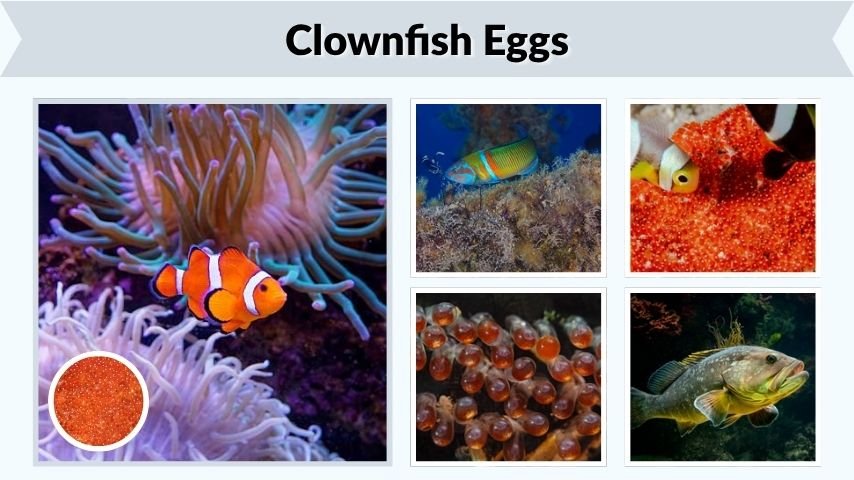
Clownfish eggs are a clear sign that a bonded pair feels comfortable in the aquarium. These tiny eggs usually appear on a flat surface near the pair’s chosen territory. Their color, shape, and development change as hatching gets closer. This guide explains what clownfish eggs look like, how many eggs clownfish lay, when they hatch, and why clownfish may eat their own eggs.
What Are Clownfish Eggs?
Clownfish eggs are the fertilized eggs laid by a female clownfish after she forms a breeding pair with a male. In aquariums, eggs are often laid on rock, tile, flowerpots, glass, or another flat surface near the pair’s home area.
Do Clownfish Lay Eggs?
Yes, clownfish lay eggs. They are egg-laying saltwater fish, not livebearers. The female lays the eggs, and the male fertilizes them shortly after.
After spawning, the male usually guards the eggs, fans them with his fins, and removes bad eggs. The female may also protect the area, but the male often does most of the direct egg care.
Where Do Clownfish Lay Their Eggs?
Clownfish usually lay eggs on a flat, cleaned surface close to their territory. In the wild, this may be near the base of an anemone. In aquariums, they may choose:
- A piece of live rock
- Aquarium glass
- A clay pot
- A ceramic tile
- A flat decoration
- A surface near their host coral or anemone
Many breeders provide a removable tile or pot so the eggs can be moved to a separate hatching tank.
What Do Clownfish Eggs Look Like?
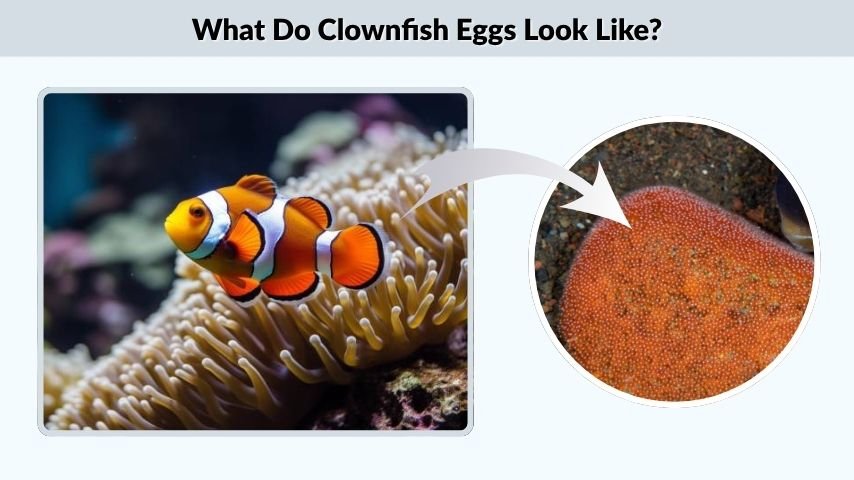
Clownfish eggs are small, oval-shaped, and attached closely together in a patch. At first, they may look orange, red, or bright yellow depending on the species and egg stage.
What Color Are Clownfish Eggs?
Fresh clownfish eggs are usually orange or reddish-orange. As they develop, they become darker. Near hatching, the eggs may look silver or gray because the baby clownfish eyes are visible inside.
This color change is normal and helps aquarists estimate when the eggs are close to hatching.
Clownfish Eggs on Glass
Sometimes clownfish lay eggs on aquarium glass. This can happen when the pair chooses a tank corner as their territory.
Eggs on glass are usually harder to remove safely than eggs on tile or rock. If you are not trying to raise the fry, it is usually best to leave the eggs alone and let the parents care for them.
Clownfish Eggs Stages
Clownfish eggs go through visible stages before they hatch. The exact timing depends on temperature, species, and water conditions, but many clownfish eggs hatch in about 6 to 10 days.
| Stage | What the Eggs Look Like | What It Means |
|---|---|---|
| Day 1–2 | Bright orange or red | Freshly laid and fertilized |
| Day 3–5 | Darker orange or brown | Embryos are developing |
| Day 6–8 | Gray or silver eyes visible | Eggs are getting close to hatching |
| Hatch night | Shiny eyes, darker eggs | Fry may hatch after lights go out |
Early Stage Eggs
In the first stage, clownfish eggs look bright and clean. The male clownfish usually fans them often to keep water moving over the eggs.
If some eggs turn white, cloudy, or fuzzy, they may be unfertilized or dead. The male may remove these eggs to protect the rest of the nest.
Developing Eggs
As the eggs develop, they become darker. You may notice the male spending more time near them. He may fan the eggs, pick at them gently, and chase away tank mates.
This behavior is normal. The male is usually cleaning the eggs and removing unhealthy ones.
Eggs Ready to Hatch
Clownfish eggs ready to hatch often look silver or shiny because the fry’s eyes are visible. The egg patch may appear darker overall.
Most clownfish eggs hatch after the lights go out. If you are trying to raise the fry, this is when you need a prepared hatching or rearing tank.
How Many Eggs Do Clownfish Lay?
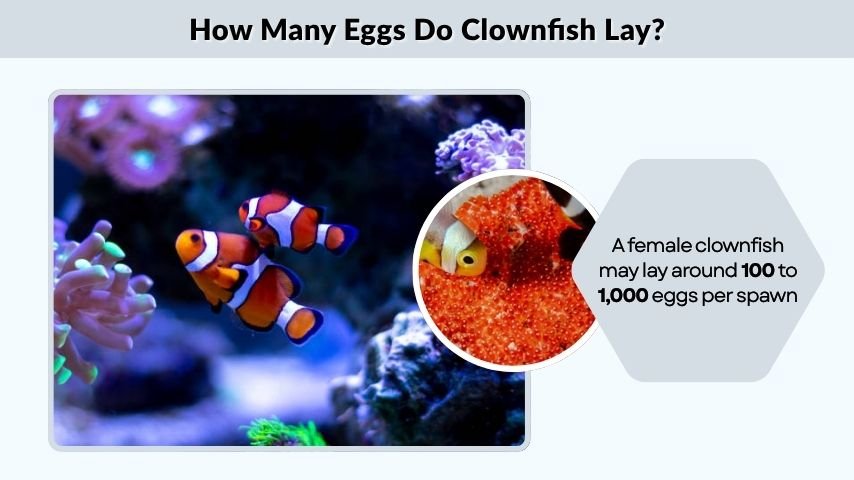
Clownfish can lay a few hundred eggs at a time, but the number varies. A young or new breeding pair may lay fewer eggs, while an experienced pair may lay much larger batches.
How Many Eggs Can a Clownfish Lay?
A female clownfish may lay around 100 to 1,000 eggs per spawn, depending on her size, age, species, health, and experience. Larger species or mature pairs may produce more eggs than younger pairs.
Not all eggs survive. Some may be unfertilized, eaten, damaged, or lost before hatching.
How Often Do Clownfish Lay Eggs?
A healthy breeding pair may lay eggs every 10 to 14 days when conditions are stable. Some pairs spawn regularly, while others may stop if they become stressed.
Good food, stable water, and a safe territory can encourage regular spawning.
How Long Do Clownfish Eggs Take to Hatch?
Clownfish eggs usually hatch in about 6 to 10 days. Warmer water may speed development slightly, while cooler water may slow it down.
Clownfish Eggs Hatching Time
Most clownfish eggs hatch at night. In many aquariums, hatching happens shortly after the lights turn off.
The fry are tiny and fragile when they hatch. They are attracted to light and can easily be pulled into filters or eaten by other fish.
Clownfish Eggs Not Hatching
If clownfish eggs are not hatching, several things may be wrong. The eggs may be unfertilized, damaged, infected, or affected by poor water conditions.
Common reasons eggs fail to hatch include:
- Unfertilized eggs
- Poor water quality
- Fungus or bacterial growth
- Inexperienced parents
- Low oxygen around the eggs
- Sudden changes in temperature or salinity
If the pair is new, failed batches are common. Many clownfish pairs improve after several spawning attempts.
How to Take Care of Clownfish Eggs
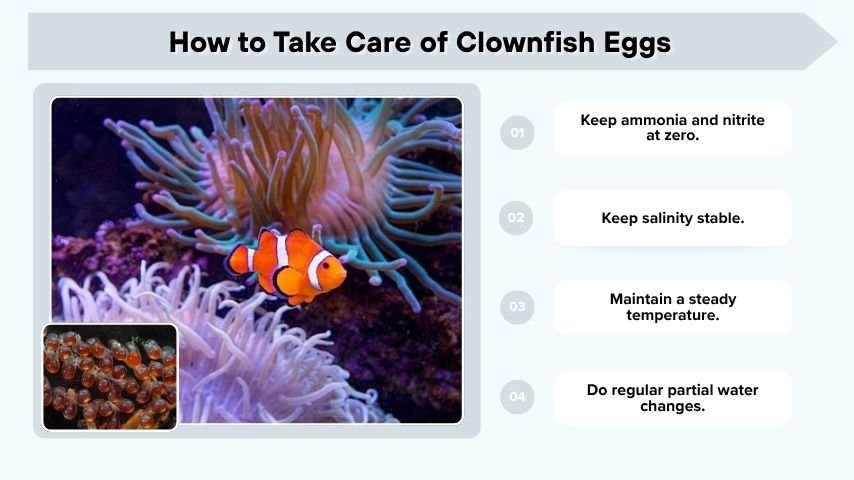
Clownfish parents often care for the eggs themselves. In a display tank, the main job is to keep conditions stable and avoid disturbing the pair.
Leave the Parents Alone
If your clownfish laid eggs, avoid touching the eggs or moving decorations unless you are prepared to raise the fry. Stress can cause the parents to abandon or eat the eggs.
Keep the tank routine steady. Sudden changes in lighting, water flow, or aquascape can disturb breeding behavior.
Keep Water Quality Stable
Stable water is essential for healthy clownfish eggs. Poor water quality can cause fungus, weak development, or egg loss.
To support clownfish eggs:
- Keep ammonia and nitrite at zero.
- Keep salinity stable.
- Maintain a steady temperature.
- Avoid aggressive tank mates near the nest.
- Do regular partial water changes.
- Feed the parents a nutritious diet.
- Avoid sudden changes before hatch night.
Good parent health often leads to stronger egg batches.
Should You Move Clownfish Eggs?
You should only move clownfish eggs if you know how to raise fry. Clownfish fry need special food and care after hatching.
If the eggs are on a removable tile or pot, breeders may move them to a separate hatching tank shortly before they hatch. If the eggs are on rock or glass, moving them can be difficult and risky.
How to Hatch Clownfish Eggs
Hatching clownfish eggs is possible, but raising the fry is the hard part. Baby clownfish are tiny and need very small live foods at first.
Prepare a Fry Tank
A fry tank should be ready before the eggs hatch. It should have clean saltwater, gentle aeration, and no strong filter intake that can pull in baby fish.
Many breeders use a simple bare-bottom tank because it is easier to clean and monitor.
Feed the Fry
Newly hatched clownfish fry usually need rotifers as their first food. They cannot eat regular pellets or flakes right away.
As they grow, they may be introduced to newly hatched brine shrimp and later small prepared foods. Without proper first foods, most fry will not survive.
Do Clownfish Eat Their Own Eggs?
Yes, clownfish may eat their own eggs. This behavior is common, especially with new breeding pairs.
Why Do Clownfish Eat Their Eggs?
Clownfish may eat eggs that are unfertilized, dead, infected, or unlikely to hatch. This helps keep the nest clean and protects healthy eggs from fungus or bacteria.
They may also eat eggs because of stress, poor water quality, lack of food, or inexperience. New pairs often eat early batches before they become better parents.
Do Female Clownfish Eat Their Eggs?
Female clownfish can eat eggs, but the male is usually more involved in egg care. The male fans, cleans, and guards the eggs.
If the female or male eats some eggs, it does not always mean there is a serious problem. They may simply be removing bad eggs.
How to Stop Clownfish From Eating Eggs
You cannot always stop egg eating, but you can reduce stress and improve egg survival.
Helpful steps include:
- Feed the pair high-quality food.
- Keep water parameters stable.
- Avoid tapping the glass.
- Keep aggressive fish away.
- Do not move the eggs unnecessarily.
- Keep a consistent lighting schedule.
- Give the pair a safe spawning area.
With time, many pairs become better at caring for their eggs.
What Eats Clownfish Eggs?
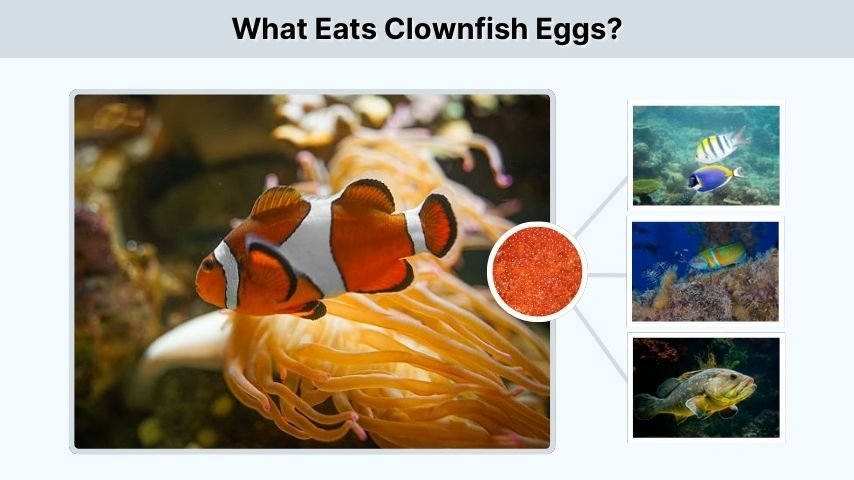
In the wild and in aquariums, clownfish eggs can be eaten by many animals. Because the eggs are small and attached to a surface, they are easy targets if the parents cannot protect them.
Do Barracudas Eat Clownfish Eggs?
Barracudas are predators and may eat small fish or eggs if they have the chance, but clownfish eggs are usually guarded near anemones or reef shelter. In most discussions, barracudas are more relevant as general predators than direct clownfish egg predators.
In aquariums, barracudas are not typical tank mates. Egg loss is more likely caused by parent behavior, other aquarium fish, crabs, shrimp, or poor egg health.
What Fish Eat Clownfish Eggs?
Other fish may eat clownfish eggs if they can reach the nest. Wrasses, damselfish, larger fish, and curious tank mates may pick at eggs.
This is why breeding pairs often become territorial. They may chase away fish that come too close to the egg patch.
Do Clownfish Die After Laying Eggs?
No, clownfish do not die after laying eggs. A healthy pair can lay eggs many times throughout their breeding life.
Spawning does require energy, so the parents need a nutritious diet and stable water. If the female looks thin or stressed, improve feeding and reduce tank stress.
FAQs
What do clownfish eggs look like?
Clownfish eggs are tiny, oval-shaped, and laid in a tight patch on a flat surface. Fresh eggs are usually orange or reddish. As they develop, they darken, and near hatching they may look silver because the fry’s eyes are visible.
How many eggs do clownfish lay?
Clownfish may lay around 100 to 1,000 eggs at a time. The number depends on the female’s size, age, species, health, and breeding experience. Young pairs often lay smaller batches than mature, experienced pairs.
How long do clownfish eggs take to hatch?
Clownfish eggs usually hatch in about 6 to 10 days. The timing depends on temperature, species, and tank conditions. Most eggs hatch at night, often shortly after the aquarium lights turn off.
Do clownfish eat their own eggs?
Yes, clownfish may eat their own eggs. They often eat eggs that are unfertilized, damaged, infected, or unlikely to hatch. Stress, poor water quality, inexperience, or lack of food can also cause egg eating.
What should I do if my clownfish laid eggs?
If your clownfish laid eggs, keep the tank stable and avoid disturbing the pair. The parents will usually guard and fan the eggs. If you want to raise the fry, prepare a separate fry tank and first foods such as rotifers before the eggs hatch.