
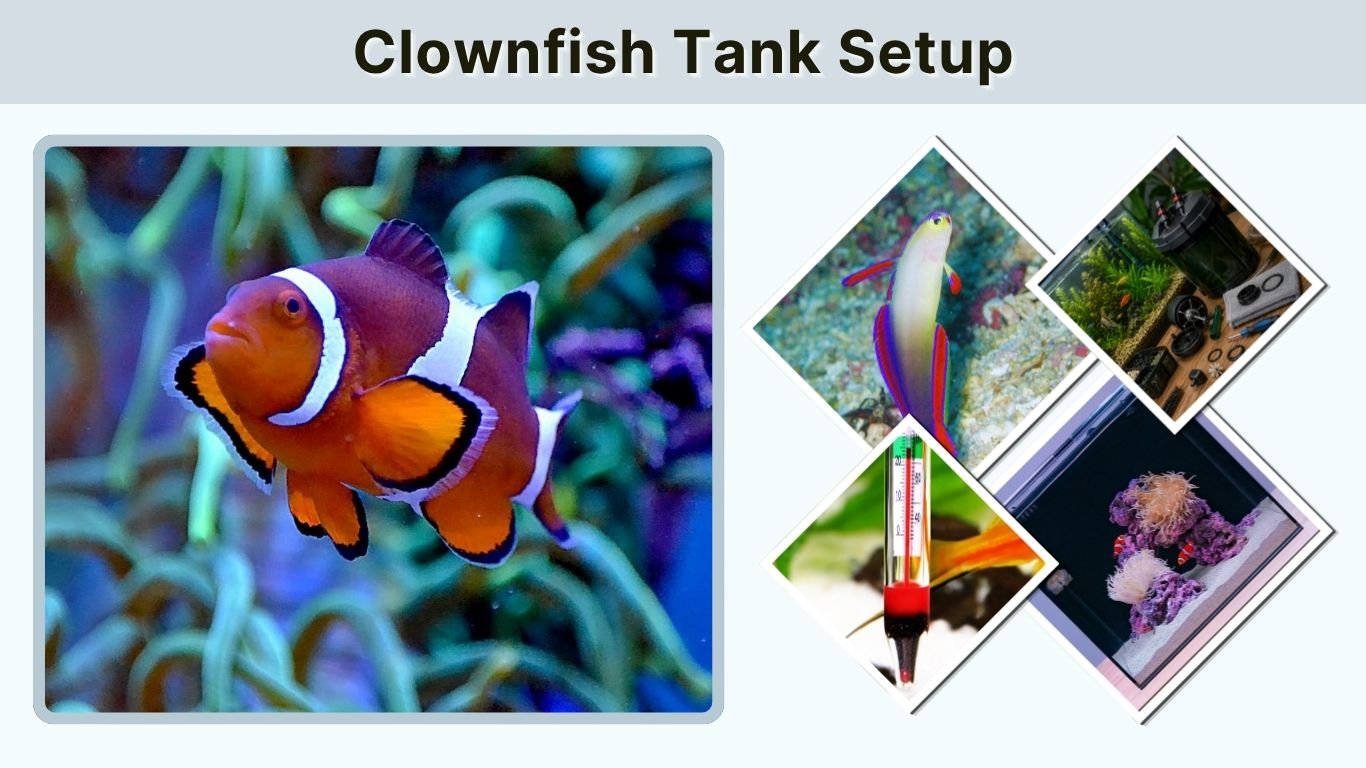
A clownfish tank is one of the most popular saltwater aquarium setups for beginners. Clownfish are hardy, colorful, and full of personality, but they still need stable saltwater conditions, the right tank size, and compatible tank mates. This guide explains clownfish tank size, setup, requirements, stocking, anemones, behavior, and common mistakes to avoid.
What Is a Clownfish Tank?
A clownfish tank is a saltwater aquarium designed to keep one clownfish, a pair of clownfish, or clownfish with peaceful saltwater tank mates. Most beginner clownfish tanks are small reef or fish-only saltwater aquariums.
Are Clownfish Freshwater or Saltwater Fish?
Clownfish are saltwater fish. They cannot live in a freshwater tank. If you are wondering, “Can I put clownfish in my freshwater tank?” the answer is no. Clownfish need marine saltwater, stable salinity, proper filtration, and saltwater aquarium equipment.
Freshwater tanks and saltwater tanks have very different water chemistry. A clownfish placed in freshwater would become severely stressed and would not survive.
Are Clownfish Good for Beginners?
Clownfish are one of the better beginner saltwater fish because many tank-bred clownfish are hardy and adapt well to aquarium life. Ocellaris clownfish and percula clownfish are especially popular for beginner tanks.
However, clownfish are not as simple as most freshwater beginner fish. They need a cycled saltwater tank, stable temperature, correct salinity, and regular water testing.
Clownfish Tank Size
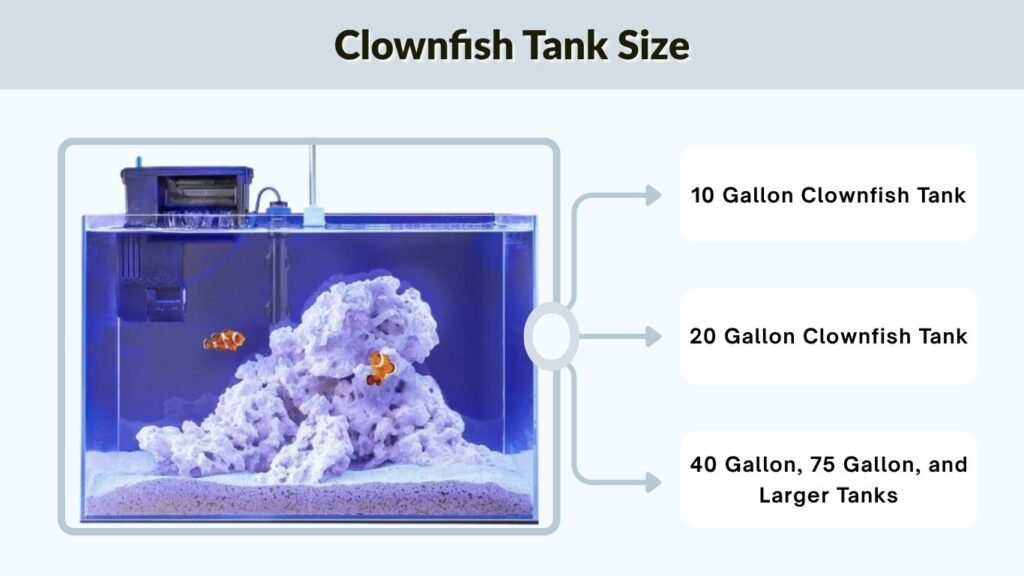
Choosing the right clownfish tank size is one of the most important decisions. A larger tank gives clownfish more swimming room and helps keep water conditions stable.
Minimum Tank Size for Clownfish
The minimum tank size for one clownfish is usually around 10 gallons, but a 20-gallon tank is a better choice for most beginners. A 20 gallon clownfish tank is easier to maintain because water quality changes more slowly than in a very small aquarium.
For a pair of clownfish, 20 gallons is commonly recommended as a practical minimum, especially for ocellaris or percula clownfish. Larger clownfish species may need more space.
10 Gallon Clownfish Tank
A 10 gallon clownfish tank can work for one small clownfish or a small pair of ocellaris clownfish in some cases, but it leaves little room for mistakes. Small saltwater tanks can change quickly in temperature, salinity, and water quality.
If you choose a 10 gallon clownfish tank setup, keep it simple. Avoid adding too many fish, use reliable equipment, and test the water often. A 10 gallon tank is not ideal for large clownfish species or active tank mates.
20 Gallon Clownfish Tank
A 20 gallon clownfish tank is one of the best beginner options. It gives enough room for a pair of clownfish, live rock, basic filtration, and possibly a few carefully chosen tank mates.
If you are asking how many clownfish in a 20 gallon tank, the safest answer is usually two clownfish. A bonded pair can live comfortably in a 20 gallon tank when the aquarium is properly maintained.
40 Gallon, 75 Gallon, and Larger Tanks
Larger tanks give more stocking options and more stable water. In a 40 gallon tank, you may keep a clownfish pair with several peaceful tank mates. In a 75 gallon tank, there is more room for a reef setup, extra fish, and corals.
However, having a larger tank does not always mean you should add more clownfish. Clownfish can become territorial, especially as they mature and pair off.
Clownfish Tank Size Guide
The table below gives a simple overview of common clownfish tank sizes and what they are best suited for.
| Tank Size | Best For | Recommended Clownfish Number | Notes |
|---|---|---|---|
| 5 gallons | Not recommended | 0 | Too small for long-term clownfish care |
| 10 gallons | Nano clownfish tank | 1–2 small ocellaris clownfish | Requires careful maintenance |
| 15 gallons | Small clownfish tank | 1–2 small clownfish | Better than 10 gallons, still limited |
| 20 gallons | Beginner clownfish tank | 2 clownfish | Best practical starter size |
| 30 gallons | Clownfish community tank | 2 clownfish plus limited tank mates | More stable and flexible |
| 40 gallons | Reef tank clownfish setup | 2 clownfish plus tank mates | Good for beginners with more space |
| 75 gallons | Larger reef aquarium | 2 clownfish plus more fish | Better for active tank mates |
Clownfish Tank Requirements
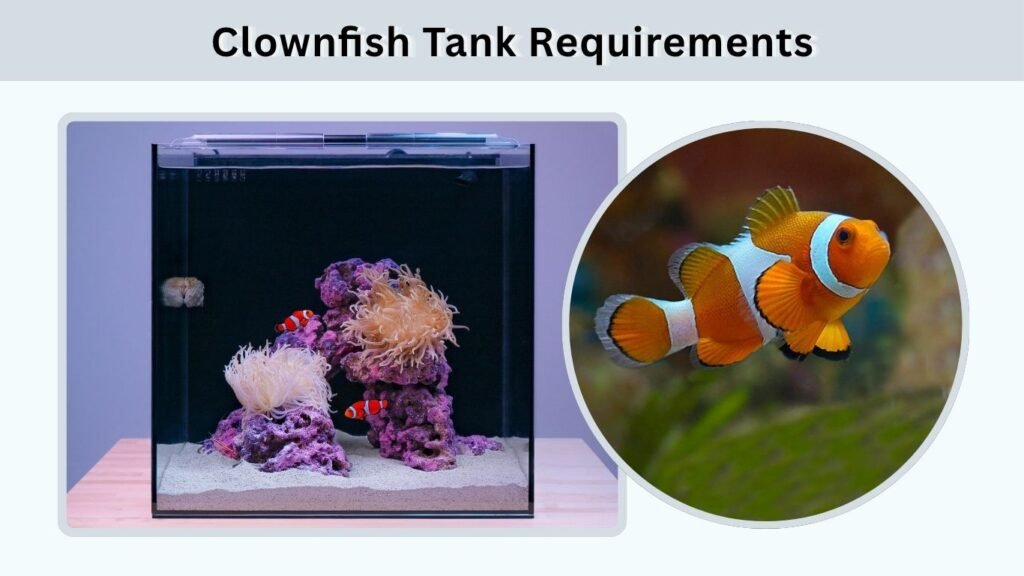
A healthy clownfish saltwater tank needs more than just water and decorations. Clownfish need stable marine conditions and a properly cycled aquarium.
Water Parameters
Clownfish are hardy compared to many saltwater fish, but poor water quality can still make them sick. The most important clownfish tank requirements include stable salinity, proper temperature, and low waste levels.
A basic clownfish tank should have:
- Stable saltwater salinity
- Warm tropical temperature
- Zero ammonia
- Zero nitrite
- Controlled nitrate
- Proper pH
- Good water movement
- Reliable filtration
Water testing is especially important in new tanks. Even if the water looks clear, ammonia or nitrite can still be dangerous.
Filtration and Water Movement
A clownfish tank needs a filter that can handle waste and keep the water moving. Many saltwater tanks use live rock as part of the biological filtration. Hang-on-back filters, sponge filters, canister filters, or sump systems may also be used depending on the tank size.
Water movement helps oxygenate the tank and prevents waste from settling in dead spots. Clownfish do not need extremely strong flow, but the tank should not be stagnant.
Heater and Thermometer
Clownfish are tropical marine fish, so they need warm, stable water. A reliable heater and thermometer help prevent temperature swings.
Avoid placing the tank near windows, air conditioners, heaters, or direct sunlight. Sudden temperature changes can stress clownfish and other saltwater fish.
Lighting
Fish-only clownfish tanks do not need intense reef lighting. However, if you plan to keep corals or anemones, lighting becomes much more important.
A clownfish and anemone tank usually needs stronger lighting than a simple fish-only setup. Beginners should research the needs of any anemone before adding one.
How to Set Up a Clownfish Tank
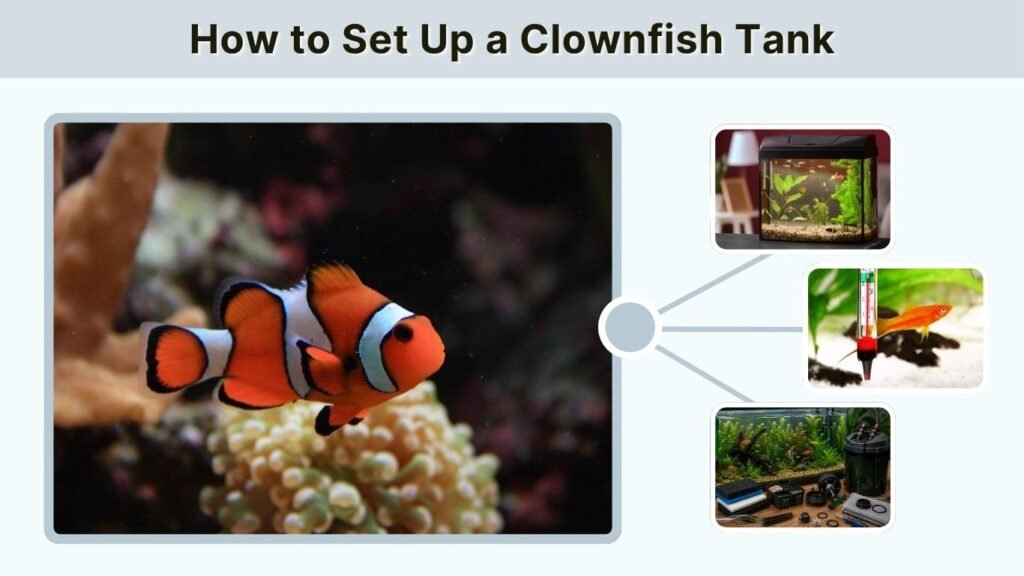
A clownfish tank setup should be planned before buying the fish. Rushing the setup is one of the most common beginner mistakes.
Step 1: Choose the Tank Size
Start with the largest tank you can reasonably maintain. A 20 gallon clownfish tank is a better beginner choice than a 5 or 10 gallon tank. Larger tanks are more forgiving and provide more room for stable water conditions.
Step 2: Add Saltwater Equipment
Basic equipment for a beginner clownfish tank includes:
- Aquarium tank
- Marine salt mix
- Hydrometer or refractometer
- Filter
- Heater
- Thermometer
- Powerhead or water pump
- Live rock or dry rock
- Sand or bare-bottom setup
- Water test kit
- Aquarium light
- Lid or mesh cover
A lid is important because clownfish can jump out of the tank, especially when stressed or startled.
Step 3: Mix Saltwater Correctly
Use marine salt mix made for saltwater aquariums. Do not use table salt. Mix saltwater in a separate container and check the salinity before adding it to the tank.
A refractometer is usually more accurate than a basic hydrometer. Keeping salinity stable is one of the most important parts of clownfish care.
Step 4: Cycle the Tank
Before adding clownfish, the aquarium must be cycled. Cycling allows beneficial bacteria to grow. These bacteria help process ammonia and nitrite, which are toxic to fish.
Do not add clownfish to a brand-new uncycled tank. A cycled tank should have no ammonia and no nitrite before fish are added.
Step 5: Add Clownfish Slowly
Once the tank is cycled and stable, add clownfish carefully. Tank-bred clownfish are often the best choice because they usually adapt better to aquarium life than wild-caught fish.
Acclimate the fish slowly and keep the lights low at first. Watch for heavy breathing, hiding, or unusual behavior after adding clownfish to the tank.
How Many Clownfish in a Tank?
Clownfish are social but territorial. In most home aquariums, the best number is either one clownfish or a pair of clownfish.
Can You Keep 2 Clownfish Together?
Yes, two clownfish can often live together, especially if they are introduced while young or purchased as a bonded pair. Over time, one usually becomes the larger female and the other becomes the smaller male.
A pair of clownfish is the most common setup for home aquariums.
Can You Have 3 Clownfish in a Tank?
Keeping 3 clownfish in a tank is usually risky. Two may pair off and bully the third. This can lead to stress, injury, or death.
Some experienced aquarists keep clownfish groups in very large harem tanks, but this is not recommended for beginners.
Can You Have 4 Clownfish in One Tank?
Four clownfish in one tank is usually not recommended unless the tank is very large and carefully managed. Two pairs of clownfish in one tank may fight over territory.
For most hobbyists, one pair of clownfish is the safest and most stable option.
Best Clownfish Tank Mates
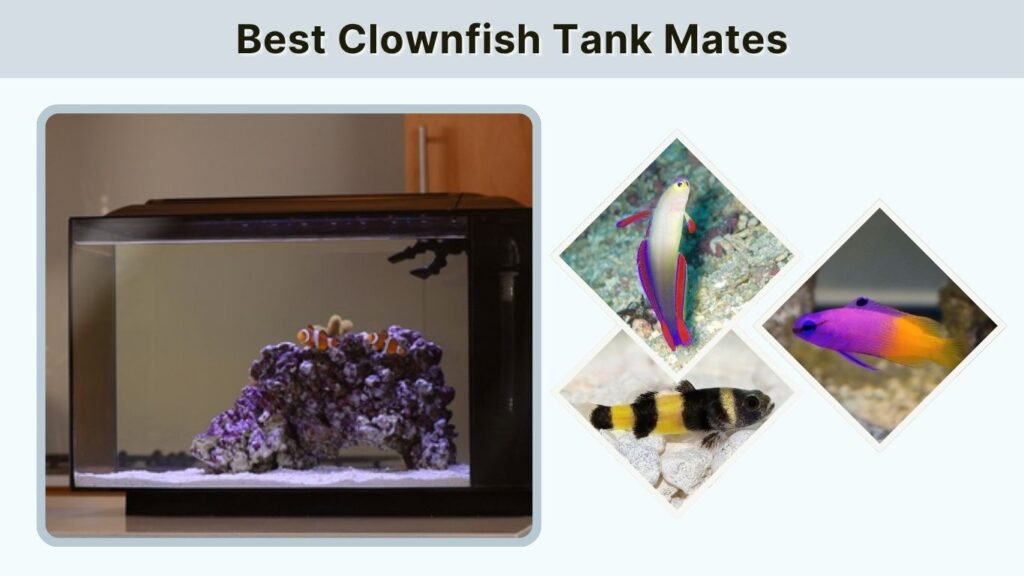
Clownfish can live with many peaceful saltwater fish, but tank size matters. A 20 gallon clownfish tank has limited space, while a 40 or 75 gallon tank allows more options.
Good Tank Mates for Clownfish
The best tank mates for clownfish are peaceful, reef-safe fish that do not compete too aggressively for space.
Good clownfish tank mates may include:
- Firefish
- Small gobies
- Royal gramma
- Tailspot blenny
- Watchman goby
- Small cardinalfish
- Cleaner shrimp
- Snails
- Hermit crabs
Always check adult size and temperament before adding any tank mate.
20 Gallon Clownfish Tank Mates
In a 20 gallon clownfish tank, stocking should stay light. A clownfish pair may be the main attraction. If the tank is stable, you may add one small peaceful fish or a small cleanup crew.
Good options may include a small goby, snails, hermit crabs, or cleaner shrimp. Avoid active swimmers or fish that need larger territories.
Tank Mates to Avoid
Some fish are not suitable for small clownfish tanks. Avoid large, aggressive, or fast-growing fish.
Tank mates to avoid in small clownfish tanks include:
- Blue tangs
- Large angelfish
- Triggers
- Lionfish
- Aggressive damselfish
- Large wrasses
- Predatory fish
- Other clownfish pairs
A blue tang and clownfish can live in the same large saltwater tank, but a blue tang is not suitable for a small clownfish tank.
Clownfish and Anemone Tank
Many people want a clownfish and anemone tank because clownfish are famous for living with anemones. However, an anemone is not required for clownfish.
Do Clownfish Need an Anemone?
No, clownfish do not need an anemone to survive in an aquarium. Tank-bred clownfish can live happily without one. They may host coral, rockwork, a powerhead corner, or another area of the tank.
Anemones are often harder to care for than clownfish. Beginners should not rush to add one.
When Should You Add an Anemone?
Anemones should usually be added only to mature, stable tanks. New tanks are often too unstable for anemones. They need strong lighting, stable water, and careful placement.
A clownfish anemone tank can be beautiful, but it is better for aquarists who already understand saltwater tank care.
Best Anemones for Clownfish
Bubble-tip anemones are among the most common choices for clownfish tanks. However, they still need strong lighting and stable water.
Even if you add an anemone, there is no guarantee your clownfish will use it. Some clownfish ignore anemones completely.
Clownfish Behavior in a New Tank
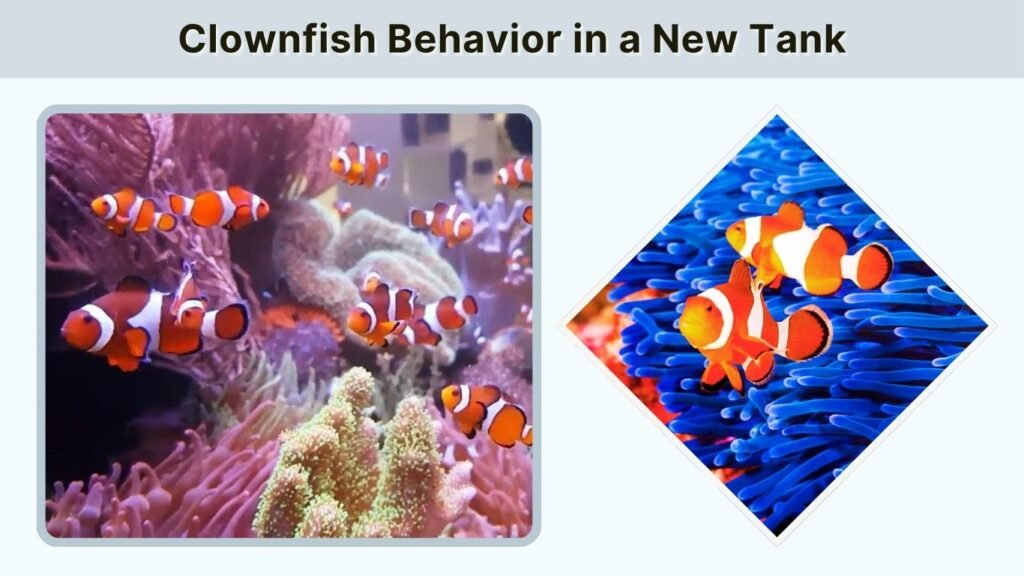
Clownfish behavior in a new tank can look strange to beginners. Some behaviors are normal, while others can signal stress.
Clownfish Staying in One Corner
A clownfish staying in the corner of the tank may simply be choosing a territory. New clownfish often stay near one area while they adjust.
However, if the fish is breathing heavily, not eating, or lying on the bottom, test the water immediately.
Clownfish at the Top of the Tank
A clownfish hanging out at the top of the tank may be normal if it has chosen that spot. But if the fish is gasping at the surface, the tank may have low oxygen, poor water quality, or high ammonia.
Check water movement, temperature, ammonia, nitrite, and salinity.
Clownfish Laying on the Bottom
Clownfish sometimes rest in odd positions, especially at night. However, clownfish laying on the bottom and breathing heavily can be a warning sign.
Possible causes include stress, poor water quality, disease, or improper salinity. Test the water before assuming the behavior is normal.
Clownfish Jumping Out of Tank
Clownfish can jump out of the tank. This may happen because of stress, aggression, sudden movement, or poor conditions.
Use a tight-fitting lid or mesh cover, especially on nano clownfish tanks.
Clownfish Breeding Tank
A clownfish breeding tank is different from a basic display tank. Clownfish may lay eggs in a home aquarium, especially if they form a bonded pair and feel secure.
Clownfish Eggs in Tank
Clownfish eggs are usually laid on a flat surface near the pair’s chosen territory. The male often guards and fans the eggs.
In a normal community tank, clownfish fry usually do not survive without special care. Raising clownfish fry requires a separate setup and tiny live foods.
Breeding Clownfish Tank Setup
A breeding clownfish tank setup should be stable, simple, and easy to clean. Many breeders use a bare-bottom tank, a spawning surface, stable filtration, and controlled feeding.
Raising fry requires extra tanks, rotifers, phytoplankton, and careful water quality. Breeding clownfish is possible, but it is more advanced than keeping a pair.
Tank-Bred Clownfish
Tank-bred clownfish are often the best option for home aquariums. They are raised in captivity and usually adapt better to aquarium food and tank conditions.
Why Choose Tank-Bred Clownfish?
Tank-bred clownfish are generally hardier, easier to feed, and better suited to aquarium life. They also reduce pressure on wild reef populations.
Many popular varieties, including ocellaris clownfish, percula clownfish, and designer clownfish, are available as tank-bred options.
Best Clownfish for Nano Tanks
For nano tanks, ocellaris clownfish and percula clownfish are usually better choices than larger species. Clarkii clownfish, maroon clownfish, and tomato clownfish are more aggressive and often need larger tanks.
A small clownfish tank should use smaller, peaceful clownfish species and minimal tank mates.
Common Clownfish Tank Mistakes
A clownfish tank can be beginner-friendly, but mistakes can quickly cause stress or illness. Good planning prevents most problems.
Using a 5 Gallon Tank
A 5 gallon clownfish tank is too small for long-term care. It is difficult to keep saltwater stable in such a small volume, and the fish has limited space.
If you want a small clownfish tank, choose at least 10 gallons, with 20 gallons being much better.
Adding Clownfish Too Early
Do not add clownfish to an uncycled tank. Clear water does not mean safe water. Ammonia and nitrite can harm fish even when the tank looks clean.
Cycle the tank first and test the water before adding fish.
Keeping Too Many Clownfish
More clownfish does not always mean a better tank. Clownfish become territorial, and extra clownfish may be bullied.
For most tanks, keep one clownfish or one pair.
Choosing the Wrong Tank Mates
Aggressive or oversized tank mates can stress clownfish. Small tanks make this problem worse because fish cannot avoid each other.
Choose peaceful saltwater fish that match your tank size.
Skipping Water Testing
Saltwater tanks need regular testing. Salinity, ammonia, nitrite, nitrate, pH, and temperature should be monitored.
Testing helps you fix problems before they become emergencies.
FAQs
What size tank does a clownfish need?
One small clownfish can live in a 10 gallon tank, but a 20 gallon tank is better for beginners. A pair of ocellaris or percula clownfish usually does well in a properly maintained 20 gallon tank with stable saltwater conditions.
Can clownfish live in a 5 gallon tank?
A 5 gallon tank is not recommended for clownfish. Saltwater conditions change quickly in very small tanks, making them harder to maintain. A 10 gallon tank is a better minimum, while 20 gallons is a safer beginner choice.
How many clownfish can live in a 20 gallon tank?
A 20 gallon tank is best for one clownfish or a pair of clownfish. Keeping three or more clownfish in a 20 gallon tank can lead to bullying and territorial aggression, especially when two fish form a pair.
Do clownfish need an anemone in a tank?
No, clownfish do not need an anemone to live in an aquarium. Many tank-bred clownfish do well without one. Anemones require strong lighting, mature tanks, and stable water, so beginners should research carefully before adding one.
What are the best clownfish tank mates?
Good clownfish tank mates include small peaceful saltwater fish such as gobies, firefish, royal grammas, and small blennies. Cleanup crew animals like snails, hermit crabs, and cleaner shrimp can also work well in many clownfish tanks.