
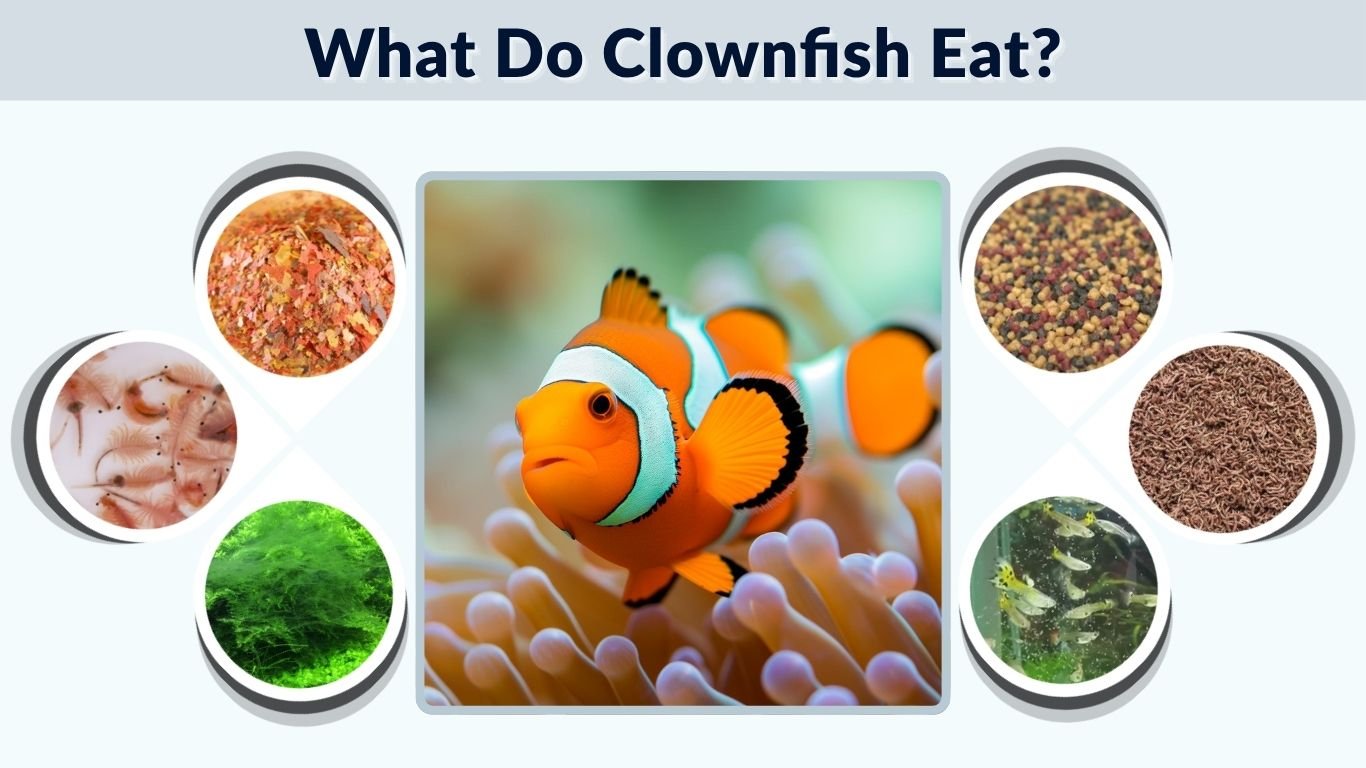
Clownfish eat a mix of meaty foods, algae, plankton, and small marine organisms. In home aquariums, they can eat high-quality pellets, flakes, frozen mysis shrimp, brine shrimp, and other marine foods. A healthy clownfish diet should be varied, balanced, and given in small portions. This guide explains what clownfish eat in the wild, in tanks, and why they may sometimes eat their own eggs.
What Do Clownfish Eat?
Clownfish are omnivores, which means they eat both animal-based and plant-based foods. Their natural diet includes tiny marine animals, algae, plankton, and leftover food from their host anemone.
Clownfish Are Omnivores
Clownfish are not strict meat-eaters or strict plant-eaters. They need protein for growth, energy, and color, but they can also eat small amounts of algae or plant-based foods.
In an aquarium, this means they should not be fed only one type of food every day. A varied diet helps support better health, stronger immune function, and brighter colors.
Common Foods Clownfish Eat
Clownfish can eat many different foods, especially when they are tank-bred. Most aquarium clownfish quickly learn to accept prepared fish food.
Common clownfish foods include:
- Marine pellets
- Marine flakes
- Frozen mysis shrimp
- Frozen brine shrimp
- Chopped seafood
- Copepods
- Krill
- Small plankton-based foods
- Spirulina flakes
- Nori or seaweed in small amounts
The best diet usually combines prepared food with occasional frozen or natural foods.
What Do Clownfish Eat in the Ocean?
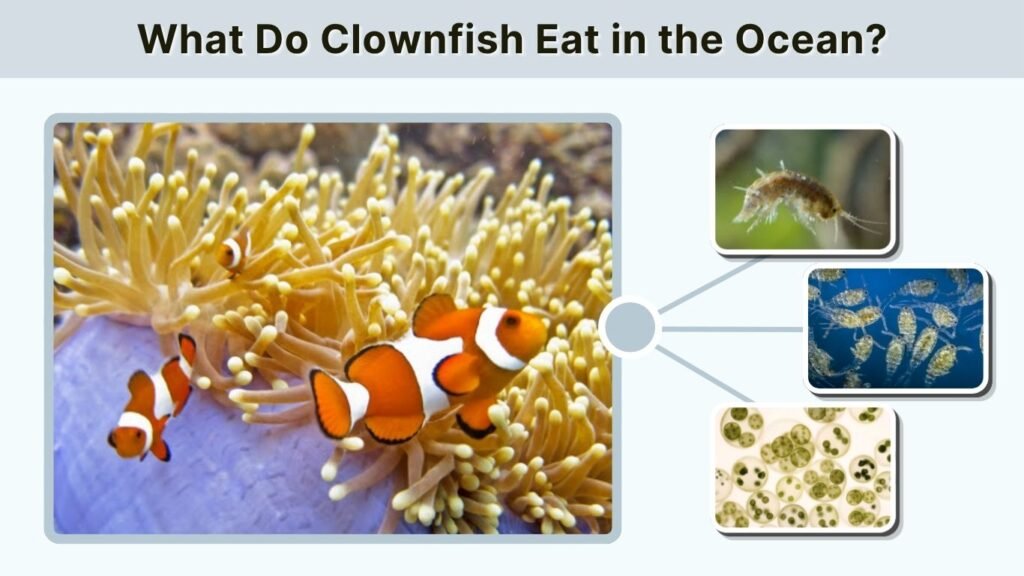
In the ocean, clownfish eat whatever small foods are available around their reef habitat. They often live near anemones, which provide protection from many predators.
Wild Clownfish Diet
Wild clownfish eat plankton, tiny crustaceans, algae, and small food particles floating in the water. They may also eat leftover scraps from their anemone’s meals.
Because clownfish are small, they do not hunt large prey. Instead, they feed on tiny organisms and bits of food they can easily swallow.
Do Clownfish Eat Plankton?
Yes, clownfish eat plankton in the wild. Plankton is one of the natural foods available in reef environments. It may include tiny animals, larvae, and other microscopic organisms.
In aquariums, clownfish do not need live plankton every day. However, plankton-based frozen or liquid foods can be used occasionally as part of a varied diet.
Do Clownfish Eat Algae?
Yes, clownfish may eat some algae. They are not major algae-eaters like some tangs, blennies, or snails, but algae can be part of their natural diet.
In a home tank, clownfish may nibble on algae or accept foods that contain spirulina. However, they should not be expected to clean algae from the aquarium.
What Do Clownfish Eat in a Tank?
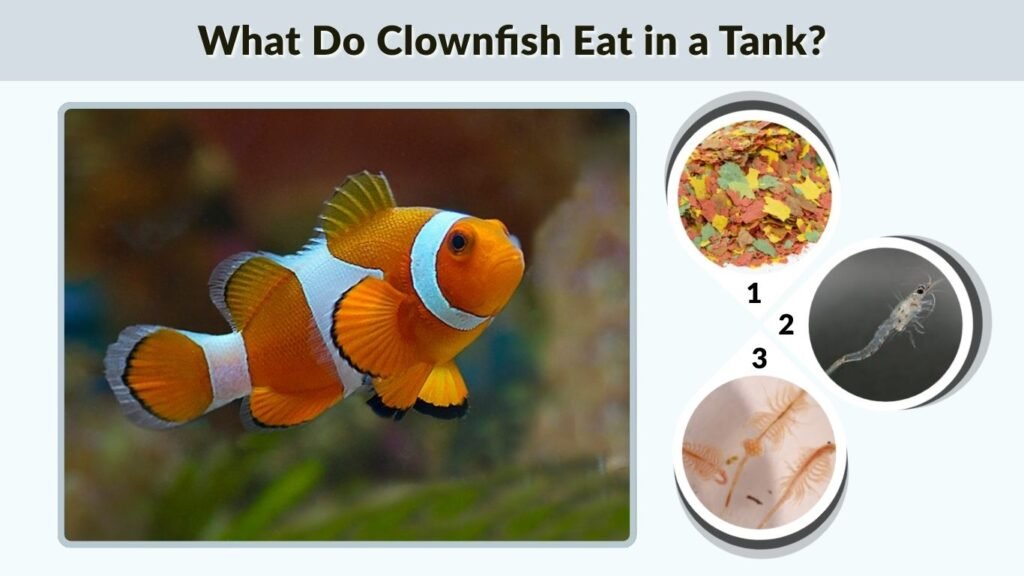
In a home aquarium, clownfish usually eat prepared marine foods. Tank-bred clownfish are especially easy to feed because they are often raised on pellets, flakes, and frozen foods.
Best Aquarium Foods for Clownfish
The best clownfish food is made for marine fish and contains a mix of protein, vitamins, and plant-based ingredients. High-quality pellets or flakes can be the main part of the diet.
Good aquarium foods for clownfish include:
- Small marine pellets
- Marine flake food
- Mysis shrimp
- Brine shrimp
- Finely chopped shrimp
- Krill pieces
- Spirulina-based flakes
- Copepod-based foods
Avoid feeding large pieces of food. Clownfish have small mouths, so food should be bite-sized.
Can Clownfish Eat Tropical Flakes?
Clownfish may eat tropical flakes, but they are not the best long-term food. Tropical flakes are usually made for freshwater fish, not marine fish.
A better choice is marine flake food or saltwater fish pellets. These foods are designed for the nutritional needs of saltwater fish. Tropical flakes may work in an emergency, but they should not be the main diet.
Can Clownfish Eat Bloodworms?
Clownfish can eat bloodworms occasionally, but bloodworms should not be their main food. They are more commonly used for freshwater fish.
For clownfish, marine-based foods such as mysis shrimp, brine shrimp, krill, copepods, and marine pellets are better choices. Occasional bloodworms may be accepted, but they are not ideal as a regular diet.
Clownfish Feeding Schedule
A good feeding schedule keeps clownfish healthy without polluting the tank. Overfeeding is one of the most common mistakes in saltwater aquariums.
How Often Should You Feed Clownfish?
Most clownfish can be fed once or twice per day. Young clownfish may benefit from smaller, more frequent meals, while adult clownfish usually do well with one or two small feedings daily.
Feed only what they can eat within a short time. If food falls to the bottom and stays there, you are likely feeding too much.
How Much Should You Feed?
Clownfish have small stomachs. A small pinch of flakes or a few pellets per fish is often enough, depending on the food size.
Use this simple feeding rule:
- Feed small portions.
- Watch how quickly they eat.
- Remove uneaten food when possible.
- Avoid large chunks.
- Skip extra feeding if the tank already has leftover food.
It is safer to feed lightly than to overfeed. Too much food can cause ammonia spikes, cloudy water, algae growth, and unhealthy fish.
Clownfish Diet Table
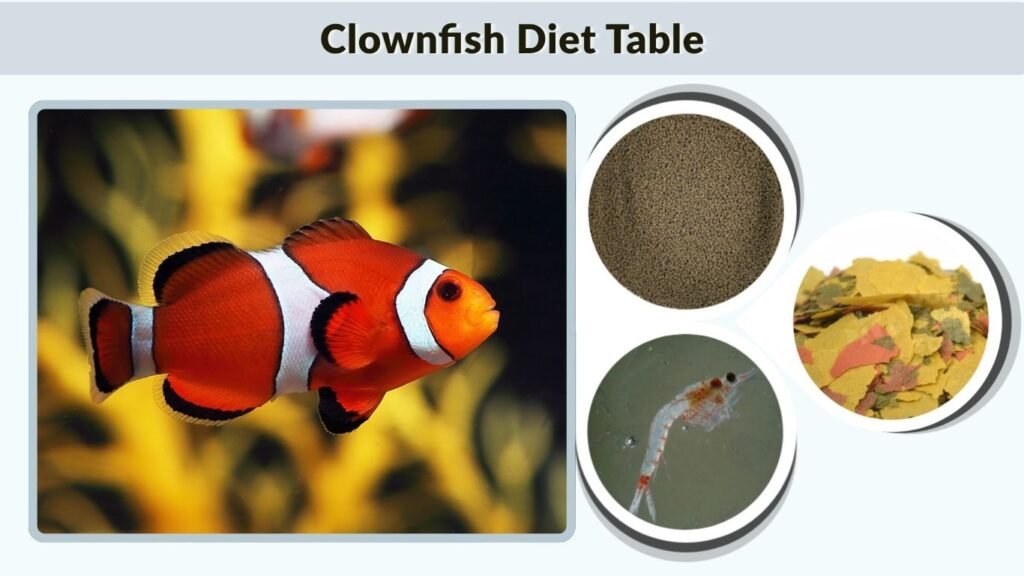
The table below shows common clownfish foods and how often they can be offered.
| Food Type | Good for Clownfish? | How Often to Feed | Notes |
|---|---|---|---|
| Marine pellets | Yes | Daily | Best staple food |
| Marine flakes | Yes | Daily | Choose saltwater formula |
| Mysis shrimp | Yes | 2–4 times weekly | Great protein source |
| Brine shrimp | Yes | Occasionally | Better as a treat |
| Krill | Yes | Occasionally | Use small pieces |
| Copepods | Yes | Occasionally | Natural marine food |
| Spirulina flakes | Yes | 1–3 times weekly | Adds plant-based nutrition |
| Nori/seaweed | Sometimes | Occasionally | Feed small amounts |
| Tropical flakes | Not ideal | Emergency only | Use marine food instead |
| Bloodworms | Sometimes | Rarely | Not a main clownfish food |
Do Clownfish Eat Seaweed or Nori?
Clownfish may eat seaweed or nori in small amounts, especially if it is offered in tiny pieces. However, they are not heavy seaweed grazers.
Is Seaweed Good for Clownfish?
Seaweed can add plant-based nutrients to a clownfish diet, but it should not replace protein-rich marine food. Clownfish still need animal-based foods such as mysis shrimp, brine shrimp, krill, and high-quality pellets.
If your clownfish ignores nori, that is normal. Some clownfish eat it, while others show little interest.
Do Clownfish Eat Seagrass?
Clownfish do not usually eat seagrass as a main part of their diet. In the wild, they are more likely to eat plankton, tiny crustaceans, algae, and small food particles.
For aquarium care, there is no need to feed seagrass. A balanced marine fish diet is enough.
Do Clownfish Eat Shrimp?
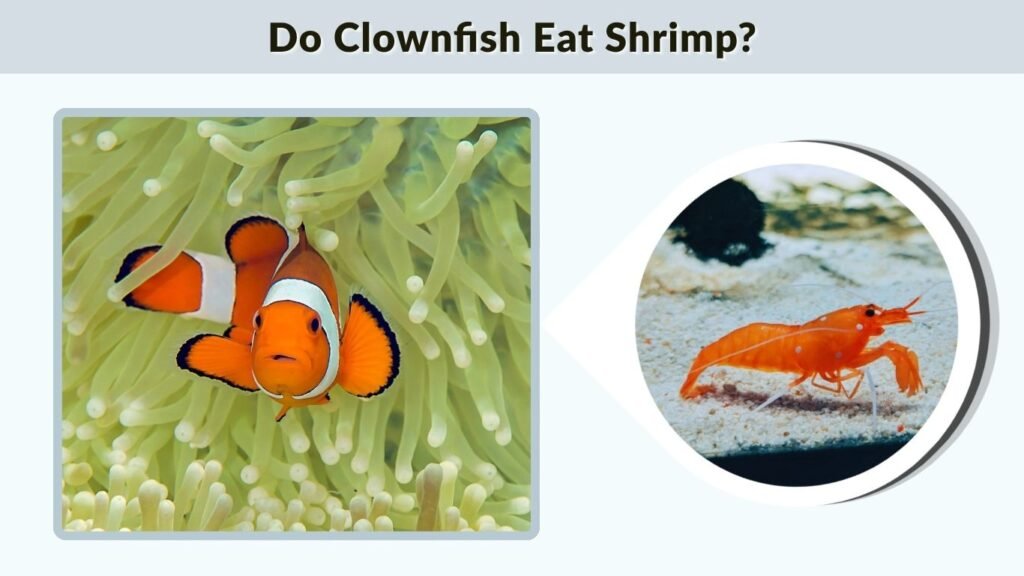
Clownfish can eat small shrimp-based foods. In fact, shrimp is one of the most common protein sources used in clownfish diets.
Do Clownfish Eat Brine Shrimp?
Yes, clownfish eat brine shrimp. Many clownfish enjoy frozen or live brine shrimp. However, adult brine shrimp are not always very nutritious unless they are enriched.
Brine shrimp is best used as a treat or part of a mixed diet, not the only food.
Do Clownfish Eat Mysis Shrimp?
Yes, mysis shrimp is one of the best frozen foods for clownfish. It is protein-rich and usually accepted quickly by aquarium clownfish.
Mysis shrimp can be fed a few times per week along with pellets, flakes, and other marine foods.
Do Clownfish Eat Cleaner Shrimp?
Clownfish usually do not eat adult cleaner shrimp. Cleaner shrimp are often kept in saltwater aquariums with clownfish. However, very tiny shrimp larvae or small meaty particles may be eaten.
If a clownfish is very large or the shrimp is very small, there may be some risk, but most clownfish and cleaner shrimp can live together peacefully.
Do Clownfish Eat Their Own Eggs?
Yes, clownfish may eat their own eggs in some situations. This can seem strange, but it is a known behavior in many fish species.
Why Do Clownfish Eat Their Eggs?
Clownfish may eat eggs that are unfertilized, damaged, infected, or unlikely to survive. This helps keep the nest clean and may prevent fungus or bacteria from spreading.
Sometimes clownfish also eat eggs when they are stressed, inexperienced, underfed, or disturbed too often. New breeding pairs may eat their first few batches of eggs before learning proper care.
Do Female Clownfish Eat Their Eggs?
Female clownfish can eat eggs, but the male usually does most of the egg care. The male often fans the eggs, cleans them, and removes bad eggs.
If either parent eats the eggs, it does not always mean something is wrong. It may happen because the eggs were not healthy or because the pair is still inexperienced.
How to Reduce Egg Eating
If you are trying to breed clownfish, stable care is important. Stress can make egg eating more likely.
To reduce the chance of clownfish eating their eggs:
- Keep water quality stable.
- Avoid disturbing the breeding pair.
- Feed a varied, nutritious diet.
- Keep lighting and routines consistent.
- Provide a clean spawning surface.
- Avoid aggressive tank mates near the nest.
Even with good care, some egg loss is normal.
Why Is My Clownfish Not Eating?
A clownfish not eating can be a sign of stress, illness, poor water quality, or unfamiliar food. New clownfish may also refuse food for a short time while adjusting.
Common Reasons Clownfish Stop Eating
Clownfish may stop eating for several reasons:
- New tank stress
- Poor water quality
- Wrong salinity
- Sudden temperature change
- Bullying from tank mates
- Illness or parasites
- Food pieces are too large
- They do not recognize pellets yet
If your clownfish is breathing fast and not eating, test the water immediately. Check ammonia, nitrite, nitrate, salinity, pH, and temperature.
What to Do If Clownfish Refuse Pellets
Some clownfish do not eat pellets right away. Try soaking pellets in tank water before feeding, or offer frozen mysis shrimp to trigger appetite.
Once the clownfish starts eating, slowly mix pellets with frozen food. Over time, many clownfish learn to accept pellets.
What Eats Clownfish?
Although the main topic is what clownfish eat, many people also wonder what eats clownfish. In the wild, clownfish are small fish and can be prey for larger animals.
Clownfish Predators
Clownfish may be eaten by larger fish and reef predators if they leave the protection of their anemone. Possible predators include larger fish, eels, groupers, and some sharks.
Barracudas can eat small fish, including clownfish, if they have the opportunity. However, clownfish often stay close to anemones for protection.
Do Anemones Eat Clownfish?
Healthy clownfish are usually protected from their host anemone’s sting by a special mucus coating. This allows them to live among the tentacles.
However, anemones can sometimes eat weak, sick, or unfamiliar fish. In rare cases, an anemone may catch a clownfish, especially if the fish is stressed or not properly acclimated.
Can You Eat Clownfish?
Technically, many fish can be eaten, but clownfish are not considered a normal food fish. They are small, ornamental reef fish kept mainly in aquariums.
Are Clownfish Safe to Eat?
Clownfish are not commonly eaten by people. They are too small to be useful as food and are valued as aquarium fish. There is also no good reason to eat them when many safer and more suitable food fish are available.
If the question comes from curiosity, the practical answer is simple: clownfish are not used as a regular seafood fish.
FAQs
What do clownfish eat in a fish tank?
Clownfish in a fish tank eat marine pellets, marine flakes, frozen mysis shrimp, brine shrimp, krill, copepods, and small amounts of spirulina or seaweed-based food. A varied diet is best because it provides protein, vitamins, and plant-based nutrients.
What do clownfish eat in the ocean?
In the ocean, clownfish eat plankton, tiny crustaceans, algae, and small food particles around coral reefs. They may also eat scraps left from their host anemone’s meals. Their natural diet is varied and includes both animal and plant-based foods.
Do clownfish eat algae?
Yes, clownfish may eat some algae, but they are not strong algae cleaners. They may nibble algae or eat spirulina-based foods in aquariums. Their main diet should still include marine pellets, flakes, mysis shrimp, and other protein-rich foods.
Do clownfish eat their own eggs?
Yes, clownfish may eat their own eggs, especially if the eggs are unfertilized, damaged, infected, or unlikely to survive. New breeding pairs may also eat eggs because of stress or inexperience. Stable water and a good diet can help reduce egg eating.
How often should clownfish eat?
Most clownfish should eat once or twice per day. Feed only small amounts they can finish quickly. Young clownfish may need smaller, more frequent meals, while adult clownfish usually do well with one or two light feedings daily.