
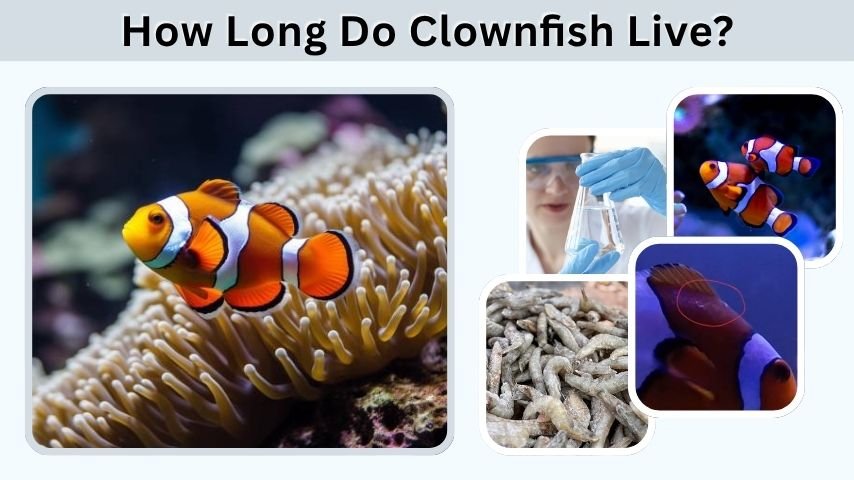
Clownfish can live much longer than many new aquarium owners expect. In a healthy tank, many clownfish live 10 years or more, while some may reach 15 to 20 years with excellent care. Their lifespan depends on species, water quality, diet, stress, disease prevention, and whether they live in captivity or the wild.
Quick Answer: How Long Do Clownfish Live?
Most clownfish live 6 to 10 years in the wild and 10 to 15 years in captivity when kept in a stable, well-maintained saltwater aquarium. Some hardy species, especially ocellaris and maroon clownfish, may live even longer in ideal tank conditions.
The exact answer depends on the clownfish type and its environment. A clownfish in the ocean faces predators, competition, storms, parasites, and food shortages. A clownfish in a home aquarium avoids many of those dangers, but only if the tank is properly cared for.
In general:
- Wild clownfish often live around 6 to 10 years.
- Captive clownfish often live around 10 to 15 years.
- Some well-kept clownfish may live 20 years or more.
- Poor water quality can shorten their life dramatically.
- Captive-bred clownfish usually adapt better to aquariums than wild-caught fish.
So, if you are asking “how long do clownfish live for,” the simple answer is: a healthy clownfish can be a long-term pet for more than a decade.
Clownfish Lifespan by Environment
Clownfish lifespan changes depending on where they live. A clownfish in a reef, a home tank, or a public aquarium may have very different survival chances.
| Environment | Average Lifespan | Main Factors |
| Wild ocean reef | 6–10 years | Predators, food supply, storms, disease |
| Home aquarium | 10–15 years | Water quality, diet, tank size, stress |
| Excellent captive setup | 15–20+ years | Stable parameters, low stress, strong care |
| Poor tank conditions | Less than 5 years | Ammonia, disease, aggression, bad diet |
How Long Do Clownfish Live in Captivity?
Clownfish usually live longer in captivity than in the wild when they are kept correctly. In a good aquarium, they do not have to escape predators, fight for every meal, or survive harsh reef changes. This gives them a better chance of reaching old age.
A captive clownfish may live 10 to 15 years in a stable tank. Some hobbyists report clownfish living close to 20 years, especially when the fish are captive-bred, fed well, and kept in a mature aquarium.
However, captivity does not automatically mean a longer life. A poorly maintained tank can be more dangerous than the ocean. High ammonia, unstable salinity, low oxygen, sudden temperature swings, and aggressive tank mates can all shorten a clownfish’s lifespan.
How Long Do Clownfish Live in a Tank?
In a tank, clownfish commonly live 10 years or more when their basic needs are met. The most important part is stability. Clownfish are hardy compared with many marine fish, but they still need clean saltwater and a consistent environment.
A healthy clownfish tank should have:
- Stable salinity suitable for marine fish
- Zero ammonia and nitrite
- Low nitrate
- Proper filtration and water movement
- A heater to keep temperature steady
- Hiding places or live rock
- Peaceful tank mates
- A varied marine diet
A clownfish in your tank may live much longer if you avoid sudden changes. Many clownfish die early not because they are fragile, but because the tank is new, unstable, overcrowded, or poorly cycled.
How Long Do Clownfish Live in an Aquarium?
The phrase “in an aquarium” usually means the same as “in a tank,” but aquarium quality matters a lot. A mature saltwater aquarium gives clownfish a better chance of living a full life.
Clownfish do not need an extremely large aquarium, but they do need enough room to establish territory. A pair of clownfish can become aggressive if the tank is too cramped or if other fish invade their space. Stress from constant fighting can weaken their immune system and reduce lifespan.
A well-planned aquarium helps clownfish live longer by keeping stress low and water quality high. Regular testing, partial water changes, and careful feeding are simple habits that make a big difference.
How Long Do Clownfish Live in the Wild?
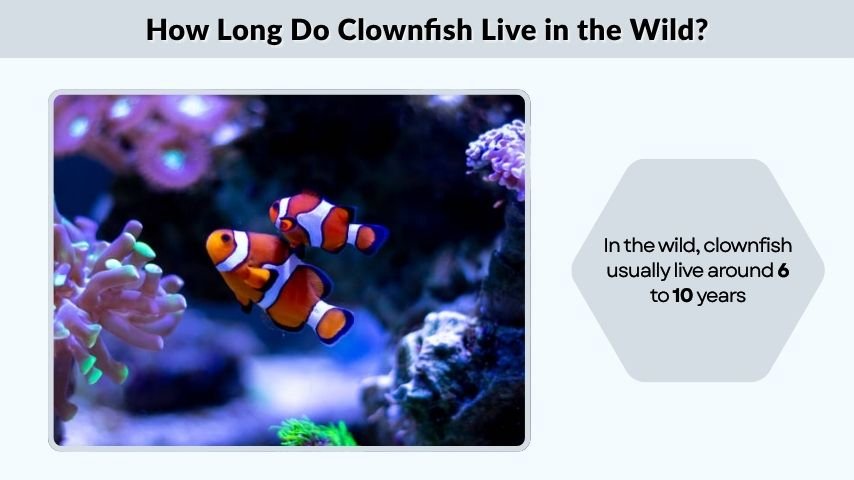
In the wild, clownfish usually live around 6 to 10 years, although some may live longer. Their natural home is the warm reef environment of the Indian and Pacific Oceans, where many clownfish form close relationships with sea anemones.
Wild clownfish face more daily danger than captive fish. Even with an anemone for protection, they still deal with predators, parasites, disease, reef damage, and food competition. Young clownfish are especially vulnerable before they find a safe host anemone or territory.
How Long Do Clownfish Live in the Ocean?
In the ocean, clownfish survival depends heavily on habitat quality. A clownfish living in a healthy reef with a protective anemone has a better chance than one in a damaged or crowded reef.
Ocean conditions that affect lifespan include:
- Predator pressure
- Availability of host anemones
- Water temperature changes
- Coral reef health
- Food availability
- Disease and parasites
- Human impact on reef ecosystems
Clownfish are not open-water swimmers. They usually stay close to their host anemone or a small territory. This behavior helps protect them, but it also means their survival depends on the condition of that local reef area.
How Long Do Clownfish Live in Anemones?
Clownfish that live in anemones often have better protection than clownfish without a host. The anemone’s stinging tentacles help keep many predators away, while the clownfish helps clean and defend the anemone.
However, an anemone does not guarantee a longer life. The clownfish still needs enough food, clean water, and a stable reef. In aquariums, clownfish can live long lives even without an anemone. Many captive-bred clownfish will host in corals, artificial decorations, or even a corner of the tank.
For home aquariums, adding an anemone is not required for clownfish lifespan. In fact, anemones can be harder to care for than clownfish, so beginners should not add one unless their tank is mature and stable.
Lifespan by Clownfish Species
Different clownfish species can have slightly different lifespans. Care quality still matters more than species, but some types are known for being especially hardy.
How Long Do Ocellaris Clownfish Live?
Ocellaris clownfish are one of the most popular clownfish species. They are often called common clownfish or false percula clownfish. In captivity, ocellaris clownfish commonly live around 10 to 15 years, and some may live longer with excellent care.
They are popular because they are hardy, peaceful compared with some other clownfish, and widely available as captive-bred fish. Captive-bred ocellaris clownfish usually adapt well to aquarium life, which can improve their chances of living longer.
How Long Do Percula Clownfish Live?
Percula clownfish look very similar to ocellaris clownfish. They usually live around 8 to 12 years in captivity, although some can live longer in excellent conditions.
Percula clownfish may be slightly more sensitive than ocellaris clownfish, depending on the individual fish and source. Choosing a healthy captive-bred percula and giving it a stable tank can help it reach its full lifespan.
How Long Do Maroon Clownfish Live?
Maroon clownfish are larger and more aggressive than many other clownfish. With proper care, they can live 10 to 15 years or more in captivity. Some may reach 20 years in very good conditions.
Because maroon clownfish can become territorial, tank size and tank mate selection are very important. A stressed maroon clownfish or one kept with unsuitable fish may not live as long. They are beautiful, hardy fish, but they are better for aquarists who understand their aggressive nature.
How Long Do Tomato Clownfish Live?
Tomato clownfish are hardy and can live around 10 years or more in captivity. Like maroon clownfish, they can become territorial as they mature.
They need a stable marine aquarium, a good diet, and enough room to claim territory. Tomato clownfish are often recommended for aquarists who want a tough clownfish species but are prepared for a more assertive personality.
How Long Do Clarkii Clownfish Live?
Clarkii clownfish are adaptable and hardy. In captivity, they may live around 10 to 15 years with good care. They are active, bold, and usually larger than ocellaris clownfish.
Clarkii clownfish can be a good choice for larger community saltwater tanks, but they should not be kept with very timid fish in a small aquarium. Reducing aggression and stress helps them live longer.
How Long Do Black Clownfish and Midnight Clownfish Live?
Black clownfish and midnight clownfish are usually color varieties of ocellaris clownfish. Their lifespan is similar to regular ocellaris clownfish, often around 10 to 15 years in captivity.
Their color does not usually change their lifespan. What matters most is genetics, health at purchase, tank stability, diet, and long-term care.
What Affects How Long Clownfish Live?
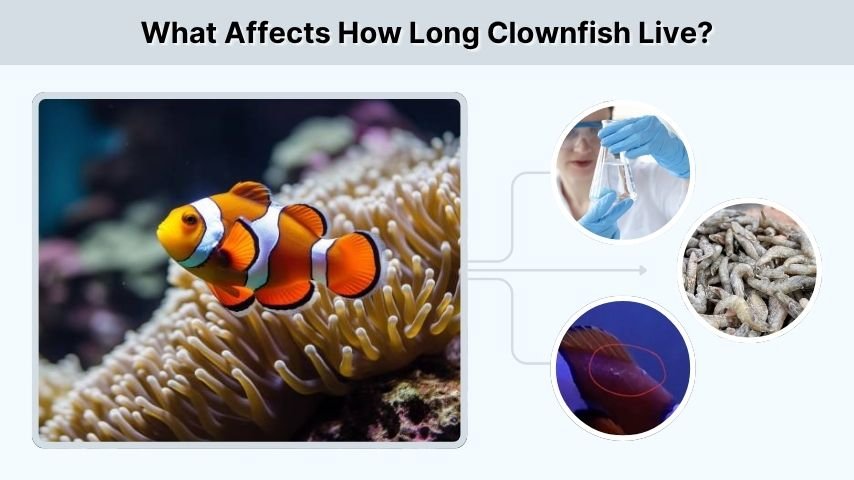
Clownfish longevity is not random. Most early deaths in aquariums are connected to stress, poor water conditions, disease, or unsuitable tank setups.
Water Quality
Water quality is the biggest factor in clownfish lifespan. Saltwater fish are sensitive to ammonia and nitrite, even if clownfish are considered hardy.
To protect your clownfish:
- Cycle the tank before adding fish.
- Test ammonia, nitrite, nitrate, pH, and salinity.
- Do regular partial water changes.
- Avoid overfeeding.
- Use proper filtration.
- Keep temperature stable.
Clean, stable water helps prevent stress and disease. A clownfish living in poor water may survive for a while, but its immune system will weaken over time.
Diet and Feeding
Clownfish are omnivores, which means they eat both meaty and plant-based foods. In an aquarium, they do best with a varied diet.
Good clownfish foods include:
- Marine pellets
- Frozen mysis shrimp
- Brine shrimp
- Chopped seafood
- Spirulina-based foods
- High-quality flakes
- Occasional vitamin-enriched foods
Feed small portions instead of large meals. Overfeeding can pollute the tank and cause water quality problems. A balanced diet supports color, energy, immune health, and long lifespan.
Stress and Aggression
Stress can shorten a clownfish’s life. Common stress sources include bullying, overcrowding, sudden tank changes, poor water quality, and incompatible tank mates.
Clownfish can also be aggressive themselves, especially when paired or breeding. A bonded pair may defend one area of the tank strongly. This is normal behavior, but it can become a problem in small aquariums.
To reduce stress, provide hiding spaces, avoid overcrowding, and choose peaceful tank mates. Introduce new fish carefully and monitor aggression.
Disease Prevention
Disease can reduce clownfish lifespan quickly if ignored. Common problems include marine ich, brooklynella, fin rot, internal parasites, and bacterial infections.
Signs of illness may include:
- Heavy breathing
- White spots
- Excess mucus
- Torn fins
- Loss of appetite
- Swimming oddly
- Hiding constantly
- Faded color
Quarantining new fish before adding them to the main aquarium can prevent many problems. Early treatment is important because marine diseases can spread fast.
Do Clownfish Live Longer With Their Parents?
Clownfish do not live with their parents in the way mammals do. In the wild, clownfish have a social hierarchy within a group. The largest fish is usually female, the second largest is male, and smaller fish remain lower in rank.
Young clownfish may live near adult clownfish in a group, but their survival depends on rank, territory, food, and protection. In aquariums, baby clownfish are usually raised separately because adult fish may eat eggs or fry if conditions are not controlled.
So, clownfish do not need to live with their parents to live long. In captivity, they usually do better when raised in safe nursery systems and later moved into suitable aquariums.
How to Help Clownfish Live Longer
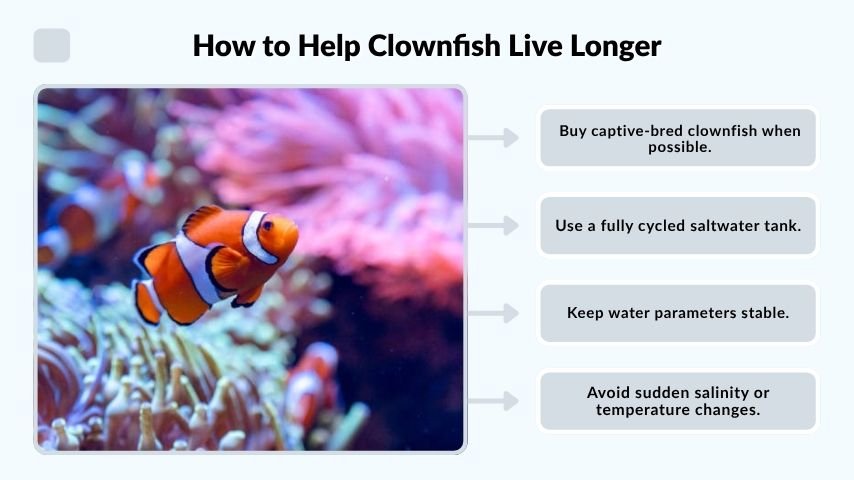
A clownfish can be a long-term pet if you focus on steady care instead of complicated tricks. The basics matter most.
To help your clownfish live longer:
- Buy captive-bred clownfish when possible.
- Use a fully cycled saltwater tank.
- Keep water parameters stable.
- Avoid sudden salinity or temperature changes.
- Feed a varied marine diet.
- Do not overcrowd the aquarium.
- Choose peaceful tank mates.
- Quarantine new fish before adding them.
- Watch for early signs of disease.
- Keep up with regular maintenance.
A clownfish does not need an anemone to live a long life. It needs clean water, low stress, proper food, and a stable home. If those needs are met, your clownfish may stay with you for many years.
FAQs
How long do clownfish live on average?
Clownfish usually live 6 to 10 years in the wild and 10 to 15 years in captivity. Some may live longer than 20 years in excellent aquarium conditions. Their lifespan depends on species, genetics, diet, water quality, disease prevention, and stress levels.
How long do clownfish live in captivity?
In captivity, clownfish commonly live around 10 to 15 years when kept in a stable saltwater aquarium. Some hardy individuals may live close to 20 years or more. Captive-bred clownfish often adapt better to tanks than wild-caught fish, which may improve long-term survival.
How long do clownfish live in a tank?
Clownfish in a tank can live 10 years or more with proper care. A cycled aquarium, stable salinity, good filtration, regular water changes, and a varied diet all help increase lifespan. Poor water quality, stress, and disease can shorten their life significantly.
How long do ocellaris clownfish live?
Ocellaris clownfish often live around 10 to 15 years in captivity. They are one of the hardiest and most common clownfish species in the aquarium hobby. With excellent care, some ocellaris clownfish may live even longer, especially if they are captive-bred.
Do clownfish need an anemone to live longer?
No, clownfish do not need an anemone to live longer in an aquarium. Anemones offer protection in the wild, but captive clownfish can thrive without them. Clean water, stable conditions, good food, and low stress are more important for lifespan than keeping an anemone.