
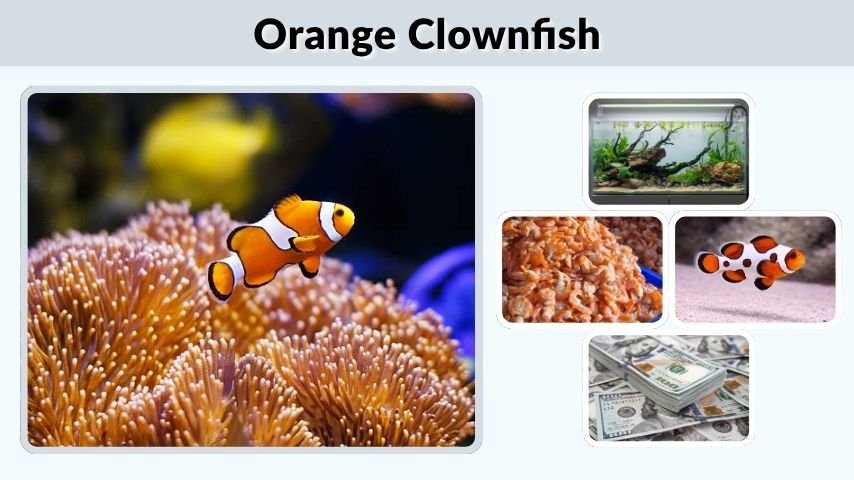
Orange clownfish are among the most recognizable saltwater aquarium fish, famous for their bright orange bodies, white bands, and bold personalities. Many people know them as “Nemo fish,” but there are several orange clownfish types, including ocellaris, percula, skunk, storm, and blood orange varieties. With stable saltwater conditions, proper food, and compatible tank mates, they can be excellent marine aquarium fish.
What Is an Orange Clownfish?
An orange clownfish is a marine fish from the clownfish group, most commonly the ocellaris clownfish or percula clownfish. These fish are known for their orange color, white stripes, black edging, and close relationship with sea anemones in the wild.
In aquariums, orange clownfish are popular because they are hardy compared with many marine fish. Captive-bred orange clownfish are especially common and usually adapt well to aquarium foods and tank life.
The name “orange clownfish” may refer to several species or designer varieties. Some are naturally orange, while others are selectively bred for unusual patterns, deeper color, or special markings.
Orange Clownfish Types
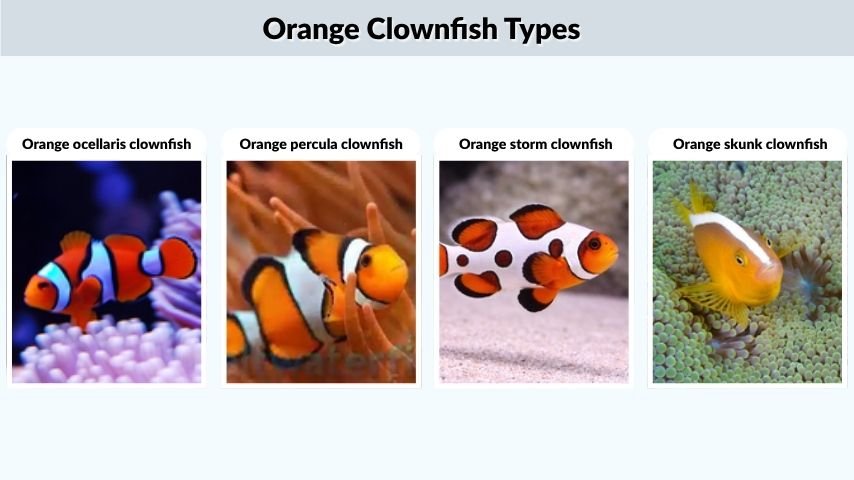
There are many orange clownfish varieties available in the aquarium hobby. Some look like the classic orange-and-white clownfish, while others have bold designer patterns.
| Orange Clownfish Type | Appearance | Notes |
|---|---|---|
| Orange ocellaris clownfish | Orange body with three white bands | Most common “Nemo” type |
| Orange percula clownfish | Orange body with white bands and thicker black edges | Similar to ocellaris |
| Orange storm clownfish | Orange body with irregular white storm-like markings | Designer ocellaris morph |
| Orange snowflake clownfish | Orange body with expanded white bands | Popular designer variety |
| Orange skunk clownfish | Orange body with a white stripe along the back | Different look from classic clownfish |
| Blood orange clownfish | Deeper orange/red-orange color, often hybrid-related | Usually a specialty variety |
| Black and orange clownfish | Dark body with orange areas or face | May be juvenile or designer form |
Orange Ocellaris Clownfish
The orange ocellaris clownfish is the classic aquarium clownfish. It has a bright orange body, three white vertical bands, and thin black outlines around the bands. This is the fish most people think of when they hear “Nemo fish.”
Ocellaris clownfish are often recommended for beginner saltwater aquariums because captive-bred fish are widely available, adaptable, and generally peaceful. They still need a fully cycled marine tank, stable salinity, and proper water quality.
Orange ocellaris clownfish are usually smaller and less aggressive than some other clownfish types, making them a good choice for community reef tanks.
Orange Percula Clownfish
Orange percula clownfish look very similar to orange ocellaris clownfish. The main visual difference is that percula clownfish often have thicker black outlines around their white bands. However, the difference can be subtle, especially with designer or captive-bred varieties.
Percula clownfish are also popular aquarium fish. They are colorful, active, and reef-safe. Like ocellaris clownfish, they can be kept in pairs when introduced properly.
If you are buying one, ask the seller whether the fish is ocellaris, percula, or a designer morph. Common names are sometimes used loosely in pet shops.
Orange Storm Clownfish
Orange storm clownfish are designer clownfish known for their irregular white patterns over an orange body. Instead of neat vertical bands, they may have broken, flowing, or cloud-like white markings.
These fish are usually captive-bred and may cost more than standard orange ocellaris clownfish. Their care needs are similar to ocellaris clownfish, but price depends on pattern, breeder, and availability.
Orange storm clownfish are popular with aquarists who want a unique-looking clownfish but still prefer the bright orange color.
Orange Skunk Clownfish
Orange skunk clownfish have a different pattern from the classic orange-and-white clownfish. Instead of three vertical white bands, they usually have a white stripe running along the top of the body from head to back.
They can be beautiful aquarium fish, but their care and behavior may differ slightly from ocellaris clownfish. Some skunk clownfish can be more active or sensitive, so beginners should research the exact species before buying.
If you want a clownfish that looks orange but less like the classic “Nemo” pattern, orange skunk clownfish can be an interesting option.
Blood Orange Clownfish
Blood orange clownfish are specialty clownfish known for their rich orange or reddish-orange color. Some blood orange varieties are associated with hybrid or designer breeding lines, so appearance can vary.
They may be sold as blood orange clownfish, blood orange misbar clownfish, or ORA blood orange clownfish depending on the breeder or seller. Misbar individuals have incomplete or unusual white bands.
Because these fish may cost more than standard clownfish, buyers should check the seller’s reputation, fish health, feeding history, and exact variety before purchasing.
Why Are Clownfish Orange and White?
Clownfish are orange and white because of natural pigmentation and species-specific markings. Their color may help with recognition, camouflage among anemone tentacles, and communication with other clownfish.
The white bands are one of the most recognizable features of many clownfish species. In aquariums, selective breeding has produced many variations, including snowflake, storm, misbar, frostbite, and other designer patterns.
Not all clownfish are orange and white. Some are black, maroon, brown, yellowish, white, or mixed-color depending on species and morph.
Orange Clownfish Habitat
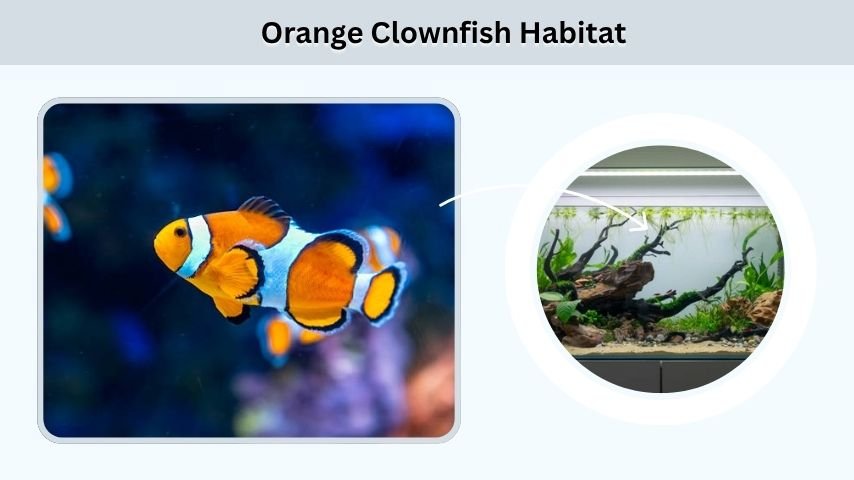
In the wild, orange clownfish live in warm tropical marine environments, often near coral reefs and sea anemones. They form a close relationship with host anemones, using them for protection from predators.
In aquariums, orange clownfish do not require an anemone to survive. Captive-bred clownfish often host in corals, rockwork, tank corners, or even equipment. Many live healthy lives without any anemone at all.
Aquarium Habitat Needs
- Fully cycled saltwater tank
- Stable salinity and temperature
- Live rock or reef-safe structure
- Hiding areas and open swimming space
- Good filtration and water movement
- Regular water testing
- Peaceful tank mates
- Secure lid to prevent jumping
A stable aquarium is more important than a complicated setup. Poor water quality can stress clownfish and make them more vulnerable to disease.
Orange Clownfish Tank Size
A pair of small orange ocellaris clownfish can often do well in a moderate-sized saltwater aquarium. Many hobbyists use tanks around 20 gallons or larger for a pair, though bigger tanks are easier to keep stable.
If you want more tank mates, corals, or an anemone, choose a larger tank. Small marine tanks can change quickly in salinity, temperature, and waste levels, so they require careful maintenance.
Larger clownfish types or more aggressive varieties may need more space than standard ocellaris clownfish.
Orange Clownfish Diet
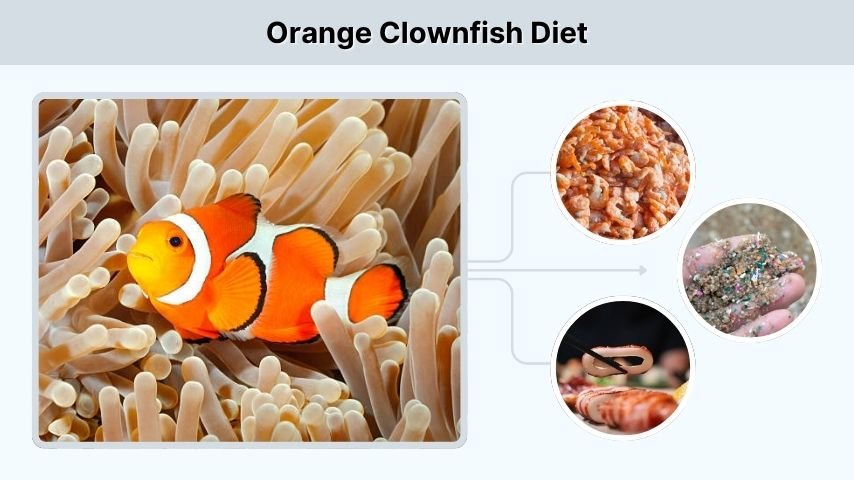
Orange clownfish are omnivores. In the wild, they eat small plankton, algae, tiny crustaceans, and food particles around their host area. In aquariums, most captive-bred clownfish accept prepared foods readily.
Good Foods for Orange Clownfish
- Marine pellets
- High-quality marine flakes
- Frozen mysis shrimp
- Brine shrimp
- Chopped seafood
- Copepods
- Algae-based foods
- Vitamin-enriched frozen blends
Feed small portions once or twice a day. Overfeeding can pollute the water and increase nitrate. A varied diet helps maintain color, energy, immune health, and breeding condition.
Orange Clownfish Behavior
Orange clownfish are active, curious, and territorial. They often choose one part of the tank as their home and defend it. This area might be an anemone, coral, rock, corner, or powerhead.
A bonded pair usually develops a hierarchy. The larger fish becomes female, while the smaller fish remains male. The female is typically more dominant and may chase the male or defend the territory more aggressively.
Some chasing is normal, especially when a pair is forming. However, constant fighting, torn fins, or one fish hiding all day may mean the pair is not compatible.
Orange Clownfish Lifespan
Orange clownfish can live for many years with good care. Captive-bred clownfish often adapt well to aquarium life, and stable conditions can support a long lifespan.
Their lifespan depends on water quality, diet, tank stability, genetics, disease prevention, and stress level. A healthy clownfish in a well-maintained aquarium can become a long-term pet rather than a short-term display fish.
Orange Clownfish Price
Orange clownfish price depends on the type, size, pattern, and source. Standard orange ocellaris clownfish are usually more affordable than designer varieties. Orange storm, blood orange, snowflake, or rare misbar clownfish often cost more.
A bonded pair or breeding pair is also usually more expensive than a single juvenile. When buying, choose healthy captive-bred fish from a reputable seller rather than focusing only on price.
Look for clear eyes, steady swimming, smooth fins, good appetite, and normal breathing. Avoid fish with white spots, cloudy skin, torn fins, heavy breathing, or sunken bellies.
Can You Mix Black and Orange Clownfish?
Yes, black and orange clownfish can sometimes be kept together if they are compatible species and sizes. For example, a black ocellaris and orange ocellaris may form a pair if introduced carefully, especially when one is clearly smaller.
Problems can happen when both fish are large, both are female, or the tank is too small. Two dominant clownfish may fight instead of pairing.
Tips for Mixing Black and Orange Clownfish
- Choose the same or compatible species when possible.
- Add one larger and one smaller fish.
- Avoid two large established females.
- Watch for severe aggression.
- Provide enough space and hiding areas.
- Remove one fish if fighting causes injury.
Black and orange clownfish offspring may vary depending on genetics. Some may show mixed colors, darker bodies, orange faces, or unusual patterns.
Do Orange Clownfish Need an Anemone?
Orange clownfish do not need an anemone in a home aquarium. They can live well without one if the tank is stable and safe.
Anemones require mature tanks, strong lighting, stable water, and careful placement. They can move, sting corals, or get injured by pumps. Beginners should not buy an anemone just because they have clownfish.
If you want an anemone later, research suitable species such as bubble tip anemones and make sure your tank is mature enough.
Orange Clownfish Predators
In the wild, small clownfish may be threatened by larger predatory fish and other reef animals. Their relationship with anemones helps protect them. The anemone’s stinging tentacles can discourage many predators, while the clownfish has special mucus protection that allows it to live among the tentacles.
In aquariums, avoid keeping orange clownfish with large predatory fish that may eat them. Groupers, lionfish, large triggers, and aggressive predators are not suitable tank mates for small clownfish.
Orange Clownfish Health Problems
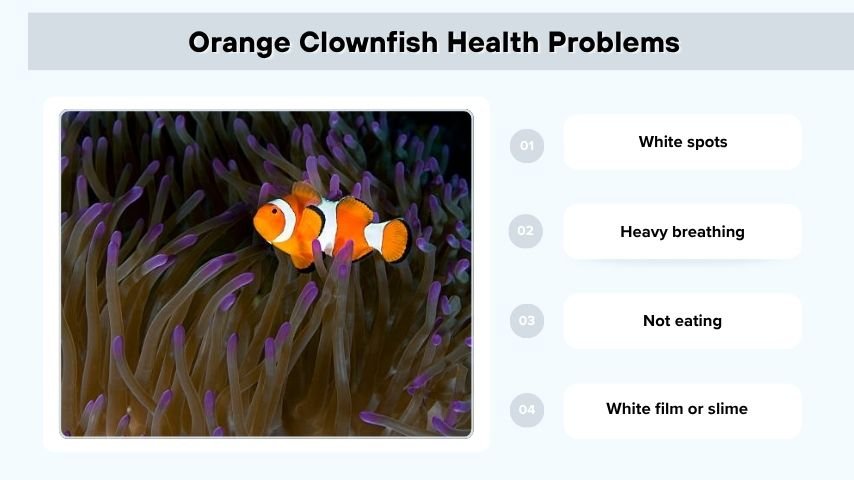
Orange clownfish are hardy, but they can still get sick. Common concerns include marine ich, Brooklynella, bacterial infections, fin damage, internal parasites, and stress-related symptoms.
Warning signs include:
- White spots
- Heavy breathing
- Not eating
- Clamped fins
- White film or slime
- Sitting at the bottom
- Scratching against rocks
- Torn fins
- Stringy white poop
- Sudden color fading
If symptoms appear, test water first. Ammonia and nitrite should be zero. Also check salinity, temperature, nitrate, and pH. Quarantine is helpful for new or sick marine fish.
FAQs
What is an orange clownfish called?
The most common orange clownfish is the orange ocellaris clownfish, often called the “Nemo fish.” Orange percula clownfish look similar and are also popular. Designer types include orange storm, orange snowflake, and blood orange clownfish.
Are orange clownfish good for beginners?
Yes, captive-bred orange ocellaris clownfish are often good beginner saltwater fish. They are hardy compared with many marine species, but they still need a fully cycled saltwater tank, stable salinity, warm temperature, clean water, and a proper marine diet.
What do orange clownfish eat?
Orange clownfish eat a varied omnivorous diet. Good foods include marine pellets, quality flakes, frozen mysis shrimp, brine shrimp, copepods, chopped seafood, and algae-based foods. Feed small portions once or twice daily to avoid polluting the aquarium.
Do orange clownfish need an anemone?
No, orange clownfish do not need an anemone to survive in an aquarium. Captive-bred clownfish often host in rocks, corals, corners, or equipment. Anemones require mature tanks, strong lighting, and stable water, so beginners should research carefully first.
Can black and orange clownfish live together?
Yes, black and orange clownfish can live together if they are compatible and introduced correctly. A black ocellaris and orange ocellaris may pair if one is smaller. Avoid keeping two large females together, because they may fight aggressively.