
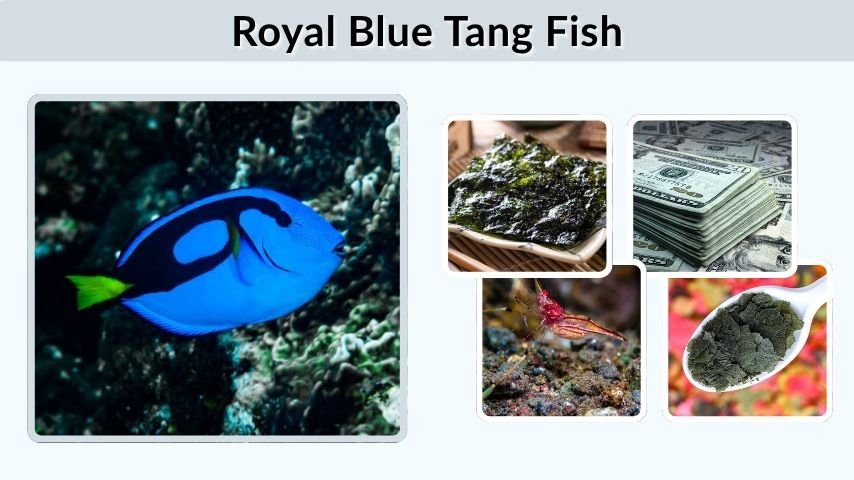
The royal blue tang fish is one of the most recognizable saltwater aquarium fish, loved for its bright blue body, black markings, and yellow tail. Also known as the regal tang or palette surgeonfish, this tropical marine species is beautiful but not ideal for every beginner. Before buying one, it is important to understand its tank needs, diet, lifespan, behavior, and care requirements.
What Is a Royal Blue Tang Fish?
A royal blue tang fish is a colorful marine fish commonly kept in large saltwater aquariums. Its scientific name is Paracanthurus hepatus. Many people also call it the regal blue tang, hippo tang, palette tang, or blue surgeonfish.
Royal Blue Regal Tang Fish Names
The royal blue tang has several common names, which can sometimes confuse new aquarium owners. In fish stores, the same species may be listed under different names.
Common names include:
- Royal blue tang
- Regal blue tang
- Blue tang
- Hippo tang
- Palette surgeonfish
- Royal blue regal tang fish
Although “blue tang” is a popular name, it can sometimes refer to other species too. For accurate identification, look for the royal blue body, black pattern, yellow tail, and oval-shaped body.
Is a Royal Blue Tang a Freshwater Fish?
No, a royal blue tang is not a freshwater fish. It is a saltwater fish that lives in tropical marine reefs. This means it needs a properly maintained saltwater aquarium with stable salinity, temperature, filtration, and water quality.
A royal blue tang should never be kept in a freshwater tank. Freshwater conditions can quickly stress or kill the fish.
Royal Blue Tang Fish Facts
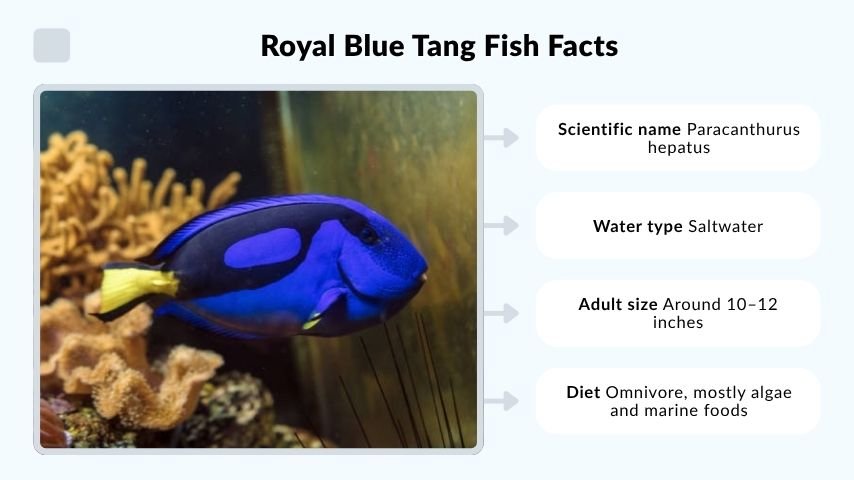
The royal blue tang is famous for its color and active swimming behavior. It is usually peaceful but needs enough space because it grows larger than many people expect.
| Feature | Royal Blue Tang Fish Details |
|---|---|
| Scientific name | Paracanthurus hepatus |
| Water type | Saltwater |
| Adult size | Around 10–12 inches |
| Diet | Omnivore, mostly algae and marine foods |
| Temperament | Generally peaceful |
| Tank level | Active open swimmer |
| Lifespan | Often 8–20 years with proper care |
| Minimum tank size | Large marine tank, often 100+ gallons recommended |
| Beginner friendly? | Better for intermediate aquarists |
Appearance
Royal blue tang fish have a vivid blue body, a bold black marking, and a bright yellow tail. Their body is flat and oval-shaped, helping them move quickly through reef areas.
Like other surgeonfish, they have a sharp spine near the tail. This spine can be used for defense, so they should be handled carefully and only when necessary.
Natural Habitat
In the wild, royal blue tangs live in warm tropical waters around coral reefs. They are found in parts of the Indo-Pacific region and often swim near reef slopes and coral-rich areas.
They are active swimmers and need open space in an aquarium. A small tank can cause stress, poor health, and aggressive behavior.
Royal Blue Tang Fish Care
Royal blue tang fish care requires planning, stable water, and a spacious aquarium. These fish are not usually recommended for small tanks or poorly maintained setups.
Tank Setup
A royal blue tang needs a mature saltwater aquarium with good filtration and plenty of swimming space. It also benefits from live rock, hiding places, and open areas for movement.
Important tank setup needs include:
- Large aquarium with open swimming space
- Stable saltwater conditions
- Strong filtration
- Good water movement
- Live rock for grazing and hiding
- Secure lid to prevent jumping
- Regular water testing
Because royal blue tangs are active and sensitive to poor water quality, they do best in established aquariums rather than brand-new tanks.
Royal Blue Tang Fish Tank Size
Tank size is one of the most important parts of royal blue tang care. Juveniles may look small in fish stores, but they can grow much larger. A small aquarium may work only temporarily for a young fish.
For long-term care, many aquarists recommend a tank of at least 100 gallons or more. Bigger is usually better because this fish needs swimming room and stable water conditions.
Keeping a royal blue tang in a tank that is too small can lead to stress, disease, and aggressive behavior.
Water Conditions
Royal blue tangs need clean and stable saltwater. Sudden changes in temperature, salinity, or water chemistry can weaken them.
General aquarium conditions should include:
- Tropical marine temperature
- Stable salinity
- Low ammonia and nitrite
- Controlled nitrate levels
- Strong oxygenation
- Regular maintenance
Water stability matters more than chasing perfect numbers. Rapid changes are often more harmful than slightly imperfect but stable conditions.
Royal Blue Tang Fish Diet
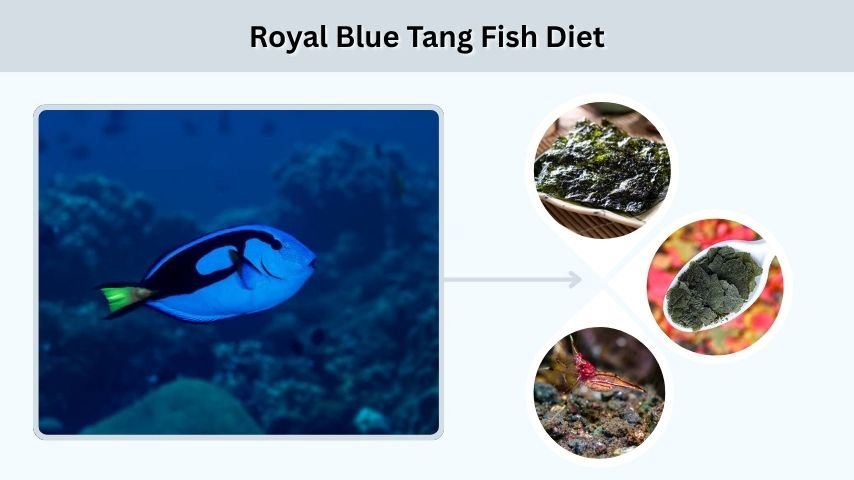
Royal blue tang fish are omnivores, but plant-based foods should be a major part of their diet. In the wild, they graze on algae and also eat tiny marine organisms.
What Do Royal Blue Tang Fish Eat?
A healthy royal blue tang diet should include both algae-based and protein-based foods. Variety helps support color, immunity, and long-term health.
Good food options include:
- Marine algae sheets
- Seaweed or nori
- Spirulina-based flakes
- High-quality marine pellets
- Mysis shrimp
- Brine shrimp
- Chopped marine foods
- Frozen herbivore blends
Algae should be offered regularly. Many owners clip seaweed sheets inside the tank so the fish can graze throughout the day.
Feeding Tips
Royal blue tangs are active fish with healthy appetites. Smaller meals offered more than once a day are often better than one large feeding.
Avoid overfeeding, as leftover food can pollute the aquarium. Remove uneaten food and test water regularly to keep the tank healthy.
Royal Blue Tang Fish Lifespan
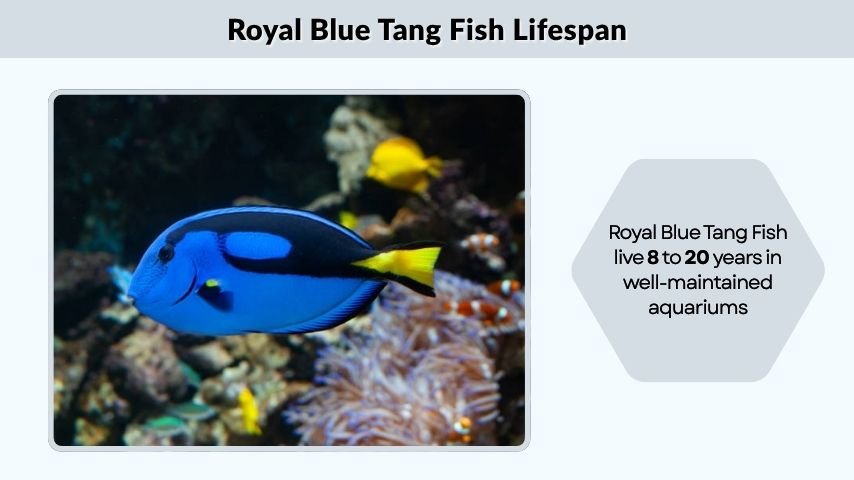
A common question is: how long do royal blue tang fish live? With proper care, royal blue tangs can live for many years in captivity. Some may live 8 to 20 years in well-maintained aquariums.
What Affects Lifespan?
Their lifespan depends on tank size, diet, stress level, disease prevention, and water quality. Fish kept in cramped or unstable tanks usually do not live as long.
Factors that support a longer lifespan include:
- Large tank space
- Stable saltwater parameters
- Balanced diet
- Low stress
- Proper quarantine
- Compatible tank mates
- Regular water changes
A royal blue tang should be seen as a long-term pet, not a short-term decorative fish.
Royal Blue Tang Fish Price
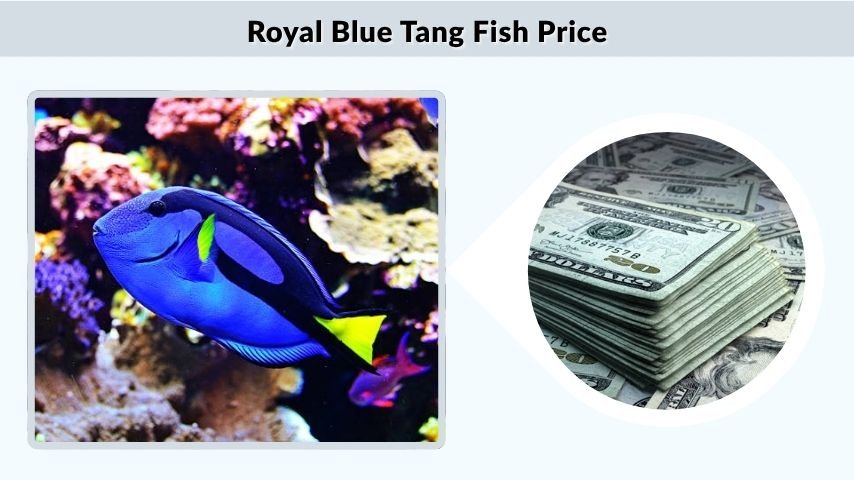
Royal blue tang fish price can vary depending on size, location, availability, and the fish store. Small juveniles are usually cheaper than larger, healthier, well-acclimated specimens.
How Much Is a Royal Blue Tang Fish?
In many aquarium markets, royal blue tang fish may cost anywhere from moderate to expensive compared with common beginner fish. The price can change based on supply, shipping, season, and demand.
When checking the royal blue tang fish price, do not look only at the purchase cost. The full cost includes the aquarium, filtration, salt mix, food, water testing kits, quarantine supplies, and maintenance.
Royal Blue Tang Fish for Sale
Royal blue tang fish are often available through marine aquarium stores and online saltwater fish retailers. However, buyers should choose sellers carefully.
Before buying a royal blue tang fish, check:
- Whether the fish is active and alert
- If it is eating well
- Whether its body looks full, not thin
- If the fins are clear and undamaged
- Whether there are signs of spots or disease
- If the seller provides proper saltwater care advice
A cheap fish is not always a good deal if it is stressed, sick, or poorly handled.
Royal Blue Tang and Clown Fish
Royal blue tangs and clownfish are often seen together in saltwater aquariums. They can usually live in the same tank if the aquarium is large enough and properly maintained.
Compatibility
Clownfish are usually smaller and stay closer to a specific area, especially if they have an anemone or favorite hiding place. Royal blue tangs are active swimmers that use more open space.
They can be compatible when:
- The tank is large enough
- Water quality is stable
- Food is offered properly
- There are hiding places
- Fish are introduced carefully
Aggression is not usually a major issue between royal blue tangs and clownfish, but every fish has its own personality.
Royal Blue Tang Fish Aquarium Problems
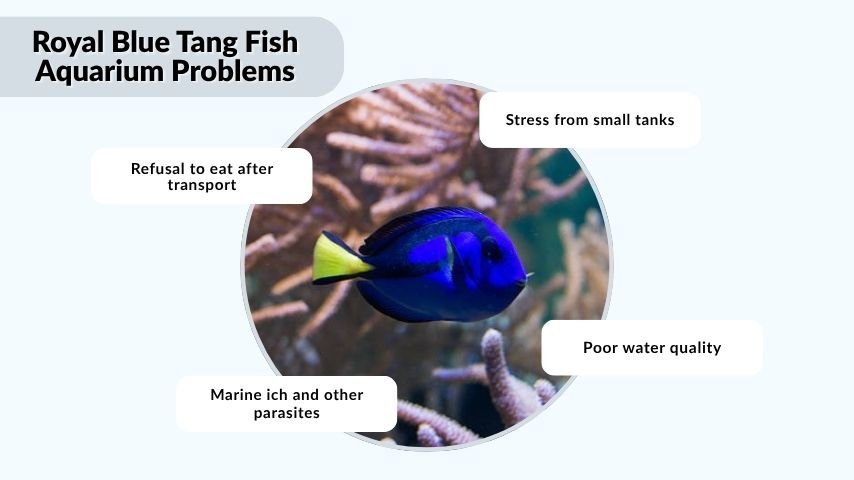
Royal blue tangs are beautiful, but they can be sensitive. They are known for being prone to stress and certain saltwater fish diseases, especially when newly added to an aquarium.
Common Care Challenges
New owners should watch for:
- Stress from small tanks
- Poor water quality
- Aggression from unsuitable tank mates
- Refusal to eat after transport
- Marine ich and other parasites
- Weight loss from poor diet
- Hiding due to stress
Quarantine is strongly recommended before adding a royal blue tang to a display aquarium. This helps reduce the risk of introducing disease to other fish.
Best Tank Mates
Royal blue tangs usually do well with peaceful or semi-peaceful marine fish. Avoid overly aggressive species that may chase, nip, or stress them.
Suitable tank mates may include clownfish, gobies, wrasses, blennies, dwarf angelfish with caution, and other peaceful reef fish. Be careful when mixing tangs, especially in smaller tanks, because territory disputes can occur.
Is a Royal Blue Tang Fish a Good Pet?
A royal blue tang can be a great pet for someone with a large saltwater aquarium and some marine fishkeeping experience. It is colorful, active, and interesting to watch.
However, it is not the best choice for very small tanks, freshwater aquariums, or owners who are not ready for saltwater maintenance. The fish needs space, stable water, proper food, and long-term care.
Who Should Buy One?
A royal blue tang is best for aquarists who:
- Already understand saltwater aquariums
- Have a large tank
- Can maintain stable water quality
- Are ready for long-term care
- Can provide algae-based foods
- Will quarantine new fish
For beginners, it may be better to start with easier saltwater fish before buying a royal blue tang.
FAQs
Is a royal blue tang a freshwater fish?
No, a royal blue tang is a saltwater fish. It lives in tropical marine reef environments and needs a properly maintained saltwater aquarium. It should never be kept in a freshwater tank because freshwater conditions are not suitable for its survival.
How long do royal blue tang fish live?
Royal blue tang fish can live many years with proper care. In a healthy aquarium, they may live 8 to 20 years. Their lifespan depends on tank size, water quality, diet, stress level, disease prevention, and overall care.
What do royal blue tang fish eat?
Royal blue tang fish eat algae, seaweed, marine pellets, spirulina foods, mysis shrimp, brine shrimp, and other marine foods. Their diet should include plenty of plant-based foods, especially algae or nori, because grazing is an important part of their natural feeding behavior.
How much is a royal blue tang fish?
The price of a royal blue tang fish depends on size, seller, location, and availability. Smaller fish are often cheaper, while larger or well-acclimated fish may cost more. Buyers should also consider the cost of a large saltwater aquarium and maintenance.
What tank size does a royal blue tang need?
A royal blue tang needs a large saltwater tank with open swimming space. For long-term care, many aquarists recommend at least 100 gallons or more. A small tank can cause stress, health problems, and poor growth as the fish matures.