
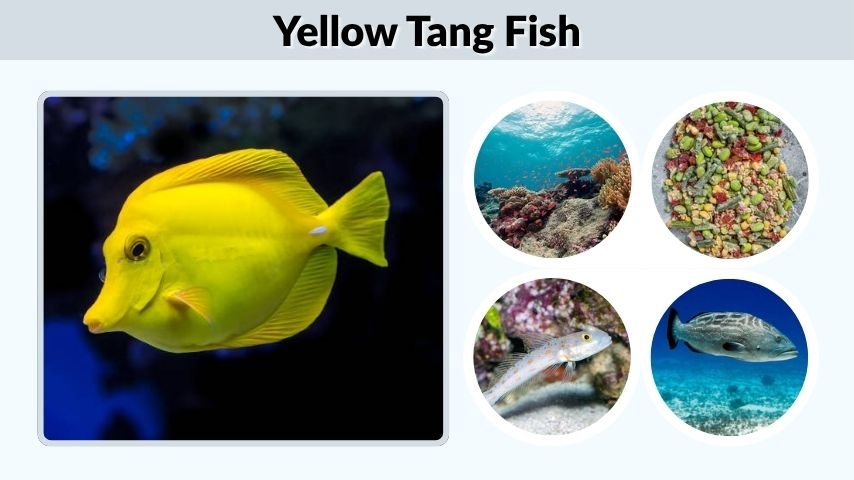
The yellow tang fish is one of the most popular saltwater aquarium fish because of its bright color, active swimming style, and reef-friendly behavior. This marine fish is often seen in tropical aquariums, especially in tanks with live rock and peaceful community fish. Before buying one, it is important to understand its care needs, diet, tank size, price, lifespan, and compatibility.
What Is a Yellow Tang Fish?
A yellow tang fish is a tropical marine fish known for its solid yellow body and oval shape. Its scientific name is Zebrasoma flavescens. It belongs to the surgeonfish family, which includes many popular tang species kept in saltwater aquariums.
Yellow Tang Marine Fish Overview
The yellow tang is a saltwater fish, not a freshwater fish. It lives naturally around coral reefs and rocky reef areas, where it grazes on algae throughout the day. In aquariums, it is valued not only for its appearance but also for its algae-eating behavior.
Many people search for “yellow tang aquarium fish” because this species is strongly associated with reef tanks and marine display aquariums. It can be a beautiful centerpiece fish when kept in the right conditions.
Why Yellow Tangs Are Popular
Yellow tangs are popular because they are colorful, active, and generally hardy compared with some other marine fish. Their bright yellow color stands out against live rock, coral, and blue aquarium lighting.
Common reasons aquarists like yellow tangs include:
- Bright yellow body color
- Active swimming behavior
- Algae-grazing habit
- Good visibility in reef tanks
- Generally peaceful temperament
- Compatibility with many marine fish
Although they are hardy for a saltwater fish, they still need proper care and stable water conditions.
Yellow Tang Fish Facts
Yellow tangs are easy to recognize, but there is more to this fish than its color. It has several interesting features that help it survive in reef environments.
| Feature | Yellow Tang Fish Information |
|---|---|
| Scientific name | Zebrasoma flavescens |
| Fish type | Saltwater marine fish |
| Common habitat | Coral reefs and rocky reef areas |
| Adult size | Around 7 to 8 inches |
| Diet | Mostly algae and plant-based marine foods |
| Temperament | Semi-peaceful to semi-aggressive |
| Tank type | Saltwater aquarium or reef tank |
| Lifespan | Often 10+ years with good care |
| Care level | Intermediate |
| Main color | Bright yellow |
Appearance and Body Shape
The yellow tang has a flat, oval-shaped body with a pointed snout. Its bright yellow color covers almost the entire body, including the fins. At night or when stressed, its color may look slightly faded or show a pale horizontal mark.
Like other tangs, the yellow tang has a sharp spine near the base of its tail. This spine is used for defense and is one reason tangs are also called surgeonfish. Owners should avoid handling the fish unless necessary.
Yellow Tang Fish Adaptations
Yellow tangs are adapted for life around reefs. Their flat bodies allow them to turn quickly between rocks and coral structures. Their small mouths help them pick algae from surfaces.
Their bright color may seem easy for predators to spot, but reef fish often use color, movement, and habitat cover together for survival. Yellow tangs can quickly move into rockwork when threatened.
Where Do Yellow Tang Fish Live?
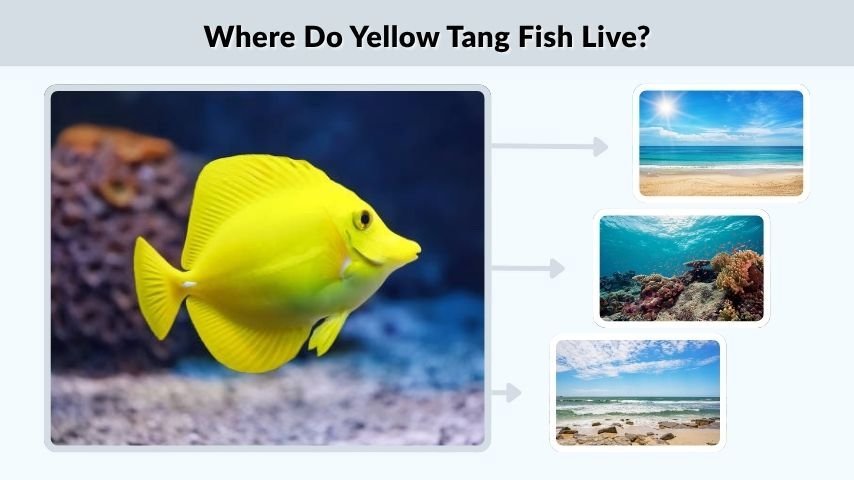
Yellow tang fish are strongly associated with warm Pacific reef environments. They are especially known from Hawaiian waters, which is why many people search for “yellow tang fish Hawaii” or “Hawaiian yellow tang fish.”
Natural Habitat
In the wild, yellow tangs live near coral reefs, rocky areas, and reef slopes. They spend much of the day grazing on algae and swimming around reef structures.
They are commonly found in areas with:
- Warm tropical saltwater
- Coral reefs
- Rocky reef zones
- Plenty of algae growth
- Clear water
- Hiding spaces
Their natural lifestyle explains why they need a spacious aquarium with live rock and stable marine water conditions.
Are Yellow Tangs Saltwater Fish?
Yes, yellow tangs are saltwater fish. They cannot live in freshwater. Anyone planning to keep a yellow tang must have a properly cycled saltwater aquarium with marine filtration, salt mix, water testing, and stable salinity.
A freshwater tank is not suitable for a yellow tang. Even short exposure to the wrong water conditions can seriously harm the fish.
Yellow Tang Fish Care
Yellow tang fish care is manageable for aquarists with some saltwater experience. They are not the most difficult marine fish, but they are not ideal for a tiny tank or an unstable beginner setup.
Aquarium Setup
A yellow tang needs a mature saltwater aquarium with open swimming space and rockwork. Live rock is especially useful because it provides grazing surfaces and hiding places.
A good yellow tang fish tank should include:
- Stable saltwater conditions
- Strong filtration
- Good water movement
- Live rock for grazing
- Open swimming areas
- Hiding spaces
- Secure aquarium lid
- Regular water testing
Yellow tangs are active fish, so cramped tanks can lead to stress and aggression.
Yellow Tang Fish Tank Size
Tank size is one of the most important parts of yellow tang care. While young yellow tangs may look small in stores, they grow larger and need room to swim.
For long-term care, many aquarists recommend a tank of at least 75 gallons, though larger tanks are better. A longer tank is especially helpful because yellow tangs swim actively across open space.
A small tank may cause:
- Stress
- Aggression
- Poor growth
- Weak immunity
- More disease risk
- Territory problems
If you want to keep a yellow tang with other tangs or active fish, a larger tank is strongly recommended.
Yellow Tang Fish Food and Diet
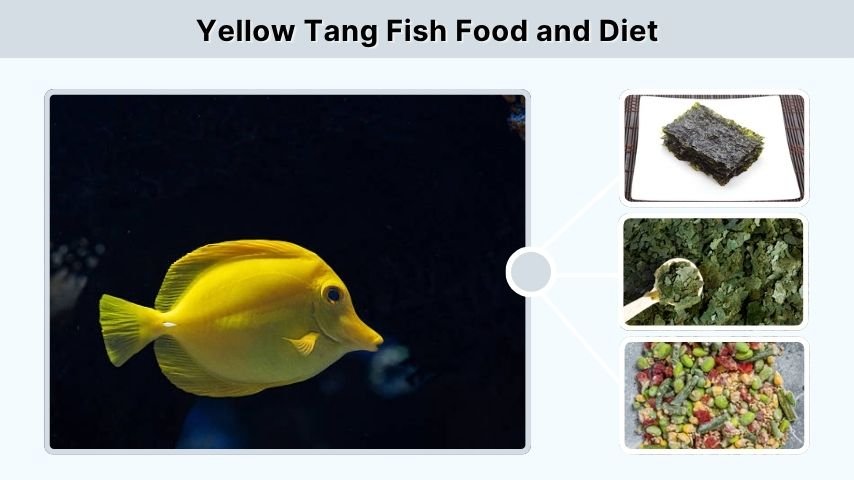
A yellow tang’s diet should be rich in algae and plant-based foods. In the wild, it spends much of the day grazing on algae, so aquarium feeding should support this natural behavior.
What Do Yellow Tang Fish Eat?
Yellow tang fish mainly eat algae, but they also accept a variety of prepared marine foods. A balanced diet helps maintain their color, energy, and immune system.
Good yellow tang fish food options include:
- Marine algae sheets
- Nori or seaweed
- Spirulina flakes
- Herbivore pellets
- Frozen herbivore blends
- Mysis shrimp in small amounts
- Brine shrimp as an occasional food
- Algae growing on live rock
Plant-based foods should make up a major part of the diet. Protein foods can be offered, but they should not replace algae-based feeding.
Feeding Yellow Tang Fish
Yellow tangs do best when they can graze regularly. Many aquarists clip seaweed sheets inside the aquarium so the fish can feed throughout the day.
Feed small portions instead of overfeeding. Uneaten food can break down and reduce water quality. Since yellow tangs are active swimmers, they often benefit from regular feeding and a clean, stable tank.
Yellow Tang Fish Price and Buying Guide
Many people search for “yellow tang fish for sale” or “how much is a yellow tang fish” before setting up a marine aquarium. The price can vary depending on location, availability, size, and whether the fish is captive-bred or wild-sourced.
How Much Is a Yellow Tang Fish?
Yellow tang fish price can range widely. In some markets, yellow tangs have become more expensive than they were years ago because availability, collection rules, shipping costs, and captive-breeding efforts can affect supply.
When calculating the cost, remember that the fish itself is only one part of the expense. A proper saltwater setup may cost much more than the fish.
Costs may include:
- Aquarium tank
- Marine salt mix
- Filtration system
- Heater and thermometer
- Water test kits
- Protein skimmer
- Live rock or reef structure
- Quarantine tank
- Quality marine food
A low-cost fish is not a good deal if it is unhealthy, thin, or poorly handled.
Yellow Tang Fish for Sale
Yellow tangs may be found at saltwater fish stores, marine aquarium shops, and online fish retailers. Before buying, inspect the fish carefully or choose a trusted seller with good livestock practices.
A healthy yellow tang should:
- Swim actively
- Eat readily
- Have clear eyes
- Show smooth fins
- Have a full body shape
- Show no white spots
- Avoid heavy breathing
- Move normally without rubbing on rocks
Avoid buying a fish that looks thin, weak, scratched, or covered in spots.
Yellow Tang Aquarium Compatibility
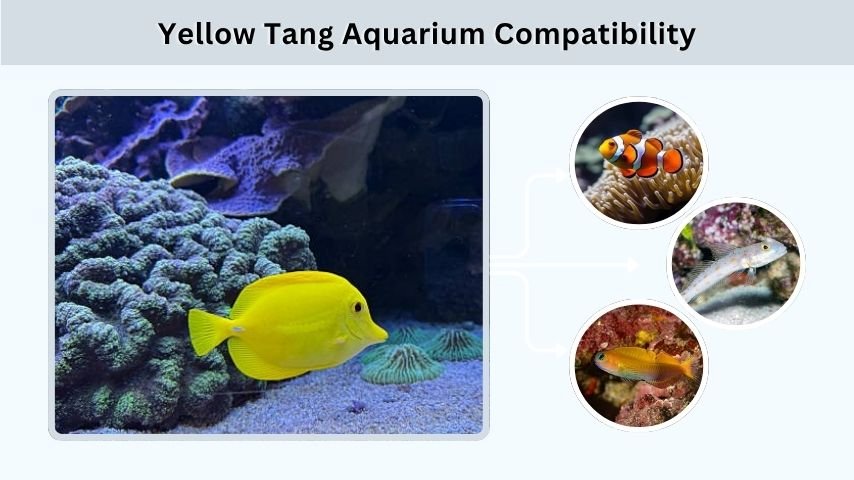
Yellow tangs are generally considered semi-peaceful, but they can become territorial. Their behavior depends on tank size, tank mates, feeding, and how the fish are introduced.
Fish Compatible With Yellow Tang
Yellow tangs can live with many saltwater fish when the aquarium is large enough. They often do well with peaceful or semi-peaceful species that do not compete too aggressively for territory.
Possible tank mates include:
- Clownfish
- Royal gramma
- Gobies
- Blennies
- Wrasses
- Chromis
- Firefish
- Cleaner shrimp
- Some dwarf angelfish with caution
Cleaner shrimp are often seen cleaning yellow tangs by picking at parasites or dead skin. This behavior is common in reef aquariums and can be interesting to watch.
Are Yellow Tangs Aggressive Toward Other Fish?
Yellow tangs can be aggressive toward other tangs or fish with a similar body shape. They may chase new fish if they feel their space is being invaded. Aggression is more likely in small tanks.
To reduce aggression:
- Use a large aquarium
- Add hiding places
- Feed well
- Avoid overcrowding
- Introduce fish carefully
- Be cautious with other tangs
If keeping multiple tangs, the tank should be large and well-planned.
Yellow Tang and Blue Tang Fish
Yellow tangs and blue tangs are both popular saltwater aquarium fish. Many people search for “blue and yellow tang fish” or “yellow and blue tang fish” because both species are bright, active, and commonly seen in marine tanks.
Can Yellow Tang and Blue Tang Live Together?
A yellow tang and blue tang may live together in a large aquarium if there is enough space, food, and hiding structure. However, both fish are active swimmers and need room.
A royal blue tang often grows larger than a yellow tang, so the aquarium must be planned carefully. A tank that is too small can cause stress, chasing, and health problems.
When keeping both, make sure the tank has:
- Plenty of swimming space
- Strong filtration
- Separate hiding areas
- Frequent algae feeding
- Stable water quality
- Low crowding
This combination can look beautiful but is best for larger saltwater tanks.
Can You Eat Yellow Tang Fish?
Some people ask whether yellow tang fish can be eaten. While some reef fish are consumed in certain places, yellow tangs are mainly known as ornamental aquarium fish. They are not commonly kept or discussed as food fish.
For aquarium owners, yellow tangs should be treated as pets, not food. Also, reef fish from some regions may carry food safety concerns depending on local conditions and toxins in the marine food chain.
What Eats Yellow Tang Fish?
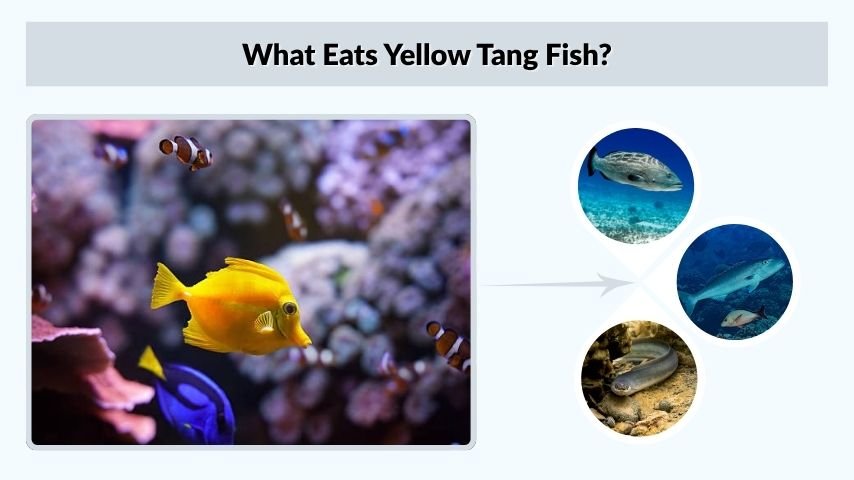
In the wild, yellow tangs may be eaten by larger predatory fish. Reef predators can include groupers, jacks, larger wrasses, eels, and other carnivorous marine animals.
Yellow tangs avoid predators by staying near reef structure, moving quickly, and using hiding spaces. Their sharp tail spine may also help defend them from threats.
Common Yellow Tang Health Problems
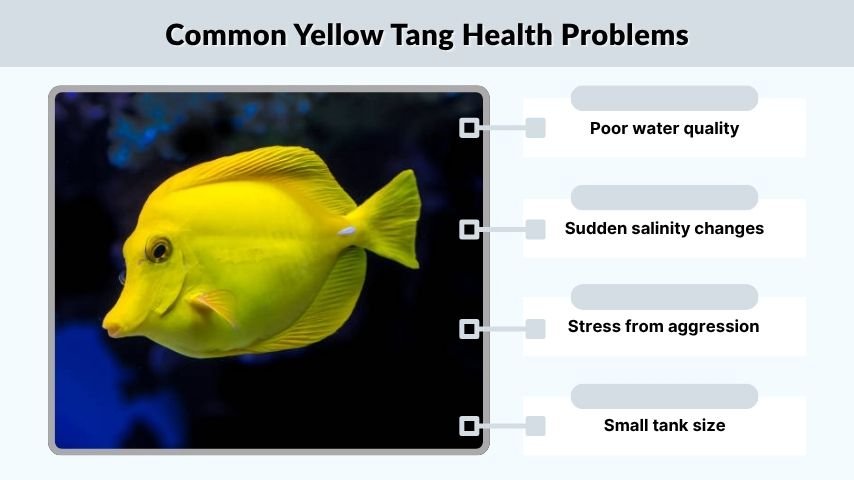
Yellow tangs can be hardy, but they are still sensitive to poor water quality and stress. Like many marine fish, they may develop diseases if introduced without quarantine or kept in unstable conditions.
White Spots on Yellow Tang Fish
White spots on a yellow tang may be a sign of marine ich or another parasite. It can also result from stress, injury, or poor water quality. If white spots appear, observe the fish carefully and avoid guessing without checking the full situation.
Common causes of health problems include:
- Poor water quality
- Sudden salinity changes
- Stress from aggression
- Small tank size
- Poor diet
- Lack of quarantine
- Parasites
Quarantining new fish before adding them to the main aquarium is a smart way to reduce disease risk.
Breeding Yellow Tang Fish
Breeding yellow tang fish in home aquariums is very difficult. In the wild, yellow tangs release eggs and sperm into the water column, and the larvae develop in open water before settling into reef areas.
Captive breeding has improved in recent years, but it requires specialized systems, larval foods, and expert care. Most hobbyists do not breed yellow tangs at home.
Juvenile Yellow Tang Fish
Juvenile yellow tangs look similar to adults but are smaller and more delicate. Young fish still need stable water, proper food, and enough space to grow.
A baby yellow tang should not be placed in a tiny tank just because it is small. It will need a suitable long-term aquarium as it matures.
FAQs
What do yellow tang fish eat?
Yellow tang fish mainly eat algae and plant-based marine foods. In aquariums, they should be fed seaweed, nori, spirulina flakes, herbivore pellets, and algae-based frozen foods. They may also eat small amounts of mysis shrimp or other marine foods.
How long do yellow tang fish live?
Yellow tang fish can live for many years with proper care. In a stable saltwater aquarium, they often live 10 years or longer. Their lifespan depends on tank size, water quality, diet, stress level, and disease prevention.
Are yellow tangs saltwater fish?
Yes, yellow tangs are saltwater fish. They live naturally in tropical marine reef environments and need a saltwater aquarium. They cannot live in freshwater because they require proper marine salinity and stable saltwater conditions.
How big can a yellow tang fish get?
A yellow tang can grow to around 7 to 8 inches as an adult. Because it is an active swimmer, it needs more space than its body size may suggest. A larger tank helps reduce stress and supports healthier behavior.
Is a yellow tang fish aggressive?
A yellow tang is usually semi-peaceful but can become territorial, especially toward other tangs or similarly shaped fish. Aggression is more common in small or crowded tanks. Providing enough space, hiding areas, and regular feeding can reduce problems.