
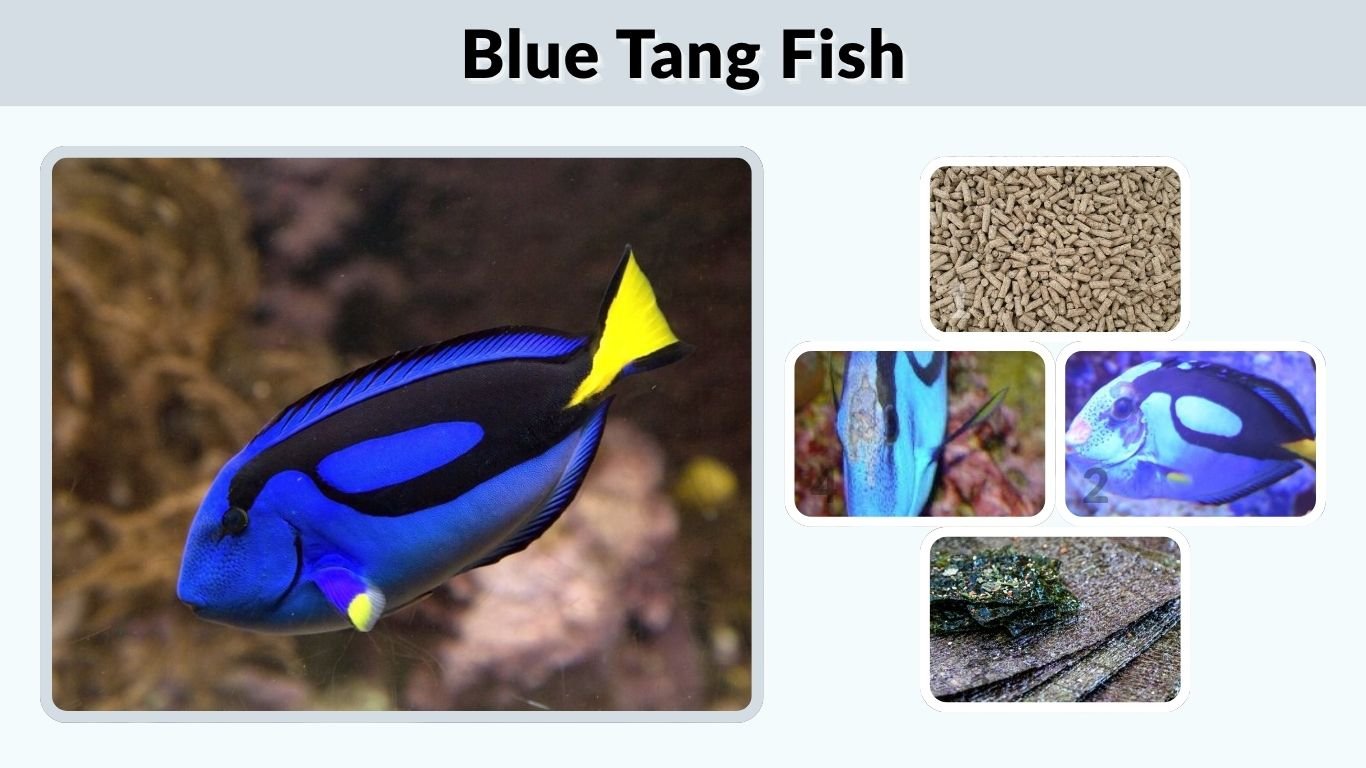
The blue tang is one of the most recognizable saltwater fish in the world. Known for its bright blue body, yellow tail, and connection to Dory from Finding Nemo, this reef fish attracts both aquarium lovers and ocean life fans. However, blue tang fish need more than admiration. They require a large tank, clean water, proper food, and experienced care to stay healthy.
What Is a Blue Tang Fish?
A blue tang is a colorful marine fish commonly found around coral reefs. Its scientific name is Paracanthurus hepatus. It is also called the regal blue tang, hippo tang, blue hippo tang, palette surgeonfish, royal blue tang, and Pacific blue tang.
Blue tangs are often confused with other tang species, especially the Atlantic blue tang and powder blue tang. These fish may share similar names, but they are not the same species. The popular “Dory” fish is usually the Pacific blue tang, known for its royal blue body, black pattern, and yellow tail.
Why Blue Tangs Are So Popular
Blue tang fish became especially famous because of animated movies, but their popularity also comes from their natural beauty. Their color pattern makes them stand out in reef tanks and ocean documentaries. They are active swimmers, curious grazers, and interesting fish to watch.
Still, popularity does not mean they are easy pets. A blue tang is not a beginner fish for a small aquarium. It needs stable saltwater conditions, plenty of swimming space, and a diet rich in marine-based plant foods.
Blue Tang Appearance and Key Features
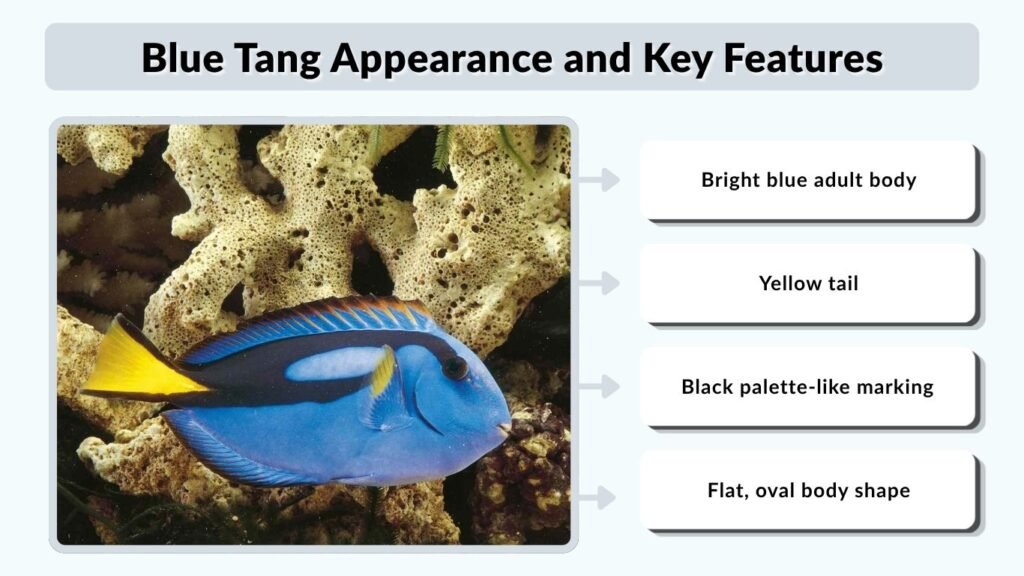
The blue tang has a flat, oval-shaped body built for moving through reef areas. Adults usually show a bright blue body, black markings, and a yellow tail. Juveniles may look different from adults, and their colors can change with age, stress, or mood.
The Surgeonfish Spine
Blue tangs belong to the surgeonfish family. These fish have sharp spines near the base of the tail. When threatened, they can raise these spines for defense. This is one reason aquarists should handle them carefully and avoid using bare hands when moving them.
Important blue tang features include:
- Bright blue adult body
- Yellow tail
- Black palette-like marking
- Flat, oval body shape
- Sharp defensive tail spines
- Active swimming behavior
- Strong need for open space
These features make the blue tang beautiful, but also more demanding than many smaller reef fish.
Blue Tang Habitat in the Wild
In the wild, blue tangs live around tropical coral reefs in the Indo-Pacific region. They are often found near reef slopes, clear coastal waters, and areas with coral shelter. Juvenile blue tangs may stay close to branching coral for protection, while adults swim more actively around reef zones.
Why Coral Reefs Matter
Coral reefs provide shelter, food, and safety for blue tang fish. These fish graze on algae and other natural foods around reef habitats. By eating algae, tangs can also help support reef balance because too much algae may compete with coral.
Blue tangs are part of a larger reef ecosystem. Their health depends on clean oceans, stable reef habitats, and balanced marine environments.
Blue Tang Lifespan
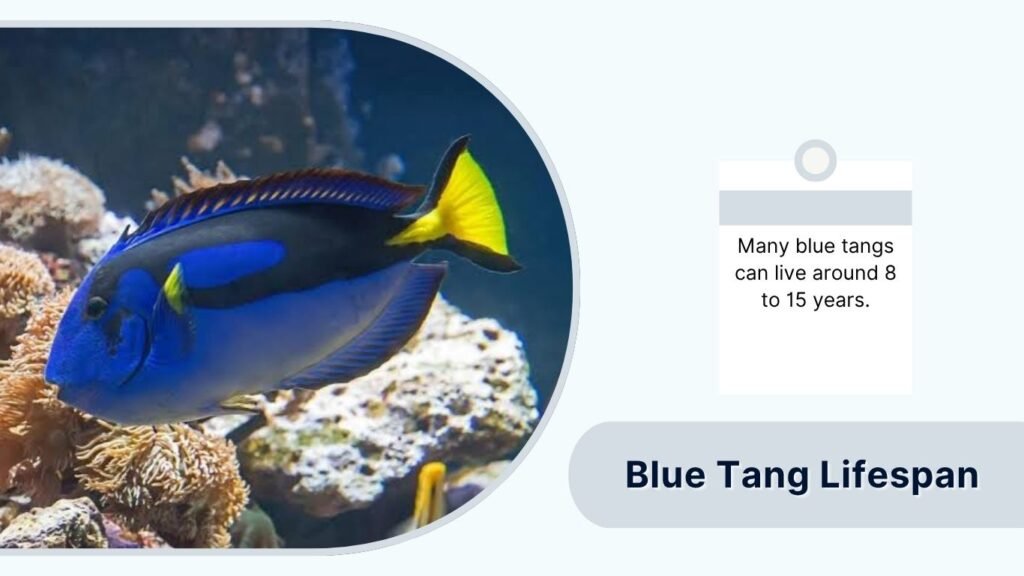
Blue tang lifespan can vary depending on whether the fish lives in the wild or in an aquarium. In good conditions, blue tangs may live for many years. In captivity, their lifespan depends heavily on tank size, water quality, diet, stress levels, and disease prevention.
How Long Do Blue Tangs Live?
Many blue tangs can live around 8 to 15 years in aquariums when cared for properly. Some may live longer in excellent conditions. However, poor aquarium care can shorten their life quickly. Small tanks, unstable water, weak diet, and stress can lead to disease and early death.
A blue tang should not be bought only because it looks beautiful. It is a long-term responsibility and needs a mature saltwater setup.
Blue Tang Tank Size
Blue tang tank size is one of the most important care topics. These fish are active swimmers and grow larger than many beginners expect. A small tank can cause stress, aggression, poor growth, and health problems.
Recommended Aquarium Setup
A blue tang should be kept in a large saltwater aquarium with strong filtration and stable water conditions. Many hobbyists recommend a tank of at least 100 gallons or more for long-term care. Bigger is better because blue tangs need swimming space and produce waste.
| Care Factor | Recommended Condition | Why It Matters |
| Tank type | Saltwater aquarium | Blue tangs are marine fish |
| Tank size | Large, often 100+ gallons | They need open swimming space |
| Water temperature | Tropical marine range | Keeps metabolism stable |
| pH | Stable marine pH | Prevents stress |
| Diet | Algae-rich, varied foods | Supports color and health |
| Care level | Moderate to advanced | Not ideal for beginners |
| Tank mates | Peaceful or semi-compatible reef fish | Reduces stress and fighting |
Why Small Tanks Are a Problem
A small aquarium limits swimming space and makes water quality harder to control. Blue tangs may pace, hide, fight, or become more vulnerable to disease when stressed. Even if a juvenile blue tang looks small in a store, it can grow and need much more room later.
Blue Tang Diet
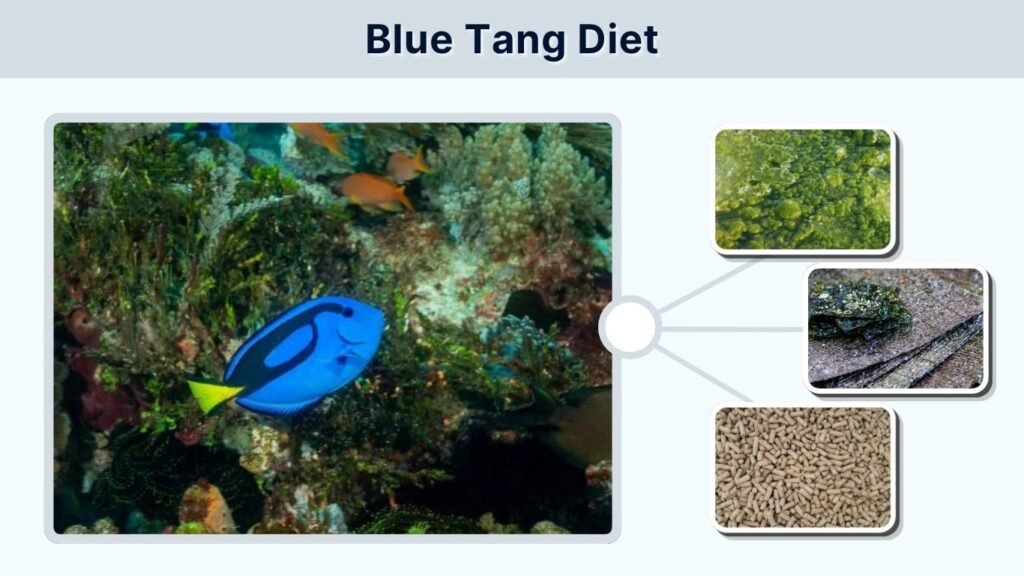
Blue tang diet is another major keyword topic because many new owners want to know what blue tangs eat. In nature, blue tangs eat algae and small marine foods. In aquariums, they need a varied diet with plenty of plant-based marine nutrition.
What Do Blue Tangs Eat?
Blue tangs should be fed foods that support their natural grazing behavior. They often do best with marine algae, seaweed sheets, quality herbivore pellets, and some frozen foods. A varied diet helps maintain energy, color, and immune health.
Good blue tang foods include:
- Dried seaweed or nori
- Marine algae sheets
- Herbivore pellets
- Spirulina-based foods
- Frozen mysis shrimp
- Brine shrimp as an occasional food
- High-quality marine flakes
- Vegetable-based marine blends
Blue tangs should not rely only on meaty foods. They need plant matter to support digestion and long-term health.
Feeding Tips for Better Health
Feed small amounts instead of one large meal. Blue tangs naturally graze, so regular access to seaweed clips can be helpful. Remove uneaten food before it breaks down and affects water quality.
Blue Tang Behavior and Temperament
Blue tangs are active and curious fish. They often swim across open areas of the tank and explore rockwork. They may hide when stressed or when first introduced to a new aquarium.
Are Blue Tangs Aggressive?
Blue tangs can be semi-aggressive, especially toward other tangs or fish with similar body shapes. They may become territorial if the tank is too small. In a large aquarium with proper spacing and hiding areas, they are often easier to manage.
Tank behavior can depend on:
- Aquarium size
- Number of hiding places
- Tank mate selection
- Feeding routine
- Water quality
- Stress levels
- Order of introduction
Blue tangs should be added carefully to a community reef tank. Avoid placing them with overly aggressive fish or too many tangs in a small space.
Blue Tang and Clownfish Compatibility
Many people search for blue tang and clownfish together because of Finding Nemo. In real aquariums, compatibility depends on tank size and individual behavior. Blue tangs and clownfish can sometimes live in the same saltwater aquarium, but they still need proper space and stable water.
Can Blue Tangs Live With Clownfish?
Yes, blue tangs may live with clownfish in a suitable marine tank. However, a clownfish can live in a much smaller aquarium than a blue tang. The tank should be designed for the larger and more active fish, not the smaller one.
A blue tang also needs more swimming room, stronger filtration, and careful disease control. Clownfish are usually hardier, while blue tangs are more sensitive.
Common Blue Tang Health Problems
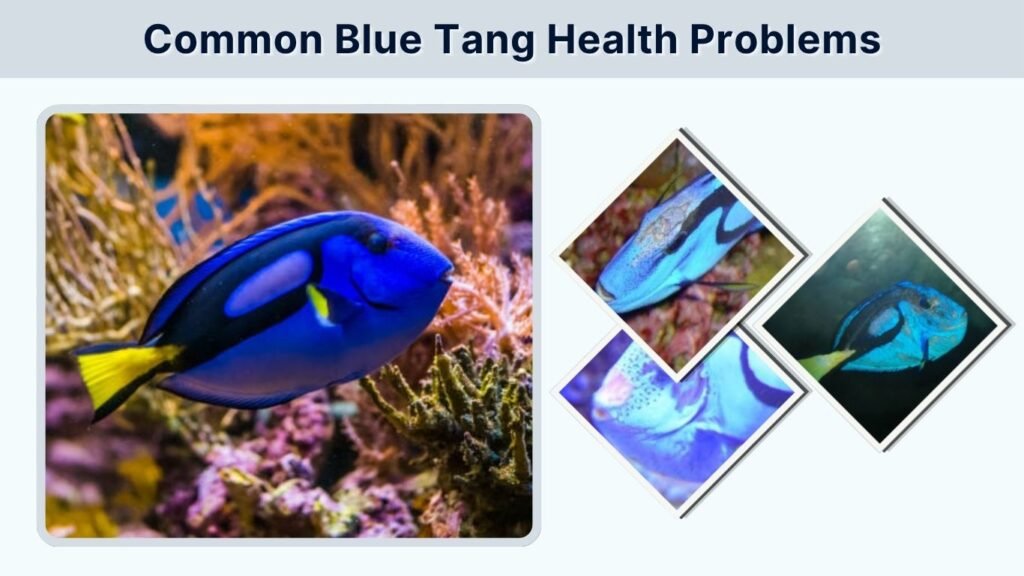
Blue tangs are known to be sensitive to stress and disease, especially marine ich. Poor water quality, sudden changes, and overcrowding can weaken their immune system.
Warning Signs to Watch
A healthy blue tang should swim actively, eat well, and show clear coloring. If it starts hiding constantly, scratching against rocks, breathing fast, or refusing food, something may be wrong.
Common warning signs include:
- White spots on body or fins
- Rapid breathing
- Loss of appetite
- Faded color
- Scratching on rocks
- Torn fins
- Hiding all day
- Unusual swimming
- Weight loss
Always check water quality first when a blue tang looks sick. Poor water conditions can cause or worsen many health problems.
Blue Tang Price and Buying Tips
Blue tang prices can vary based on size, location, availability, and seller. Smaller juveniles may cost less than larger specimens, but buyers should not choose a fish only by price. A cheap blue tang can become expensive if it needs treatment, special food, or a larger aquarium.
What to Check Before Buying
Before buying a blue tang, make sure your aquarium is ready. The tank should already be cycled and stable. Avoid buying a blue tang for a new or untested saltwater setup.
Look for a fish that:
- Swims normally
- Eats at the store
- Has clear eyes
- Has no visible white spots
- Has no torn fins
- Is not breathing heavily
- Has a healthy body shape
Ask the seller what the fish is eating. A blue tang that already accepts prepared foods is usually easier to care for.
Blue Tang Facts
Blue tangs are more than beautiful aquarium fish. They play a role in reef ecosystems and have several interesting traits that make them unique.
Interesting Facts About Blue Tangs
Here are some simple blue tang facts for readers:
- The scientific name is Paracanthurus hepatus.
- The blue tang is also called the regal tang or hippo tang.
- The “Dory” fish is based on a blue tang.
- Blue tangs have sharp spines near the tail.
- They live around coral reef habitats.
- They eat algae and other marine foods.
- Juveniles can look different from adults.
- They need large saltwater aquariums in captivity.
These facts make the blue tang a popular subject for students, aquarium keepers, and marine life fans.
Is a Blue Tang Good for Beginners?
A blue tang is usually not the best fish for beginners. It needs a large tank, stable water, strong filtration, and careful feeding. New saltwater keepers often do better with hardier marine fish before trying a blue tang.
Who Should Keep a Blue Tang?
A blue tang is better for someone who already understands saltwater aquarium care. The owner should know how to test water, manage filtration, quarantine fish, feed marine species, and prevent disease.
A blue tang may be a good choice if you have:
- A large established saltwater tank
- Experience with marine fish
- Stable water quality
- Proper filtration
- A varied feeding plan
- Space for active swimming
- Time for regular maintenance
If you cannot provide these conditions, it is better to choose a smaller, easier saltwater fish.
FAQs
What is the scientific name of the blue tang?
The scientific name of the blue tang is Paracanthurus hepatus. It is also known by common names such as regal blue tang, hippo tang, blue hippo tang, palette surgeonfish, royal blue tang, and Pacific blue tang. These names often refer to the same popular reef fish.
How long do blue tangs live?
Blue tangs can live for many years when cared for properly. In aquariums, many live around 8 to 15 years, depending on tank size, water quality, diet, and stress levels. A poorly maintained tank can shorten their lifespan significantly.
What do blue tangs eat?
Blue tangs eat algae, seaweed, and other marine foods. In aquariums, they should receive dried seaweed, marine algae sheets, herbivore pellets, spirulina foods, and occasional frozen foods. A plant-rich diet helps support digestion, color, and overall health.
What tank size does a blue tang need?
A blue tang needs a large saltwater aquarium because it is an active swimmer. Many keepers recommend at least 100 gallons or more for long-term care. Small tanks can cause stress, aggression, poor water quality, and health issues as the fish grows.
Can blue tangs live with clownfish?
Blue tangs can sometimes live with clownfish in a suitable saltwater aquarium. The tank must be large enough for the blue tang, not just the clownfish. Compatibility also depends on water quality, hiding spaces, feeding, and each fish’s behavior.