
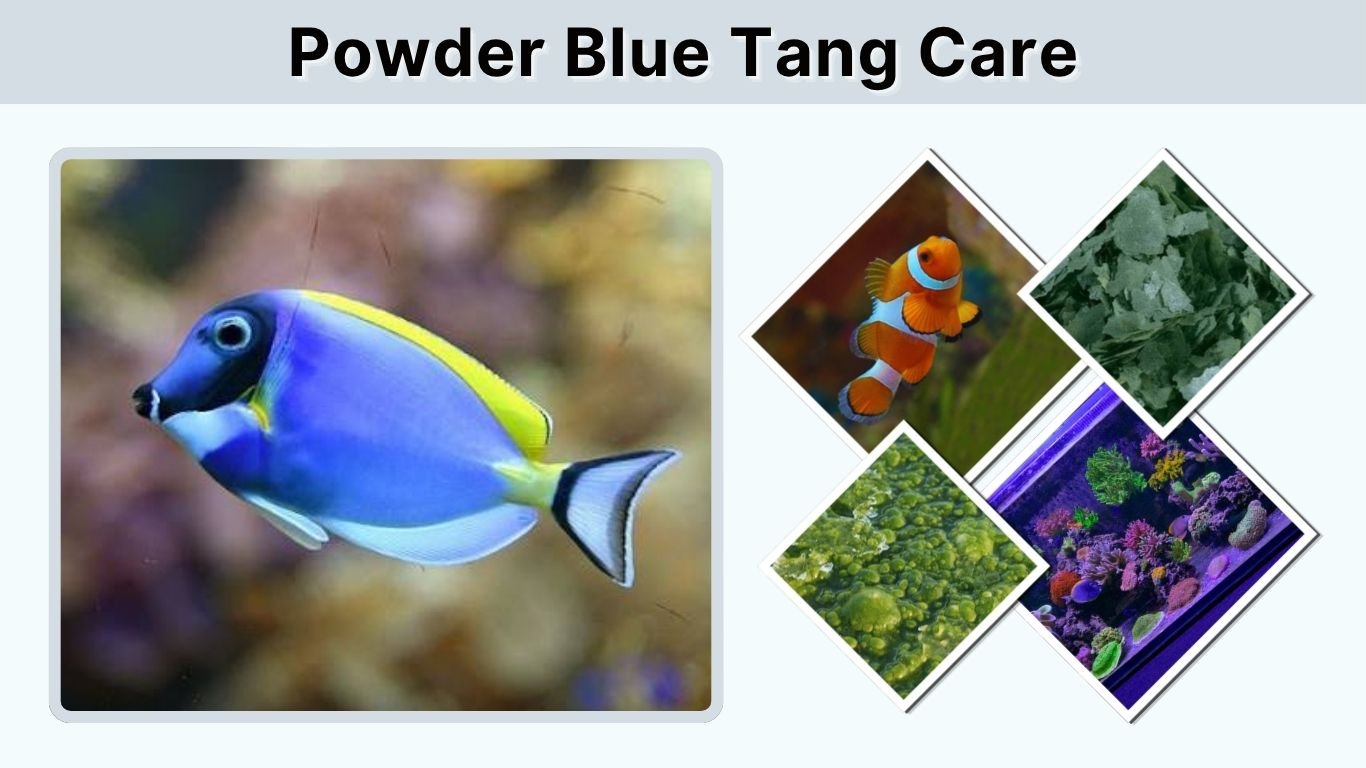
The powder blue tang is one of the most beautiful saltwater fish in the aquarium hobby. Its soft blue body, black face, yellow dorsal fin, and white markings make it a showpiece in reef tanks. However, this fish is not an easy beginner species. Powder blue tang care requires a large aquarium, excellent water quality, regular feeding, and careful disease prevention.
What Is a Powder Blue Tang?
The powder blue tang is a marine surgeonfish with the scientific name Acanthurus leucosternon. It is also called the powder blue surgeonfish or blue powder tang. This fish is naturally found around reef areas in the Indian Ocean, where it spends much of its time swimming and grazing on algae.
Its bold color pattern makes it easy to identify. A healthy powder blue tang usually has a bright powder-blue body, a dark face mask, a yellow dorsal fin, and a pale tail area. Like other tangs, it also has a sharp spine near the tail, which it can use for defense.
Why Powder Blue Tangs Are Popular
Powder blue tangs are popular because they look stunning in reef aquariums. They bring strong color, movement, and personality to a saltwater tank. Many aquarists also like them because they graze on algae and stay active throughout the day.
Still, beauty should not be the only reason to buy one. Powder blue tangs are sensitive fish. They are known for stress, aggression, and disease problems when kept in poor conditions. This makes them better for experienced marine fishkeepers than complete beginners.
Powder Blue Tang Quick Care Overview
Before buying a powder blue tang, it helps to understand its basic needs. This fish requires a mature saltwater aquarium and consistent care. It should not be placed in a small, new, or unstable tank.
| Care Factor | Recommended Condition | Notes |
| Scientific name | Acanthurus leucosternon | Also called powder blue surgeonfish |
| Care level | Moderate to difficult | Best for experienced aquarists |
| Temperament | Semi-aggressive to aggressive | Especially toward other tangs |
| Diet | Mostly herbivore | Needs algae and seaweed daily |
| Adult size | Around 8 to 10 inches | Needs open swimming space |
| Tank size | Large marine tank | Often 100–125+ gallons recommended |
| Reef safe | Generally yes | Usually safe with corals |
| Main concern | Ich and stress | Quarantine is strongly recommended |
Powder Blue Tang Tank Size
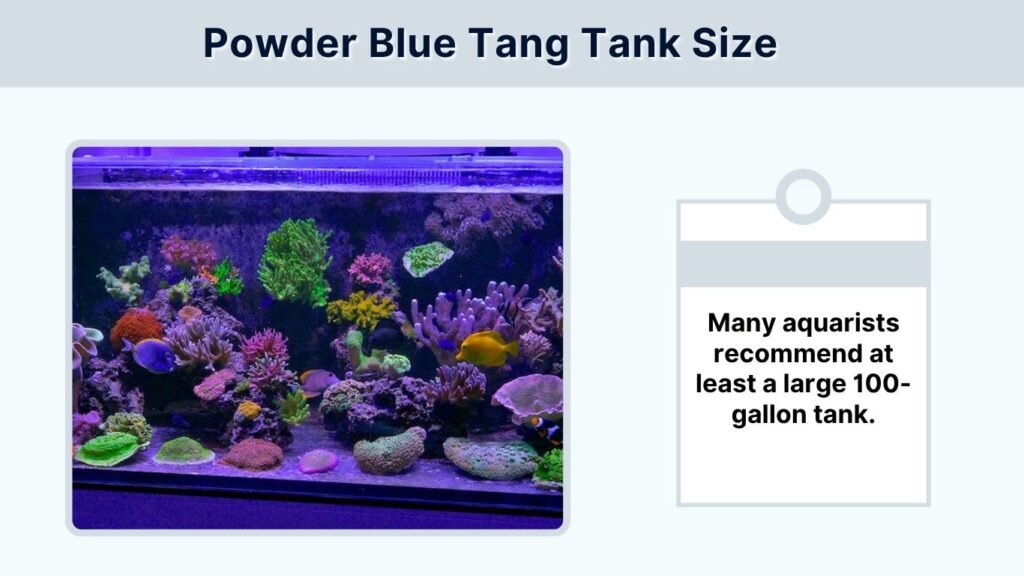
Powder blue tang tank size is one of the most important care topics. This fish is an active swimmer and needs open space. A small aquarium can quickly lead to stress, pacing, aggression, and disease.
Many aquarists recommend at least a large 100-gallon tank, while others prefer 125 gallons or more for long-term care. Bigger is safer because it gives the fish more swimming room and makes water quality easier to keep stable.
Can a Powder Blue Tang Live in a 75-Gallon Tank?
A 75-gallon tank is usually not ideal for a powder blue tang long term. A small juvenile may appear comfortable at first, but the fish can grow quickly and become territorial. As it matures, it needs more room to swim and establish space.
In a smaller tank, a powder blue tang may become aggressive toward tank mates or more vulnerable to marine ich. If you want this species, plan for a larger aquarium from the beginning instead of upgrading later.
Best Tank Setup
A good powder blue tang aquarium should have both open swimming space and rockwork. The fish needs room to swim across the tank, but it also needs hiding spots for security. Strong filtration and water movement are important because tangs are active fish that produce waste.
A good setup includes:
- Large saltwater aquarium
- Mature biological filtration
- Strong water movement
- Stable salinity and temperature
- Live rock for grazing and shelter
- Open swimming areas
- Tight-fitting lid
- Regular water testing
Powder blue tangs do best in stable systems. Avoid adding one to a newly cycled or unstable aquarium.
Powder Blue Tang Diet
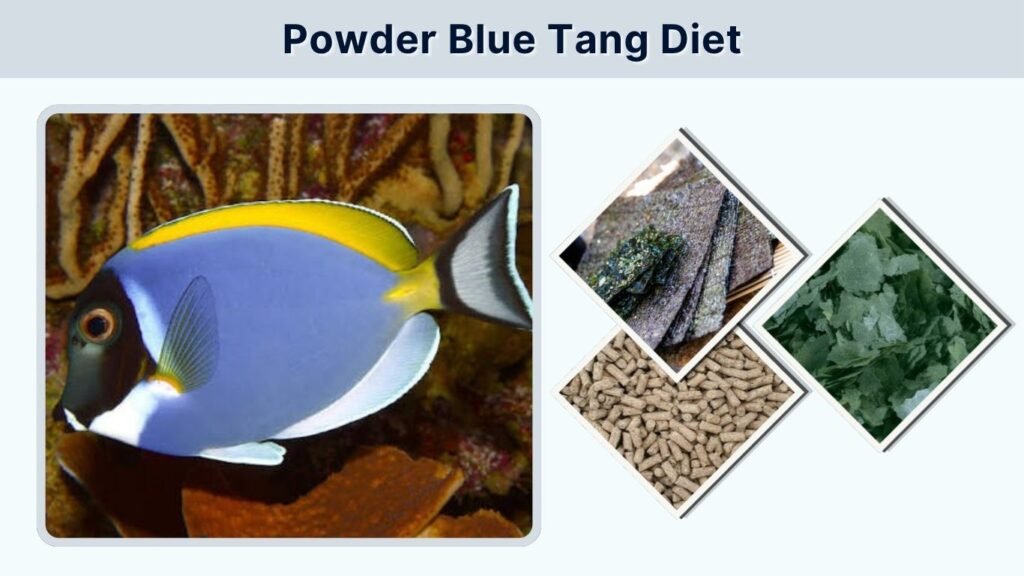
Powder blue tang diet should be based mostly on marine plant matter. In the wild, this fish grazes on algae around reef habitats. In captivity, it needs frequent access to algae-based foods to support digestion, color, and immune health.
What Do Powder Blue Tangs Eat?
A powder blue tang should eat a varied herbivore-focused diet. It may accept some meaty frozen foods, but plant-based marine foods should be the main part of its diet.
Good foods include:
- Dried seaweed or nori
- Marine algae sheets
- Spirulina flakes
- Herbivore pellets
- Frozen herbivore blends
- Mysis shrimp in small amounts
- Brine shrimp as an occasional treat
- Algae growing naturally on live rock
Seaweed clips are helpful because they allow the tang to graze during the day. This matches its natural feeding behavior and can also reduce aggression.
Feeding Powder Blue Tang Fish
Feed small portions several times a day if possible. A powder blue tang that is underfed may lose weight, become stressed, or start bothering other fish. However, overfeeding can pollute the water, so uneaten food should be removed.
A healthy powder blue tang should have a full body shape, bright color, and strong appetite. If it stops eating, check water quality and observe for signs of disease.
Powder Blue Tang Lifespan
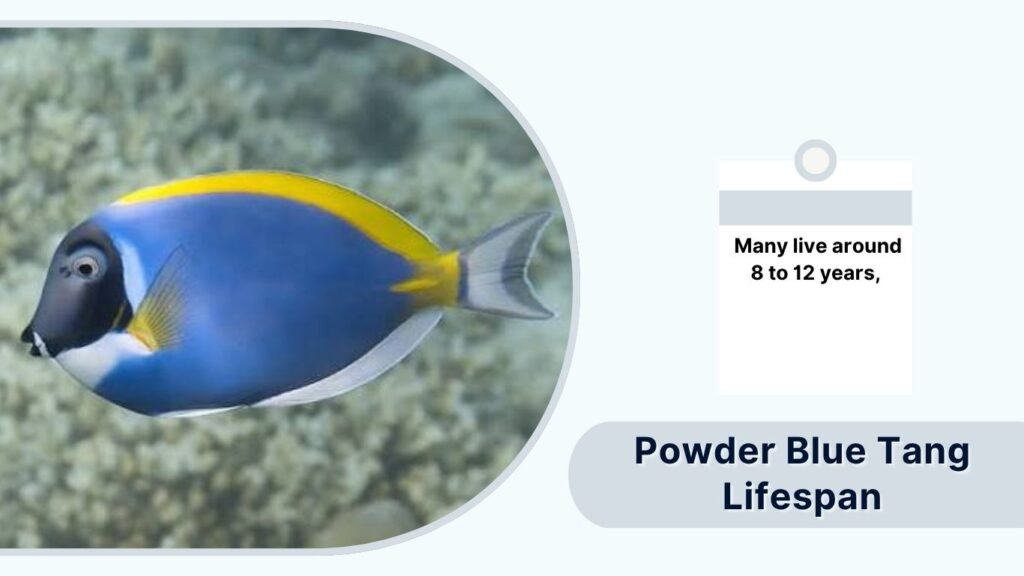
Powder blue tang lifespan depends on the quality of care. In aquariums, many live around 8 to 12 years, and some may live longer in excellent conditions. Their lifespan is shortened by stress, poor diet, small tanks, unstable water, and disease.
How to Help a Powder Blue Tang Live Longer
The best way to support a long lifespan is to reduce stress. Powder blue tangs are sensitive to sudden changes, aggressive tank mates, and poor water conditions.
To help them live longer:
- Quarantine before adding to the display tank
- Keep water parameters stable
- Feed algae-based foods daily
- Use a large aquarium
- Avoid overcrowding
- Choose tank mates carefully
- Maintain strong filtration
- Watch for early disease signs
A powder blue tang is not a “set and forget” fish. It needs regular observation and consistent care.
Powder Blue Tang Size and Growth
Powder blue tang size is another important factor for buyers. These fish can reach around 8 to 10 inches as adults. They may look small in stores, but they need room to grow and swim.
Juvenile Powder Blue Tang Care
A juvenile powder blue tang may be easier to fit into an aquarium at first, but it should still be treated as a future large fish. Do not buy a juvenile for a small tank unless you already have a realistic plan for a larger system.
Juveniles can also be sensitive after shipping. They should be quarantined, fed carefully, and introduced slowly to the aquarium.
Powder Blue Tang Temperament
Powder blue tangs are known for being semi-aggressive to aggressive. Their aggression is usually strongest toward other tangs, especially those with similar body shapes or feeding habits.
Are Powder Blue Tangs Aggressive?
Yes, powder blue tangs can be aggressive. They may chase other tangs, defend feeding areas, or become territorial in smaller tanks. A large aquarium can reduce aggression, but it does not remove the risk completely.
Aggression is more likely when:
- The tank is too small
- There are multiple tangs
- Food is limited
- Hiding spaces are poor
- The powder blue tang is added too early
- Tank mates have similar shapes
Adding a powder blue tang later in the stocking order can sometimes help because it prevents the fish from claiming the entire tank first.
Powder Blue Tang Compatibility
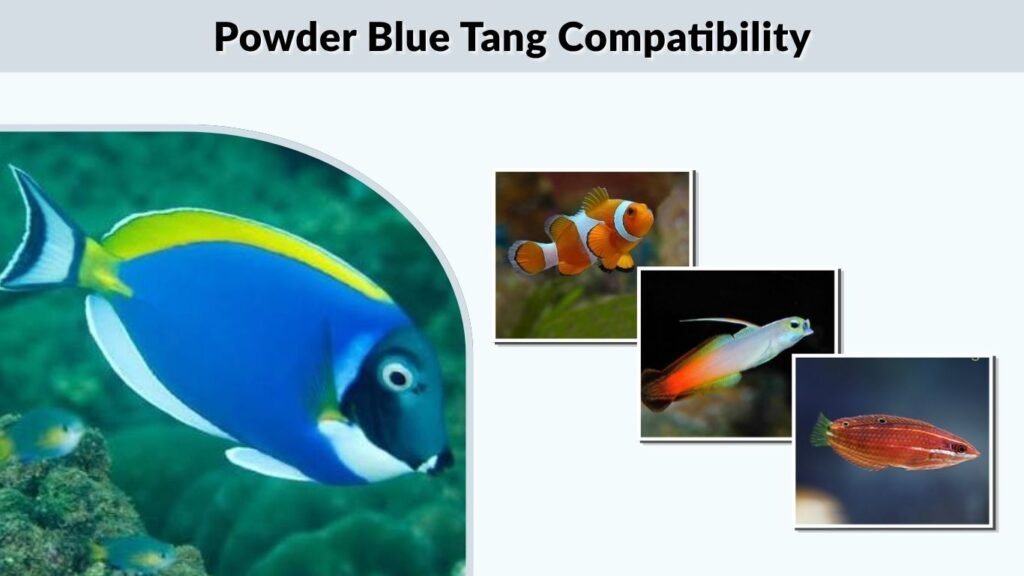
Powder blue tang compatibility depends on tank size, personality, and fish selection. It can live with many reef fish, but it may fight with other tangs or surgeonfish.
Good Tank Mate Choices
Peaceful or semi-bold reef fish are usually better than very shy fish. The tank should be large enough that each fish has space.
Possible tank mates may include:
- Clownfish
- Wrasses
- Gobies
- Blennies
- Some angelfish
- Some butterflyfish
- Peaceful reef-safe fish
- Larger community marine fish
Avoid tiny, delicate, or very nervous fish if the tang is already aggressive.
Powder Blue Tang and Yellow Tang
A powder blue tang and yellow tang may live together in a large tank, but there is risk. Both are active algae grazers, and the powder blue tang may become territorial. If keeping them together, use a large aquarium, plenty of hiding places, and multiple feeding areas.
Adding tangs at the same time can sometimes reduce fighting, but it does not guarantee success.
Powder Blue Tang and Hippo Tang
A powder blue tang and hippo tang can sometimes be kept together in a very large aquarium. The hippo tang has a different body shape, which may reduce direct competition, but both still need space. A small tank is not suitable for this combination.
Powder Blue Tang Ich and White Spot Problems
Powder blue tang ich is one of the biggest concerns with this species. This fish is often called an “ich magnet” because it can be highly vulnerable to marine ich, especially after stress from shipping, poor water, or aggressive tank mates.
Signs of Ich
Marine ich often appears as small white spots on the body, fins, or gills. The fish may also scratch against rocks, breathe quickly, hide, or stop eating.
Warning signs include:
- White spots on body or fins
- Flashing or scratching
- Rapid breathing
- Loss of appetite
- Faded color
- Hiding more than usual
- Clamped fins
A proper quarantine process is one of the best ways to protect both the powder blue tang and the display tank. Do not add a new powder blue tang directly into a reef aquarium without observation.
Is the Powder Blue Tang Reef Safe?
The powder blue tang is generally considered reef safe. It usually does not eat corals or invertebrates. Its main role in a reef tank is swimming and grazing algae.
However, reef safe does not mean problem-free. It may still fight with fish, stress weaker tank mates, or become difficult to manage if the tank is too small.
Does a Powder Blue Tang Eat Coral?
A healthy, well-fed powder blue tang usually does not eat coral. It is mostly interested in algae and prepared foods. If it picks around rocks or coral bases, it is usually searching for algae rather than eating the coral itself.
Powder Blue Tang Price and Buying Tips
Powder blue tang prices can vary based on size, location, availability, and seller. Larger or healthier-looking specimens may cost more. Hybrid powder blue tangs may also be priced differently depending on rarity and appearance.
What to Check Before Buying
Do not buy only based on price. A cheap powder blue tang can become expensive if it arrives sick or refuses food.
Before buying, check that the fish:
- Is eating prepared food
- Has clear eyes
- Has no white spots
- Swims strongly
- Does not breathe rapidly
- Has no torn fins
- Has a healthy body shape
- Is not being bullied in the store tank
Ask the seller how long the fish has been in their system. A fish that has been eating well for several days or weeks is usually a safer choice than one that just arrived.
Hybrid Powder Blue Tang
Hybrid powder blue tang keywords have lower volume but strong niche interest. A hybrid powder blue tang usually refers to a cross involving powder blue tang and a closely related tang species, often discussed among advanced hobbyists.
Should Beginners Buy a Hybrid?
A hybrid may be interesting, but it is not automatically easier to care for. In many cases, it should be treated with the same caution as a regular powder blue tang. It still needs a large tank, stable water, careful feeding, and disease prevention.
Powder Blue Tang vs Blue Tang
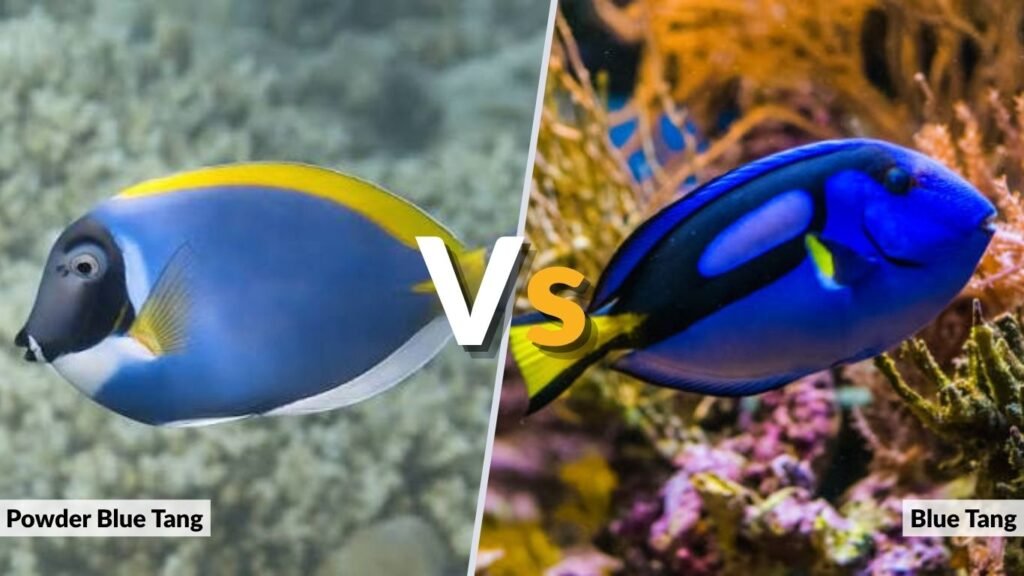
The powder blue tang is different from the blue tang often associated with Dory from Finding Nemo. The “Dory” fish is usually the regal blue tang or blue hippo tang, while the powder blue tang is Acanthurus leucosternon.
Main Differences
The powder blue tang has a powder-blue body, black face, yellow dorsal fin, and white markings. The blue hippo tang has a deeper blue body, black pattern, and yellow tail.
Both fish need large saltwater aquariums, but the powder blue tang is often considered more aggressive and more sensitive to disease.
Is a Powder Blue Tang Hard to Keep?
Yes, powder blue tangs are hard to keep compared with many marine fish. They are beautiful but demanding. They are best for aquarists who already understand saltwater maintenance, quarantine, disease treatment, and compatibility planning.
Best Owner for This Fish
A powder blue tang is best for someone with:
- A large established reef or marine tank
- Experience with tangs or surgeonfish
- Strong filtration
- Stable water quality
- Quarantine setup
- Time for daily feeding
- Ability to manage aggression
If you are new to saltwater fishkeeping, it is better to start with easier species before choosing a powder blue tang.
FAQs
What is the scientific name of the powder blue tang?
The scientific name of the powder blue tang is Acanthurus leucosternon. It is also called the powder blue surgeonfish or blue powder tang. It belongs to the surgeonfish family and is naturally found around reef habitats in the Indian Ocean.
What tank size does a powder blue tang need?
A powder blue tang needs a large saltwater aquarium. Many aquarists recommend at least 100 to 125 gallons for long-term care. This fish is an active swimmer and can become stressed or aggressive in small tanks.
What do powder blue tangs eat?
Powder blue tangs mainly eat algae and marine plant-based foods. In aquariums, they should be fed dried seaweed, nori, spirulina foods, herbivore pellets, and algae-based frozen blends. Small amounts of meaty food can be offered, but algae should be the main diet.
Are powder blue tangs aggressive?
Yes, powder blue tangs can be aggressive, especially toward other tangs or fish with similar body shapes. A large tank, plenty of hiding spots, and regular feeding can reduce aggression, but this species still needs careful compatibility planning.
Is a powder blue tang good for beginners?
No, a powder blue tang is usually not a good beginner fish. It is sensitive to stress, prone to ich, and needs a large stable saltwater tank. It is better suited for experienced marine aquarists who can manage disease prevention and aggressive behavior.