
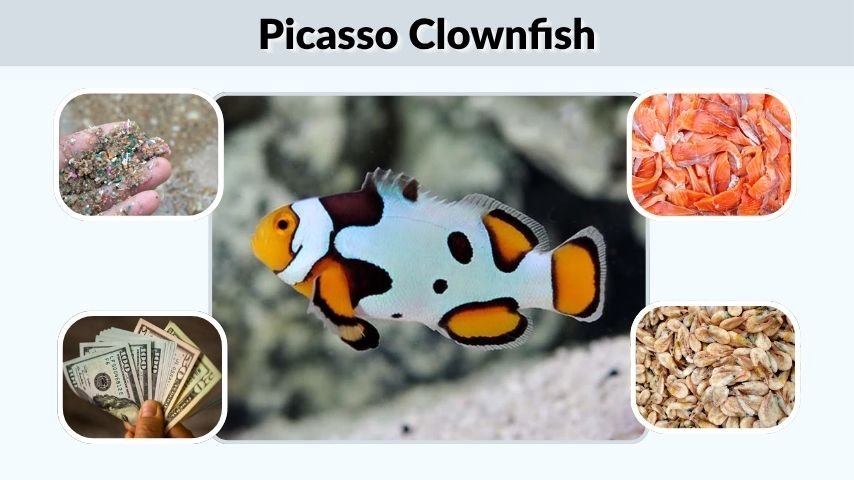
Picasso clownfish are designer clownfish known for bold, irregular white markings that make each fish look unique. Instead of the classic three clean white bands, Picasso clownfish often have broken, connected, or abstract patterns across the body. Their unusual appearance, hardy nature, and captive-bred availability make them popular with reef hobbyists who want a colorful, beginner-friendly saltwater fish with a premium look.
What Is a Picasso Clownfish?
A Picasso clownfish is a designer form of the percula clownfish, usually listed as Amphiprion percula. It is not a separate species but a selectively bred pattern variation. The name “Picasso” comes from the fish’s artistic, uneven white markings, which can look like brushstrokes or abstract patches.
Why Picasso Clownfish Look Different
Standard percula clownfish usually have three white vertical bands. Picasso clownfish have unusual white coverage, especially around the middle band. The markings may stretch, merge, curve, or break into shapes that look different from fish to fish.
This is one reason buyers often search for WYSIWYG Picasso clownfish, meaning “what you see is what you get.” Since every Picasso pattern is different, many hobbyists prefer buying the exact fish shown in the photo rather than a general stock image.
Are Picasso Clownfish Ocellaris or Percula?
Most true Picasso clownfish are percula clownfish, not ocellaris clownfish. However, the aquarium trade sometimes uses confusing names, and some designer morphs may be mixed, mislabeled, or compared with ocellaris designer types.
A Picasso percula clownfish generally has the body shape, behavior, and care needs of Amphiprion percula. When buying one, check whether the seller clearly labels it as percula, ocellaris, hybrid, or designer clownfish.
Picasso Clownfish Types and Varieties
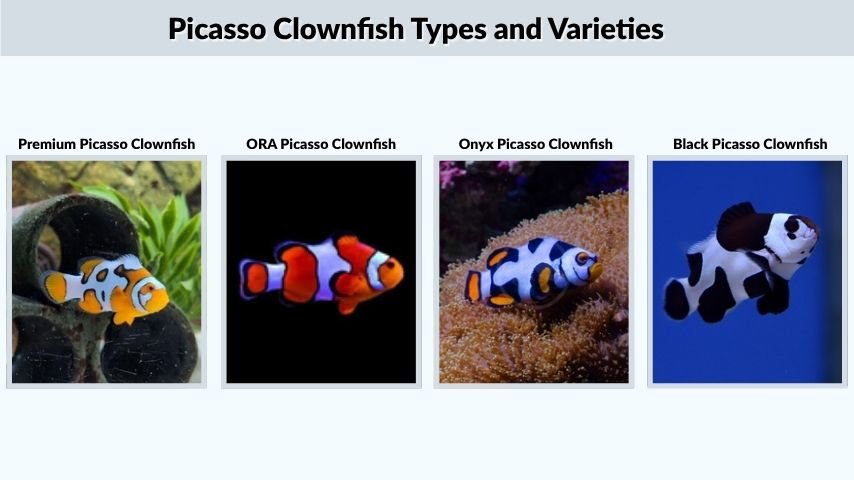
Picasso clownfish come in different grades, color patterns, and breeding lines. These names usually describe the pattern, black coverage, breeder source, or intensity of white markings.
Premium Picasso Clownfish
A premium Picasso clownfish usually has more dramatic white coverage and unusual striping than a standard Picasso. These fish are often hand-selected because their markings are more unique, balanced, or rare.
Premium fish usually cost more because fewer offspring develop the exact pattern breeders want. In many cases, the more connected and unusual the white markings are, the more desirable the fish becomes.
ORA Picasso Clownfish
ORA Picasso clownfish are among the best-known lines in the hobby. They helped popularize the Picasso clownfish as a designer percula morph. ORA’s Picasso strain is associated with selective captive breeding and unique white patterning.
Many hobbyists search for ORA premium Picasso clownfish because they want a recognizable captive-bred line. Captive-bred fish are generally preferred because they adapt well to aquariums and reduce pressure on wild reef populations.
Onyx Picasso Clownfish
An onyx Picasso clownfish combines the Picasso pattern with heavier black coloration. The body may show deeper black between the orange and white areas, especially as the fish matures.
Black onyx Picasso clownfish and extreme onyx Picasso clownfish are popular with aquarists who want a darker, high-contrast look. These fish may look especially striking under reef lighting.
Helmet, Extreme, and Black Picasso Clownfish
Helmet Picasso clownfish usually have a bold head or facial marking that looks like a helmet. Extreme Picasso clownfish may show very wide or connected white areas. Black Picasso clownfish often refer to fish with stronger dark coverage or related designer lines.
These names are not always standardized across sellers. One store’s “extreme” may look similar to another store’s “premium.” Always judge the actual fish, not just the name.
Bali Picasso and Other Designer Lines
Bali Picasso clownfish, Bali Aquarich Picasso clownfish, nebula Picasso clownfish, platinum Picasso clownfish, snowflake Picasso clownfish, and gladiator Picasso clownfish are often searched by buyers comparing designer morphs.
Some of these may be specific breeding lines, regional captive-bred strains, hybrids, or marketing names. Before buying, ask the seller for the species, parentage if known, adult appearance, and whether the fish is captive-bred.
Picasso Clownfish Care Requirements
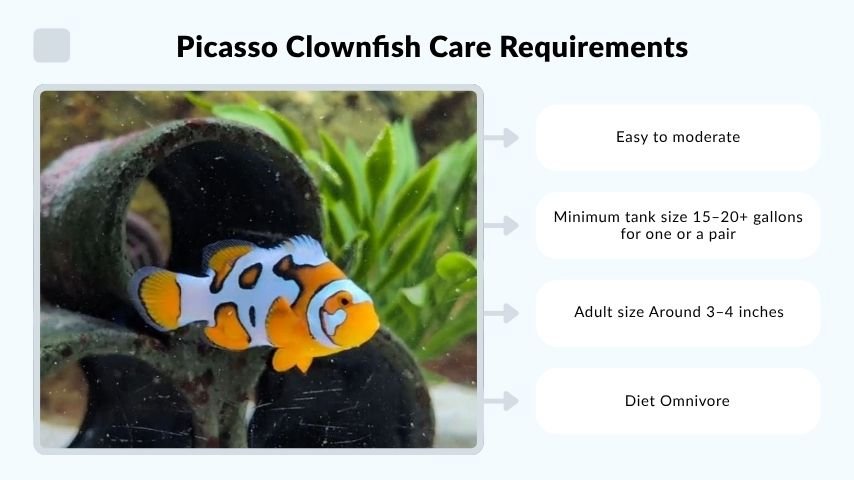
Picasso clownfish care is similar to percula clownfish care. They are considered hardy compared with many marine fish, but they still need stable saltwater conditions and a properly cycled aquarium.
| Care Factor | Recommendation |
| Scientific type | Usually Amphiprion percula designer morph |
| Care level | Easy to moderate |
| Minimum tank size | 15–20+ gallons for one or a pair |
| Adult size | Around 3–4 inches |
| Temperament | Semi-peaceful to semi-aggressive |
| Diet | Omnivore |
| Reef safe | Yes |
| Lifespan | Often 6–10+ years with good care |
| Best for | Beginner to intermediate saltwater keepers |
Tank Size
A single Picasso clownfish or bonded pair can often do well in a smaller marine aquarium, but a tank around 20 gallons or larger is a safer starting point. Larger tanks are more stable, easier to maintain, and better for long-term health.
A small tank can work, but it leaves less room for error. Salinity, temperature, ammonia, and nitrate can change quickly in low water volume. Beginners usually have more success with a slightly larger setup.
Water Parameters
Picasso clownfish need stable marine water. Aim for warm tropical reef conditions with clean, oxygenated water and reliable filtration.
Good general targets include:
- Temperature around 75–82°F
- pH around 8.1–8.4
- Specific gravity around 1.020–1.025
- Ammonia and nitrite at 0 ppm
- Low nitrate through water changes
- Stable salinity with top-offs
The exact number is less important than stability. Sudden changes in salinity or temperature can stress clownfish and make them more vulnerable to disease.
Tank Setup
A Picasso clownfish aquarium should include open swimming space, live rock, hiding spots, and steady water movement. They often choose one area of the tank as their territory and may stay close to it.
Useful setup features include:
- Cycled biological filtration
- Live rock or reef-safe structure
- Moderate water flow
- A secure lid
- Stable heater
- Regular maintenance schedule
A lid is important because clownfish can jump, especially when stressed or startled.
Picasso Clownfish Diet and Feeding
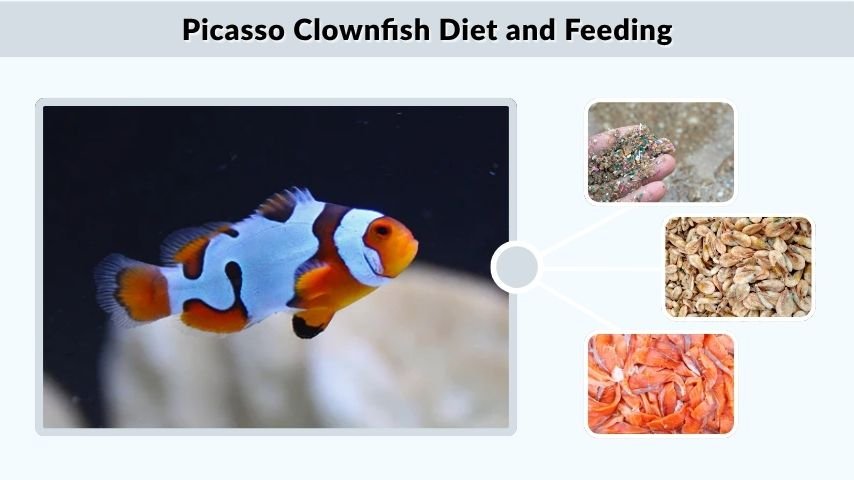
Picasso clownfish are omnivores. They usually accept a wide range of prepared and frozen foods, especially if they are captive-bred.
Best Foods
A varied diet helps support color, growth, and immunity. Feed small portions instead of large meals that pollute the water.
Good food options include:
- Marine pellets
- High-quality flakes
- Frozen mysis shrimp
- Frozen brine shrimp
- Finely chopped seafood
- Algae-based foods
- Enriched frozen blends
Feed once or twice daily, depending on the tank and filtration. Only offer what the fish can eat quickly.
Feeding Baby Picasso Clownfish
Baby Picasso clownfish for sale are usually juveniles. They may need smaller food particles than adults. Crushed pellets, finely chopped frozen foods, and small marine feeds are easier for them to eat.
When buying a juvenile, ask the seller what it is currently eating. A fish already taking pellets and frozen foods is usually easier to transition into a home aquarium.
Picasso Clownfish Behavior and Aggression
Picasso clownfish are usually active, curious, and hardy. They often develop a favorite corner, rock, coral, or anemone and may defend it.
Are Picasso Clownfish Aggressive?
Picasso clownfish can be semi-aggressive, especially once paired or mature. They are usually less aggressive than maroon clownfish but may still chase fish that enter their territory.
Aggression is more likely in small tanks, during pairing, or when the clownfish are breeding. A bonded pair may become more protective of their chosen area.
Good Tank Mates
Picasso clownfish usually do well with peaceful or semi-peaceful reef fish. Avoid large predators or aggressive fish that may bully them.
Possible tank mates include:
- Gobies
- Blennies
- Firefish
- Cardinalfish
- Royal gramma
- Small wrasses
- Peaceful reef-safe fish
Avoid mixing several clownfish species in a small tank. Different clownfish can fight, especially once they mature.
Picasso Clownfish and Anemones
Many buyers search for the best anemone for Picasso clownfish, but an anemone is not required. Picasso clownfish can live healthy lives without one.
Best Anemone Options
Because Picasso clownfish are percula clownfish variants, they may host compatible anemones, but hosting is never guaranteed. Bubble tip anemones are common in aquariums, while some natural host anemones are harder to keep.
Anemones need mature, stable reef tanks with strong lighting and good water quality. Do not add an anemone to a new or unstable aquarium just to make the clownfish happy.
Alternatives to Anemones
Picasso clownfish may host corals, rockwork, powerhead corners, or even empty tank space. This is normal. The fish does not need an anemone to feel secure if the tank is peaceful and stable.
Picasso Clownfish Price and Buying Tips
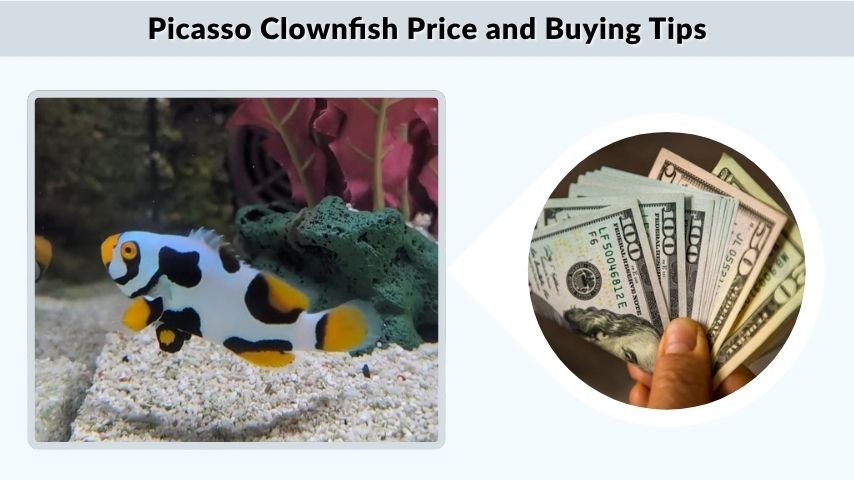
Picasso clownfish price depends on grade, pattern, breeder, size, color, pair status, and whether the listing is WYSIWYG. Standard juveniles may be more affordable, while premium, extreme, onyx, helmet, or bonded pairs often cost more.
Why Some Picasso Clownfish Cost More
Price usually increases when the fish has rare markings, extra white coverage, strong black contrast, or a known breeder line. A Picasso clownfish pair for sale may cost more than two individual juveniles because the fish are already bonded or compatible.
Factors that affect price include:
- Pattern rarity
- Grade A or premium label
- Onyx or extra-black coloration
- Captive-bred source
- Size and age
- Bonded or mated pair status
- WYSIWYG photo listing
- Shipping cost and live-arrival guarantee
Should You Buy a Pair?
A Picasso clownfish pair can be a good choice if you want natural social behavior or possible breeding. Buying a bonded pair reduces the risk of fighting compared with introducing two random adults.
If buying two juveniles, choose different sizes when possible. Clownfish form a hierarchy, with the larger dominant fish becoming female. Two similarly sized mature fish may fight more.
What to Check Before Buying
Before choosing a Picasso clownfish for sale, look for clear photos, active behavior, clean fins, bright eyes, and a strong feeding response. Avoid fish that are breathing fast, hiding constantly, covered in spots, or swimming weakly.
Ask these questions before purchase:
- Is it captive-bred?
- Is it percula or hybrid?
- What food is it eating?
- Is the photo WYSIWYG?
- Has it been quarantined or conditioned?
- Is it a single, bonded pair, or mated pair?
- What is the live-arrival policy?
Picasso Clownfish Breeding
Breeding Picasso clownfish is possible, but raising the fry is more advanced than keeping adults. Adult pairs may spawn regularly once mature and settled.
Pairing and Spawning
A compatible pair may clean a flat surface and lay eggs near their chosen territory. The male usually tends the eggs, fans them, and protects the nest.
Stable water, a protein-rich diet, and a low-stress environment can encourage spawning. However, spawning does not guarantee successful fry survival.
Raising Fry
Raising baby Picasso clownfish requires separate equipment, tiny live foods, and careful water management. Newly hatched larvae are delicate and need appropriate first foods such as rotifers before transitioning to larger foods.
Breeding snowflake and Picasso clownfish, gladiator x Picasso clownfish, or onyx Picasso pairings may produce varied designer offspring. However, results are not always predictable, and not every baby will show premium markings.
FAQs
How big do Picasso clownfish get?
Picasso clownfish usually reach around 3 to 4 inches as adults. Females are typically larger than males because clownfish have a dominance-based social structure. A pair often includes one larger female and one smaller male.
Are Picasso clownfish hard to care for?
Picasso clownfish are not very hard to care for if the tank is cycled and stable. They are hardy designer percula clownfish, but they still need clean saltwater, stable salinity, proper food, and peaceful tankmates.
What is the lifespan of a Picasso clownfish?
A Picasso clownfish can often live 6 to 10 years or longer with good care. Lifespan depends on water quality, diet, genetics, stress, disease prevention, and tank stability. Captive-bred fish often adapt well to aquarium life.
What is the difference between Grade A and Grade B Picasso clownfish?
Grade A Picasso clownfish usually have more dramatic, connected, or unusual white markings. Grade B fish may still be attractive but have less extreme patterning. Grading can vary by breeder or seller, so always compare actual photos.
Do Picasso clownfish need an anemone?
No, Picasso clownfish do not need an anemone to survive. They may host an anemone, coral, rockwork, or another area of the tank. Clean water, a safe territory, and low stress are more important than having an anemone.