
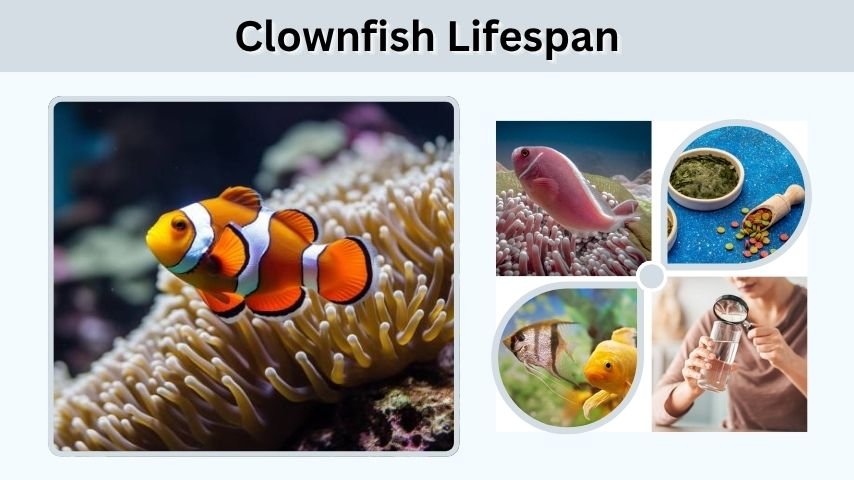
Clownfish are among the most popular saltwater aquarium fish because they are colorful, hardy, and full of personality. But before adding one to a tank, many aquarists ask the same question: how long do clownfish live? The answer depends on the species, environment, diet, water quality, and overall care. With the right setup, clownfish can become long-term aquarium companions.
What Is the Average Clownfish Lifespan?
The average clownfish lifespan is usually 6 to 10 years in captivity, although some individuals can live longer in excellent aquarium conditions. In the wild, their lifespan may vary because they face predators, food competition, environmental changes, and disease. In a stable home aquarium, clownfish often avoid many of these dangers.
Typical Lifespan Range
Most common clownfish species live several years when cared for properly. Ocellaris and percula clownfish, the two most familiar types, are often considered beginner-friendly and may live around 10 years or more in a healthy marine tank.
Some experienced aquarists report clownfish living well beyond a decade, especially when the fish are captive-bred, kept in stable water, and not exposed to aggressive tankmates. However, lifespan should never be judged by species alone. Care quality matters just as much.
Why Lifespan Varies
Two clownfish of the same species can have very different lifespans. One may live only a few years in a poorly maintained tank, while another may thrive for over a decade in a balanced aquarium.
The biggest lifespan factors include:
- Stable water temperature and salinity
- Low ammonia, nitrite, and nitrate levels
- Proper tank size and filtration
- Balanced diet
- Low stress environment
- Compatible tankmates
- Early disease prevention
Clownfish Lifespan in Captivity vs the Wild
Clownfish can live in both reef environments and home aquariums, but each setting affects their survival differently. In the wild, they depend heavily on reef shelter, food availability, and their relationship with sea anemones. In captivity, their lifespan depends on how well the aquarist recreates a stable marine environment.
Lifespan in a Tank
The lifespan of clownfish in a tank is commonly around 6 to 10 years, with longer lives possible under excellent care. Captive-bred clownfish often adapt better to aquarium life than wild-caught fish because they are raised in controlled conditions and usually accept prepared foods more easily.
A tank-raised clownfish may also experience less stress during the transition into a home aquarium. This can reduce the risk of disease and improve long-term health.
Lifespan in the Wild
In the wild, clownfish live around coral reefs and often form close relationships with sea anemones. The anemone provides shelter, while the clownfish may help bring food particles and defend the area.
However, wild clownfish face dangers that aquarium fish usually do not. These include predators, reef damage, parasites, storms, food shortages, and competition. Because of these risks, some wild clownfish may not reach their full potential lifespan.
Clownfish Lifespan by Species
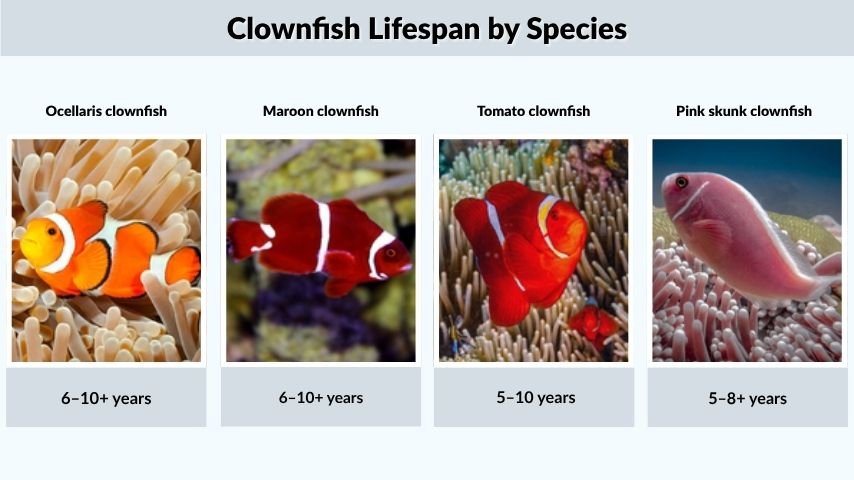
Different clownfish species can have slightly different lifespans, sizes, temperaments, and care needs. Still, most species kept in aquariums can live for many years when their environment is stable.
| Clownfish Type | Common Lifespan in Captivity | Notes |
| Ocellaris clownfish | 6–10+ years | Hardy, peaceful, beginner-friendly |
| Percula clownfish | 6–10+ years | Similar to ocellaris, slightly more delicate in some tanks |
| Maroon clownfish | 6–10+ years | Larger and more territorial |
| Tomato clownfish | 5–10 years | Hardy but can become aggressive |
| Clarkii clownfish | 6–10+ years | Adaptable and active |
| Cinnamon clownfish | 5–10 years | Durable, semi-aggressive |
| Pink skunk clownfish | 5–8+ years | Peaceful but more sensitive |
| Designer morphs | Similar to parent species | Lifespan depends on genetics and care |
Ocellaris Clownfish Lifespan
The ocellaris clownfish lifespan is one of the most searched topics because this species is the classic “orange clownfish” many people recognize. Ocellaris clownfish are hardy, widely available, and often captive-bred.
With proper aquarium care, they commonly live 6 to 10 years, and some may live longer. Their manageable size, peaceful nature, and strong adaptability make them a popular choice for beginners.
Percula Clownfish Lifespan
Percula clownfish look very similar to ocellaris clownfish, but they are a separate species. Their lifespan is also usually around 6 to 10 years in captivity.
True percula clownfish may have thicker black markings and can sometimes be slightly more sensitive than ocellaris clownfish. They still do well in stable aquariums with clean water and peaceful tankmates.
Maroon Clownfish Lifespan
Maroon clownfish can live around 6 to 10 years or more, but they require more planning than smaller species. They grow larger and are often more territorial, especially as adults.
A maroon clownfish should not be crowded into a small tank with timid fish. Stress and fighting can shorten its lifespan. A larger aquarium, secure hiding places, and careful tankmate selection are important.
Tomato, Clarkii, and Cinnamon Clownfish Lifespan
Tomato, clarkii, and cinnamon clownfish are hardy species that can live for many years with good care. They may be more assertive than ocellaris or percula clownfish, so tank setup matters.
These species often do best when given enough space, strong filtration, and compatible fish that will not constantly challenge their territory.
What Helps Clownfish Live Longer?
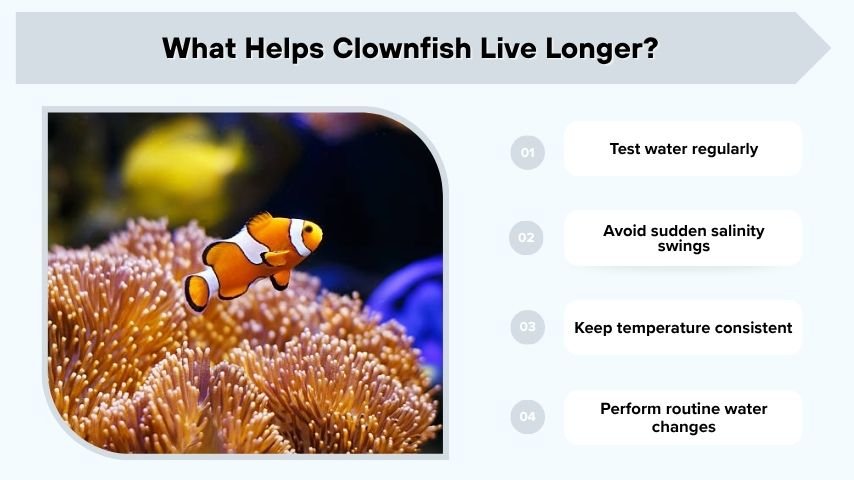
A long clownfish lifespan starts with consistency. Clownfish are hardy, but they still need stable saltwater conditions. Sudden changes in temperature, salinity, or water chemistry can cause stress and illness.
Keep Water Conditions Stable
Stable water is one of the most important parts of clownfish care. A healthy tank should be fully cycled before adding fish. Ammonia and nitrite should remain at zero, while nitrate should be kept low through water changes and filtration.
Important water care habits include:
- Test water regularly
- Avoid sudden salinity swings
- Keep temperature consistent
- Perform routine water changes
- Use a reliable filter and heater
- Do not overfeed the tank
Even hardy clownfish can suffer if water quality drops. Poor water conditions may lead to breathing problems, weakened immunity, fin damage, and disease outbreaks.
Choose the Right Tank Size
A single clownfish or pair needs enough room to swim, establish territory, and avoid stress. While clownfish are not large fish, they still benefit from a properly sized saltwater aquarium.
Small tanks can change water chemistry quickly, which increases risk. Larger tanks are usually easier to keep stable. A bigger water volume helps protect fish from sudden ammonia spikes, temperature changes, and salinity shifts.
Feed a Balanced Diet
Clownfish are omnivores, which means they eat both plant-based and animal-based foods. In aquariums, they usually accept pellets, flakes, frozen foods, and small meaty foods.
A varied diet may include:
- High-quality marine pellets
- Marine flakes
- Frozen mysis shrimp
- Brine shrimp
- Finely chopped seafood
- Algae-based foods
Overfeeding is a common mistake. Extra food breaks down and lowers water quality. It is better to feed small portions that the fish can finish quickly.
Reduce Stress
Stress can shorten the lifespan of a clownfish. Even if the fish looks active, constant stress weakens the immune system over time.
Common stress triggers include aggressive tankmates, overcrowding, poor water quality, sudden lighting changes, and frequent rearranging of the aquarium. Clownfish like having a familiar territory, so avoid unnecessary disruptions once they settle in.
Does a Clownfish Need an Anemone to Live Longer?
Many people connect clownfish with sea anemones, but a clownfish does not need an anemone to survive in an aquarium. In fact, many captive-bred clownfish live long and healthy lives without one.
Benefits of an Anemone
An anemone may provide shelter and a natural hosting behavior for clownfish. Watching a clownfish interact with an anemone can be one of the most interesting parts of a reef tank.
However, anemones are not beginner animals. They often need strong lighting, stable water, and mature reef systems. If the tank is too new or unstable, the anemone may suffer.
Alternatives to Anemones
Some clownfish will host coral, rockwork, powerhead corners, or even aquarium decorations. While this may look unusual, it is normal behavior. The key is not whether the fish has an anemone, but whether it feels safe.
A clownfish can live a full lifespan without an anemone if the aquarium is clean, stable, and peaceful.
Common Problems That Shorten Clownfish Lifespan
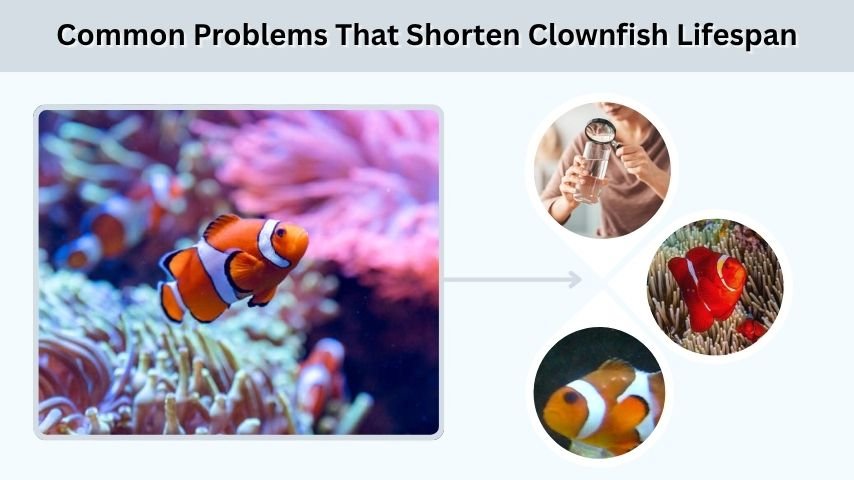
Clownfish are considered hardy, but they are not indestructible. Many health problems come from poor water quality, stress, or introducing sick fish without quarantine.
Poor Water Quality
Bad water is one of the fastest ways to harm a clownfish. Ammonia and nitrite are especially dangerous. Even low levels can damage gills and cause serious stress.
Cloudy water, algae blooms, gasping at the surface, and loss of appetite can all signal a water quality issue. Testing the water is better than guessing.
Aggressive Tankmates
Clownfish can be territorial, but some species are more peaceful than others. Ocellaris and percula clownfish are usually easier to keep in community tanks, while maroon and tomato clownfish can become more aggressive.
Avoid keeping clownfish with fish that constantly chase, nip, or compete for the same territory. Stress from fighting can lead to injuries and disease.
Disease and Parasites
Marine fish can suffer from parasites and infections. New fish should be observed carefully before being added to a display tank. Quarantine is a smart practice for serious hobbyists because it helps prevent disease from spreading.
Warning signs include:
- White spots or dusty coating
- Rapid breathing
- Scratching against rocks
- Refusing food
- Torn fins
- Unusual hiding
- Stringy waste
- Faded color
Early action often improves survival. Waiting too long can make treatment harder.
How to Tell If a Clownfish Is Healthy
A healthy clownfish is active, alert, and interested in food. It should swim steadily, respond to movement, and show bright coloration.
Signs of a Healthy Clownfish
Healthy clownfish usually have clear eyes, smooth fins, normal breathing, and a strong appetite. They may stay near a chosen territory but should not remain motionless all day.
Normal behavior includes gentle wiggling, defending a favorite spot, swimming near rockwork, and interacting with a mate or host area.
Signs of an Aging Clownfish
Older clownfish may become slightly less active, but they should still eat and swim normally. Aging is usually gradual. Sudden weakness, fast breathing, or refusal to eat is more likely a health issue than simple old age.
If a clownfish has been in the tank for many years, continue maintaining stable water and a calm environment. Older fish often handle sudden changes poorly.
Best Tank Care Tips for a Longer Clownfish Lifespan
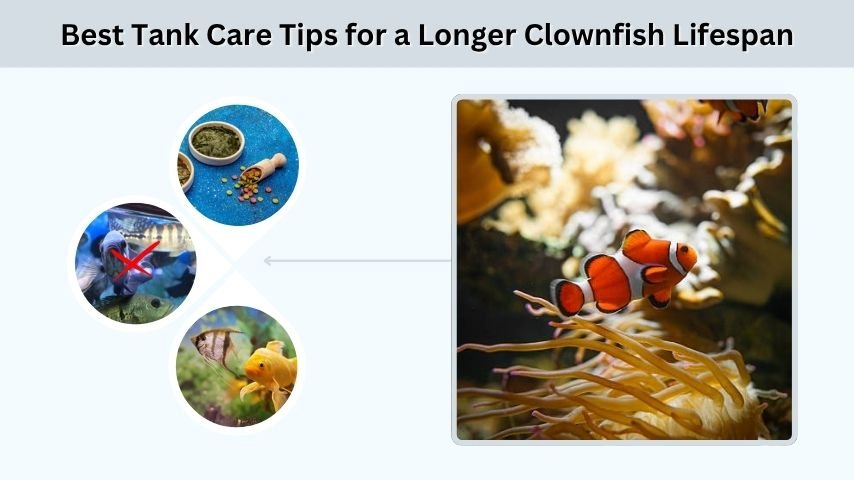
A long-lived clownfish is usually the result of good habits repeated over time. You do not need a complicated setup, but you do need consistency.
Simple Longevity Checklist
Use this checklist to support a healthy clownfish lifespan:
- Cycle the tank before adding fish
- Keep ammonia and nitrite at zero
- Maintain stable salinity and temperature
- Feed a varied marine diet
- Avoid overcrowding
- Choose peaceful tankmates
- Quarantine new fish when possible
- Clean equipment regularly
- Perform routine water changes
- Watch behavior daily
Small problems are easier to fix when noticed early. A quick daily check can help you catch changes in appetite, swimming, breathing, or aggression.
FAQs
What is the lifespan of a clownfish?
The average lifespan of a clownfish in captivity is usually 6 to 10 years. Some clownfish can live longer with excellent care, stable water quality, a balanced diet, and a low-stress tank environment. Lifespan varies by species and aquarium conditions.
How long do ocellaris clownfish live?
Ocellaris clownfish commonly live around 6 to 10 years in a well-maintained aquarium. Some may live longer when kept in stable saltwater conditions with good filtration, peaceful tankmates, and proper feeding. Captive-bred ocellaris clownfish often adapt well to home aquariums.
Do clownfish live longer in captivity or in the wild?
Clownfish can live long lives in both environments, but captivity may offer protection from predators and food shortages. However, aquarium clownfish only live longer when water quality, diet, tank size, and stress levels are properly managed. Poor care can shorten their lifespan.
Can clownfish live without an anemone?
Yes, clownfish can live without an anemone in an aquarium. Many captive-bred clownfish live healthy lives without one. Anemones can provide natural shelter, but they are not required. Clean water, good food, and a safe territory are more important for lifespan.
Which clownfish lives the longest?
Ocellaris, percula, maroon, and clarkii clownfish can all live many years with proper care. There is no single guaranteed longest-living type because lifespan depends heavily on tank stability, diet, genetics, and stress. A well-cared-for clownfish of any common species may live 10 years or more.