
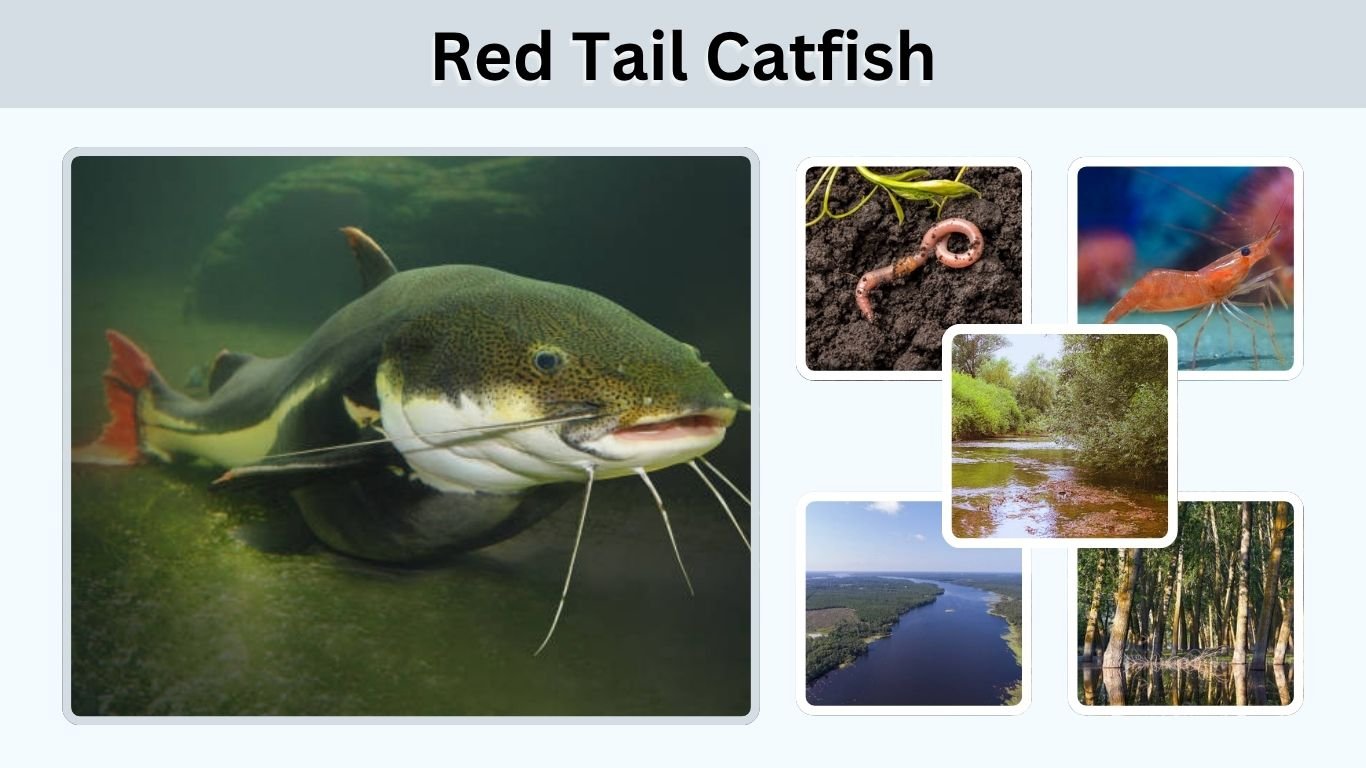
The red tail catfish is a massive freshwater fish recognized by its broad head, long whiskers, dark body, and bright orange-red tail. Juveniles may look manageable in pet stores, but they grow rapidly and eventually require an enormous custom aquarium or indoor pond. Keeping one successfully demands strong filtration, careful feeding, stable tropical water, and considerable long-term expense. This guide explains the red tail catfish’s size, appearance, habitat, diet, temperament, lifespan, tank requirements, and suitability as an aquarium pet.
Red Tail Catfish Quick Facts
The red tail catfish, scientifically known as Phractocephalus hemioliopterus, belongs to the Pimelodidae family. It is a powerful South American predator that spends much of its time near the bottom of rivers and flooded habitats. Its impressive appearance makes it popular among monster-fish enthusiasts, although its enormous adult size makes it unsuitable for most household aquariums.
Basic Information
- Common name: Red tail catfish
- Scientific name: Phractocephalus hemioliopterus
- Family: Pimelodidae
- Origin: South America
- Water type: Freshwater
- Adult length: Commonly 3–4 feet
- Diet: Omnivorous predator
- Temperament: Predatory and territorial around food
- Lifespan: Approximately 15 years or longer
- Care level: Advanced
- Best enclosure: Custom aquarium or indoor pond
Red Tail Catfish Appearance and Identification
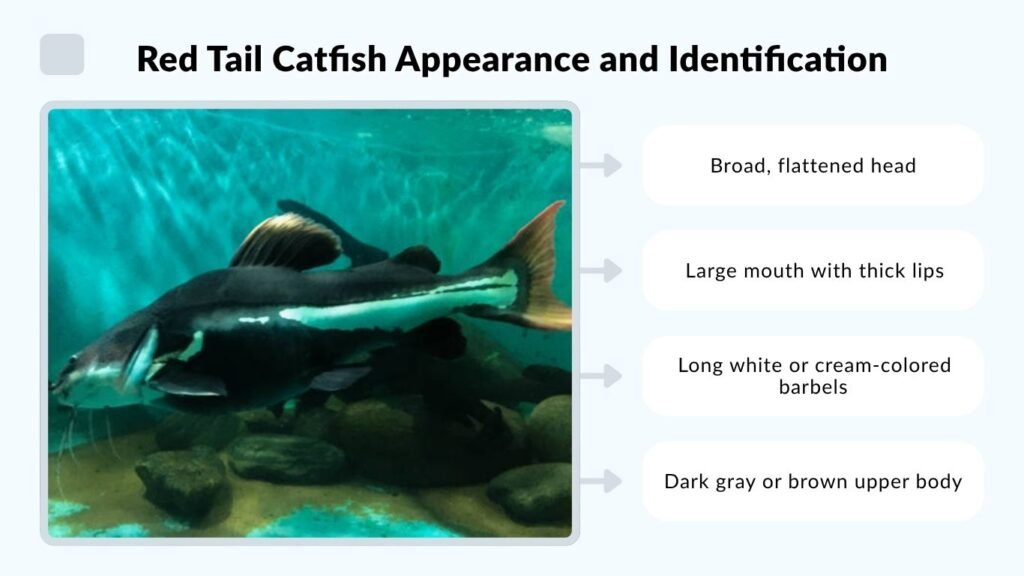
Red tail catfish are easy to recognize because their body contains several sharply contrasting colors. Their wide mouth, long sensory barbels, and flattened underside reveal their bottom-dwelling lifestyle. Although juveniles are attractive and relatively small, their body becomes thick, muscular, and extremely powerful as they mature. Healthy adults have a smooth, streamlined appearance without visible scales.
Body Shape and Color
The upper body is usually dark gray, brown, or almost black. A pale horizontal band runs along each side, separating the darker back from the white or cream-colored underside. The tail fin is orange, reddish-orange, or deep red, creating the fish’s most recognizable feature.
Its head is broad and flattened, while its mouth is large enough to swallow surprisingly big prey. Several long barbels extend from around the mouth. These sensitive structures help the fish detect food and navigate through dark or muddy water.
Main Identification Features
Look for the following characteristics:
- Broad, flattened head
- Large mouth with thick lips
- Long white or cream-colored barbels
- Dark gray or brown upper body
- White or pale underside
- Light stripe running along the sides
- Bright orange or red tail fin
- Thick body that narrows toward the tail
- Smooth skin without obvious scales
Red Tail Catfish Size and Growth Rate
Size is the most important factor to consider before purchasing this fish. A juvenile measuring only a few inches can eventually become longer than many household aquariums. Owners should plan for its full-grown size from the beginning. A smaller enclosure will not safely prevent growth and may instead cause stress, injury, deformity, and poor water quality.
How Big Do Red Tail Catfish Get?
A full-grown red tail catfish commonly reaches three to four feet in captivity. Exceptionally large wild individuals may grow beyond four feet and weigh more than 80 pounds. Growth depends on genetics, diet, water quality, enclosure size, and overall health.
Even an adult that remains slightly below the species’ maximum size will still be an enormous aquarium fish. Its thick body and wide turning radius require considerably more room than a slender fish of the same length.
How Fast Do They Grow?
Red tail catfish grow rapidly during their early years. Well-fed juveniles may gain approximately one inch per month, although growth is not identical for every fish. Some can grow even faster under warm conditions with frequent feeding.
Rapid growth means a temporary juvenile aquarium may become unsuitable within months. Buying a larger tank every time the fish outgrows its enclosure is usually expensive and impractical. Permanent adult housing should be arranged before bringing the fish home.
Red Tail Catfish Natural Habitat and Distribution
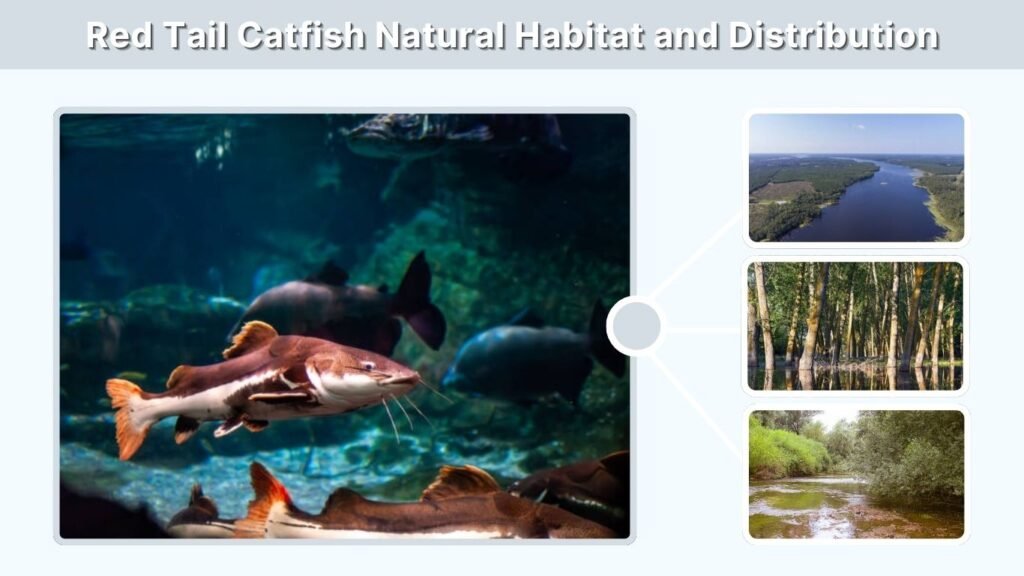
Red tail catfish are native to tropical South America, where they inhabit enormous interconnected river systems. Their natural environment offers deep water, flooded forests, submerged structures, and almost unlimited swimming space. Seasonal flooding gives them access to new feeding areas, while murky conditions allow their sensitive barbels and strong sense of smell to locate prey.
Where Do Red Tail Catfish Live?
They naturally occur within the Amazon and Orinoco river basins. Their range includes parts of Brazil, Peru, Colombia, Venezuela, Ecuador, Bolivia, and neighboring regions.
They may be found in:
- Large rivers
- Deep channels
- Flooded forests
- Connected lakes
- Slow-moving tributaries
- Areas near submerged branches and riverbanks
Red tail catfish generally remain near the bottom, although they will move throughout the water when feeding or exploring.
Natural Behavior
This species is primarily active during darker periods and may spend part of the day resting in sheltered areas. It uses its barbels to investigate the substrate and locate fish, crustaceans, insects, fruits, and other edible material.
Red tail catfish are opportunistic feeders. Instead of constantly chasing prey, they often wait until a suitable meal comes close enough to capture with a sudden movement of the mouth.
Red Tail Catfish Aquarium and Tank Requirements
A red tail catfish requires much more than a standard large aquarium. Adult housing must provide enough length for swimming, sufficient width for turning, powerful filtration, secure equipment, and easy access for maintenance. Because this fish produces a tremendous amount of waste, maintaining safe water conditions becomes one of the greatest challenges for its owner.
Minimum Tank Size
Juveniles can temporarily live in smaller aquariums, but adults need a custom-built system containing hundreds or preferably more than 1,000 gallons. Very large individuals may require an indoor pond or public-aquarium-sized enclosure.
The aquarium must be wide enough for the fish to turn without bending its body against the walls. Floor space is more important than excessive height because red tail catfish spend much of their time close to the bottom.
Recommended Water Conditions
Maintain stable conditions within these general ranges:
- Temperature: 72–80°F
- pH: 6.0–7.5
- Water hardness: Soft to moderately hard
- Ammonia: 0 ppm
- Nitrite: 0 ppm
- Nitrate: Kept as low as practical
- Water movement: Moderate
- Oxygen level: High
A heater may be necessary in colder homes. Large systems may need multiple protected heaters or an external heating method. All equipment should be secured because a powerful adult can move, break, or damage exposed aquarium hardware.
Filtration and Maintenance
Heavy-duty mechanical and biological filtration is essential. The filter must remove solid waste while supporting enough beneficial bacteria to process ammonia. Many keepers use large sump systems, oversized canister filters, or pond filtration equipment.
Partial water changes should be completed regularly. Uneaten food must be removed quickly because it can decay and cause ammonia spikes. Water should be tested frequently, especially after feeding or whenever the fish’s behavior changes.
Red Tail Catfish Diet and Feeding
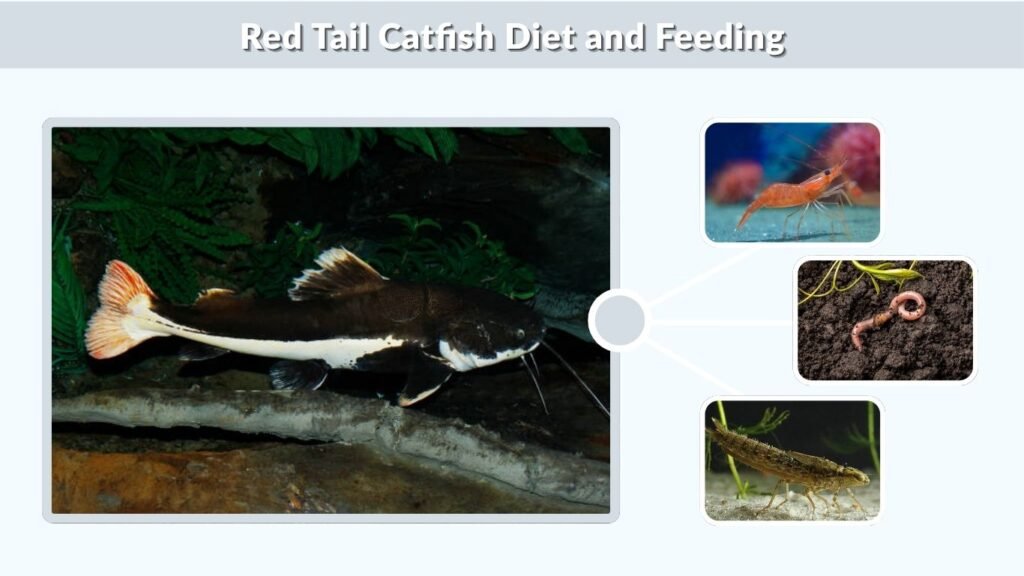
Red tail catfish are omnivorous predators with enormous appetites. In nature, they consume fish, crustaceans, insects, mollusks, fruits, and other available foods. Captive individuals need a varied diet rather than a constant supply of feeder fish. Overfeeding can cause obesity, digestive problems, poor water quality, and unusually rapid growth.
Suitable Foods
A balanced feeding plan may include:
- High-quality sinking carnivore pellets
- Pieces of shrimp or prawn
- Earthworms
- Mussels and clams
- Chopped fish fillets
- Crayfish or similar crustaceans
- Insects raised as animal food
- Occasional fruits for variety
- Commercial foods formulated for large catfish
Avoid feeding mammal or poultry meat regularly because these foods contain fats that fish may not process efficiently. Wild-caught feeder fish can also introduce parasites, bacteria, or harmful chemicals.
Feeding Frequency
Juveniles may be fed small portions once daily, while larger fish usually need meals only several times per week. Adults should not be fed every time they beg. Red tail catfish quickly learn to associate people with food and may appear hungry even after receiving enough.
Offer an amount the fish can finish promptly. A slightly rounded body is normal after eating, but constant abdominal swelling may indicate overfeeding or digestive trouble.
Temperament and Tank Mates
Red tail catfish are not always aggressive in the traditional sense, but they are highly predatory. Any animal that fits inside their mouth may eventually be swallowed. Their feeding response can also become forceful, particularly when several large fish compete for food in a confined enclosure.
Are Red Tail Catfish Aggressive?
They are usually calm when resting and may recognize the person who feeds them. However, they can become territorial around food or limited hiding spaces. Their strength also allows them to injure smaller fish accidentally.
A red tail catfish may swallow prey that appears too large for it. This can cause choking, internal injury, or the spines of another catfish becoming lodged inside its mouth.
Choosing Tank Mates
Keeping this species alone is often safest. Possible companions must be too large to swallow, peaceful enough to avoid constant conflict, and capable of living under similar water conditions.
Even large tank mates are not guaranteed to remain safe. A suitable combination when the fish are young may fail as their sizes and behavior change. Multiple monster fish also dramatically increase the required enclosure size and filtration capacity.
Lifespan and Common Health Concerns
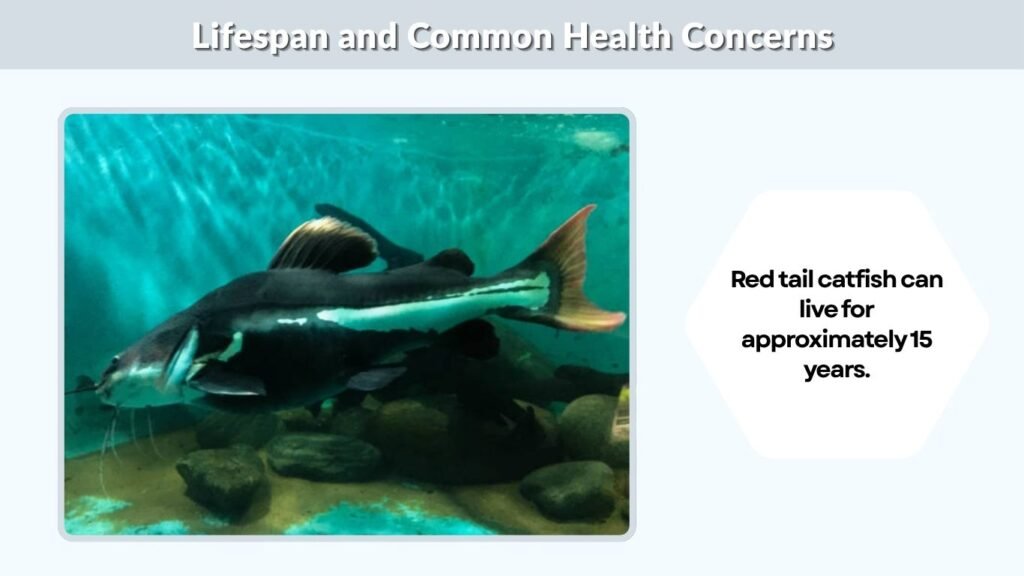
A properly housed red tail catfish can live for approximately 15 years or longer. Purchasing one is therefore a long-term commitment comparable to keeping many other large pets. Poor water quality, nutritional deficiencies, injuries, and undersized housing can substantially reduce its lifespan.
Common Health Problems
Red tail catfish may develop skin infections, parasites, damaged barbels, fin injuries, obesity, and digestive blockages. Most problems are connected to dirty water, poor nutrition, sharp decorations, unsuitable tank mates, or careless feeding.
Watch for loss of appetite, rapid breathing, unusual swelling, damaged fins, white spots, cloudy skin, or difficulty swimming. Because medication dosages become complicated in enormous systems, prevention through proper care is especially important.
Albino, Platinum and Phantom Red Tail Catfish
Several unusual color forms are sold within the aquarium trade. Albino red tail catfish generally have pale bodies and reduced dark pigmentation. Platinum individuals appear white, silver, or cream, while fish marketed as phantom varieties may display unusual gray, black, white, or patchy patterns.
Do Color Varieties Need Different Care?
These fish require the same enormous enclosure, filtration, diet, and long-term commitment as normally colored red tail catfish. A rare color does not create a smaller or easier-to-manage fish.
Unusual specimens can also be considerably more expensive. Buyers should verify that the fish is healthy and naturally colored rather than assuming every pale or patchy individual is a valuable genetic variety.
FAQs
The following questions address common concerns about keeping, feeding, identifying, and housing red tail catfish. Understanding these points before purchasing one can prevent serious welfare problems. The species is fascinating, but its rapid growth, powerful feeding behavior, heavy waste production, and enormous space requirements make it appropriate only for experienced owners with permanent facilities.
Are Red Tail Catfish Good Pets?
Red tail catfish can become responsive and impressive display animals, but they are unsuitable for most homes. Their rapid growth, enormous adult size, heavy waste production, and long lifespan require a custom aquarium or indoor pond, professional-grade filtration, and a substantial long-term budget.
Do Red Tail Catfish Need a Heater?
A heater is necessary when the surrounding environment cannot maintain stable tropical water temperatures. Owners should use protected equipment designed for the system’s total volume. In very large enclosures, multiple heaters or an external heating system may be safer and more efficient than one exposed aquarium heater.
Are Red Tail Catfish Aggressive?
They are generally less territorial than some monster fish, but they are powerful predators. Small fish will usually be treated as food, and similarly sized companions may be injured during feeding. Their behavior can also change with age, limited space, hunger, or competition for shelter.
What Is the Best Food for a Red Tail Catfish?
The best diet combines quality sinking carnivore pellets with shrimp, mussels, earthworms, fish pieces, and other appropriately prepared aquatic foods. Variety provides better nutrition than feeder fish alone. Portions should be controlled carefully because red tail catfish readily overeat and produce large quantities of waste.
Can a Red Tail Catfish Live in a 100-Gallon Tank?
A 100-gallon aquarium may temporarily hold a small juvenile, but it cannot house an adult. The fish will quickly become too long and heavy for the available swimming and turning space. Permanent accommodation generally requires a custom system containing hundreds or more than 1,000 gallons.