
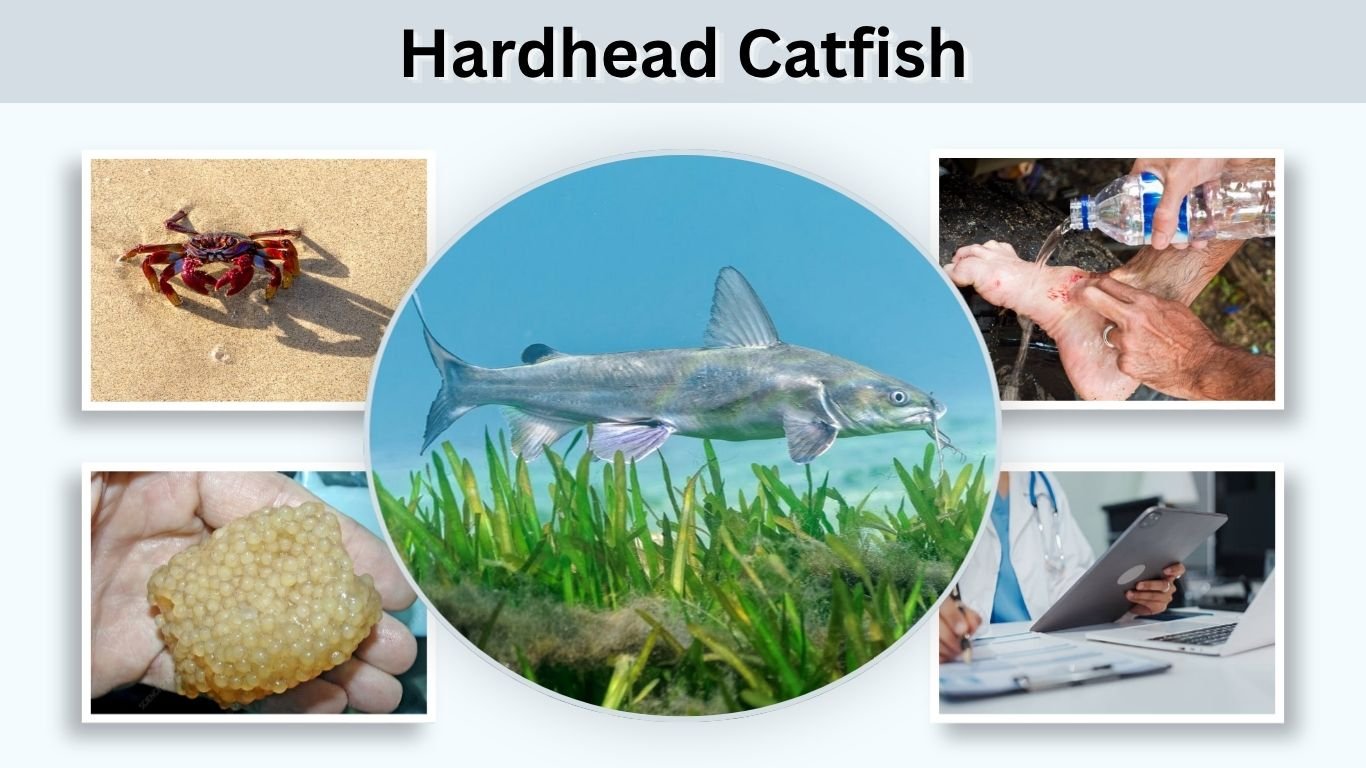
The hardhead catfish is a common saltwater catfish found along the Atlantic and Gulf coasts of North America. Recognizable by its deeply forked tail, six whisker-like barbels, and three sharp fin spines, this fish is frequently caught from beaches, piers, bridges, bays, and coastal waterways. Hardheads are edible, but many anglers release them because they have relatively little usable meat and are difficult to clean. Their dorsal and pectoral spines can deliver an extremely painful venomous puncture, making careful handling essential.
Hardhead Catfish Quick Facts
The hardhead catfish belongs to the sea catfish family Ariidae. Its accepted scientific name is Ariopsis felis, although older sources may use Arius felis.
| Feature | Information |
| Scientific name | Ariopsis felis |
| Family | Ariidae |
| Water type | Saltwater and brackish water |
| Common length | Around 10 inches |
| Maximum reported length | About 27.5 inches |
| Maximum published weight | Approximately 12.1 pounds |
| Diet | Crabs, shrimp, fish and bottom-dwelling animals |
| Main range | Western Atlantic and Gulf of Mexico |
| Reproduction | Male carries eggs in his mouth |
| Danger to people | Venomous dorsal and pectoral spines |
FishBase reports a common length of approximately 25 centimeters and a maximum published length of 70 centimeters, or about 27.5 inches. The maximum published weight is 5.5 kilograms, or approximately 12.1 pounds.
What Does a Hardhead Catfish Look Like?
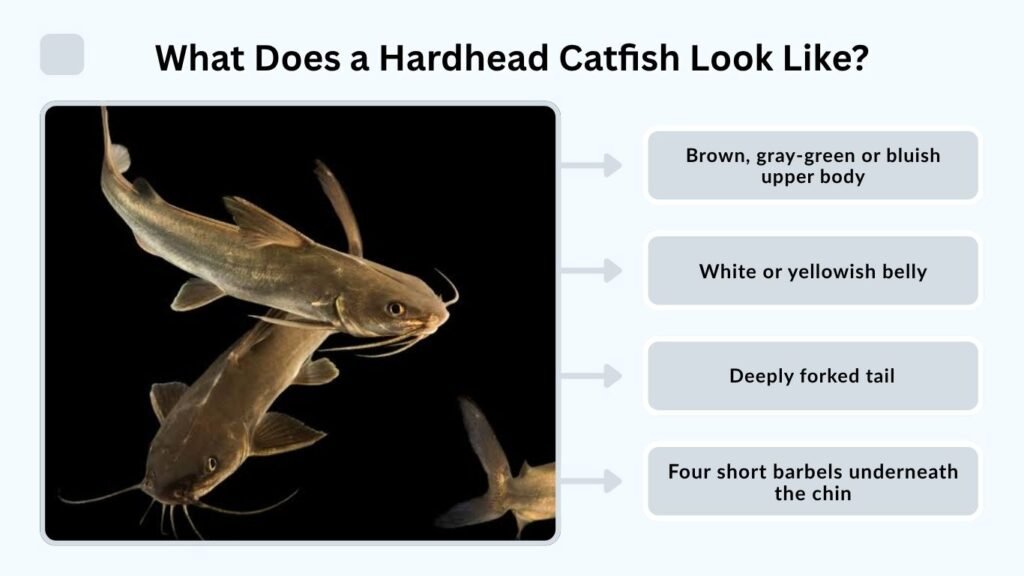
The hardhead has an elongated body with a rounded, bony head and smooth skin without scales. Its coloration provides camouflage over sandy or muddy bottoms.
Identification Features
A hardhead catfish can be identified by its:
- Brown, gray-green or bluish upper body
- White or yellowish belly
- Deeply forked tail
- Four short barbels underneath the chin
- One barbel at each corner of the mouth
- Sharp dorsal-fin spine
- One sharp spine on each pectoral fin
- Hard, bony plate on top of the head
- Lack of long filaments on the fin spines
The barbels contain sensory organs that help the fish find crabs, fish, shrimp and other food in muddy or low-visibility water.
Why Is It Called a Hardhead?
The name comes from the hard, bony shield across the upper surface of the head. This plate protects the skull and makes the fish feel unusually solid compared with many freshwater catfish.
Some people dry the skull and describe part of it as resembling a cross or crucifix. However, this shape is simply part of the fish’s natural skull structure.
Where Do Hardhead Catfish Live?
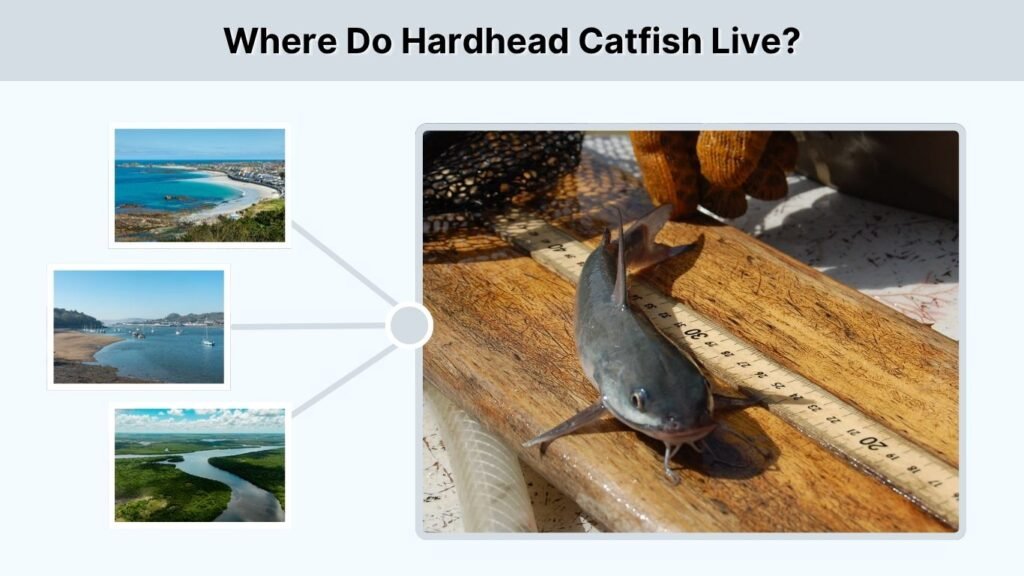
Hardhead catfish inhabit coastal waters of the western Atlantic and Gulf of Mexico. Their range extends along the eastern United States and around Florida into the northern Gulf and Mexico.
Preferred Habitat
They are commonly found in:
- Coastal bays
- Estuaries
- Tidal rivers
- Inlets and passes
- Beaches and surf zones
- Muddy or sandy bottoms
- Inland coastal waterways
- Areas around piers and bridges
Adults occupy marine waters and regularly enter brackish estuaries. They are especially common in turbid water over soft, muddy bottoms.
Hardhead Catfish in Florida
Hardheads are native to Florida and occur in coastal waters around much of the state. They are regularly caught from catwalks, fishing piers, bridges, passes and inland waterways. Because they are native, they should not generally be described as an invasive Florida species.
Fishing regulations can change, so anglers should check the current Florida Fish and Wildlife Conservation Commission rules before keeping fish.
What Do Hardhead Catfish Eat?
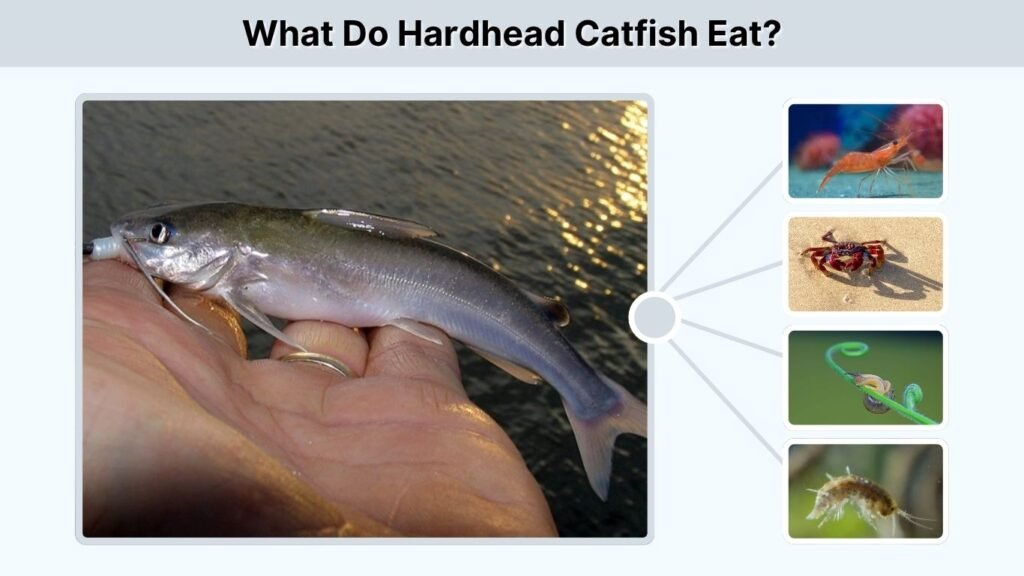
Hardhead catfish are opportunistic bottom feeders that use their barbels to locate food. They will consume natural prey as well as fishing bait placed on or near the bottom.
Their diet includes:
- Shrimp
- Crabs
- Small fish
- Marine worms
- Mollusks
- Small crustaceans
- Organic material on the seafloor
Their willingness to bite almost any natural bait has earned them the nickname tourist trout in parts of the Gulf Coast.
Hardheads are frequently considered bait thieves because they may find a baited hook before more desirable species such as redfish, black drum or speckled trout.
Are Hardhead Catfish Venomous?
Yes. Hardhead catfish are venomous rather than poisonous. Their flesh does not contain the venom responsible for stings. Instead, defensive venom is associated with their sharp dorsal and pectoral spines.
Each fish has three dangerous spines:
- One at the front of the dorsal fin
- One in the left pectoral fin
- One in the right pectoral fin
The spines are strong, serrated and covered with mucus containing toxic material. A puncture may produce immediate severe pain, swelling and redness. The backward-facing serrations can also make the spine difficult to remove.
A hardhead does not actively “sting” like a bee. Most injuries happen when an angler grabs a struggling fish, steps on one, or attempts to hold it down while removing a hook.
Hardhead Catfish Sting Treatment
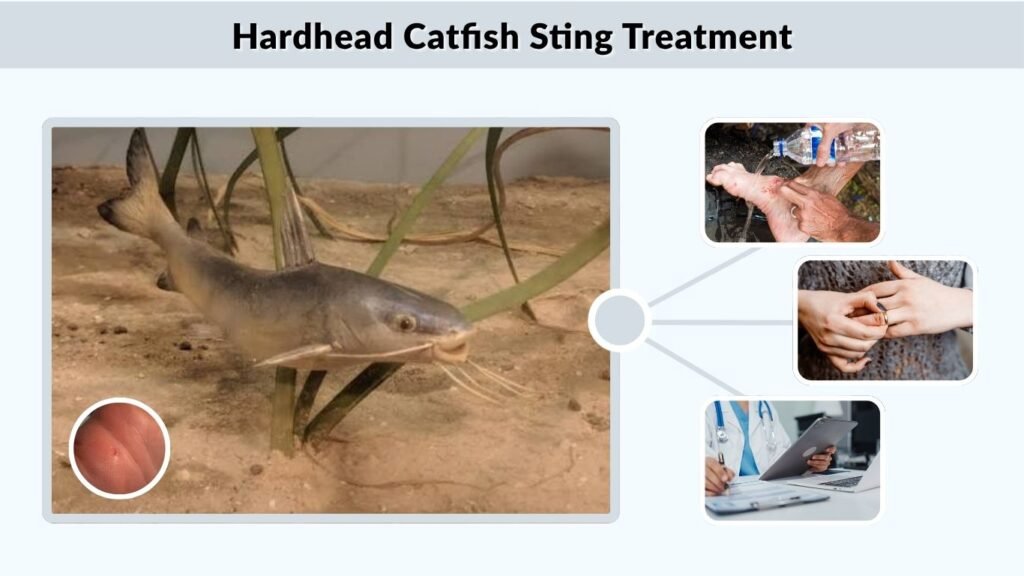
A hardhead spine injury combines a puncture wound, possible venom exposure and the risk of retained spine fragments or aquatic bacterial infection.
Immediate First Aid
Take these steps after a puncture:
- Move away from the fish and control any bleeding with gentle pressure.
- Rinse and irrigate the wound thoroughly with clean water.
- Immerse the injured area in hot but non-scalding water.
- Remove rings or tight items before swelling increases.
- Do not dig deeply into the wound or forcefully pull an embedded barb.
- Seek medical care if a spine may remain inside.
Medical literature on catfish envenomation recommends immersing the affected area in non-scalding hot water, commonly around 45°C or 113°F, for approximately 30–90 minutes. The temperature must be tested carefully to prevent burns.
When to Seek Medical Care
Prompt medical evaluation is advisable for:
- A retained or broken spine
- A deep puncture
- Severe or increasing pain
- Significant swelling
- Loss of movement or sensation
- A wound near a joint, tendon or blood vessel
- Fever, pus or spreading redness
- Red streaks extending from the wound
- Breathing trouble, weakness or faintness
- People with diabetes or weakened immunity
Treatment may involve pain control, wound exploration, removal of spine fragments, irrigation and a tetanus booster. Antibiotics may be required when a wound is deep, contaminated, infected or contains a foreign body. Serious tissue damage is uncommon, but retained fragments and infection can cause major complications.
Can You Eat Hardhead Catfish?
Hardhead catfish are edible and are not poisonous to eat when collected legally from clean water and handled properly. However, opinions about their flavor vary widely.
Texas Parks and Wildlife notes that the flesh is edible but describes the fish as difficult to clean and not especially tasty. FishBase similarly records it as edible but generally not consumed.
Why Many Anglers Do Not Keep Them
Hardheads are often released because:
- The head and internal cavity are large
- The usable fillets are relatively small
- Thick skin makes cleaning difficult
- Sharp spines complicate handling
- More desirable food fish may be available
Smaller specimens provide very little meat. Larger, properly cleaned hardheads can be cooked by frying, baking or grilling.
Check local fish-consumption advisories before eating any coastal fish, particularly one collected near industrial areas, polluted canals or contaminated sediments.
Hardhead Catfish vs. Gafftopsail Catfish
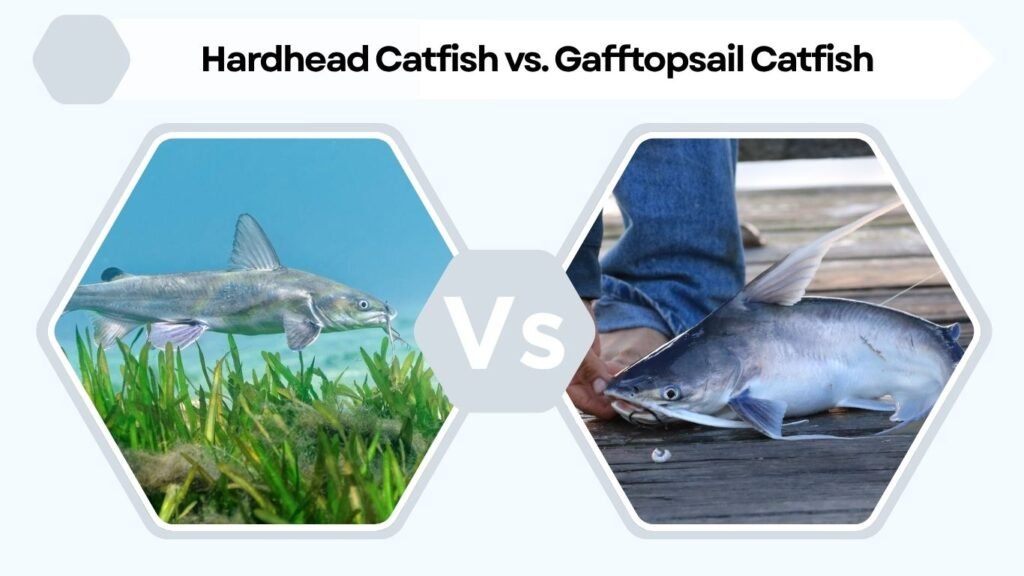
Hardheads and gafftopsails are closely related saltwater catfish that occupy similar coastal habitats. Their barbels, spines and overall size provide useful identification clues.
| Feature | Hardhead catfish | Gafftopsail catfish |
| Scientific name | Ariopsis felis | Bagre marinus |
| Chin barbels | Four | Two |
| Spine appearance | No long filaments | Long, fleshy filaments |
| Max reported Florida size | About 24 inches | About 27 inches |
| Typical coloration | Gray-brown to green | More bluish or silvery |
| Food reputation | Often considered poor | Generally considered better |
The gafftopsail has a tall dorsal fin and elongated fleshy extensions trailing from its dorsal and pectoral spines. The hardhead lacks these long filaments and has four chin barbels rather than two.
Both species have dangerous spines and must be handled carefully.
Size and Record Fish
Most hardhead catfish caught by anglers are around 10 inches long and weigh approximately half a pound. Texas Parks and Wildlife reports that adults can exceed two pounds and lists a Texas state record of 3.3 pounds at 19 inches.
Florida lists a state-record hardhead weighing 4 pounds, 8 ounces. The Florida species profile reports a possible maximum size of 24 inches and 12 pounds, while FishBase records a maximum published weight of approximately 12.1 pounds.
Record categories and recognized catches vary among organizations. Therefore, claims about a single “world record” should be checked against the latest official record database.
Reproduction and Eggs
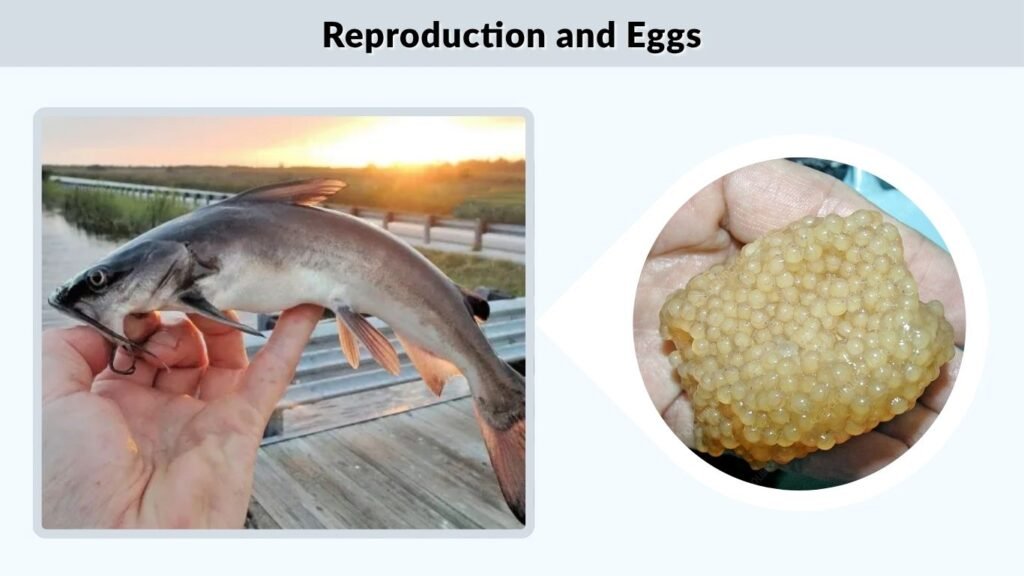
Hardhead catfish have an unusual method of parental care. They generally spawn during spring, and the male carries the fertilized eggs inside his mouth.
The eggs are relatively large. The male protects them until they hatch and may continue sheltering the young until they can survive independently. During this period, he has limited ability to feed because his mouth is occupied.
Mouthbrooding protects the eggs from many predators, strong currents and changing environmental conditions.
How to Handle a Hardhead Safely
Never hold a hardhead down with your bare foot. Texas Parks and Wildlife warns that its erect dorsal spine may puncture tennis shoes and even leather-soled footwear.
Use long-handled pliers or a purpose-built fish-gripping tool. Keep your hands away from the dorsal and pectoral spines, and control the fish before attempting to remove the hook.
Cutting the line may be safer than struggling with a deeply hooked fish in poor conditions. Never leave discarded hardheads where people or pets could step on their raised spines.
FAQs
Are hardhead catfish poisonous?
Their meat is not generally considered poisonous. However, the dorsal and pectoral spines can inject venom into a puncture wound, so hardheads are more accurately described as venomous.
How painful is a hardhead catfish sting?
A puncture can cause immediate and sometimes severe burning or throbbing pain, followed by swelling and redness. Pain may worsen when a barbed spine or fragment remains in the wound.
Are hardhead catfish good bait?
Small hardheads or pieces of fresh hardhead may attract large predators, but their use as bait depends on local fishing regulations. Their sharp spines should be removed or handled with extreme care.
What is the difference between a hardhead and a channel catfish?
Hardheads are coastal marine catfish with deeply forked tails and venomous spines. Channel catfish primarily live in freshwater and belong to a different family, although they also have sharp fin spines.
Are hardhead catfish invasive?
They are native to Atlantic and Gulf coastal waters, including Florida and Texas. They are therefore not considered invasive within this natural range.