
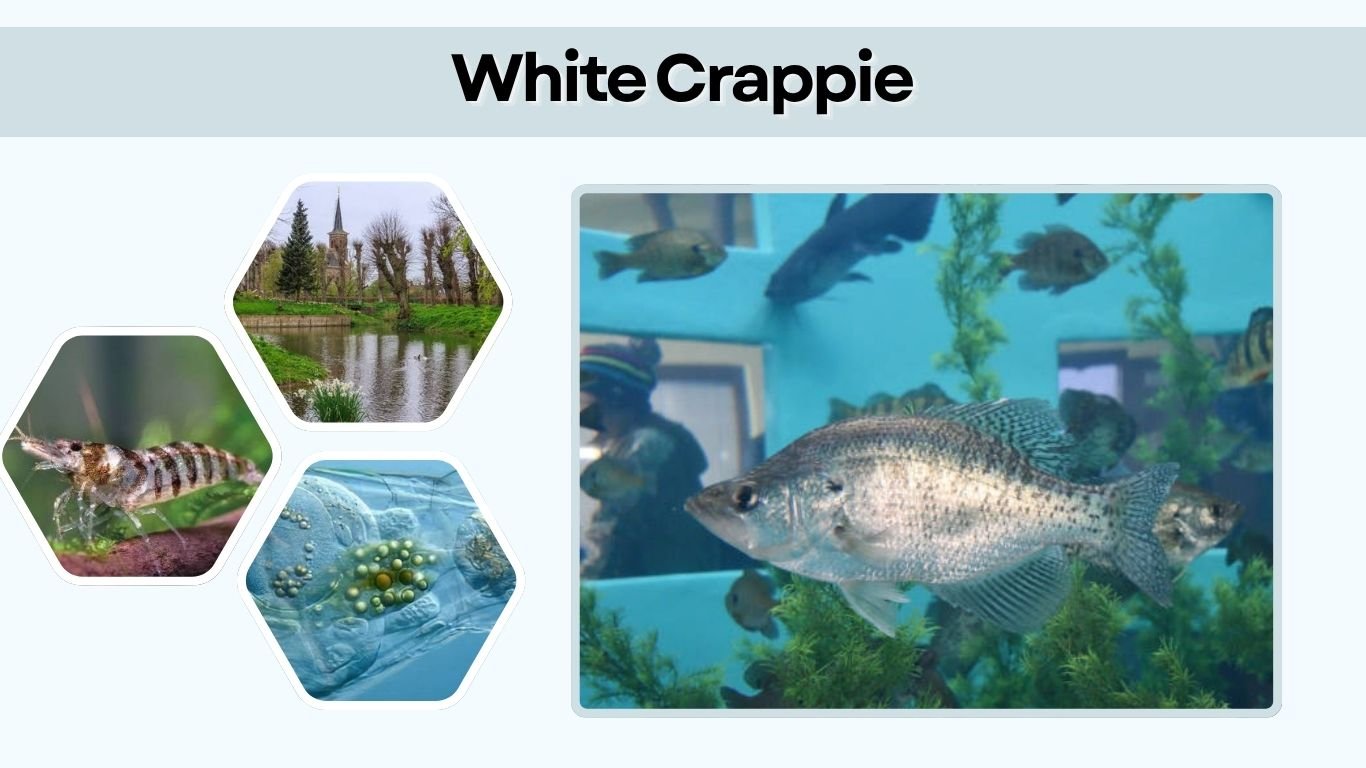
White crappie are popular freshwater fish known for their silvery bodies, dark vertical markings, and appeal to anglers. They inhabit lakes, reservoirs, and slow-moving waters, often gathering around submerged timber and other cover. Although frequently confused with black crappie, they have several reliable identifying features beyond color. Understanding those differences also helps separate them from fish called white perch. This guide covers white crappie identification, habitat, feeding habits, spawning, fishing methods, and the remarkable world record that has stood for decades.
What Is a White Crappie?
The white crappie’s scientific name is Pomoxis annularis. It belongs to the sunfish family, Centrarchidae, which also includes bluegills and largemouth bass. Its flattened body has earned it the familiar angling nickname “slab.”
Identification Features
- Body: Deep and strongly flattened from side to side.
- Color: Silvery sides, a pale belly, and a darker back.
- Markings: Usually five to ten dark vertical bars, sometimes faint.
- Mouth: Large, with the upper jaw extending beyond the middle of the eye.
- Dorsal fin: Usually five or six sharp spines before the soft rays.
Examine several features together. Water conditions, lighting, and breeding coloration can make an individual appear unusually pale or dark.
Male and Juvenile White Crappie
Males may develop darker coloration around the throat during the spring spawning season. A dark breeding male is therefore not automatically a black crappie.
Young white crappie are smaller and less conspicuous, so identifying them requires close attention to fin structure and developing markings. Size alone cannot distinguish the two crappie species.
White Crappie vs. Black Crappie
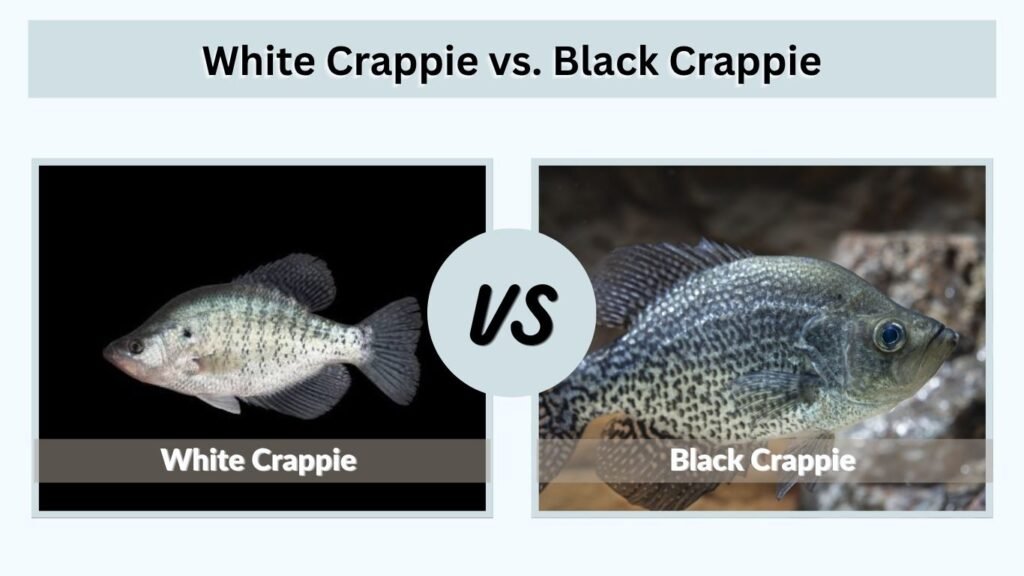
White and black crappie are separate species, not simply different colors of the same fish. Both can live in the same waterbody, and their overall appearance overlaps. The most useful identification checks are dorsal-fin spine count and the arrangement of dark markings.
Main Differences
| Feature | White crappie | Black crappie |
| Scientific name | Pomoxis annularis | Pomoxis nigromaculatus |
| Dorsal spines | Usually 5–6 | Usually 7–8 |
| Body markings | Dark vertical bars | Irregular spots and blotches |
| General shape | Somewhat more elongated | Usually deeper-bodied |
| Habitat tendency | More tolerant of turbid water | Often favors clearer water |
These habitat differences are tendencies, not guarantees. Finding a fish in muddy water does not establish its identity. Count the stiff dorsal spines rather than the flexible rays behind them.
Can Black and White Crappie Crossbreed?
Yes. The species can produce hybrids, and unusual-looking fish are not always identifiable confidently from photographs. Genetic testing has confirmed hybrid crappie, including a large Illinois catch initially identified as black crappie. Mixed-looking markings alone do not prove hybrid ancestry.
White Crappie Habitat and Diet
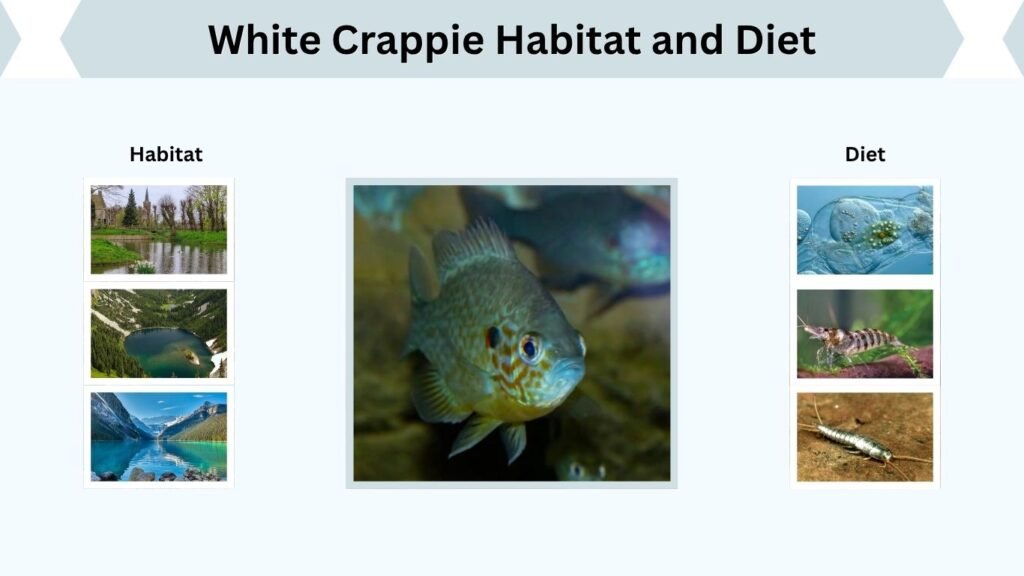
White crappie occur widely across the United States, both within their native range and in waters where they have been introduced. Their original distribution included much of central North America, extending into southern Canada and northeastern Mexico.
Where Do White Crappie Live?
Typical habitats include reservoirs, lakes, ponds, and slow-flowing river backwaters. They often use submerged trees, brush piles, and other underwater cover.
Their position changes with season and conditions. Fish may occupy shallow spawning areas in spring, then gather around deeper cover or suspend away from shore later. A productive location is therefore not necessarily productive at the same depth year-round.
What Do White Crappie Eat?
Their diet changes as they grow:
- Newly feeding fry: Microscopic aquatic animals.
- Growing juveniles: Small invertebrates and increasingly larger prey.
- Adults: Small fish, aquatic insects, and small crustaceans.
Minnows and young shad can be important adult foods. This helps explain why small live baits and minnow-shaped lures are effective fishing options.
White Crappie Size, Spawning, and Lifespan
Growth varies with food supply, population density, temperature, and the waterbody. A fish’s length does not translate into one dependable age everywhere. Similarly, spawning dates differ between southern reservoirs and cooler northern waters.
How Big Do White Crappies Get?
Many white crappie are around 9–10 inches long, although larger individuals occur. Fish exceeding 15 inches are exceptional in many waters, and a two-pound crappie is a substantial catch.
Some white crappie survive eight years or longer, but many live much shorter lives. Local conditions and fishing pressure influence how many reach older ages.
When Do They Spawn?
White crappie spawn in spring, building nests in sheltered areas. Texas Parks and Wildlife describes typical spawning temperatures around 65–70°F, while noting that activity can begin at lower temperatures.
Eggs can hatch within several days. Young fish initially depend on tiny prey before progressing to larger food. High reproductive output can cause overcrowding and slow growth in unsuitable small impoundments.
What Is the World Record White Crappie?
The IGFA all-tackle world record is 5 pounds, 3 ounces, caught by Fred Bright at Enid Dam, Mississippi, on July 31, 1957.
This is a weight record. Length records and state records are separate categories and should not be confused with it.
White Perch vs. Crappie
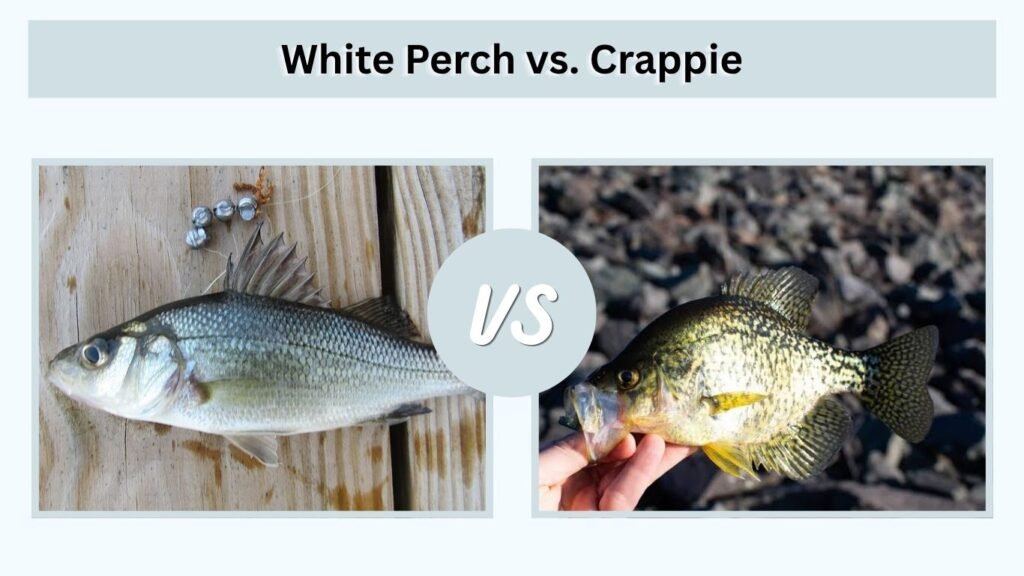
The name “white perch” causes confusion because anglers sometimes use it as a regional nickname for crappie. However, the fish formally known as white perch is a different species.
Are They the Same Fish?
True white perch are Morone americana, members of the temperate bass family. White crappie are Pomoxis annularis, members of the sunfish family.
White perch have separate dorsal fins and three strong anal-fin spines. White crappie have a broadly connected dorsal fin and a different body pattern. Scientific names help resolve confusion when regional nicknames overlap.
How to Catch White Crappie
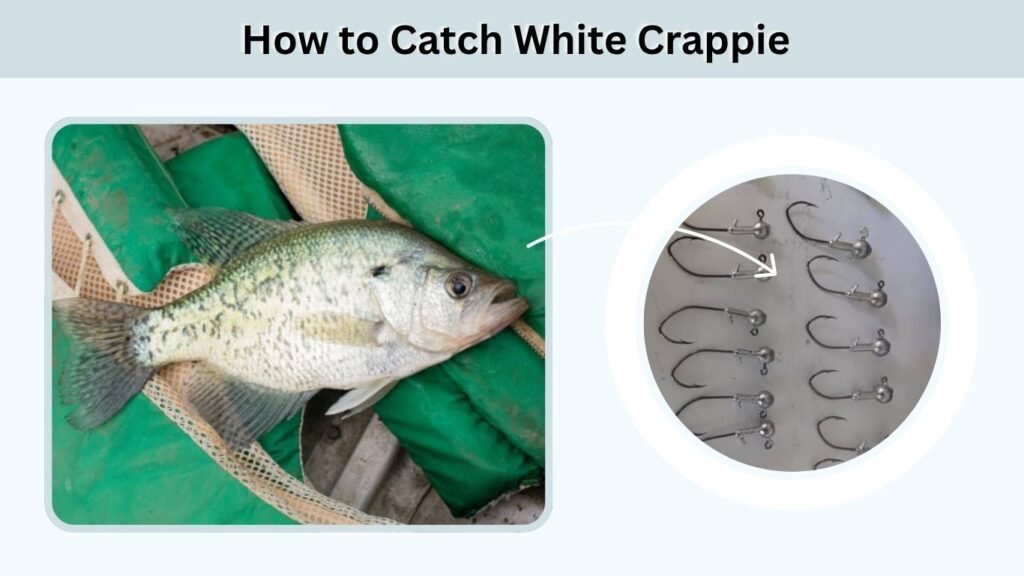
Successful white crappie fishing usually depends on locating fish and presenting bait at their depth. Changing lure colors repeatedly will not help much if the school is several feet above or below the presentation.
Useful Baits and Jigs
- Small live minnows: Fish beneath a float or beside submerged cover.
- Small jigs: A 1/16-ounce jig is a versatile starting point.
- Tube and minnow-style plastics: Useful for casting or vertical presentations.
- White or chartreuse combinations: Reasonable colors to try, without assuming either always works.
Adjust jig weight to depth, wind, and current. Choose enough weight to control the presentation without making it unnecessarily heavy.
Seasonal Fishing Approach
In spring, investigate sheltered shorelines, woody cover, and nearby drop-offs. During warmer months, check deeper brush, standing timber, and bridge structures.
In cold water, slow the presentation and test different depths. Once you catch a fish, repeat the successful depth and retrieve before changing locations. Seasonal patterns are starting points; local weather can shift fish away from their usual positions.
Always check current licensing requirements, harvest limits, and bait rules for the specific waterbody.
Are White Crappie Good to Eat?
White crappie are widely enjoyed for their mild flavor and delicate, flaky flesh. They can be fried, baked, or prepared in other familiar fish dishes.
Check Local Consumption Advice
Whether a catch is appropriate to eat depends partly on where it came from. Follow local fish-consumption advisories, including recommendations about serving frequency.
Clear water and a healthy-looking fish do not guarantee the absence of chemical contaminants. Appearance and smell cannot establish whether a fish contains unsafe pollutant levels.
FAQs
These answers summarize common identification and fishing questions.
What Is the Easiest Way to Identify White Crappie?
Look for vertical body bars and count the dorsal spines. White crappie usually have five or six; black crappie usually have seven or eight.
Are White Crappie Always Lighter Than Black Crappie?
No. Individual coloration varies, and breeding males can become darker. Marking patterns and spine counts are more dependable.
What Is the Best Bait for White Crappie?
Small live minnows and small jigs are reliable starting choices. The most effective option depends on fish location, depth, and feeding activity.
Do White Crappie Live Only in Muddy Water?
No. They tolerate turbid conditions but also inhabit clearer lakes and reservoirs. Water clarity alone cannot identify the species.
Can You Catch White Crappie From Shore?
Yes. Banks near submerged brush, docks, or spawning areas can provide opportunities. Shore fishing is especially accessible when fish move into shallower water.