

Guppy fish are colorful, peaceful freshwater fish popular among beginners and experienced aquarium owners. Their attractive tails, active swimming behavior, and relatively simple care requirements make them excellent aquarium pets. However, many fishkeepers wonder, how long do guppy fish live? Most guppies survive for two to three years, although their lifespan depends on genetics, water quality, diet, and aquarium conditions. Understanding the factors affecting guppy lifespan can help owners provide healthier environments and give their fish the best opportunity to live longer.
How Long Do Guppy Fish Live?
Guppy fish (Poecilia reticulata) typically live for 2–3 years in a properly maintained freshwater aquarium. Some individuals may survive for four years or longer under favorable conditions, although this is less common.
Their lifespan depends on several factors, including inherited health, nutrition, water temperature, and environmental stress. Guppies raised in stable, well-maintained aquariums generally have better chances of reaching their natural lifespan.
It is also important to remember that guppies purchased from pet stores may already be several months old. Therefore, their remaining lifespan after purchase may be shorter than their total lifespan from birth.
| Guppy living conditions | General lifespan expectations |
| Well-maintained aquarium | Usually 2–3 years |
| Excellent care and favorable genetics | Sometimes 4 years or longer |
| Poor aquarium conditions | May die considerably earlier |
| Natural habitats | Varies with predators and environmental conditions |
These estimates are not guaranteed because individual guppies age differently.
How Long Do Guppies Live in a Fish Tank?

Guppies generally live for two to three years in a home fish tank when provided with appropriate water conditions, sufficient swimming space, and balanced nutrition.
A 10-gallon aquarium is a practical starting point for a small group of guppies. Larger tanks, such as 20-gallon aquariums, provide additional space and make maintaining stable water conditions easier.
Guppies need proper filtration, suitable temperatures, and regular water changes. Overcrowded aquariums can increase stress and encourage disease transmission, reducing their chances of living a full lifespan.
Keeping guppies with peaceful tank mates is equally important. Aggressive fish may chase, injure, or repeatedly disturb guppies, negatively affecting their health.
How Long Do Male and Female Guppy Fish Live?
Male and female guppies have similar general lifespan expectations, but individual longevity can vary according to genetics, reproductive activity, and environmental conditions.
Male Guppy Fish Lifespan
Male guppies typically live for about two to three years under suitable aquarium conditions. They are generally smaller and more colorful than females, with flowing tails and distinctive body patterns.
Male guppies frequently display courtship behavior, especially when females are present. Maintaining adequate swimming space and avoiding stressful stocking conditions supports their health.
Some populations show differences in male and female survival, but there is no reliable fixed lifespan that applies to every male guppy.
Female Guppy Fish Lifespan
Female guppies also commonly live for two to three years. They are usually larger than males and have rounder bodies with less elaborate coloration.
Females can reproduce frequently, and continuous breeding may place additional demands on their bodies. Providing nutritious food, sufficient hiding places, and balanced male-to-female ratios helps reduce unnecessary stress.
Healthy females may live longer than some males, but sex alone cannot predict an individual guppy’s lifespan.
What Factors Affect Guppy Fish Lifespan?

Several environmental and biological factors influence how long guppies survive. Although these fish are relatively hardy, unsuitable aquarium conditions can cause chronic stress and increase their vulnerability to disease.
1. Water Quality
Clean aquarium water is essential for guppy health. Ammonia and nitrite are toxic to fish, while excessive nitrate accumulation can contribute to poor water conditions.
An established biological filter, regular water testing, and appropriate partial water changes help maintain a healthier aquarium environment.
2. Water Temperature
Guppies generally thrive in water temperatures between 72–82°F (22–28°C). Maintaining a stable temperature around 74–78°F is a practical approach for many home aquariums.
Unusually high temperatures can increase metabolic demands, while sudden temperature changes may cause stress. Consistency is more important than frequently adjusting the heater.
3. Food and Nutrition
A balanced diet supports guppy growth, immunity, and overall health. Guppies are omnivorous and benefit from high-quality flakes or micro-pellets supplemented with occasional brine shrimp, daphnia, and suitable plant-based foods.
Overfeeding should be avoided because uneaten food can pollute aquarium water.
4. Genetics and Breeding
Genetics influence growth, disease resistance, and longevity. Poor breeding practices may contribute to inherited weaknesses in some guppy populations.
Selecting active, healthy fish from responsible breeders or reputable aquarium stores can help reduce avoidable health problems.
5. Stress and Overcrowding
Crowded aquariums, aggressive tank mates, and frequent environmental disturbances can increase stress.
Providing adequate swimming space, compatible companions, and planted hiding areas helps create a more comfortable environment.
How to Help Guppy Fish Live Longer

Although guppies have naturally short lifespans compared with many larger fish, proper care can help them remain healthy throughout their lives.
Follow these essential aquarium care practices:
- Maintain stable water conditions: Keep ammonia and nitrite at zero, monitor nitrate, and test water regularly.
- Perform routine water changes: Replace approximately 10–25% of aquarium water every one to two weeks as needed, using treated, temperature-matched replacement water.
- Feed a varied diet: Provide suitable commercial guppy food with occasional protein-rich and plant-based supplements.
- Avoid overcrowding: Choose an appropriately sized aquarium and account for population growth if breeding occurs.
- Prevent disease: Quarantine new fish when possible and observe existing fish for unusual behavior or physical changes.
- Reduce environmental stress: Maintain consistent lighting, appropriate temperatures, and peaceful tank companions.
Avoid unnecessary medications or sudden changes in aquarium conditions. Consistent daily care is generally more beneficial than frequent major adjustments.
Signs Your Guppy Fish Is Getting Old
As guppies age, they may gradually become less active and display subtle changes in appearance or behavior. However, aging is not always easy to distinguish from illness.
Possible age-related changes include slower swimming, reduced activity, and declining reproductive performance.
Older guppies may spend more time resting and participate less frequently in courtship behavior. These changes usually develop gradually rather than appearing overnight.
Sudden appetite loss, rapid breathing, white spots, damaged fins, or difficulty swimming should not automatically be considered normal aging.
Such symptoms may indicate disease, injury, or unsuitable water conditions. Testing the aquarium water and consulting a qualified aquatic veterinarian can help identify problems.
Do Guppies Live Longer in the Wild or Captivity?
Guppies can live in both natural freshwater habitats and home aquariums, but their survival depends on different environmental pressures.
Wild guppies encounter predators, seasonal changes, food competition, and disease. These challenges may cause many individuals to die before reaching their potential lifespan.
Captive guppies are generally protected from predators and can receive consistent food and suitable water conditions.
However, aquarium fish are not automatically guaranteed longer lives. Poor filtration, overcrowding, and inappropriate care may create conditions worse than those in natural habitats.
Research also shows that wild guppy populations can differ in aging patterns and longevity because of evolutionary and environmental factors.
Why Do Guppy Fish Die Early?
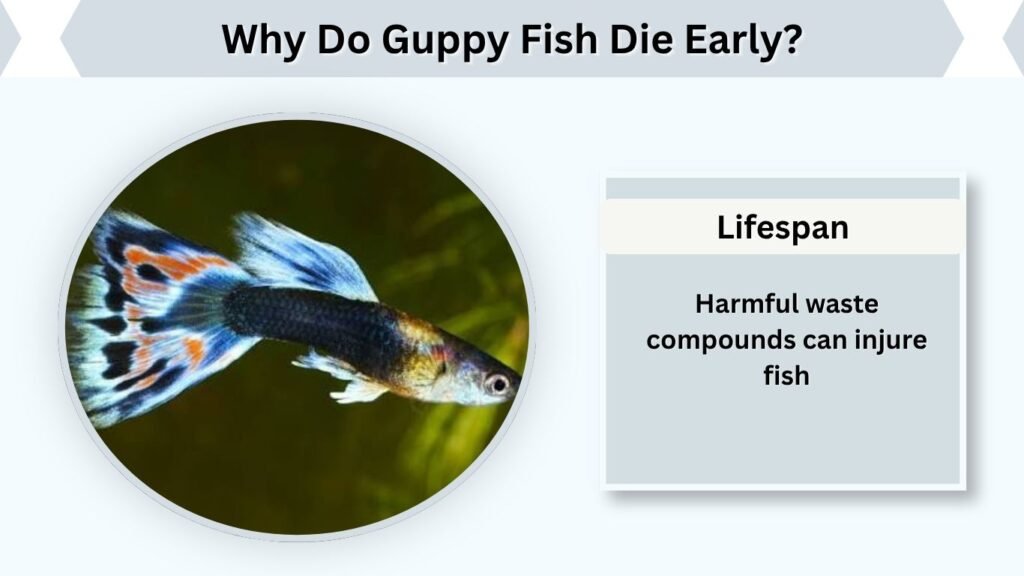
Guppies sometimes die before reaching their expected two-to-three-year lifespan. Premature deaths can occur because of aquarium maintenance problems, disease, or poor health before purchase.
Common causes include:
- Ammonia or nitrite poisoning: Harmful waste compounds can injure fish and damage their gills.
- Sudden temperature changes: Rapid fluctuations can cause physiological stress.
- Poor nutrition: An inadequate diet may weaken fish over time.
- Disease and parasites: Untreated infections may progress rapidly.
- Aggressive tank mates: Repeated attacks and injuries can reduce survival.
Early identification of problems is important. Regular observation and water testing help fishkeepers respond before aquarium conditions deteriorate.
FAQs
1. Can guppy fish live for five years?
Some unusually long-lived guppies may approach five years, but this is not typical. Most guppy fish live approximately two to three years under suitable aquarium conditions.
2. How long do guppies live in a 10-gallon tank?
Guppies can live for two to three years in a properly maintained 10-gallon aquarium. Their lifespan depends on water quality, stocking levels, nutrition, and overall health.
3. Do male guppies live longer than female guppies?
Not necessarily. Both sexes commonly live for two to three years. Their actual lifespans depend on genetics, reproductive demands, environmental conditions, and individual health.
4. Can guppy fish live without a heater?
Guppies can survive without a heater when room temperatures remain consistently suitable. However, a heater is recommended when temperatures fluctuate or regularly fall below their preferred range.
5. What is the longest a guppy fish can live?
Some guppies may survive beyond four years with favorable genetics and excellent care. However, exceptional cases should not be treated as the normal lifespan for aquarium guppies.