

Guppy fish are popular freshwater aquarium fish known for their bright colors, peaceful behavior, and frequent breeding. But how do you know if a guppy fish is pregnant? A pregnant female guppy usually develops a larger belly, a darker gravid spot, and noticeable behavioral changes as she approaches birth. Guppies are livebearers, meaning they give birth to fully developed baby fish instead of laying eggs. Understanding pregnancy signs, gestation length, and pregnancy stages helps aquarium owners prepare for newborn fry and keep their guppies healthy.
How Do You Know If a Guppy Fish Is Pregnant?
You can tell if a guppy fish is pregnant by observing changes in her abdomen, gravid spot, and swimming behavior. Female guppies develop a larger, rounder belly as their babies grow. As delivery approaches, their abdomen may become noticeably square-shaped. However, no single physical sign can confirm pregnancy in every fish.
1. A Darker Gravid Spot
One of the most recognizable pregnancy signs is a dark patch called the gravid spot. It appears near the rear of the female’s abdomen, just above and in front of the anal fin.
Female guppies can have a visible gravid spot even when they are not pregnant. During pregnancy, however, the spot often becomes larger and darker as the developing fry become more noticeable.
In lighter-colored guppies, the spot may appear brown or almost black. In darker varieties, it can be difficult to identify.
2. A Larger and Rounder Belly
Pregnant guppies gradually develop a swollen abdomen as their babies grow. During early pregnancy, the change may be subtle, but their belly usually becomes noticeably larger over time.
Near the end of pregnancy, the abdomen often develops a square or box-like shape rather than remaining evenly rounded.
Watch how the abdomen changes over several days. A gradually expanding belly combined with a more pronounced gravid spot provides stronger evidence of pregnancy than temporary swelling after feeding.
3. Changes in Swimming and Behavior
Pregnant female guppies generally continue swimming and eating normally during much of their pregnancy. However, some develop noticeable behavioral changes as delivery approaches.
They may spend more time near plants, avoid crowded areas, or seek quiet places inside the aquarium.
Some females become restless or temporarily show less interest in food before giving birth. These behaviors are not definitive pregnancy signs because stress and illness can produce similar changes.
How Long Are Guppy Fish Pregnant?
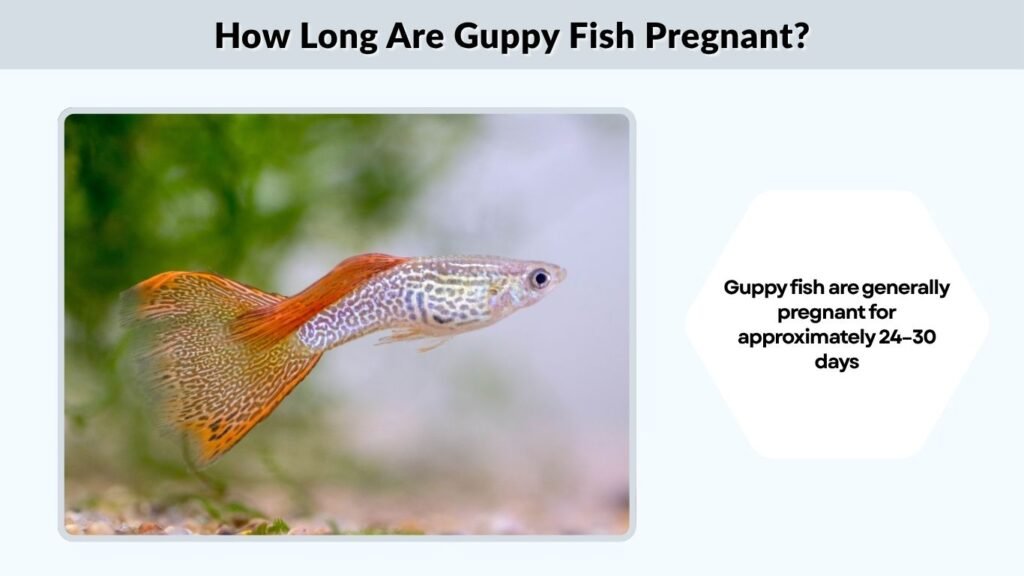
Guppy fish are generally pregnant for approximately 24–30 days, although gestation may range from around 21 to 35 days depending on conditions. Water temperature, genetics, nutrition, and overall health can influence the pregnancy period.
In stable tropical aquarium conditions, many females give birth approximately once a month.
Guppies reproduce through internal fertilization, and females can store sperm for future pregnancies. Therefore, a female may produce several batches of fry without another recent mating.
Pregnant Guppy Fish Stages
Understanding pregnant guppy fish stages helps aquarium owners recognize changes and prepare for delivery. Pregnancy progresses gradually, although the exact timing varies between individuals. The following table describes common physical and behavioral changes rather than a fixed schedule.
| Pregnancy stage | Physical appearance | Common behavior |
| Early pregnancy | Slightly rounded belly; gravid spot may be visible | Normal swimming and feeding |
| Middle pregnancy | Growing abdomen; gravid spot may darken | Usually active with a normal appetite |
| Late pregnancy | Larger, sometimes box-shaped abdomen | May seek sheltered areas |
| Approaching birth | Very full abdomen; pronounced gravid spot | May hide, become restless, or eat less |
In some light-colored females, tiny dark points resembling the eyes of developing fry may become visible near the gravid spot.
However, color and body shape vary, so these signs cannot predict the exact delivery date.
Signs a Pregnant Guppy Fish Is About to Give Birth
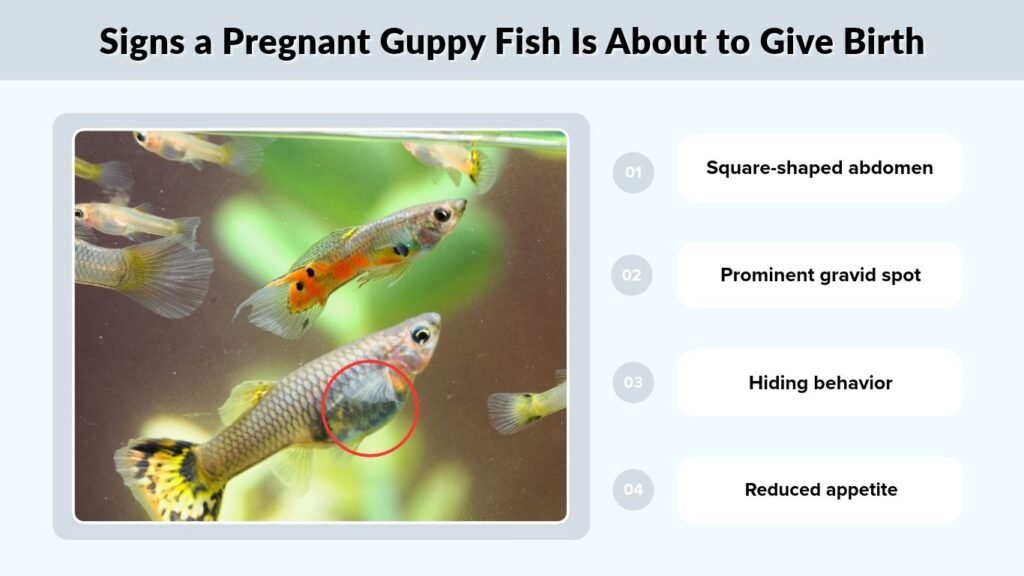
A pregnant guppy may display several changes shortly before releasing her fry. A noticeably box-shaped abdomen and increased hiding behavior are common observations. Some females become less active, while others continue behaving normally until delivery.
Potential signs of approaching birth include:
- Square-shaped abdomen: The rear portion of the belly looks more angular.
- Prominent gravid spot: The dark patch becomes particularly noticeable.
- Hiding behavior: The female seeks shelter behind plants or decorations.
- Reduced appetite: Some guppies eat less shortly before delivery.
- Restless movement: Occasional trembling or unusual positioning may occur around birth.
These signs do not guarantee that delivery will occur within a particular number of hours. Persistent distress, difficulty swimming, or labored breathing should not automatically be considered normal labor.
How Do Guppy Fish Get Pregnant?
Guppies reproduce through internal fertilization. Male guppies possess a specialized anal fin called a gonopodium, which transfers sperm to females during mating.
After fertilization, the young develop inside the female’s body until they are ready to be born.
Unlike egg-laying aquarium fish, female guppies release fully formed, free-swimming fry.
Female guppies can also store sperm for weeks or months. This explains why a female purchased from a pet store may give birth even when no male guppy is currently living in her aquarium.
Pregnant Guppy Fish vs. Bloated Guppy
A swollen belly does not always indicate pregnancy. Guppies can also develop abdominal enlargement from overfeeding, constipation, infections, or internal health problems.
Pregnancy usually causes gradual abdominal enlargement while the fish otherwise behaves normally.
Illness-related swelling may appear suddenly or occur alongside unusual symptoms, such as raised scales, reduced appetite, abnormal swimming, or persistent lethargy.
Scales sticking outward in a pinecone-like pattern are particularly concerning and may indicate a serious underlying condition.
If these symptoms appear, check water quality and seek advice from an aquatic veterinarian rather than assuming the fish is pregnant.
How to Take Care of a Pregnant Guppy Fish
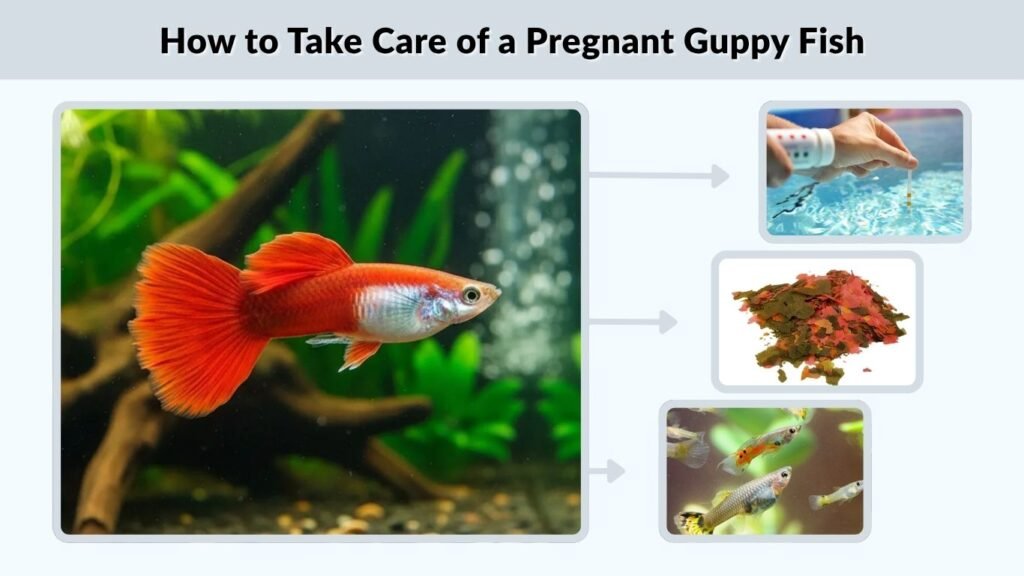
Pregnant guppies generally do not require complicated treatment, but stable aquarium conditions are essential. Clean water, nutritious food, peaceful tank mates, and suitable hiding places help reduce unnecessary stress. Preparing a safe environment before delivery also improves the survival chances of newborn fry.
Maintain Proper Water Conditions
Keep the aquarium at a stable tropical temperature, commonly around 75–80°F (24–27°C), with water hardness and pH suitable for guppies.
Use reliable filtration and test water regularly. Ammonia and nitrite should remain at zero, and routine partial water changes help maintain healthy conditions.
Avoid sudden temperature changes or unnecessary handling of pregnant females.
Provide Nutritious Food
Feed pregnant guppies a balanced diet containing high-quality tropical fish flakes or micro-pellets.
Occasional small portions of brine shrimp, daphnia, or other appropriate aquarium foods can provide nutritional variety.
Avoid overfeeding because leftover food decomposes and reduces water quality. Several small feeding opportunities may be useful, but total portions should remain controlled.
Prepare a Safe Birthing Environment
Provide dense plants such as Java moss, guppy grass, or floating vegetation where newborn fry can hide.
A separate, established nursery aquarium with gentle sponge filtration is useful when raising large numbers of babies.
Avoid confining the mother in a tiny breeding box for extended periods because unnecessary confinement can increase stress.
What Happens After a Guppy Fish Gives Birth?
After giving birth, a female guppy’s abdomen usually becomes noticeably smaller. Guppies commonly produce several dozen babies, although the number varies with age, size, and individual health.
Newborn fry can swim and begin feeding shortly after birth.
Adult guppies, including their mothers, may eat newborn fry. Dense plants or a separate rearing aquarium improve survival.
Feed baby guppies appropriately sized fry food, finely crushed flakes, or newly hatched brine shrimp in small portions several times daily.
FAQs
Can a Guppy Fish Be Pregnant Without a Male?
Yes. Female guppies can store sperm from previous mating and use it to fertilize additional batches of young. Therefore, a female may give birth several times after being separated from male guppies, sometimes over several months.
How Many Babies Can a Pregnant Guppy Fish Have?
A pregnant guppy commonly gives birth to several dozen fry. Broods of approximately 20–80 are possible, although smaller or larger groups occur. Younger females often produce fewer babies than mature females, and brood size varies with health.
Do Pregnant Guppy Fish Stop Eating?
Some pregnant guppies temporarily lose interest in food shortly before giving birth. However, many continue eating normally. Persistent refusal to eat, especially with unusual swimming or breathing, may indicate illness or environmental stress rather than approaching delivery.
Should I Separate My Pregnant Guppy Fish?
Separating a pregnant guppy is not always necessary. A well-planted aquarium provides hiding places for newborn fry. If you want to raise more babies, prepare a separate nursery tank, but avoid unnecessary transfers that may stress the mother.
How Often Can a Guppy Fish Get Pregnant?
Female guppies can produce new broods approximately every month under suitable conditions. They can also store sperm and give birth repeatedly without mating again. Frequent reproduction is normal, although adequate nutrition and stable water conditions remain important.