

Male and female guppy fish are popular freshwater aquarium pets known for their colorful appearance, peaceful behavior, and easy care. However, identifying their gender can sometimes be confusing, especially when they are young. Male guppies are generally smaller, more colorful, and have longer decorative fins, while females are larger, rounder, and often have a visible gravid spot. Understanding the differences between male and female guppy fish helps aquarium owners manage breeding, maintain balanced groups, and provide suitable living conditions for these active tropical fish.
How to Identify Male and Female Guppy Fish
The easiest way to distinguish male and female guppy fish is by examining their anal fins, body shape, size, and coloration. Adult males usually have brighter colors and a slender appearance, while females generally have fuller bodies and less elaborate fins.
The most reliable identifying feature is the anal fin. Male guppies develop a narrow reproductive structure called a gonopodium, whereas females retain a broader, fan-shaped anal fin.
| Feature | Male guppy fish | Female guppy fish |
| Body size | Generally smaller | Generally larger |
| Color | Bright, colorful patterns | Usually less colorful |
| Body shape | Slim and streamlined | Fuller, rounded abdomen |
| Anal fin | Narrow gonopodium | Fan-shaped anal fin |
| Tail fin | Often long and decorative | Usually shorter and simpler |
| Gravid spot | Absent | Often visible |
| Behavior | Active courtship and chasing | Often less persistent in courtship |
These differences become easier to recognize as guppies mature. Young fish may require closer observation before their sex can be determined confidently.
6 Differences Between Male and Female Guppy Fish

Male and female guppies show noticeable physical and behavioral differences. Although aquarium breeding has produced many varieties with unusual colors and tail shapes, several characteristics remain useful for identifying their sex. Comparing multiple features is more accurate than relying on coloration or body size alone.
1. Body Size
Female guppies are generally larger than males. An adult female commonly reaches approximately 4–6 cm in length, while males are often around 2.5–4 cm, depending on their genetics and aquarium conditions.
Female guppies also have broader bodies that accommodate developing young during pregnancy.
Male guppies typically remain smaller and have a narrower appearance. However, body size alone is not a completely reliable identification method because individual growth rates and guppy varieties differ.
2. Body Color and Patterns
Male guppy fish are famous for their bright coloration. They commonly display red, blue, green, orange, yellow, or combinations of several colors.
Their bodies and tails may feature spots, stripes, or intricate patterns.
Female guppies are generally less colorful, especially in wild-type populations. Many have silver, gray, or olive-colored bodies.
However, selectively bred female guppies can also develop attractive colors and patterned tails. Therefore, coloration should be considered alongside fin shape when determining sex.
3. Tail and Fin Shape
Male guppies often possess large, decorative tail fins that make them especially attractive in aquariums.
Depending on the variety, their tails may be fan-shaped, triangular, sword-shaped, or rounded. Some males also develop elongated dorsal fins.
Female guppies typically have shorter, less elaborate fins, although fancy varieties may show larger tails.
The most important distinction is the anal fin. Males possess a narrow, pointed gonopodium, while females retain a wider, fan-shaped anal fin.
4. Body Shape and Gravid Spot
Female guppies generally have fuller, rounder bodies than males. Their abdomen may become noticeably larger during pregnancy.
Many females also display a dark area near the rear of the abdomen called the gravid spot. This feature is located just above and in front of the anal fin.
The spot often becomes more prominent during pregnancy, but its presence alone does not confirm that a guppy is pregnant.
Male guppies lack the female gravid spot and usually maintain slimmer bodies.
5. Swimming Behavior
Male guppies frequently display active courtship behavior. They may follow females, show off their colorful fins, and repeatedly attempt to mate.
Female guppies generally spend less time performing courtship displays. They may occasionally avoid persistent males by swimming toward plants or sheltered areas.
Both sexes are active swimmers, so swimming speed alone cannot determine gender.
Observe their interactions over time rather than identifying sex from one behavior.
6. Reproductive Differences
Guppies are livebearing fish, meaning females give birth to free-swimming young rather than laying eggs outside their bodies.
Male guppies use their gonopodium to transfer sperm during mating.
Female guppies carry developing offspring internally and usually give birth after approximately 24–30 days, although timing varies.
Females can also store sperm from previous mating and produce additional broods without another recent encounter with a male.
This reproductive difference makes accurate sex identification important for controlling aquarium populations.
How to Tell Male and Female Baby Guppies Apart
Identifying the sex of baby guppies is more difficult because newborn males and females initially look similar.
Sex-related characteristics generally become recognizable as they develop, often around four to six weeks of age, although some fish take longer.
Young males gradually develop a narrow gonopodium and more noticeable coloration. Young females retain a fan-shaped anal fin and may develop a visible gravid spot.
Do not rely only on tail color because ornamental varieties develop their colors at different rates.
Observing anal fin development over several weeks is usually the most dependable approach.
Can Male and Female Guppy Fish Live Together?
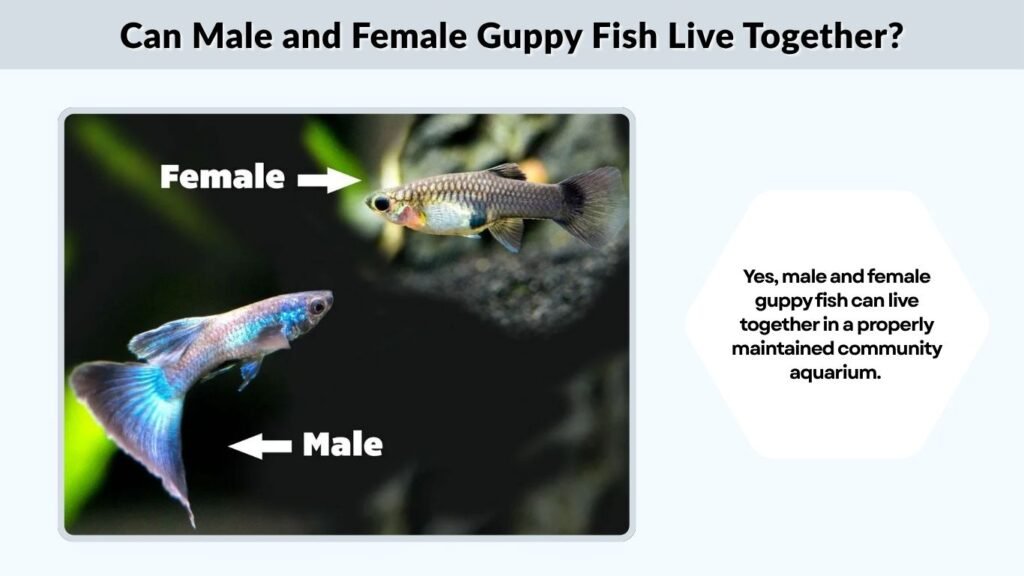
Yes, male and female guppy fish can live together in a properly maintained community aquarium. They generally coexist peacefully, although males frequently pursue females during courtship.
Keeping too many males with too few females may lead to persistent harassment and stress.
A commonly recommended ratio is one male for every two or three females.
For example, a mixed group might contain two males and four to six females, provided the aquarium has sufficient space and filtration.
Adding live plants, decorations, and hiding places gives females opportunities to avoid constant attention.
However, guppies reproduce readily, so keeping both sexes together often results in additional fry.
Can You Keep Only Male Guppy Fish Together?
Yes, an all-male guppy aquarium is an option for fishkeepers who want colorful fish without frequent breeding.
Male guppies generally coexist in groups, although occasional chasing or competitive displays may occur.
Provide enough space, maintain good water quality, and use plants to create separate swimming areas.
Monitor for persistent bullying, damaged fins, or stressed individuals.
An all-male aquarium avoids new breeding within the group, provided no females are accidentally introduced.
Male and Female Guppy Fish Tank Requirements
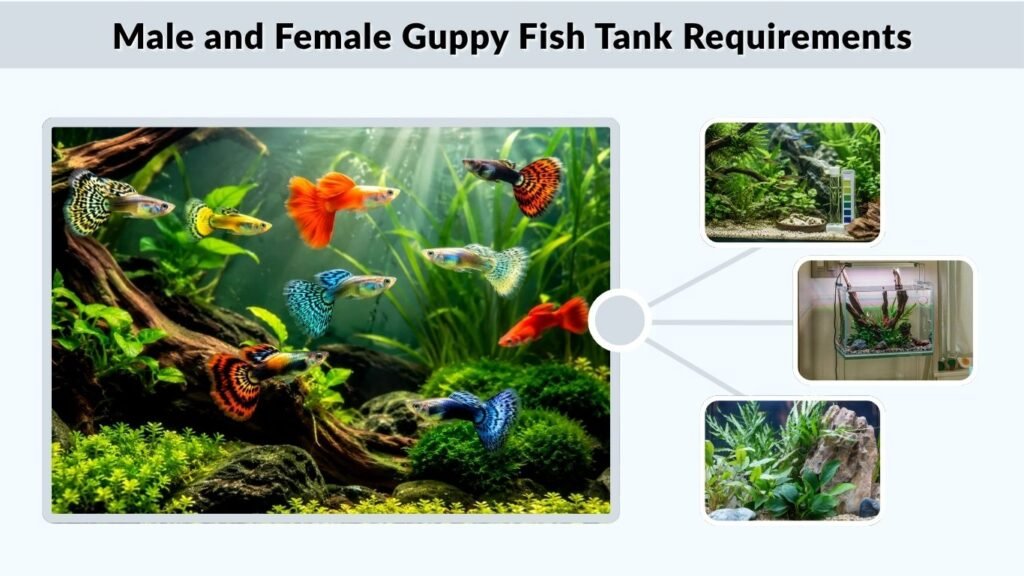
Both male and female guppies require similar aquarium conditions. Maintaining stable water chemistry, reliable filtration, and appropriate temperatures supports healthy swimming, feeding, and reproduction.
Recommended conditions include:
- Temperature: Approximately 75–80°F (24–27°C) is a practical tropical range.
- pH: Generally 7.0–8.0.
- Water hardness: Moderate to hard water, approximately 8–18 dGH.
- Tank size: Around 12 gallons or more for a small group, with larger aquariums preferred.
- Filtration: A properly cycled filter with gentle water movement.
- Plants: Live or artificial plants provide shelter and resting areas.
Regular water changes and testing help prevent ammonia and nitrite accumulation.
Avoid overcrowding, particularly in mixed-sex tanks where breeding can rapidly increase the number of fish.
FAQs
Are Male Guppy Fish More Colorful Than Females?
Yes, male guppies are generally more colorful than females. They often display bright patterns and large decorative tails. However, selectively bred female guppies can also show attractive colors, so anal fin shape remains a more reliable identification feature.
Are Male Guppy Fish Aggressive?
Male guppies are generally peaceful, but they may chase females during courtship or occasionally compete with other males. Persistent harassment can cause stress. Providing sufficient swimming space, plants, and appropriate group arrangements helps reduce unwanted behavior.
What Is the Best Male-to-Female Guppy Ratio?
A common recommendation is one male guppy for every two or three females. This arrangement distributes courtship attention across several females and can reduce stress. However, aquarium size and individual behavior must also be considered.
Can Male and Female Guppy Fish Live in the Same Tank?
Yes, male and female guppies can share an aquarium when water conditions and group sizes are appropriate. However, breeding is highly likely. Provide adequate swimming space and hiding areas, and prepare for an increasing population of baby guppies.
How Early Can You Identify Male and Female Guppies?
Some guppies develop recognizable sex characteristics around four to six weeks of age. Males gradually develop a gonopodium and brighter coloration, while females retain a broader anal fin. Accurate identification may take longer in some varieties.